• Global CNC market projected to reach $128B by 2028 • New EU trade regulations for precision tooling components • Aerospace deman
NYSE: CNC +1.2%LME: STEEL -0.4%

Shaft Parts machining issues that affect fit long after delivery
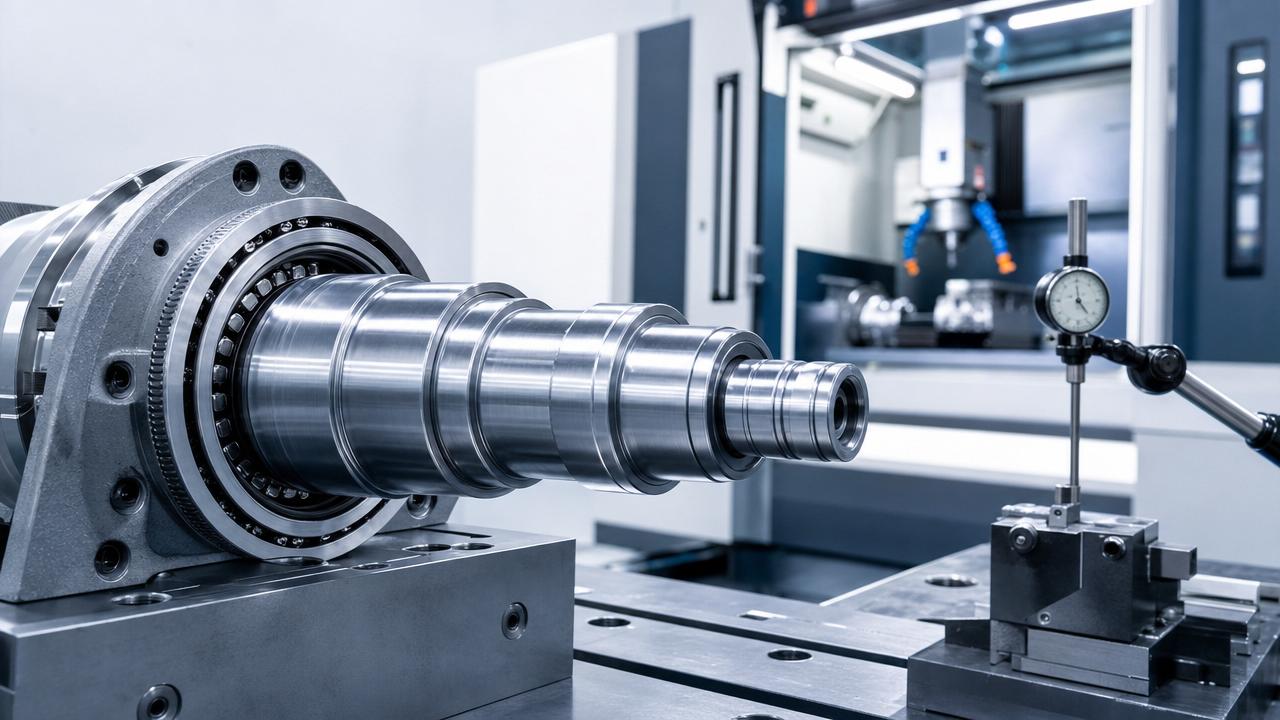
Even when Shaft Parts pass final inspection, hidden machining issues can still undermine fit, alignment, and operational safety months after delivery. In today’s precision manufacturing environment, where CNC systems, automated lines, and multi-axis machining are expected to deliver repeatable quality at scale, long-term fit stability has become a more important measure than simple pass-or-fail inspection data. A shaft that measures correctly on the day of shipment may still create assembly deviation, premature bearing wear, seal leakage, vibration, or torque instability later in service if machining variables were not fully controlled.
This matters across the broader industrial landscape. Automotive drivetrains, aerospace actuation systems, energy equipment, industrial robots, pumps, motors, and electronic production machinery all rely on Shaft Parts for rotation, transmission, and positioning. As equipment becomes more compact, faster, and more integrated, tolerance windows shrink while expectations for lifecycle reliability rise. That shift is changing how fit quality should be evaluated: not only by dimensional conformity at delivery, but by how well the part holds geometry, surface condition, and mating performance over time.
Why long-term fit of Shaft Parts is drawing more attention now
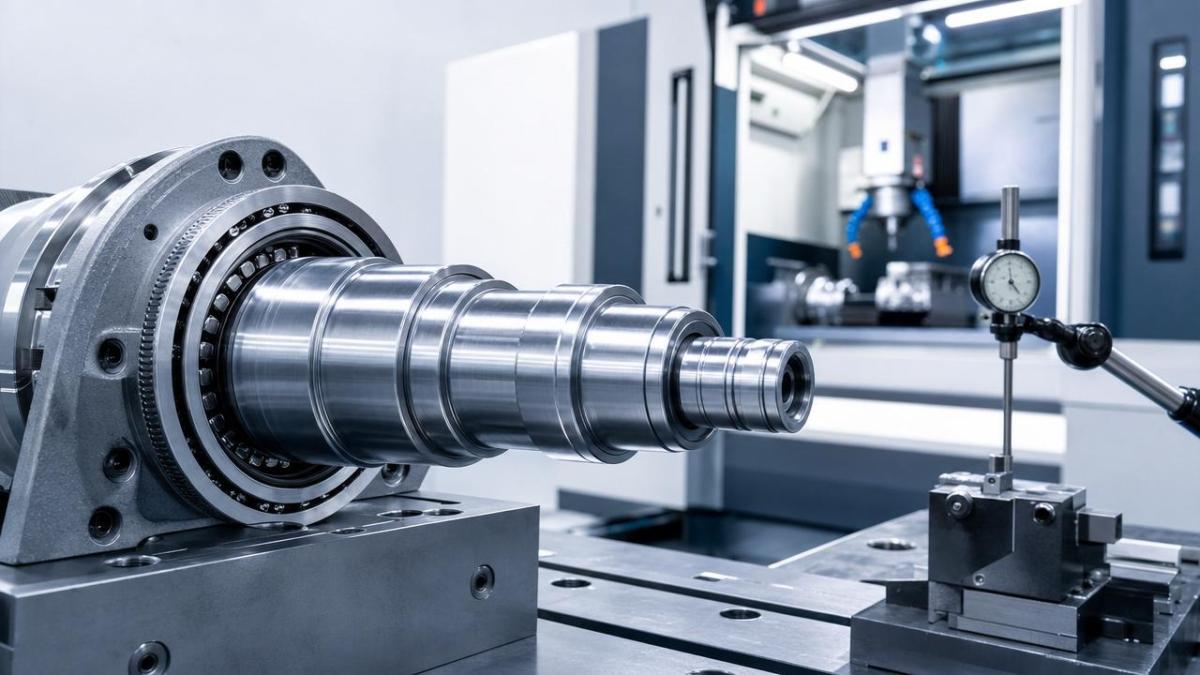
The current manufacturing trend is clear: higher precision is no longer enough unless it remains stable after transport, storage, assembly, and real operating loads. In the past, many fit-related problems were treated as isolated field issues. Today, digital traceability, warranty pressure, and global supply chains make delayed failures more visible and more expensive. A small machining inconsistency in Shaft Parts can now affect multiple production sites, disrupt line balancing, and trigger quality investigations across several tiers of suppliers.
Another reason for this increased attention is the wider use of automated assembly. Human operators can sometimes compensate for slight insertion force changes or minor alignment errors. Automated systems usually cannot. When Shaft Parts show subtle variation in roundness, cylindricity, runout, or surface finish, robotic insertion and high-speed assembly stations expose the problem immediately. Even if the part was accepted by conventional outgoing inspection, its real functional fit may prove unstable in production or during service.
The strongest trend signals behind delayed fit failures
Several manufacturing and market signals explain why delayed fit issues in Shaft Parts are becoming a bigger concern:
The machining issues in Shaft Parts that often stay hidden at delivery
Not all machining risks are obvious during final inspection. Some are functional issues disguised as acceptable dimensions. The most common hidden causes include tolerance drift, surface damage, residual stress, datum inconsistency, and unstable process capability. These issues can affect Shaft Parts differently depending on material, heat treatment, geometry, and end-use conditions, but the pattern is similar: the part appears compliant at shipment, then gradually loses fit reliability later.
Tolerance drift beyond single-point measurement
A shaft journal may measure within nominal size at room temperature, yet still be vulnerable if process variation trends toward one tolerance limit. Once coating, thermal cycling, or press fitting occurs, the effective fit changes. In many Shaft Parts, the issue is not only diameter but the relationship between diameter, roundness, taper, and runout. A part can pass a size check and still fail functionally because the full geometry was not controlled as a system.
Surface defects that grow into fit problems
Microscopic chatter marks, torn metal, burr remnants, or inappropriate roughness can change contact behavior over time. On bearing seats and seal contact areas, poor surface integrity in Shaft Parts can increase friction, disturb lubrication films, and accelerate wear. These effects are often delayed, which is why a shaft may assemble successfully at first but later develop looseness, leakage, or rotational instability.
Residual stress and post-machining distortion
Aggressive cutting, uneven stock removal, or weak stress relief practices can leave residual stress inside Shaft Parts. The shaft may shift shape after heat treatment, coating, storage, transportation, or repeated operating cycles. This is especially relevant in slender shafts, stepped shafts, and parts with multiple bearing or spline features. The resulting distortion may be small in absolute value but large enough to alter fit under real assembly conditions.
Datum mismatch across operations
When turning, grinding, keyway machining, spline cutting, and secondary finishing do not use a stable datum strategy, feature relationships can drift. The problem may not appear in isolated operation checks, but it becomes visible when Shaft Parts are assembled into systems requiring coaxiality or positional consistency. Long-term fit failures often begin with this kind of process disconnect rather than with obvious machine error.
Why these issues are becoming more common in modern production
- Shorter production cycles push tools closer to wear limits, increasing subtle variation in Shaft Parts.
- Mixed-material designs require different cutting strategies, but process plans are not always updated fast enough.
- Multi-supplier production models can introduce different measurement methods for the same shaft specification.
- Heat treatment and finish grinding are often managed as separate steps rather than as a linked fit-control system.
- Inspection may prioritize dimensional acceptance over long-term functional risk indicators.
This is why the industry is shifting from simple conformance inspection toward process-centered assurance. For Shaft Parts, the key question is no longer “Did the shaft meet drawing size today?” but “Will the shaft maintain fit, alignment, and surface performance through the next stages of handling and use?” That is a more demanding standard, but it reflects the reality of modern equipment lifecycles.
How delayed fit problems in Shaft Parts affect operations and business results
The impact of unstable Shaft Parts extends far beyond one rejected component. In automated production environments, one drifting shaft dimension can trigger insertion failures, fixture misalignment, and balancing issues across an entire assembly batch. In field applications, the same issue may appear as noise, overheating, increased vibration, oil seal wear, or early bearing failure. Because the symptom often shows up far from the original machining process, root-cause identification becomes slower and more expensive.
There is also a commercial effect. Delayed fit failures reduce confidence in process capability, increase containment costs, and can force additional incoming inspection even for previously stable supply programs. In high-value sectors such as aerospace, energy equipment, and robotics, recurring Shaft Parts fit issues may influence qualification status, documentation burden, and delivery planning. What begins as a small machining inconsistency can therefore become a larger operational and reputational problem.
What deserves closer monitoring as fit expectations continue to rise
The following control points are becoming more important for reliable Shaft Parts performance:
- Trend analysis of diameter, roundness, cylindricity, and runout rather than only final values.
- Surface integrity checks on functional areas such as bearing seats, seal tracks, splines, and shoulders.
- Residual stress awareness after roughing, heat treatment, and finish machining.
- Tool wear monitoring linked to actual fit-critical features.
- Common datum strategy across turning, grinding, milling, and inspection steps.
- Packaging and storage controls for corrosion-sensitive or slender Shaft Parts.
- Functional simulation or mating-part trials for critical fits, not only standalone inspection.
Practical response options for reducing long-term fit risk
A better next step is to treat Shaft Parts fit as a lifecycle metric
The most useful shift is practical: evaluate Shaft Parts not only by shipment acceptance, but by how well they preserve fit after downstream processing, logistics, assembly, and operating stress. That means combining CNC machining control, geometric measurement, surface verification, and application feedback into one continuous quality view. In a manufacturing landscape defined by automation, precision, and global integration, long-term fit stability is no longer a secondary concern. It is a direct indicator of process maturity.
A focused review of recurring shaft dimensions, surface zones, and post-process distortion patterns can reveal where hidden risk is building. Start with the Shaft Parts features most closely tied to bearings, seals, splines, and alignment interfaces, then compare inspection results with actual assembly and service behavior. That approach creates a clearer path to fewer field failures, lower rework, and more dependable precision manufacturing outcomes.
PREVIOUS ARTICLE
NEXT ARTICLE
Recommended for You
![]() Five Ministries Launch Joint Enforcement on EV Battery RecyclingManufacturing Policy Research Center
Five Ministries Launch Joint Enforcement on EV Battery RecyclingManufacturing Policy Research Center![]() Top 10 Future Industries Roadmap 2026 ReleasedManufacturing Market Research Center
Top 10 Future Industries Roadmap 2026 ReleasedManufacturing Market Research Center![]() Global Methanol-Electric Ecosystem Alliance LaunchedManufacturing Market Research Center
Global Methanol-Electric Ecosystem Alliance LaunchedManufacturing Market Research Center![]() ISO 23218-3:2026 Enters Force: CNC Digital Twin Interoperability Standard Goes GlobalCNC Machining Technology Center
ISO 23218-3:2026 Enters Force: CNC Digital Twin Interoperability Standard Goes GlobalCNC Machining Technology Center![]() ANVISA New Rule: Portuguese Biocompatibility Labels for Medical CNC EquipmentManufacturing Policy Research Center
ANVISA New Rule: Portuguese Biocompatibility Labels for Medical CNC EquipmentManufacturing Policy Research Center![]() KATS Updates KC Certification: CNC Cybersecurity Modules Must Comply with IEC 62443-4-2Manufacturing Policy Research Center
KATS Updates KC Certification: CNC Cybersecurity Modules Must Comply with IEC 62443-4-2Manufacturing Policy Research Center


Aris Katos
Future of Carbide Coatings
15+ years in precision manufacturing systems. Specialized in high-speed milling and aerospace grade alloy processing.
▶
Shaft Parts machining issues that affect fit long after deliveryCNC Machining Technology Center▶
Industrial turning accuracy drops for reasons beyond tool wearCNC Machining Technology Center▶
Metal machining costs that are easy to miss before quotingCNC Machining Technology Center▶
Shaft Parts machining defects that repeat across batchesCNC Machining Technology Center▶
Industrial turning accuracy issues that appear after long runsCNC Machining Technology Center
Mastering 5-Axis Workholding Strategies
Join our technical panel on Nov 15th to learn about reducing vibrations in thin-wall components.

Providing you with integrated sanding solutions
Before-sales and after-sales services
Comprehensive technical support