• Global CNC market projected to reach $128B by 2028 • New EU trade regulations for precision tooling components • Aerospace deman
NYSE: CNC +1.2%LME: STEEL -0.4%

Shaft Parts Quality Issues Often Linked to Hidden Runout Errors
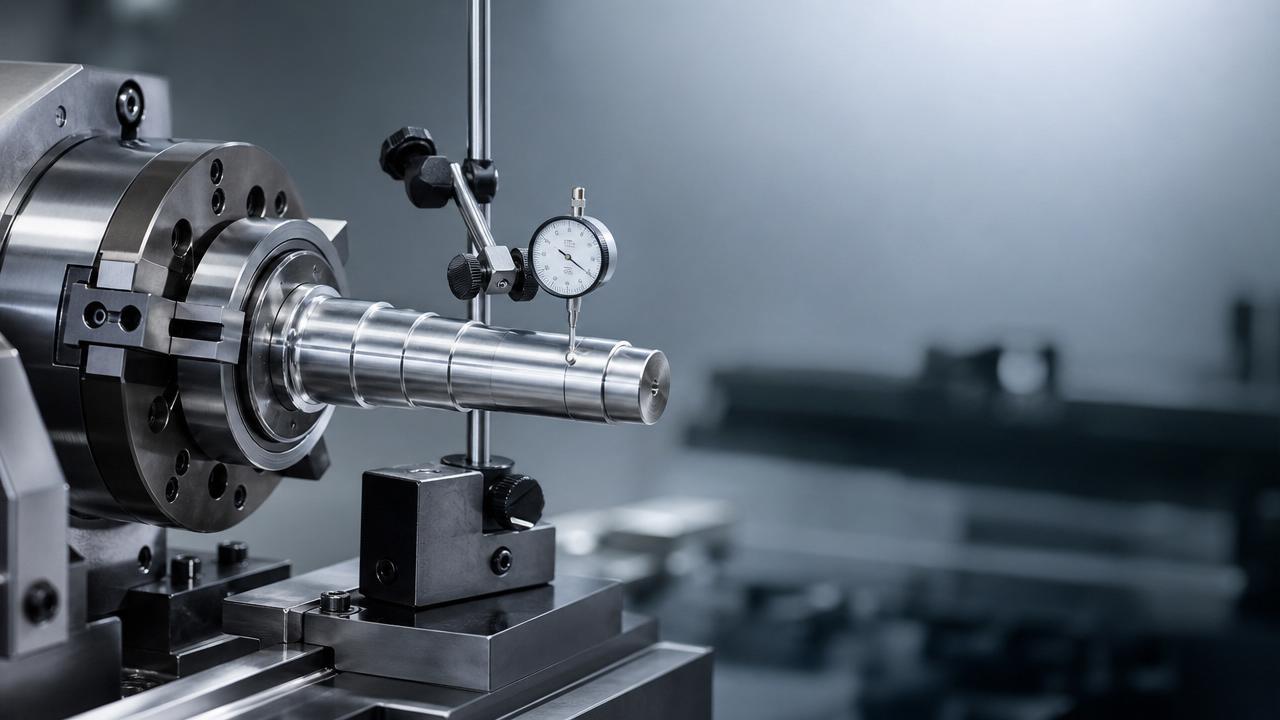
Shaft Parts quality problems are often traced to visible defects, but hidden runout errors frequently cause deeper trouble. They trigger vibration, unstable dimensions, poor assembly, early bearing damage, and unsafe machine behavior.
In CNC machining and precision manufacturing, even slight runout can reduce process capability. It can also distort inspection results, increase scrap, and weaken confidence in production consistency across industries.
As machine tools become faster, smarter, and more integrated, Shaft Parts must meet tighter tolerances. Hidden runout errors now matter not only for part quality, but also for equipment reliability, energy efficiency, and overall operational safety.
Runout as a Hidden Quality Variable in Shaft Parts
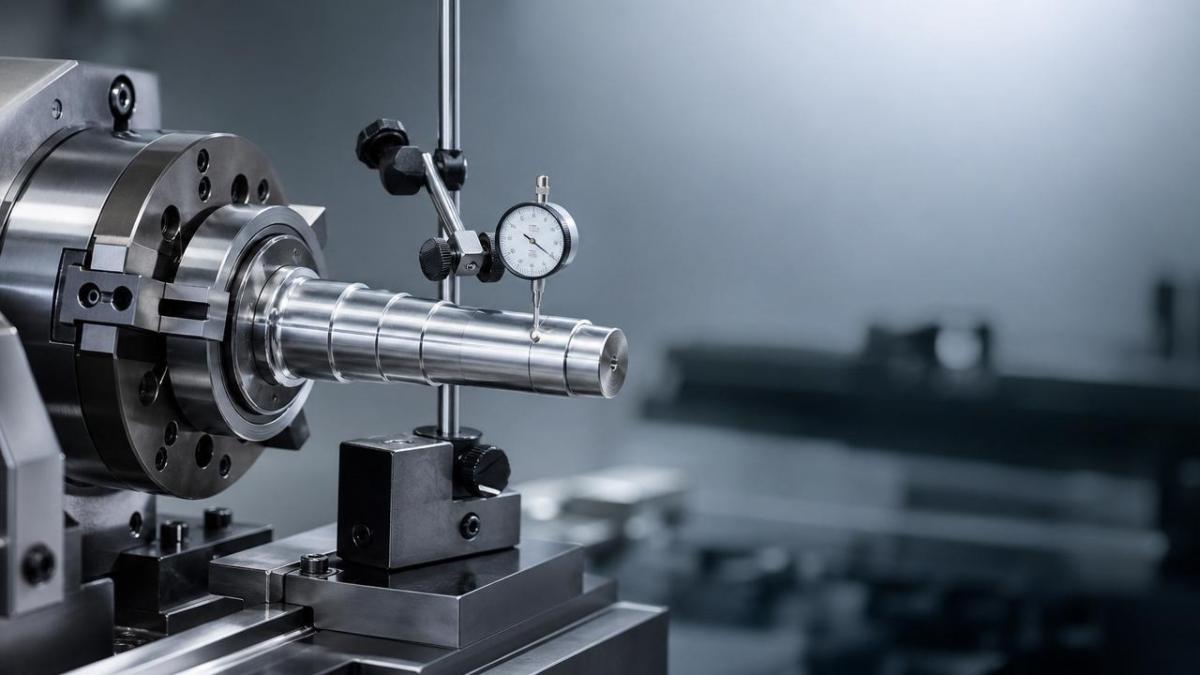
Runout describes how much a rotating surface deviates from its intended axis. In Shaft Parts, it may appear as radial runout, axial runout, or total indicated runout during inspection.
Many defects look unrelated at first. Noise, seal leakage, uneven wear, and poor concentricity often seem separate. Yet hidden runout can connect them and explain repeated quality failures.
This is why Shaft Parts deserve more than simple diameter checks. Roundness, straightness, datum stability, chuck condition, and spindle behavior all influence the final functional result.
Common forms of runout
- Radial runout affecting rotating outer surfaces
- Axial runout influencing face alignment and thrust loading
- Bending-related runout caused by material stress or handling
- Setup-induced runout from poor fixturing or chuck wear
- Measurement runout caused by unstable support conditions
In production, the danger comes from hidden variation. A shaft may pass a diameter tolerance but still fail during rotation because the actual axis is not stable.
Why the CNC and Precision Manufacturing Sector Pays Attention
The global machine tool industry is moving toward higher precision, automation, and digital process control. That shift makes hidden runout errors more visible in finished performance and warranty outcomes.
CNC lathes, machining centers, and multi-axis systems now produce Shaft Parts for automotive, aerospace, energy equipment, electronics, pumps, motors, and transmission assemblies. Each field demands repeatable rotational accuracy.
When line speed increases, tolerance stacking becomes more critical. A small runout problem in Shaft Parts can spread into balancing issues, assembly delays, and field failures across connected systems.
Key industry signals behind rising concern
Because Shaft Parts often support bearings, gears, couplings, and seals, one runout deviation can create secondary defects. That makes root-cause analysis harder unless rotational accuracy is checked early.
Business Impact of Runout Errors in Shaft Parts
The cost of hidden runout is rarely limited to one rejected part. It affects throughput, rework time, machine utilization, assembly reliability, and the long-term reputation of precision manufacturing operations.
For Shaft Parts, dimensional compliance alone does not guarantee function. A part can meet size targets and still create noise, friction, eccentric wear, or unstable rotation in service.
Typical consequences
- Poor fit between shaft and bearing or seal surfaces
- Vibration transferred to motors, housings, or gear trains
- Premature wear on mating components
- Reduced tool life during downstream finishing
- Higher scrap and unstable process capability indices
- Unexpected maintenance and safety incidents in operation
In sectors using high-speed rotating equipment, Shaft Parts with hidden runout can also increase energy loss. Friction, imbalance, and uneven load transfer reduce system efficiency over time.
This is especially important where machine tools support mass production. A minor error repeated across large batch quantities quickly becomes a major operational and financial issue.
Typical Sources and Scenario-Based Risk in Shaft Parts Production
Hidden runout in Shaft Parts usually comes from several linked factors. Material condition, machine accuracy, process design, fixturing quality, and inspection methods all influence the final result.
Frequent root causes
- Raw bar stock with residual stress or initial bend
- Chuck jaw wear or weak clamping repeatability
- Spindle misalignment or thermal drift
- Incorrect datum transfer between operations
- Tool deflection during roughing or finishing
- Improper heat treatment causing distortion
- Inadequate support for long or slender Shaft Parts
Representative application scenarios
These scenarios show why Shaft Parts should be evaluated by function, not only by isolated dimensions. A stable rotational axis is often the true requirement behind drawing tolerances.
Practical Control Methods for Reducing Hidden Runout
Effective control begins before machining starts. Material straightness checks, process planning, and machine condition verification help prevent hidden runout from entering later operations.
Recommended control points
- Inspect incoming stock for bend, stress, and surface damage
- Use stable datums and reduce unnecessary rechucking
- Verify chuck jaws, centers, and spindle accuracy regularly
- Support slender Shaft Parts with proper steady rest methods
- Control cutting force and tool wear during finishing passes
- Review heat treatment distortion before final grinding
- Measure runout under repeatable fixturing conditions
Digital inspection systems can strengthen this work. Trend data from probes, dial indicators, and in-process monitoring helps identify drift before Shaft Parts move into assembly.
It is also useful to link runout results with machine maintenance records. Repeating deviations often point to fixture wear, spindle degradation, or thermal instability rather than operator error.
Implementation Priorities for Safer and More Stable Shaft Parts
Organizations working with Shaft Parts can improve results by treating runout as a cross-functional indicator. It connects machining accuracy, inspection discipline, assembly fit, and field reliability.
A practical next step is to review parts with recurring vibration, bearing wear, or fit issues. Compare dimensional pass rates with runout records and machine condition history.
Another priority is updating control plans for critical Shaft Parts. Include defined measurement locations, fixture methods, acceptance criteria, and escalation rules for borderline results.
In modern CNC manufacturing, hidden runout errors should never be treated as minor detail. They are often the missing link behind unstable quality, avoidable downtime, and preventable safety risk.
By strengthening process control, machine verification, and functional inspection, production teams can protect Shaft Parts quality and support more reliable precision manufacturing outcomes worldwide.
PREVIOUS ARTICLE
Recommended for You
![]() Fuxing EMU Trainset Procurement Reaches ¥4.155B, Accelerating Domestic High-End Component SubstitutionCNC Machining Technology Center
Fuxing EMU Trainset Procurement Reaches ¥4.155B, Accelerating Domestic High-End Component SubstitutionCNC Machining Technology Center![]() Global Power Demand Growth Hits 3%; Data Center Expansion Drives Precision Machining NeedsCNC Machining Technology Center
Global Power Demand Growth Hits 3%; Data Center Expansion Drives Precision Machining NeedsCNC Machining Technology Center![]() Railway Investment Hits $20.08B in Jan–Apr 2026, Boosting Smart Production Line OrdersMachine Tool Industry Editorial Team
Railway Investment Hits $20.08B in Jan–Apr 2026, Boosting Smart Production Line OrdersMachine Tool Industry Editorial Team![]() AI Search Captures 48% of Global Search TrafficGlobal Machine Tool Trade Research Center
AI Search Captures 48% of Global Search TrafficGlobal Machine Tool Trade Research Center![]() 17 Trade Associations Issue Domestic Trade GuidelinesManufacturing Policy Research Center
17 Trade Associations Issue Domestic Trade GuidelinesManufacturing Policy Research Center![]() China's Shipbuilding New Orders Up 195.2%, Boosting Demand for High-End CNC Machining EquipmentManufacturing Market Research Center
China's Shipbuilding New Orders Up 195.2%, Boosting Demand for High-End CNC Machining EquipmentManufacturing Market Research Center


Aris Katos
Future of Carbide Coatings
15+ years in precision manufacturing systems. Specialized in high-speed milling and aerospace grade alloy processing.
▶
Global Power Demand Growth Hits 3%; Data Center Expansion Drives Precision Machining NeedsCNC Machining Technology Center▶
When CNC Milling Beats Other Methods for Thin-Wall PartsCNC Machining Technology Center▶
Shaft Parts Quality Issues Often Linked to Hidden Runout ErrorsCNC Machining Technology Center▶
Are Shaft Parts Failing Due to Material Choice or MachiningCNC Machining Technology Center▶
Production Process Delays That Quietly Raise Unit CostCNC Machining Technology Center
Mastering 5-Axis Workholding Strategies
Join our technical panel on Nov 15th to learn about reducing vibrations in thin-wall components.

Providing you with integrated sanding solutions
Before-sales and after-sales services
Comprehensive technical support