• Global CNC market projected to reach $128B by 2028 • New EU trade regulations for precision tooling components • Aerospace deman
NYSE: CNC +1.2%LME: STEEL -0.4%

Manufacturing Industry expansion plans now face slower approvals
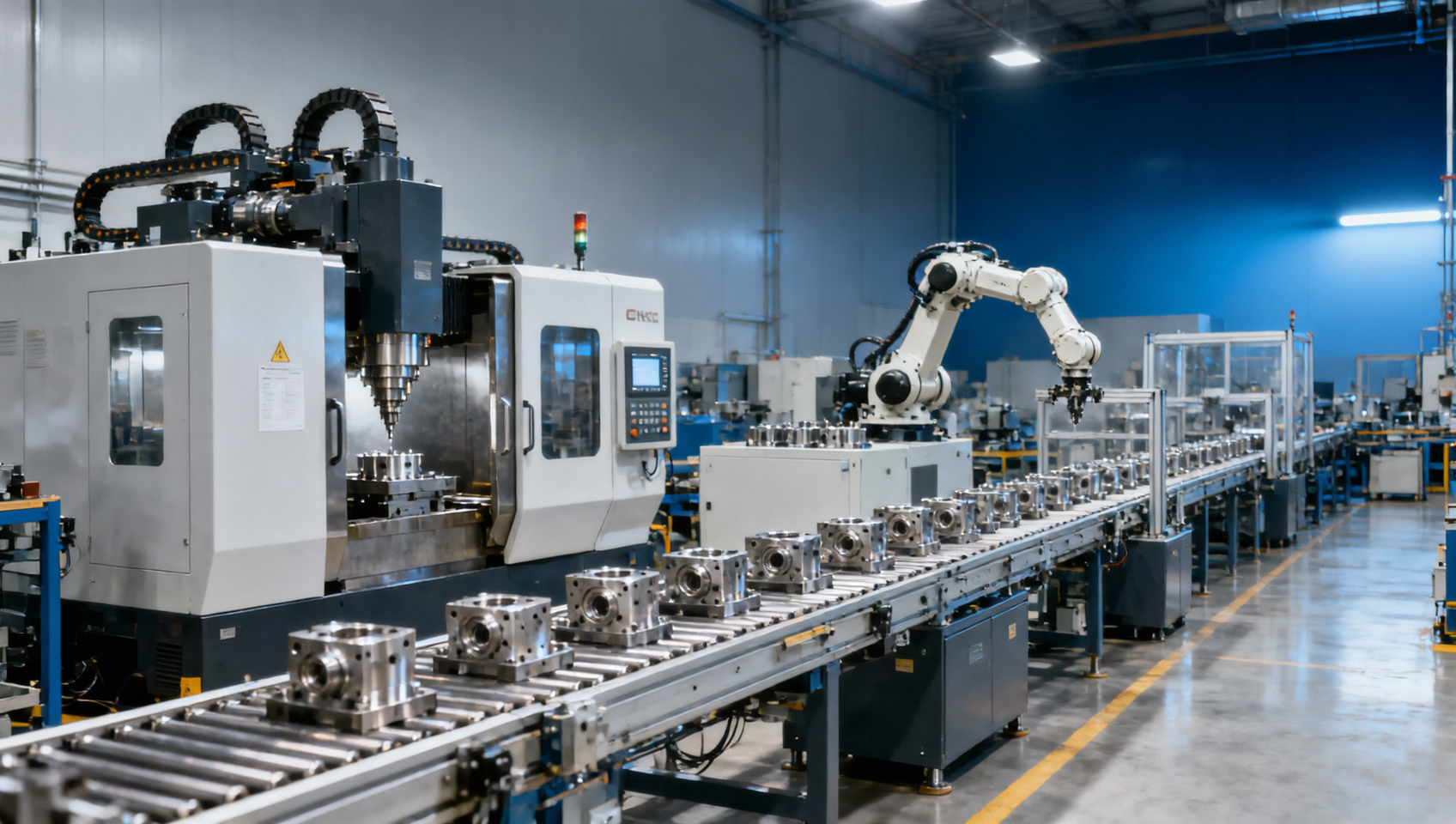
As Manufacturing Industry expansion plans face slower approvals, companies across Global Manufacturing are rethinking investment in metal machining, industrial CNC, and automated production. From CNC milling and CNC cutting to industrial robotics and automated production line upgrades, the Machine Tool Market is entering a more cautious phase—making efficiency, flexibility, and smarter production process decisions more critical than ever.
For researchers, operators, procurement teams, and business decision-makers, slower approvals do not simply delay factory projects. They also reshape equipment priorities, capital allocation, supplier qualification, and production planning. In sectors such as automotive, aerospace, electronics, and energy equipment, the challenge is no longer only how to expand, but how to expand with lower risk and faster operational return.
This shift is especially relevant in the CNC machine tool industry, where investments often involve 3- to 10-year planning cycles, high-value assets, and tightly linked production workflows. When approval lead times stretch from a few weeks to several months, companies need more disciplined decisions around machine utilization, automation scope, maintenance planning, and supplier responsiveness.
Why slower approvals are changing manufacturing investment behavior
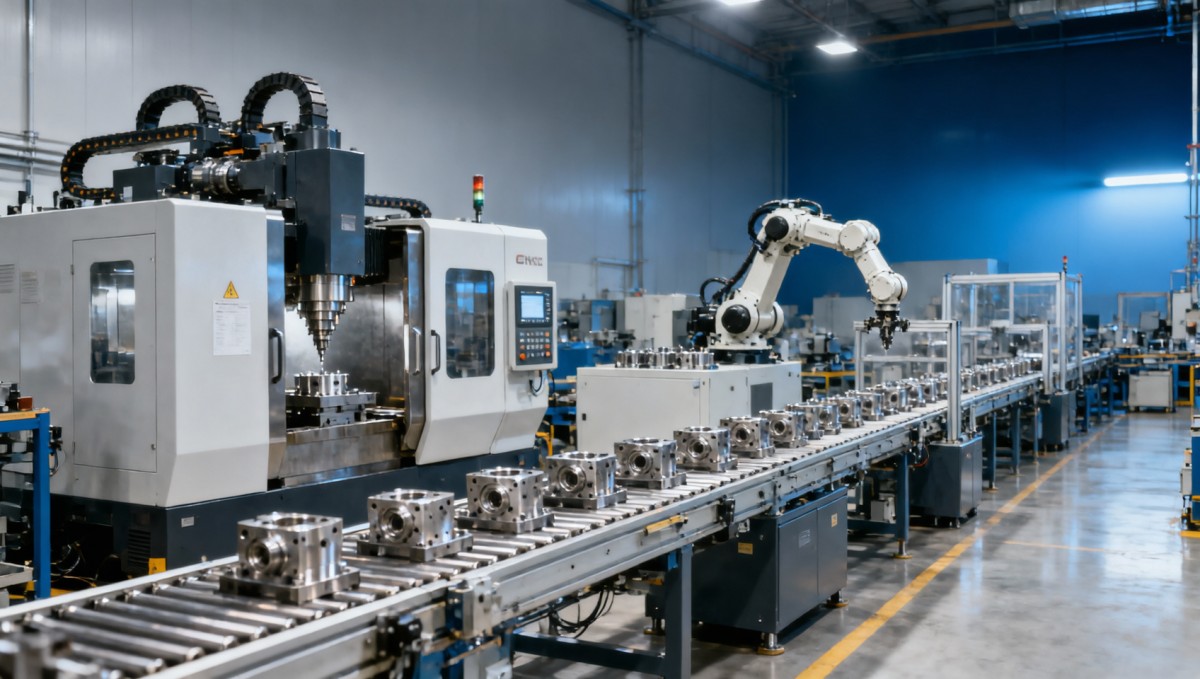
Approval delays affect more than project schedules. In many manufacturing environments, a delayed line expansion can interrupt tooling plans, postpone operator training, and create bottlenecks in machining capacity. For example, when a new 5-axis machining center is approved 8–12 weeks later than expected, upstream fixture design and downstream inspection setup are often delayed at the same time.
This has pushed buyers to favor modular investments over large one-time capacity jumps. Instead of deploying 10 machines in a single phase, some plants now prefer 2–4 machine cells, expandable automation modules, or phased robotic loading systems. That approach reduces immediate capital exposure while keeping output growth possible if demand remains stable.
Operators also feel the impact. When approvals slow, production teams must stretch existing CNC lathes, machining centers, and automated production lines for longer periods. That raises the importance of preventive maintenance intervals, spindle health checks, tool life monitoring, and software optimization. In some cases, a 6%–12% improvement in utilization can postpone urgent equipment purchases.
At the management level, slower approvals often increase the need for measurable project justification. Decision-makers want clearer answers on payback periods, floor-space efficiency, energy use, and labor impact. A machine tool investment that looked attractive under a 24-month payback target may be re-evaluated if internal approval standards move closer to 18 months or if financing costs rise.
Main pressure points for factories and suppliers
- Longer procurement cycles, often extending from 30–45 days to 60–90 days for complex CNC or automation projects.
- Higher demand for technical documentation, sample part validation, and process simulation before final approval.
- Stronger focus on retrofit, spare parts availability, and upgrade compatibility with existing machine fleets.
- More cross-functional reviews involving production, finance, engineering, EHS, and IT integration teams.
The table below shows how slower approvals typically influence purchasing logic in industrial CNC and machine tool projects.
The key takeaway is that approvals are becoming a filter for investment quality. Projects still move forward, but the winning proposals are those with better flexibility, clearer ROI logic, and lower implementation risk in real production conditions.
What this means for CNC machining, metal cutting, and automated production lines
The machine tool market is not stopping; it is becoming more selective. In practical terms, this means companies are asking whether a CNC milling machine can run multiple part families, whether a turning center can support future automation, and whether a production line can be upgraded in stages over 12–24 months instead of rebuilt all at once.
For metal machining operations, flexibility now carries more weight than maximum theoretical capacity. A machine configured for spindle speed, tool magazine capacity, and axis travel that covers 70%–80% of current parts plus moderate future variation may be preferred over a more specialized platform with higher output but limited adaptability.
Automation decisions are also being narrowed toward high-impact bottlenecks. Instead of automating every workstation, factories often target 3 areas first: repetitive loading and unloading, in-process inspection, and pallet or part transfer. These are often the fastest paths to reducing labor variability, improving takt stability, and extending unattended operation windows to 4–8 hours.
For operators and production engineers, this creates a stronger need for process discipline. Tool presetting, fixture repeatability, coolant management, and machine calibration become critical. A line equipped with advanced automation still underperforms if tool offsets drift, clamping consistency varies, or cycle imbalance remains unresolved.
Priority applications under cautious expansion plans
The following comparison highlights which machine tool and automation investments are often easier to justify when approvals slow.
These choices tend to perform well because they address immediate production pain without requiring the full approval complexity of a greenfield line. For buyers, the question becomes less about buying the biggest system and more about choosing the next most valuable improvement.
Selection signals that matter more now
- Can the machine support at least 2–3 major product variants without major fixture redesign?
- Is the expected installation and commissioning cycle within 4–10 weeks?
- Are critical spare parts available locally or regionally within 24–72 hours?
- Can software, probing, or automation functions be activated later rather than purchased all at once?
This more disciplined approach does not reduce innovation. It simply rewards machine tool solutions that are adaptable, serviceable, and easier to justify in a more careful investment climate.
Procurement criteria for buyers and decision-makers in a slower approval cycle
Procurement teams now need a more detailed evaluation model for CNC machines, precision machine tools, and automation suppliers. Price remains important, but it is no longer enough on its own. Buyers must balance acquisition cost, expected output, commissioning time, service coverage, compatibility with existing systems, and process risk during ramp-up.
A practical procurement review usually includes at least 4 dimensions: technical fit, delivery confidence, lifecycle support, and financial justification. For example, a lower-price machine may lose value if post-install accuracy stability is weak, if operator training is limited to 1 day, or if service response regularly exceeds 72 hours.
Decision-makers should also separate essential and optional features. In cautious investment periods, core performance indicators such as repeatability, rigidity, spindle duty range, controller usability, and maintenance accessibility matter more than secondary options that may not improve real throughput. This prevents specification inflation during a tighter approval process.
Another common mistake is comparing suppliers only at quotation stage. In the machine tool market, true procurement quality often appears later: during installation, process proving, training, and after-sales problem solving. A supplier with slightly longer initial lead time but better application engineering support may create less overall production risk.
A useful procurement checklist
- Verify achievable tolerance range under production conditions, not only lab or brochure conditions.
- Review installation requirements such as power load, foundation, air supply, coolant, and chip handling.
- Request sample cycle analysis for the top 3 part families by volume or margin.
- Check whether training covers programming, setup, maintenance, and alarm recovery.
- Assess spare parts commitments for 2-year and 5-year operation planning.
The table below provides a structured view of how B2B buyers can score machine tool and automation proposals in a disciplined way.
Using a structured matrix helps procurement teams explain decisions internally. It also reduces friction between technical teams focused on process capability and finance teams focused on timing, risk, and cash deployment.
How to reduce procurement risk
One effective method is staged acceptance. Instead of relying on a single final handover, companies can define 3 milestones: factory acceptance, installation verification, and production validation. This makes it easier to confirm spindle performance, software operation, and actual cycle stability before full approval closure.
Another method is to prioritize suppliers that can support both current machining needs and future digital integration. Even if advanced MES or smart factory connectivity is not activated immediately, readiness for later integration protects long-term investment value.
Implementation, maintenance, and operational strategies when expansion is delayed
When new capacity approvals slow, the fastest gains often come from existing assets. Many factories can unlock measurable output improvements by improving setup reduction, tool management, in-machine probing, and preventive maintenance discipline. In a machining shop running 2 shifts, even a 15-minute reduction in average setup time can produce meaningful weekly capacity gains.
Maintenance strategy becomes especially important. Machines that were expected to be replaced may now need to run an additional 12–36 months. That changes the priority from reactive repairs to planned inspection intervals. Common focus points include spindle vibration trends, guideway lubrication, ball screw backlash, coolant cleanliness, hydraulic stability, and control cabinet temperature management.
Production teams should also examine process consolidation opportunities. In some applications, one upgraded machining center with better tooling strategy can replace two older process steps. That does not eliminate every constraint, but it can reduce work-in-progress, handling time, and dimensional variation between operations.
Digital tools can support this transition if used pragmatically. Machine monitoring dashboards, tool life alerts, basic OEE tracking, and downtime categorization often generate more immediate value than large software rollouts. For many mid-sized manufacturers, starting with 5–8 measurable KPIs is more realistic than attempting full smart factory transformation in a single phase.
Recommended short-term actions for plants
- Audit current machine utilization, setup loss, and unplanned downtime over the last 8–12 weeks.
- Rank bottlenecks by output impact rather than by equipment age alone.
- Decide whether each bottleneck needs maintenance, retrofit, automation, or new equipment.
- Set a review cycle every 30–60 days to align demand signals with expansion timing.
Common mistakes to avoid
- Waiting for final expansion approval before addressing urgent maintenance or fixture issues.
- Buying oversized automation without validating part mix stability or loading logic.
- Ignoring operator retraining when upgrading controls, software, or inspection routines.
- Treating all downtime equally instead of separating micro-stoppages, setup loss, and major failure events.
A disciplined operational response helps companies stay productive while waiting for approvals. It also improves the quality of future investment requests because decision-makers can see which improvements came from process optimization and which still require capital equipment.
FAQ for researchers, users, buyers, and manufacturing executives
How should companies prioritize machine tool investment when approvals take longer?
Start with the constraint that most directly limits shipment or quality. In many factories, that is not the oldest machine, but the operation with the highest setup loss, the narrowest capacity margin, or the largest labor dependency. A practical sequence is maintenance first, retrofit second, selective automation third, and full new-line investment last unless demand is contract-backed.
Are retrofit projects a realistic alternative to new CNC purchases?
In many cases, yes. If the machine structure remains stable and accuracy can be restored, retrofits can extend usable life by 3–5 years. Typical upgrade areas include control systems, drives, probing, chip management, and safety functions. However, retrofits are less suitable when rigidity, thermal behavior, or spindle condition no longer supports target tolerances.
What lead times should buyers expect for CNC machines and automation equipment?
Lead times vary by specification and region, but common planning ranges are 6–12 weeks for standard machines, 12–24 weeks for customized machining centers, and 10–20 weeks for robotic loading cells with application engineering. Buyers should also add time for approval review, installation preparation, trial cutting, and operator training.
What should operators focus on while expansion decisions are delayed?
Operators should focus on repeatable setup, tool condition control, workholding consistency, and alarm pattern tracking. These areas usually provide faster gains than broad process changes. If a plant can reduce setup variation, improve tool offset discipline, and control coolant contamination, machine availability and part consistency often improve without major capital spending.
How can decision-makers justify investment in a cautious market?
The strongest investment case links machine tool purchases to measurable outcomes: fewer setups, lower scrap, reduced labor dependence, shorter cycle time, or improved delivery reliability. Presenting the project in 3 layers—technical need, financial impact, and implementation risk—usually helps internal approval teams assess the proposal more clearly.
Manufacturing expansion plans may now face slower approvals, but that does not remove the need for precision machining, CNC efficiency, or smarter production systems. It changes the decision framework. Companies that combine flexible machine tool selection, disciplined procurement, stronger maintenance, and staged automation are better positioned to protect output while preparing for the next growth cycle.
For global manufacturing professionals evaluating CNC machines, precision machining solutions, or automated production line upgrades, the most effective next step is a practical, application-based review of current bottlenecks and future capacity options. Contact us to discuss your production goals, request a customized solution, or learn more about machine tool strategies that fit today’s slower approval environment.
Recommended for You
![]() Iranian LNG Vessels Breach U.S. Strait Blockade; Shanghai Crude Surges 4%Manufacturing Market Research Center
Iranian LNG Vessels Breach U.S. Strait Blockade; Shanghai Crude Surges 4%Manufacturing Market Research Center![]() Pakistan Launches CNC Localization Tender for CPEC II Smart Manufacturing ParkGlobal Machine Tool Trade Research Center
Pakistan Launches CNC Localization Tender for CPEC II Smart Manufacturing ParkGlobal Machine Tool Trade Research Center![]() NVIDIA Joins $1T Club; AI-Driven CNC Digital Twin Gains Global TractionCNC Machining Technology Center
NVIDIA Joins $1T Club; AI-Driven CNC Digital Twin Gains Global TractionCNC Machining Technology Center![]() World's First 5-Axis Middle-Grade Wire EDM Machine Enters Mass ProductionMachine Tool Industry Editorial Team
World's First 5-Axis Middle-Grade Wire EDM Machine Enters Mass ProductionMachine Tool Industry Editorial Team![]() China’s CNC Machine Tool Export Prices Up 11.3% in Q1 2026Global Machine Tool Trade Research Center
China’s CNC Machine Tool Export Prices Up 11.3% in Q1 2026Global Machine Tool Trade Research Center![]() Saudi Energy Security Boosts CNC Import Efficiency in Middle EastGlobal Machine Tool Trade Research Center
Saudi Energy Security Boosts CNC Import Efficiency in Middle EastGlobal Machine Tool Trade Research Center


Aris Katos
Future of Carbide Coatings
15+ years in precision manufacturing systems. Specialized in high-speed milling and aerospace grade alloy processing.
▶
VDMA Updates CE Machinery Directive Guide for 2026: Connected CNC Systems Require Full ISO 13849-1 PL e AssessmentManufacturing Policy Research Center▶
CNC Metalworking Shops Face New Pressure on TraceabilityManufacturing Policy Research Center▶
Manufacturing Industry expansion plans now face slower approvalsManufacturing Policy Research Center▶
Home Appliance Industry Targets 'Four Transformations' for Overseas MarketManufacturing Policy Research Center▶
Yangxin County Urban Investment Group Implements 'Three Major and One Big' System TrainingManufacturing Policy Research Center
Mastering 5-Axis Workholding Strategies
Join our technical panel on Nov 15th to learn about reducing vibrations in thin-wall components.

Providing you with integrated sanding solutions
Before-sales and after-sales services
Comprehensive technical support