• Global CNC market projected to reach $128B by 2028 • New EU trade regulations for precision tooling components • Aerospace deman
NYSE: CNC +1.2%LME: STEEL -0.4%

CNC Metalworking Shops Face New Pressure on Traceability
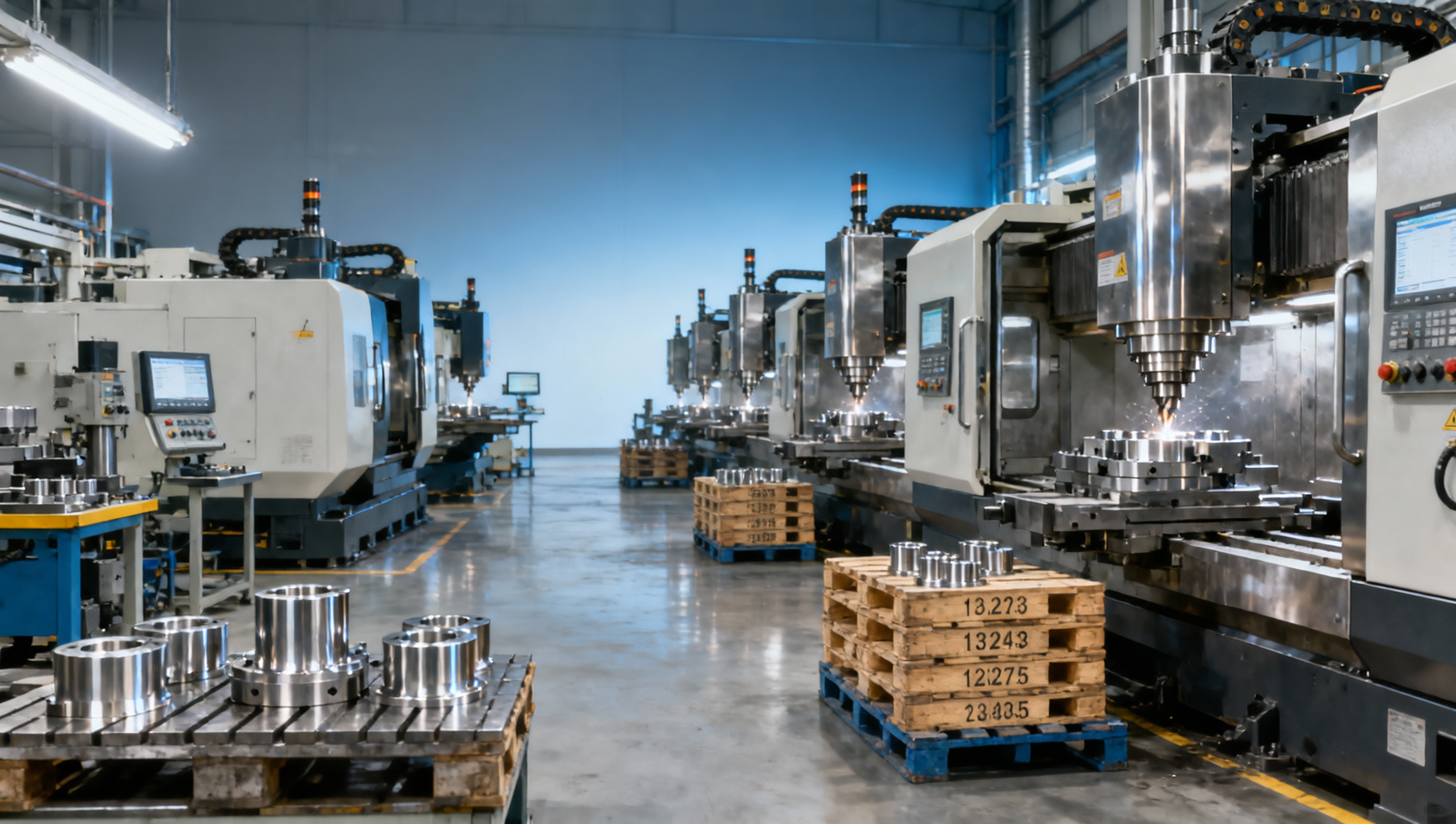
As traceability standards tighten across Global Manufacturing, CNC metalworking shops are under growing pressure to connect metal machining, CNC production, and automated production data with every part they deliver. From industrial CNC systems and CNC milling to automated lathe operations, the Manufacturing Industry now demands clearer process visibility, faster compliance, and more reliable quality records.
Why traceability has become a frontline issue for CNC metalworking shops
Traceability is no longer limited to highly regulated sectors. In today’s CNC machining environment, buyers in automotive, aerospace, energy equipment, and electronics increasingly expect every machined part to be linked to material origin, process settings, inspection results, and shipment records. For metalworking shops, this means each production lot needs a clear digital chain rather than scattered paper notes or disconnected spreadsheets.
The pressure is growing for three practical reasons. First, supply chains are more global, so one part may pass through 3 to 5 process nodes before final assembly. Second, quality audits now focus not only on whether a part passed inspection, but also on how the shop can prove what happened at each stage. Third, shorter delivery windows, often 7–15 days for repeat orders and 2–4 weeks for more complex parts, leave little time to reconstruct missing records after a problem appears.
For operators, traceability affects setup discipline, tool change records, and process confirmations. For procurement teams, it affects supplier approval and risk control. For business decision-makers, it directly influences customer confidence, dispute resolution speed, and the ability to win long-term contracts. In many cases, poor traceability does not fail on the shop floor first; it fails when a customer asks for evidence and the shop cannot respond within 24–48 hours.
This shift matters across the broader machine tool industry because CNC lathes, machining centers, multi-axis systems, cutting tools, fixtures, and automated production lines are becoming more digitally connected. As smart manufacturing advances, buyers increasingly want traceability that follows the full route: raw material, CNC milling, turning, deburring, inspection, packaging, and outbound delivery. Shops that still treat traceability as an afterthought are finding that compliance gaps quickly become commercial gaps.
What customers now expect from traceability records
The expectation is not always a fully complex enterprise system. In many cases, customers simply want records that are complete, searchable, and linked to each batch or serial number. However, the required level of detail rises sharply when parts are safety-related, tolerance-sensitive, or integrated into export supply chains.
- Material linkage, including heat number, supplier batch, and receiving inspection status before machining starts.
- Process linkage, including machine ID, operator confirmation, tool status, revision version, and key machining parameters where applicable.
- Quality linkage, including first article inspection, in-process checks, final inspection records, and nonconformance handling.
- Delivery linkage, including packaging label, lot control, shipment date, and customer order reference for rapid recall or complaint response.
For a small shop, this may begin with 4 core records. For a larger operation running multiple shifts and 10 or more CNC machines, it often expands into an integrated workflow connecting ERP, MES, quality systems, and machine data collection. The point is not complexity for its own sake. The point is being able to answer a customer question quickly, accurately, and with evidence.
Where traceability breaks down in real CNC production
Most CNC metalworking shops do not fail because they ignore quality. They fail because their data trail breaks between departments. Material receiving may be documented, but the link to the machining batch disappears. CNC milling parameters may be stable, but tool life changes are not tied to inspection trends. Automated lathe operations may run efficiently, yet manual rework records remain outside the main system. These gaps create risk when a customer asks for root cause evidence.
A common issue appears during mixed production. Shops handling small-batch, medium-batch, and high-mix orders often switch fixtures, programs, and operators several times per day. Without disciplined revision control and batch identification, records become ambiguous. If the same machine runs 6 to 12 part numbers in one shift, even a well-managed shop can struggle to prove which parameter set belonged to which lot unless the system structure is clear.
Another weak point is the boundary between automation and manual intervention. Automated production lines can capture cycle time, machine status, and some alarm data, but post-machining steps such as washing, deburring, marking, and packaging may still rely on paper forms. If one of these steps is missed or undocumented, the traceability chain is incomplete even if the CNC equipment itself is highly advanced.
For procurement teams evaluating suppliers, these practical gaps matter more than broad marketing claims. A supplier may own advanced multi-axis machining centers, but if they cannot maintain lot-level traceability across 2 shifts, 3 process stages, and final inspection release, the operational risk remains high. Traceability maturity should be assessed as a capability, not assumed from equipment value alone.
Typical failure points that create audit and quality risk
The table below outlines where traceability often breaks in CNC production and what that means for users, buyers, and plant managers.
This comparison shows that traceability risk is rarely caused by a single missing document. It usually comes from a broken link between steps. Shops that close these links can reduce investigation time, improve containment action, and answer customer questions with far less disruption to production.
A practical 4-point internal check
- Can each shipped lot be tied back to raw material within minutes rather than hours?
- Can the shop identify which machine, program version, and operator released the batch?
- Can inspection records be filtered by part number, shift, and production date?
- Can rework, scrap, and concession decisions be matched to the same lot history?
If the answer to even 1 of these 4 checks is unclear, the traceability system is likely weaker than it appears. That weakness becomes visible first during audits, complaint handling, or supplier qualification reviews.
How to build a traceability system that works on the shop floor
An effective traceability system for CNC production must fit real operations. It should not overload operators with unnecessary manual entry, and it should not depend entirely on one software platform. The strongest approach is layered: part identification, process control, inspection capture, and release approval. Whether a shop runs 5 CNC machines or 50, these layers remain relevant.
Start with identification discipline. Every material batch, work order, and in-process container should carry a consistent lot reference. For serial-managed parts, the rule must be tighter. The label or code should remain linked from cutting to machining to final packaging. If labels are replaced during processing, the handoff procedure must be standardized so there is no untracked transition between stages.
Next, define which process data truly matters. Shops do not need to capture every machine variable. They need the key records that explain production history: machine number, program revision, fixture or setup reference, tool replacement timing where critical, inspection checkpoint results, and release authorization. In many environments, 6 to 8 controlled data points per lot create more value than collecting hundreds of signals that nobody reviews.
Finally, the system must support response speed. When a customer raises a question, the traceability process should allow the shop to isolate affected lots, review process history, and issue a first response within the same working day where possible. That is often the difference between a contained quality event and a wider commercial problem.
Recommended implementation stages for CNC shops
The best rollout is usually phased over 3 stages instead of a full disruption. The timeline may range from 4–8 weeks for a simple lot-based system to 3–6 months for a broader digital integration project.
This staged model helps procurement teams and decision-makers avoid overinvesting too early. It also gives operators time to adapt workflows. A traceability system that adds 20 extra clicks per batch without clear value will not be sustained. A system that reduces confusion and speeds up issue handling is far more likely to become routine.
5 process controls worth prioritizing first
- Lot-level identification before the first machining operation begins.
- Program revision confirmation at setup and after engineering change release.
- First article inspection records tied to machine and shift information.
- Controlled handling of rework, concessions, and scrap segregation.
- Shipment approval linked to final inspection and packaging identification.
These 5 controls are simple enough to start quickly, yet strong enough to improve compliance performance across CNC milling, turning, and automated production cells.
What procurement teams and decision-makers should evaluate before choosing a supplier or solution
Procurement often focuses on price, lead time, and machine capacity. Those factors matter, but traceability capability should be examined with equal discipline when parts are high-value, export-bound, or integrated into regulated supply chains. A supplier with competitive pricing but weak lot control can create hidden cost through claims, delays, and repeated corrective actions.
For supplier evaluation, the key question is not whether the shop says it has traceability. The key question is how that traceability works under normal production pressure. Can the team retrieve a lot history in 10 minutes? Can they show how a revised drawing was controlled across multiple CNC machines? Can they isolate affected inventory without stopping unrelated jobs? These are practical signs of maturity.
For internal system selection, decision-makers should compare not only software features but also deployment fit. A highly customized platform may look impressive during demos, yet fail if operators cannot use it during shift change or if machine connectivity requires major retrofits. In many facilities, the best solution is the one that delivers consistent traceability over 80%–90% of critical events rather than attempting full data capture from day one.
This is especially important in the global CNC machine tool industry, where many suppliers operate across different countries, process standards, and documentation habits. The stronger the international supply chain, the more important common traceability language becomes between purchasing, production, quality, and logistics teams.
A practical supplier evaluation matrix
The following matrix can help buyers compare CNC metalworking shops or traceability solution providers using operational criteria rather than marketing language.
This table helps move the conversation from generic promises to measurable operating behavior. It is useful for RFQ screening, supplier audits, and internal investment reviews alike.
Key questions to ask before approval
- What is the standard response time for providing lot and inspection records?
- How are engineering changes controlled across repeated CNC production runs?
- How are rework and mixed inventory prevented in high-mix environments?
- Which process steps remain manual, and how are those steps documented?
- Can the supplier support traceability expectations for domestic and export customers alike?
If these questions cannot be answered clearly during evaluation, the risk usually appears later as delayed documentation, unclear containment, or recurring corrective action loops.
Standards, compliance expectations, and common misconceptions
Traceability expectations vary by customer, sector, and product criticality, but CNC metalworking shops should assume that documented process control is becoming a baseline requirement. In practical terms, this often means alignment with customer-specific quality clauses, controlled documentation practices, material certification retention, and documented inspection release. Where applicable, shops may also work within broader frameworks such as ISO-based quality systems or sector-specific requirements requested by end users.
One common misconception is that traceability only matters for aerospace or medical parts. In reality, many general industrial, automotive, energy, and electronics buyers now expect lot control because supply chains are more complex and downtime costs are higher. Another misconception is that traceability requires full automation. While digital integration helps, even a partially manual system can be effective if it is structured, consistent, and auditable.
A third misunderstanding is that machine data alone equals traceability. It does not. Machine logs are useful, but they do not replace material identity, inspection release, operator accountability, or packaging control. A complete traceability chain combines process evidence with transaction evidence. That is why strong CNC production records must connect both manufacturing activity and quality decisions.
For decision-makers, the right goal is proportional control. Not every product needs serial-level tracking, but every critical process should have a defined level of traceability based on risk, customer expectation, and recall exposure. This allows shops to spend intelligently rather than overengineering low-risk jobs.
FAQ: the questions buyers and shop teams ask most often
How much traceability is enough for a CNC metalworking shop?
The answer depends on part criticality, customer specification, and production mode. For many general industrial parts, lot-level traceability covering material batch, machine route, key inspections, and shipment release is the minimum practical baseline. For higher-risk parts, serial-level traceability may be requested, especially when rework control and individual history are important.
What records should a shop be able to retrieve within the same day?
At a minimum, the shop should be able to retrieve material certificate linkage, work order history, machine or process route, inspection status, and shipping batch reference. In stronger systems, these records can be reviewed within 10–30 minutes. If record retrieval takes several hours or depends on one person being present, the system is too fragile.
Is a spreadsheet-based traceability process still acceptable?
It can be acceptable for low-volume, low-complexity operations if version control, access control, and review discipline are strong. However, once the shop handles multiple shifts, frequent engineering changes, or 20+ active part numbers in rotation, spreadsheet-only management usually becomes difficult to sustain without errors or delayed responses.
What is the biggest hidden risk in poor traceability?
The biggest hidden risk is over-containment. When a shop cannot identify the exact affected lot, it may need to block far more inventory than necessary. That means unnecessary sorting, delayed shipments, customer distrust, and additional cost that often exceeds the cost of building better traceability in the first place.
Why informed buyers and CNC shops are investing now
The CNC machine tool industry is moving toward higher precision, greater automation, and deeper digital integration. As that shift continues, traceability becomes more valuable, not less. It supports smart factory initiatives, strengthens supplier communication, and improves confidence in cross-border trade. For users and operators, it reduces uncertainty during problem-solving. For buyers, it reduces approval risk. For executives, it helps protect margins when quality incidents occur.
Shops that act early do not need to transform everything at once. They need to identify the 3 to 5 highest-risk process links, standardize records, and build a response structure that works under real production pressure. That approach is practical for job shops, medium-volume suppliers, and larger automated production sites alike. It also fits the wider trend across China, Germany, Japan, South Korea, and other manufacturing centers where international customers increasingly compare suppliers on documentation reliability as well as machining capability.
Our platform focuses on the global CNC machining and precision manufacturing industry, combining industry news, technical insight, market perspective, and trade-oriented thinking. If you are reviewing traceability requirements for CNC milling, turning, machining centers, or automated production lines, we can help you narrow the decision with practical criteria instead of generic claims.
Contact us if you need support with parameter confirmation, supplier evaluation, traceability process planning, production capability review, delivery cycle discussion, documentation expectations, sample support, or quotation communication. Whether you are comparing machining suppliers, preparing an audit checklist, or improving internal CNC production control, a clearer traceability framework can reduce risk and improve decision speed.
NEXT ARTICLE
Recommended for You
 Global Manufacturing Lead Times Improve but Not EverywhereGlobal Machine Tool Trade Research Center
 Machine Tool Market Inventory Pressure Is Building AgainGlobal Machine Tool Trade Research Center
 Metal Lathe vs CNC Milling for Low Volume Round PartsCNC Machining Technology Center
 CNC Cutting Gas Choice Affects More Than Edge FinishCNC Machining Technology Center
 CNC Metalworking Shops Face New Pressure on TraceabilityManufacturing Policy Research Center
 Automated Lathe Cycle Time Gains Can Hide Quality LossesCNC Machining Technology Center

Aris Katos
Future of Carbide Coatings
15+ years in precision manufacturing systems. Specialized in high-speed milling and aerospace grade alloy processing.
▶
CNC Metalworking Shops Face New Pressure on TraceabilityManufacturing Policy Research Center▶
Home Appliance Industry Targets 'Four Transformations' for Overseas MarketManufacturing Policy Research Center▶
Yangxin County Urban Investment Group Implements 'Three Major and One Big' System TrainingManufacturing Policy Research Center▶
Manufacturing Industry survey finds 62% of shops still using paper-based CNC program verificationManufacturing Policy Research Center▶
What’s changing in global manufacturing policies that affects CNC metalworking energy subsidies?Manufacturing Policy Research Center
Mastering 5-Axis Workholding Strategies
Join our technical panel on Nov 15th to learn about reducing vibrations in thin-wall components.

Providing you with integrated sanding solutions
Before-sales and after-sales services
Comprehensive technical support