• Global CNC market projected to reach $128B by 2028 • New EU trade regulations for precision tooling components • Aerospace deman
NYSE: CNC +1.2%LME: STEEL -0.4%

U.S. Expands Export Controls on Advanced CNC Equipment to China: Industry Impacts and Responses
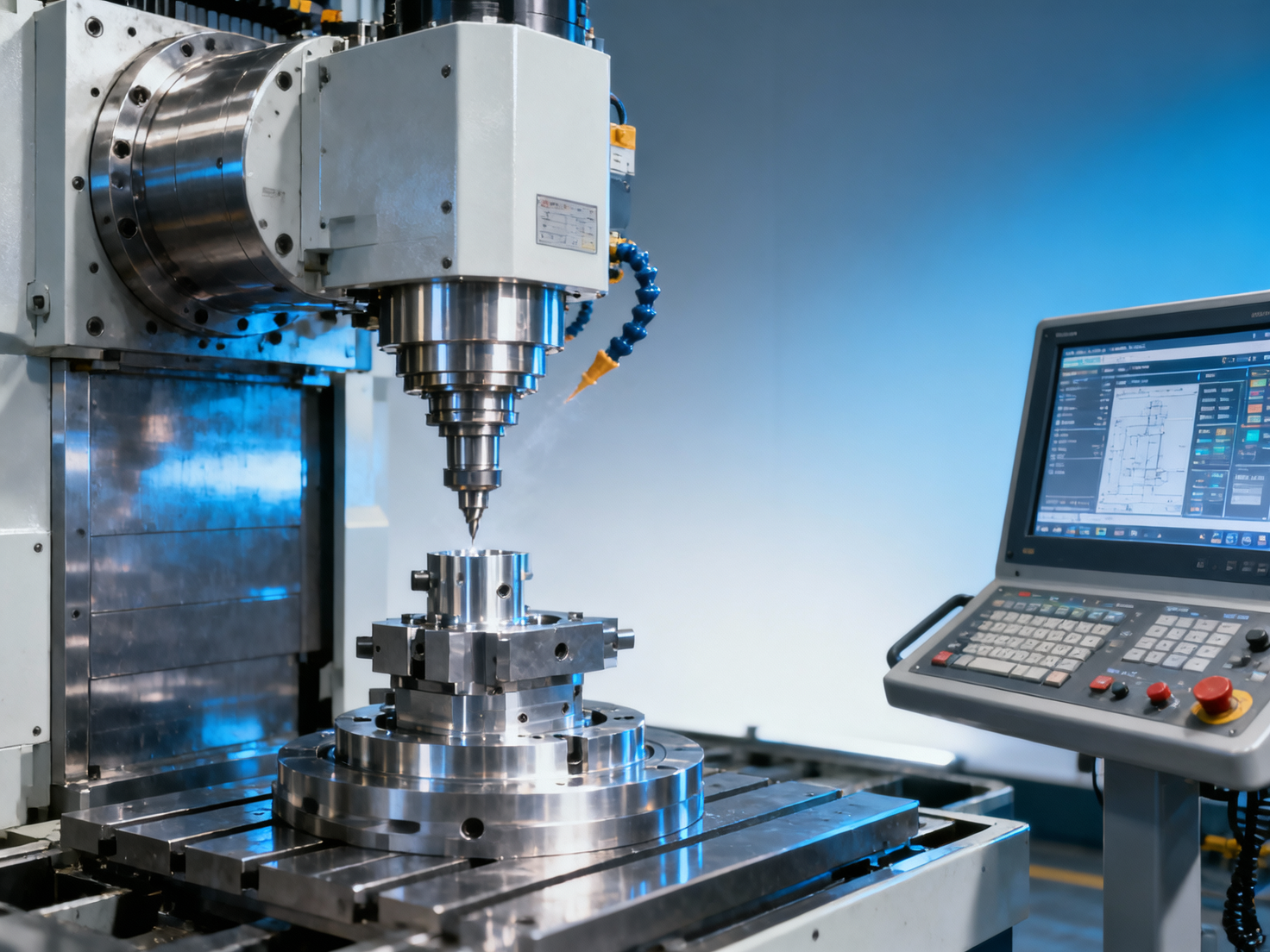
U.S. Expands Export Controls on Advanced CNC Equipment to China: Industry Impacts and Responses
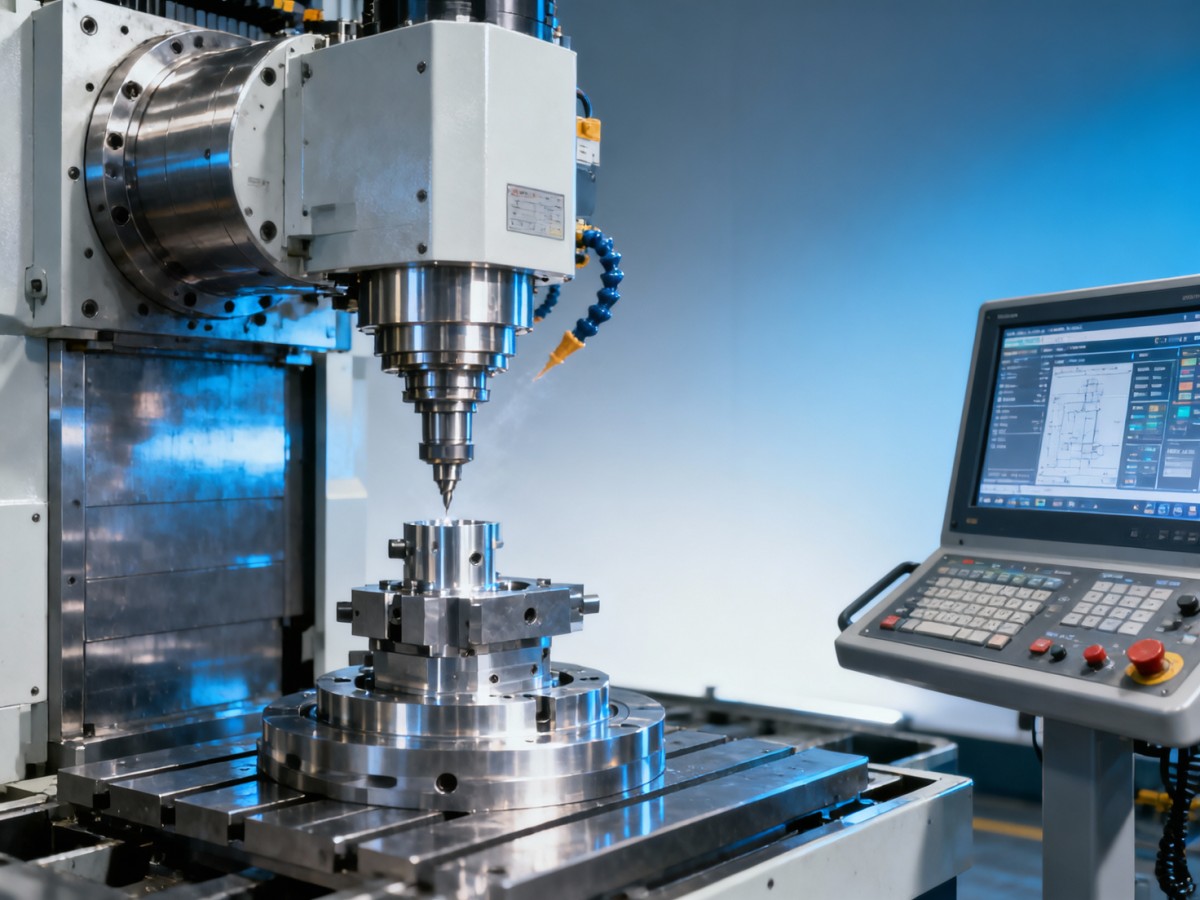
Introduction
On March 25, 2026, the U.S. Department of Commerce's Bureau of Industry and Security (BIS) issued an interim final rule (89 FR 21544) expanding export controls on eight categories of CNC equipment and related control systems to China, including 5-axis precision grinding machines and laser hybrid machining centers. This move immediately impacts technology collaboration, spare part supply chains, and OEM manufacturing models between the U.S. and China, while accelerating Southeast Asian and Mexican buyers' evaluations of Chinese alternatives. Industries reliant on high-end manufacturing equipment—particularly aerospace, automotive, and semiconductor sectors—should closely monitor these developments due to potential supply chain disruptions and technological decoupling risks.
Event Overview
The BIS update adds the following to EAR Supplement No. 7, requiring export licenses for shipments to China:
- 5-axis simultaneous precision grinding machines
- Additive-subtractive hybrid machining centers
- Nanoscale contour measuring instruments
- High-end CNC systems with localization rates below 30%
The rule took immediate effect on March 25, 2026, with no transitional period for existing contracts.
Impact on Key Industries
1. Direct Trade Enterprises
U.S.-based CNC equipment manufacturers and distributors face immediate order cancellations or delays due to licensing requirements. Chinese importers must reassess procurement timelines, particularly for maintenance parts covered under the new controls.
2. OEM Manufacturing Hubs
Chinese factories serving global aerospace and automotive OEMs may encounter production bottlenecks. The restriction on hybrid machining centers directly affects composite material processing—a critical capability for next-gen aircraft components.
3. Supply Chain Service Providers
Third-party logistics firms specializing in cross-border equipment transfers will see increased compliance costs. The inclusion of nanoscale measurement tools further complicates quality assurance workflows for precision part suppliers.
Actionable Guidance for Businesses
1. Monitor Licensing Developments
Track BIS's quarterly "Entity List" updates and Commerce Department guidance on license approval trends for civilian-use CNC applications.
2. Audit Substitution Options
Evaluate non-controlled alternatives from Japan/Switzerland for 5-axis grinders, while noting that comparable EU-made systems often exceed budget thresholds.
3. Redesign Maintenance Protocols
For enterprises using affected U.S. equipment: Prioritize securing critical spare parts through pre-license stockpiling, and explore retrofit solutions using non-controlled CNC subsystems.
Industry Perspective
Analysis suggests this escalation reflects Washington's targeted containment of China's advanced manufacturing self-sufficiency. Unlike previous broad semiconductor restrictions, the focus on CNC systems with low localization rates indicates a strategic effort to disrupt China's equipment upgrade cycles. From an industry standpoint, the immediate operational impact may be limited—given most Chinese manufacturers had begun diversifying suppliers post-2023—but the long-term technology access risks warrant contingency planning.
Conclusion
This regulatory shift underscores the geopolitical fragmentation of high-tech supply chains. While not an outright embargo, the controls create friction points that will reshape global equipment procurement patterns. Businesses should treat this as a catalyst for supply chain resilience assessments rather than a crisis—focusing on dual-source strategies and accelerated localization roadmaps where feasible.
Sources
- U.S. Federal Register Vol. 89, No. 62 (March 25, 2026)
- BIS Interim Final Rule: 89 FR 21544
- Ongoing: Monitoring Commerce Department FAQs on license application procedures (expected April 2026)
Recommended for You
![]() China Releases First Eastern Sea Seabed Elemental MapGlobal Machine Tool Trade Research Center
China Releases First Eastern Sea Seabed Elemental MapGlobal Machine Tool Trade Research Center![]() AIMM National Standard Advances for CNC Smart Factory CertificationManufacturing Policy Research Center
AIMM National Standard Advances for CNC Smart Factory CertificationManufacturing Policy Research Center![]() eVTOL Mass Production Drives CNC Export GrowthGlobal Machine Tool Trade Research Center
eVTOL Mass Production Drives CNC Export GrowthGlobal Machine Tool Trade Research Center![]() China Launches World's Largest Agri-Meteorological Observation NetworkManufacturing Market Research Center
China Launches World's Largest Agri-Meteorological Observation NetworkManufacturing Market Research Center![]() Robotics ToB Scaling Hits Data Bottleneck in CNC AI InspectionCNC Machining Technology Center
Robotics ToB Scaling Hits Data Bottleneck in CNC AI InspectionCNC Machining Technology Center![]() SAMR to Complete 1,800+ Standards Revisions in 2026Manufacturing Policy Research Center
SAMR to Complete 1,800+ Standards Revisions in 2026Manufacturing Policy Research Center


Aris Katos
Future of Carbide Coatings
15+ years in precision manufacturing systems. Specialized in high-speed milling and aerospace grade alloy processing.
▶
EU CBAM Enters Enforcement Phase for CNC Machine ToolsManufacturing Policy Research Center▶
How Trade Regulations Affect CNC Machine ImportsManufacturing Policy Research Center▶
Jiaokong Factoring Hosts Risk Control Seminar on ISO 13849-1Manufacturing Policy Research Center▶
Lianyirong AI Audit Case in China Supply Chain Finance Yearbook 2025Manufacturing Policy Research Center▶
Vietnam to Launch VN-CNC Mark for CNC Imports in Q3 2026Manufacturing Policy Research Center
Mastering 5-Axis Workholding Strategies
Join our technical panel on Nov 15th to learn about reducing vibrations in thin-wall components.

Providing you with integrated sanding solutions
Before-sales and after-sales services
Comprehensive technical support