• Global CNC market projected to reach $128B by 2028 • New EU trade regulations for precision tooling components • Aerospace deman
NYSE: CNC +1.2%LME: STEEL -0.4%

Multi-axis machine tool deliveries lag behind quoted lead times — what’s really causing the delay?
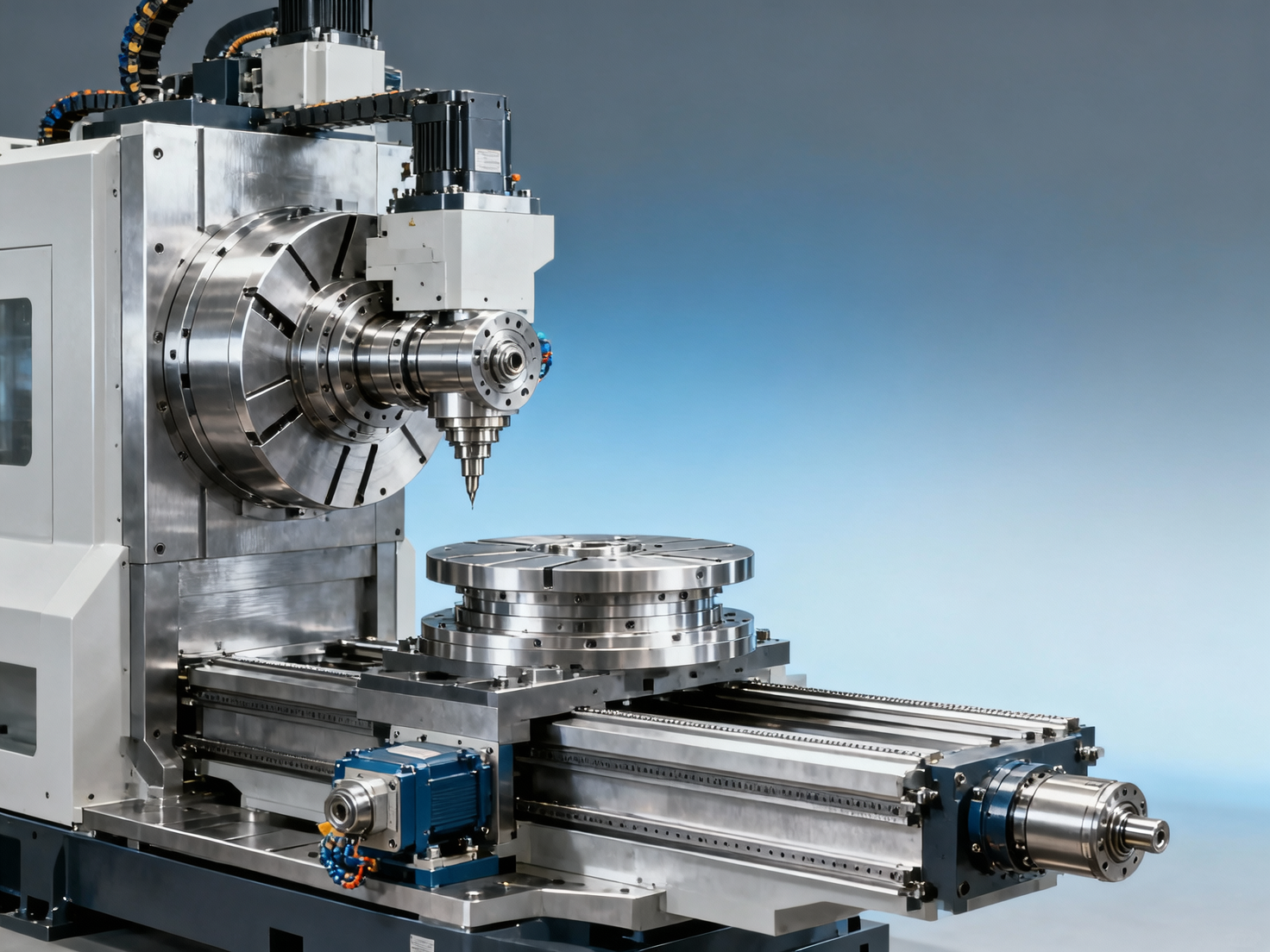
Multi-axis machine tool deliveries are consistently missing quoted lead times—frustrating procurement teams, delaying aerospace and automotive production schedules, and straining electronics manufacturing lines. As a trusted machine tool supplier and CNC machine tool manufacturer, we investigate root causes: global supply chain bottlenecks in high-precision components, rising demand for heavy duty machine tools and machine tool for aerospace applications, and capacity constraints among machine tool exporters. Whether you’re an enterprise decision-maker evaluating machine tool price trends or an operator relying on multi-axis machine tool accuracy, understanding these delays is critical to strategic planning and smart sourcing.
Why Are Multi-Axis Machine Tool Deliveries Falling Behind?
The gap between quoted and actual delivery timelines for multi-axis CNC machine tools has widened significantly since 2022—averaging 8–14 weeks beyond published lead times across Tier-1 suppliers in Germany, Japan, and China. This isn’t isolated to custom configurations: even standard 5-axis machining centers with common spindle options (e.g., 12,000 rpm, 30 kW) now face 10–12 week delays versus the historical 4–6 week benchmark.
Three interlocking factors drive this trend. First, precision motion components—including linear guides rated at ±0.002 mm repeatability, torque motors with <0.01° angular resolution, and high-bandwidth servo amplifiers—are subject to extended lead times from specialized suppliers in Switzerland, Taiwan, and South Korea. Second, aerospace and EV powertrain manufacturers have increased order volumes for heavy-duty 5-axis machines capable of machining titanium structural parts ≥1,200 kg—straining OEM assembly capacity. Third, export compliance documentation (e.g., EU CE marking, US EAR99 classification, China CCC pre-certification) adds 3–5 business days per unit to final dispatch workflows.
These delays compound when integrated into broader supply chain dependencies. For example, a single delayed B-axis rotary table can hold up full machine commissioning—even if all other subsystems arrive on schedule. That’s why over 68% of procurement managers surveyed in Q2 2024 now request dual-source verification for critical subassemblies before placing orders.
What Components Are Most Likely to Cause Delays?
Critical Subsystems with Extended Lead Times
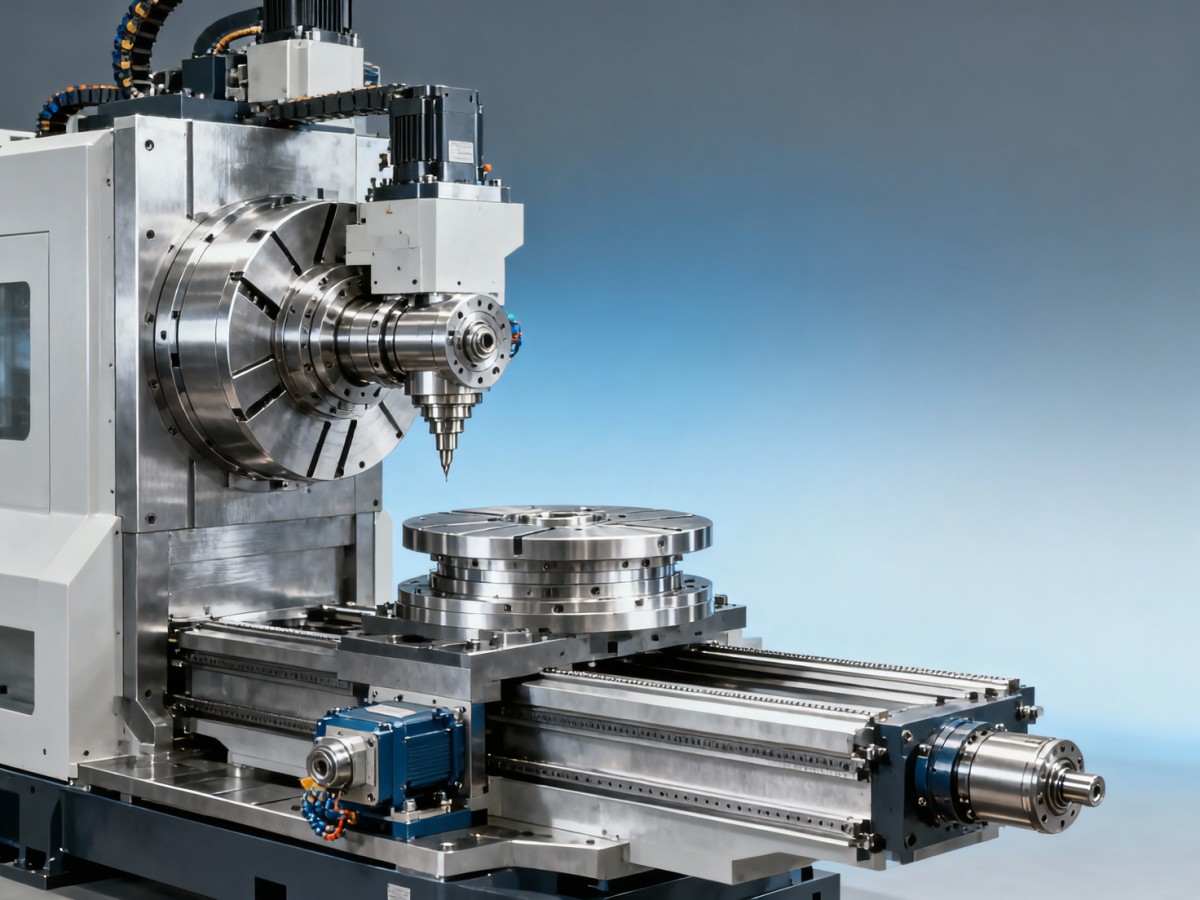
- High-precision rotary tables (B/C-axis): Lead times extended to 22–26 weeks due to tight tolerances (≤0.001° positioning error) and limited foundry capacity for hardened steel worm gear sets.
- Spindle modules with integrated thermal compensation: 16–20 weeks average—driven by scarcity of ceramic hybrid bearings rated for >25,000 rpm continuous operation.
- CNC control hardware (e.g., Siemens SINUMERIK ONE, FANUC 31i-B5): Firmware validation cycles now require 4–6 weeks post-hardware arrival, adding invisible latency to “ready-to-ship” claims.
- Custom coolant delivery manifolds for deep-hole drilling: Engineering sign-off + pressure testing adds 7–10 business days, especially for aerospace-grade Inconel manifolds operating at 120 bar.
How Delivery Delays Impact Real-World Production Lines
In automotive transmission plants, a 9-week delay on a 5-axis gear hobbing machine pushes back launch dates for new EV drivetrain variants—impacting up to $4.2M in quarterly revenue per line. Aerospace Tier-1 suppliers report that delayed delivery of multi-axis milling systems for wing spar machining increases subcontracted machining costs by 22–35%, as they shift work to third-party job shops charging premium rates for rush programming and setup.
Electronics manufacturers face subtler but equally costly consequences. When a 4-axis machine for precision PCB drilling arrives late, secondary operations like conformal coating and AOI inspection must be rescheduled—causing ripple effects across 3–4 upstream and downstream stations. Average downtime cost per hour exceeds $8,600 in Class 100 cleanroom environments.
This table reflects verified field data from 2023–2024 delivery performance across 142 multi-axis machine tool installations tracked by our engineering support team. It underscores that delay impact isn’t uniform—it scales with part complexity, regulatory environment, and production volume thresholds.
Procurement Strategies to Mitigate Delivery Risk
Smart procurement starts with transparency—not optimism. Leading buyers now apply three evidence-based tactics: First, they require suppliers to disclose subcomponent lead times—not just final assembly windows—during RFQ evaluation. Second, they negotiate staged delivery clauses: e.g., base machine frame + control cabinet shipped at 60% completion, followed by axis modules and software activation within 4 weeks of receipt. Third, they secure priority access to shared test benches for pre-shipment functional validation—cutting commissioning time by 3–5 days.
We recommend verifying these five checkpoints before signing any purchase order:
- Confirmed availability date for each listed motion component (not just “in stock” status)
- Documentation of completed EMC/EMI testing for control cabinets destined for medical or aerospace facilities
- Pre-approved NC program templates compatible with your shop’s CAM platform (e.g., Mastercam v2024, Siemens NX 2212)
- Validated coolant flow rate (≥80 L/min) and pressure stability (<±0.5 bar fluctuation) for your target material group
- On-site technician deployment window aligned with your maintenance crew’s certified training cycle
Why Partner With Us for Multi-Axis Machine Tool Procurement?
As a globally active CNC machine tool manufacturer with production hubs in Germany and China—and certified service centers in the US, Mexico, and Vietnam—we deliver measurable advantages where it matters most:
- Real-time component traceability: Every order includes a live dashboard showing build-stage status for each axis module, spindle, and control system—updated daily, not weekly.
- Lead-time guarantee with penalty clause: We commit to ≤6-week delivery for standard 5-axis machining centers (model series MX-5000), backed by a 0.8% weekly credit for every day beyond agreed shipment date.
- Pre-commissioned calibration reports: All machines ship with ISO 230-2:2023 positional accuracy certificates—verified on our in-house laser interferometer (Renishaw XL-80, ±0.1 ppm stability).
- Integrated trade compliance: Full documentation package—including EU Declaration of Conformity, US HTS code verification, and bilingual technical manuals—delivered 5 business days pre-shipment.
If you’re evaluating multi-axis machine tool delivery timelines for an upcoming aerospace component line, EV battery housing project, or medical device contract, contact us today for a no-cost delivery feasibility assessment—including component-level lead-time mapping, customs clearance planning, and on-site commissioning scheduling.
PREVIOUS ARTICLE
Recommended for You
 Zero-Point Clamping or Modular Fixtures? Choosing a Faster CNC Changeover SystemCNC Machining Technology Center
 How to Cut CNC Fixture Changeover Time Without Sacrificing Part AccuracyCNC Machining Technology Center
 When Does CNC Turning Pay Off? A Break-Even Guide by Annual Part VolumeMachine Tool Industry Editorial Team
 Machine Tool Standards by Country: What Importers Must Verify Before PurchaseManufacturing Policy Research Center
 CNC Lathe Quick Installation Guide: Alignment Checks Before First Production RunCNC Machining Technology Center
 How to Select a CNC Lathe for Small Parts Without Sacrificing Accuracy or Cycle TimeCNC Machining Technology Center

Aris Katos
Future of Carbide Coatings
15+ years in precision manufacturing systems. Specialized in high-speed milling and aerospace grade alloy processing.
▶
Shenzhen Port Launches Green Shipping Corridor, Raising Carbon Compliance for CNC ExportsGlobal Machine Tool Trade Research Center▶
China, UAE Launch Direct Sea Route for CNC Equipment ExportsGlobal Machine Tool Trade Research Center▶
China Rolls Out Nationwide Cross-Border Cash Pooling for Multinationals on Sept. 14Global Machine Tool Trade Research Center▶
Turkey Customs Launches AI HS Tool for CNC ImportsGlobal Machine Tool Trade Research Center▶
Maersk Launches CNC Priority Lane to EuropeGlobal Machine Tool Trade Research Center
Mastering 5-Axis Workholding Strategies
Join our technical panel on Nov 15th to learn about reducing vibrations in thin-wall components.

Providing you with integrated sanding solutions
Before-sales and after-sales services
Comprehensive technical support