• Global CNC market projected to reach $128B by 2028 • New EU trade regulations for precision tooling components • Aerospace deman
NYSE: CNC +1.2%LME: STEEL -0.4%

Why Is the Manufacturing Industry Rethinking Supply Risk?
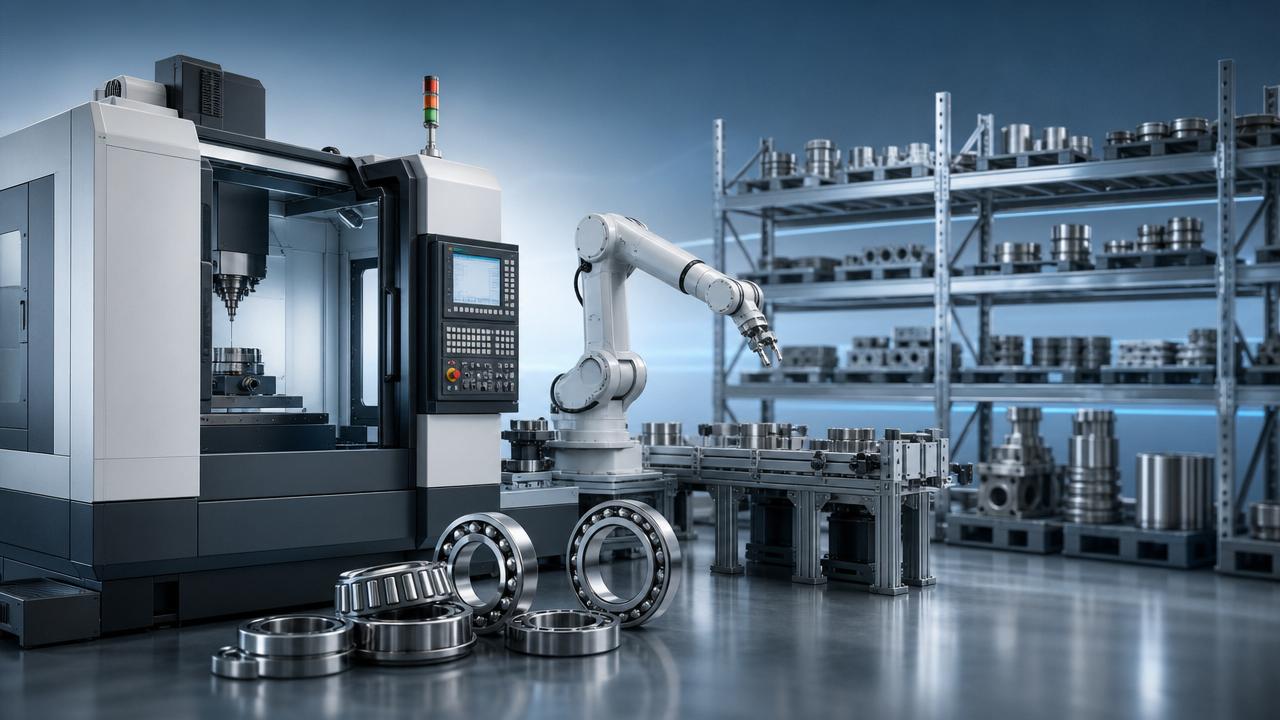
The Manufacturing Industry is reassessing supply risk as global disruptions, rising precision requirements, and rapid automation reshape how companies source CNC machine tools, components, and production technologies.
Traditional cost-based supplier decisions are no longer enough. Reliability, regional capacity, digital integration, and long-term technical support now protect production continuity.
This article explains why supply risk has become strategic, and how the Manufacturing Industry can evaluate partners in a more resilient, future-ready way.
Why Supply Risk Now Affects Every Manufacturing Industry Scenario
Supply risk once meant delayed parts, unstable prices, or limited inventory. Today, it reaches deeper into production strategy and operational competitiveness.
A missing spindle, controller, fixture, or precision bearing can stop a CNC line as quickly as a missing core machine.
The Manufacturing Industry now depends on connected equipment, automated cells, industrial robots, and digitally managed maintenance systems.
That interdependence creates new risk. A supplier failure can affect machining accuracy, delivery schedules, and customer qualification at the same time.
Precision manufacturing also has limited substitution room. Certified components cannot always be replaced quickly without testing, calibration, or process validation.
For the Manufacturing Industry, supply resilience now means more than availability. It includes technical compatibility, lifecycle support, and regional service access.
Scenario Background: Different Production Models Face Different Risks
Supply risk is not equal across all facilities. A high-volume automotive line faces different exposure than a prototype aerospace workshop.
The Manufacturing Industry includes mass production, small-batch precision work, energy equipment machining, electronics assembly, and flexible contract production.
Each scenario has its own pressure points. Some require fast spare parts. Others require micron-level stability or documented traceability.
A cost-first sourcing model may work for basic consumables. It becomes dangerous when applied to CNC controls, servo systems, or precision tooling.
Scenario-based evaluation helps the Manufacturing Industry match supplier selection with real operating consequences, not only purchase price.
Scenario One: High-Volume Production Needs Stable Capacity
Automotive, electronics, and consumer goods production rely on repeatability. Even small supply interruptions can trigger output loss across multiple shifts.
In this scenario, CNC machines, tool holders, fixtures, and automated handling systems must remain consistent over long production cycles.
The Manufacturing Industry should examine whether suppliers can support forecasted demand, emergency replenishment, and multi-site delivery.
Capacity transparency is critical. A supplier with limited production visibility may appear competitive until demand surges or logistics conditions change.
Key judgment points include lead-time stability, buffer stock policy, duplicate production lines, and historical delivery performance.
Scenario Two: Precision Machining Needs Technical Dependability
Aerospace, medical equipment, mold making, and advanced energy components require tight tolerances and controlled process variation.
Here, supply risk is not only about delay. It also includes accuracy drift, inconsistent materials, and poor application support.
The Manufacturing Industry must evaluate how suppliers manage quality documentation, calibration, engineering response, and technical troubleshooting.
A precision machining center may be available, but without stable thermal performance or service expertise, production risk remains high.
Critical checks include machine rigidity, controller compatibility, spindle reliability, tooling life data, and process validation support.
Scenario Three: Automated Lines Need Integration Security
Smart factories connect CNC equipment, robots, conveyors, inspection systems, and manufacturing execution platforms.
This improves efficiency, but it also makes the Manufacturing Industry more exposed to integration failure and software dependency.
A machine may perform well alone, yet fail inside an automated cell because communication protocols or data interfaces are weak.
Supply risk includes unavailable software updates, closed control systems, cybersecurity gaps, and insufficient commissioning support.
Reliable partners should provide interface documentation, remote diagnostics, upgrade paths, and field support for complex automation projects.
Scenario Four: Global Sourcing Needs Regional Resilience
The CNC machine tool ecosystem spans China, Germany, Japan, South Korea, Europe, North America, and emerging industrial regions.
Global sourcing gives the Manufacturing Industry access to advanced technology, competitive pricing, and specialized component clusters.
However, geopolitical changes, port congestion, export controls, and currency shifts can alter total supply reliability quickly.
Regional resilience means understanding where critical parts are made, where inventory is stored, and where service teams are located.
A supplier with local service capability may reduce downtime more effectively than a distant supplier with a lower initial price.
How Demand Differences Change Supplier Evaluation
The table shows why one supplier scorecard cannot fit every application. The Manufacturing Industry needs risk criteria linked to production reality.
For simple purchases, price and delivery may dominate. For strategic equipment, technical continuity and lifecycle service matter more.
Practical Scenario Fit: What to Check Before Selection
Supplier evaluation should move from a static quotation review to a structured risk review.
The Manufacturing Industry can reduce uncertainty by checking operational evidence before committing to critical CNC equipment or production systems.
- Confirm production capacity for both normal demand and emergency orders.
- Review spare parts availability, including motors, drives, controllers, and spindle units.
- Ask for accuracy records, machine acceptance standards, and repeatability test data.
- Check whether technical support is local, remote, or dependent on overseas dispatch.
- Verify software compatibility with existing automation, inspection, and factory data systems.
- Assess financial stability and long-term product roadmap before strategic dependence grows.
These checks help the Manufacturing Industry identify hidden exposure before it becomes downtime, quality loss, or delayed customer delivery.
Common Misjudgments That Increase Supply Exposure
Mistaking Low Price for Low Risk
A lower purchase price can hide expensive downtime, longer commissioning, unstable tooling performance, or weak service response.
Total cost should include installation time, operator training, spare parts, maintenance intervals, and production loss probability.
Assuming All CNC Equipment Is Easy to Replace
Many CNC systems are deeply connected with fixtures, programs, inspection routines, and customer-approved processes.
Replacing a machine or key component may require requalification, not simply installation.
Ignoring Software and Data Dependencies
Modern production risk often comes from digital gaps, not only mechanical defects.
The Manufacturing Industry should review controller openness, data export options, remote monitoring, and update support.
Overlooking After-Sales Response Time
Fast service access can determine whether a failure lasts hours or weeks.
Service capability should be measured by response process, engineer availability, parts stock, and technical documentation quality.
Building a More Resilient Manufacturing Industry Supply Model
Resilience does not mean holding excessive inventory or replacing every supplier. It means knowing which risks deserve redundancy.
Critical CNC machines, control systems, high-precision components, and automation interfaces require deeper evaluation than standard consumables.
The Manufacturing Industry can classify suppliers by production impact, substitution difficulty, and technical dependency.
- Map components that can stop production within one shift.
- Identify parts that require long validation or special calibration.
- Separate commodity suppliers from strategic technology partners.
- Create backup sources for high-impact, hard-to-replace items.
- Review risk quarterly, especially when demand, markets, or regulations change.
This model supports better sourcing decisions in CNC machining, precision tooling, automated assembly, and smart factory projects.
Action Guide: Turning Supply Risk Awareness Into Decisions
The next step is not a broad supplier audit. It is a focused review of the most production-critical scenarios.
Start with CNC equipment, precision tooling, automation components, and spare parts that directly influence uptime or product qualification.
Then compare partners using scenario-based criteria: capacity stability, precision capability, integration support, regional service, and lifecycle planning.
For the Manufacturing Industry, resilient sourcing is now a competitive requirement, not a defensive task.
A stronger supply model protects output, supports automation investment, and helps precision manufacturing adapt to uncertain global conditions.
Evaluate partners through real production scenarios, not only quotations. That approach creates practical resilience across the modern Manufacturing Industry.
Recommended for You
![]() Mitsubishi Electric Announces Physical AI System Linking Humanoid Robots and CNC MachinesMachine Tool Industry Editorial Team
Mitsubishi Electric Announces Physical AI System Linking Humanoid Robots and CNC MachinesMachine Tool Industry Editorial Team Precision Machining for Defense: Supplier Quality and Traceability ChecksManufacturing Market Research Center
![]() Nidec Machine Tool Launches MVR-5X Five-Axis Gantry MachineMachine Tool Industry Editorial Team
Nidec Machine Tool Launches MVR-5X Five-Axis Gantry MachineMachine Tool Industry Editorial Team Choosing a Precision Disc Parts Manufacturer in China: Tolerances and Quality ChecksManufacturing Market Research Center
![]() Siemens Executive Says AI Could Raise Factory Automation to 80%Manufacturing Market Research Center
Siemens Executive Says AI Could Raise Factory Automation to 80%Manufacturing Market Research Center Choosing Automated Machine Tools for High-Mix, Low-Volume ProductionMachine Tool Industry Editorial Team


Aris Katos
Future of Carbide Coatings
15+ years in precision manufacturing systems. Specialized in high-speed milling and aerospace grade alloy processing.
▶
Shenzhen Port Launches Green Shipping Corridor, Raising Carbon Compliance for CNC ExportsGlobal Machine Tool Trade Research Center▶
China, UAE Launch Direct Sea Route for CNC Equipment ExportsGlobal Machine Tool Trade Research Center▶
China Rolls Out Nationwide Cross-Border Cash Pooling for Multinationals on Sept. 14Global Machine Tool Trade Research Center▶
Turkey Customs Launches AI HS Tool for CNC ImportsGlobal Machine Tool Trade Research Center▶
Maersk Launches CNC Priority Lane to EuropeGlobal Machine Tool Trade Research Center
▶
Mastering 5-Axis Workholding Strategies
Join our technical panel on Nov 15th to learn about reducing vibrations in thin-wall components.

Providing you with integrated sanding solutions
Before-sales and after-sales services
Comprehensive technical support