• Global CNC market projected to reach $128B by 2028 • New EU trade regulations for precision tooling components • Aerospace deman
NYSE: CNC +1.2%LME: STEEL -0.4%

CNC metalworking shops are quietly shifting away from universal chucks—here’s why
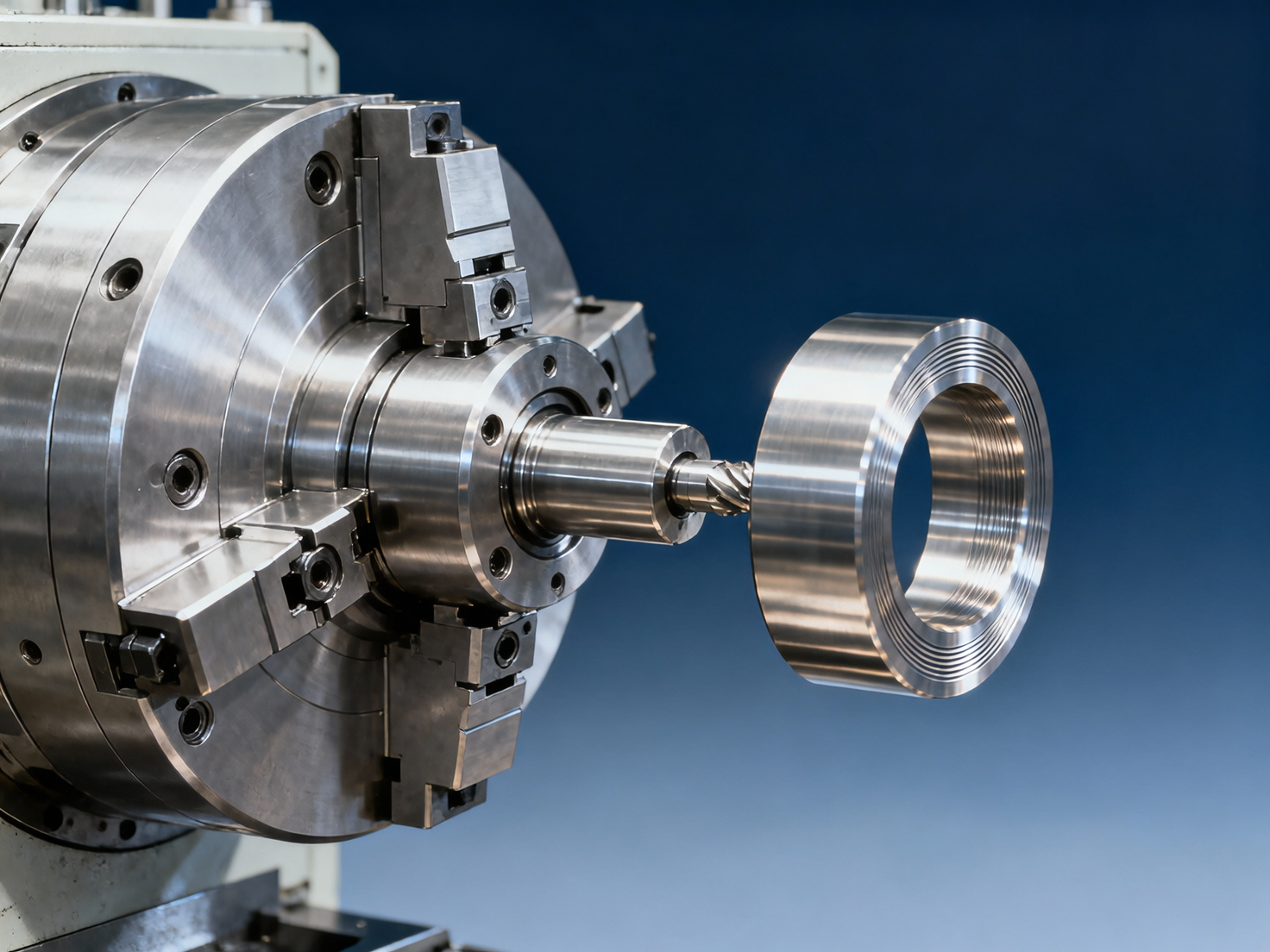
CNC metalworking shops worldwide are rethinking fixture strategies—quietly phasing out universal chucks in favor of smarter, more repeatable solutions. As industrial CNC systems evolve toward higher precision lathe performance and automated production efficiency, demand for specialized, quick-change tooling is surging. This shift reflects broader trends in CNC industrial machines: tighter tolerances in industrial turning, faster setup times for CNC metal cutting, and seamless integration with automated industrial workflows. For procurement teams, operators, and decision-makers alike, understanding why this change matters—and what alternatives deliver better ROI in CNC metal lathe and industrial machining equipment—is critical to staying competitive in today’s precision equipment landscape.
Why Universal Chucks No Longer Meet Modern CNC Lathe Demands
Universal chucks—once the default for general-purpose turning—typically offer ±0.003" (±0.076 mm) runout tolerance and require 8–12 minutes per setup when switching between part families. In contrast, modern high-mix, low-volume production demands sub-0.001" repeatability and <90-second changeover cycles. As automotive and aerospace suppliers adopt ISO 2768-mK tolerancing and implement lights-out machining, universal chucks introduce unacceptable variability in concentricity, surface finish consistency, and thermal stability during extended unattended runs.
A 2023 benchmark study across 47 Tier-1 contract manufacturers showed that shops relying on universal chucks experienced 23% more first-article rework due to clamping-induced distortion—especially on thin-walled aluminum housings and titanium impellers. These parts often require ≤0.0005" total indicated runout (TIR), a threshold impossible to guarantee without kinematic or hydraulic self-centering mechanisms built into the chuck body.
Moreover, universal chucks lack native digital interfaces. They cannot report jaw position, clamping force, or thermal drift to MES or CNC controllers—creating blind spots in predictive maintenance and SPC tracking. With Industry 4.0 adoption now exceeding 68% among German and Japanese machine tool users (VDW & JMTBA 2024 data), analog fixturing becomes a bottleneck—not just physically, but data-logistically.
The table above illustrates how modular alternatives outperform universal chucks across three measurable dimensions critical to precision CNC lathe operations: geometric accuracy, throughput velocity, and process traceability. For shops running multi-shift or unmanned cells, even a 1.5-minute reduction per setup translates to 18 extra productive hours per week—equivalent to adding half a full-time operator without labor cost.
Key Drivers Behind the Shift to Specialized Fixturing
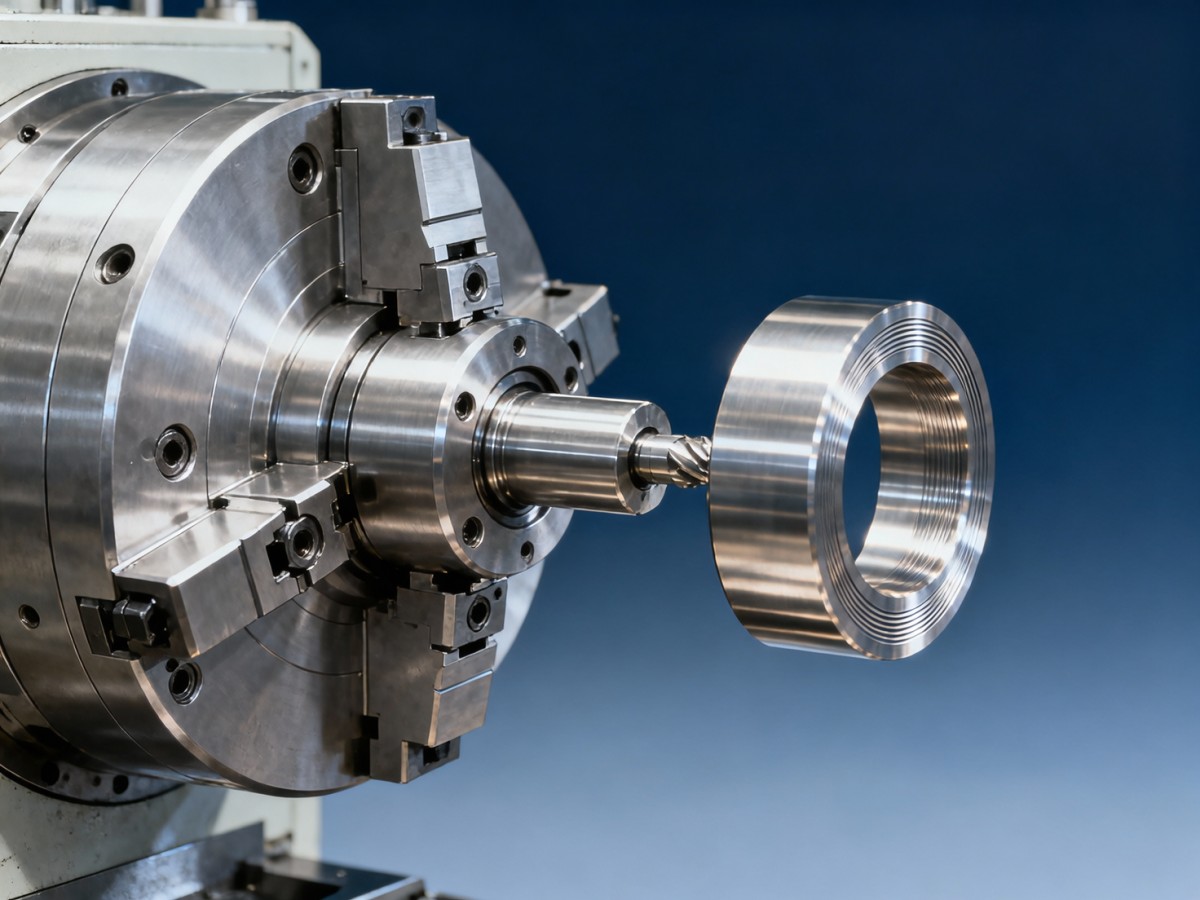
Three interlocking forces are accelerating adoption: automation integration requirements, tightening GD&T specifications, and total cost of ownership (TCO) recalculations. Shops deploying robotic part loading now require chuck interfaces compliant with ISO 9409-1-150 flanges and equipped with pneumatic/hydraulic quick-disconnect couplings—features absent from legacy universal designs.
Simultaneously, OEMs increasingly specify true position tolerances under ±0.0015" for mating surfaces on engine blocks and gearboxes. Achieving such control demands fixture-to-part contact points engineered for minimal elastic deformation—something universal chucks’ generic jaw geometry cannot guarantee across diverse diameters and materials.
From a TCO perspective, universal chucks appear economical upfront ($1,200–$3,500), but incur hidden costs: 3–5 hours annually spent calibrating jaws, $850–$2,200 in scrapped first articles per quarter, and $4,000+ in unplanned downtime from jaw slippage during high-G-force finishing passes. Modular systems amortize over 3–5 years with documented ROI within 14 months for shops processing >200 unique part numbers annually.
- Automated cell compatibility (e.g., ISO 9409-1-150 mounting + integrated I/O)
- GD&T compliance for true position, runout, and flatness at ±0.001" level
- Reduced non-value-added time: 70% less manual jaw adjustment
- Traceable clamping parameters logged via OPC UA or MTConnect
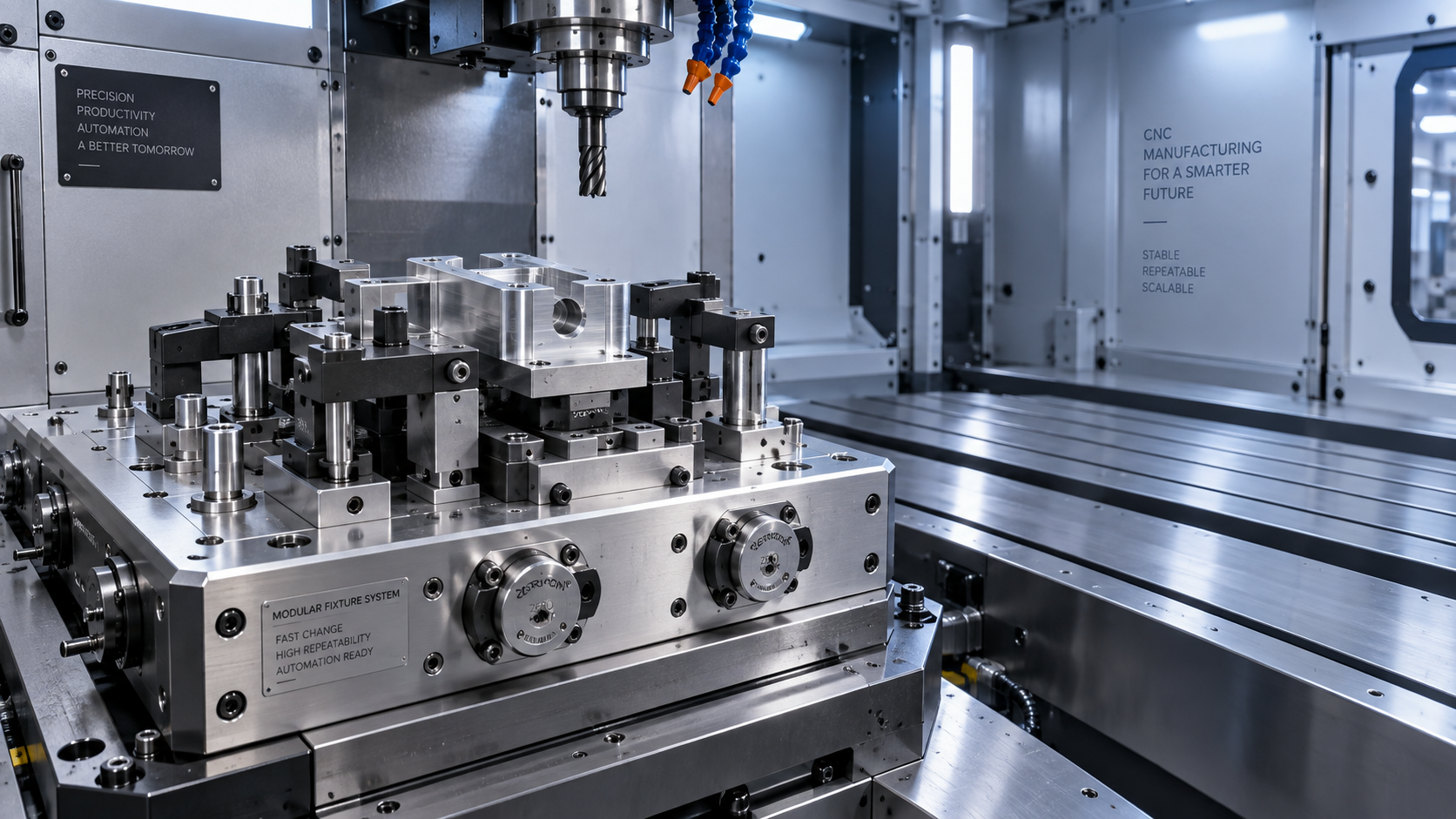
- Scalable modularity: same base chuck accepts collets, soft jaws, or custom inserts
How Procurement Teams Evaluate Next-Generation Chucking Solutions
Procurement professionals no longer compare chucks solely on price or brand reputation. Today’s evaluation framework includes six weighted criteria:
- Interface Standardization: Does it conform to DIN 6347-B or ISO 25825-2 for interchangeability across lathes?
- Digital Readiness: Is clamping force, temperature, and jaw status accessible via standard industrial protocols?
- Tool Change Cycle Time: Verified average under real-world conditions—not lab specs—with 3 different part families.
- Maintenance Interval: Minimum 12 months or 5,000 cycles before scheduled service (per ISO 13849-1 Category 3 validation).
- Material Compatibility Range: Proven performance on aluminum (6061-T6), stainless (17-4PH), and Inconel 718 without galling.
- Service Support SLA: On-site technician response within 24 hours for critical failures in North America/EU/APAC zones.
This procurement matrix ensures decisions align with both shop-floor realities and enterprise-wide digital transformation goals. It shifts focus from “what fits the spindle” to “what enables our next production milestone.”
Implementation Roadmap for Machine Shops Transitioning Away from Universal Chucks
Successful migration follows a phased 3-stage approach: assessment, pilot, and scale. Stage 1 involves mapping current chuck usage across 12 weeks—tracking part families, cycle times, scrap rates, and operator intervention frequency. Stage 2 deploys one validated solution on a single lathe for 4 weeks, measuring TIR stability, setup variance, and MES data fidelity. Stage 3 rolls out approved configurations across all compatible machines, supported by certified training (minimum 8 hours per operator).
Critical success factors include cross-functional alignment: CNC programmers must update G-code for new jaw offsets; maintenance teams need updated lubrication schedules (e.g., every 200 operating hours vs. universal chuck’s 1,000-hour interval); and quality engineers must revise SPC control plans to include clamping force as a monitored variable.
Shops reporting fastest ROI (median: 11.3 months) used standardized jaw adapters—allowing existing soft-jaw blanks to be reused on new modular bases. This reduced initial investment by 32% while maintaining full backward compatibility.
Common Pitfalls to Avoid
- Assuming all “hydraulic” chucks deliver equal repeatability—verify actual TIR under load, not just static specs
- Overlooking coolant compatibility: some modular seals degrade rapidly in high-chloride coolants used for cast iron
- Failing to validate jaw material hardness against workpiece tensile strength—soft jaws may deform on hardened steels >45 HRC
- Skipping MES integration testing until full deployment, causing delayed OEE reporting
Conclusion: Precision Fixturing Is Now a Core Production Enabler
The quiet departure from universal chucks signals more than a hardware upgrade—it reflects a fundamental recalibration of what constitutes “core infrastructure” in modern CNC metalworking. Fixturing is no longer a passive support component; it’s an active participant in dimensional control, data generation, and workflow orchestration. For operators, it means fewer manual interventions and more predictable results. For procurement teams, it means evaluating vendors on interoperability, service responsiveness, and lifecycle transparency—not just catalog price. For decision-makers, it represents a tangible lever for improving OEE, reducing scrap, and enabling lights-out operation.
If your shop processes ≥150 unique part numbers annually—or operates ≥2 shifts with robotic loading—you’re likely already experiencing the limitations of universal chucks. The transition isn’t about replacing hardware; it’s about unlocking higher levels of precision, predictability, and productivity.
Get a free fixture optimization assessment—including TIR benchmarking, setup time analysis, and ROI projection tailored to your current lathe fleet and part mix. Contact our CNC precision engineering team today to schedule your technical consultation.
Recommended for You
 Zero-Point Clamping or Modular Fixtures? Choosing a Faster CNC Changeover SystemCNC Machining Technology Center
 How to Cut CNC Fixture Changeover Time Without Sacrificing Part AccuracyCNC Machining Technology Center
 When Does CNC Turning Pay Off? A Break-Even Guide by Annual Part VolumeMachine Tool Industry Editorial Team
 Machine Tool Standards by Country: What Importers Must Verify Before PurchaseManufacturing Policy Research Center
 CNC Lathe Quick Installation Guide: Alignment Checks Before First Production RunCNC Machining Technology Center
 How to Select a CNC Lathe for Small Parts Without Sacrificing Accuracy or Cycle TimeCNC Machining Technology Center

Aris Katos
Future of Carbide Coatings
15+ years in precision manufacturing systems. Specialized in high-speed milling and aerospace grade alloy processing.
▶
KATS Expands CE Recognition for CNC Clamping SystemsMachine Tool Industry Editorial Team▶
How to Evaluate a Tooling System for Precision Machining: 7 Key Specs That MatterMachine Tool Industry Editorial Team▶
ITC Opens 337 Probe Into Chinese CNC Tool CoatingsMachine Tool Industry Editorial Team▶
Vietnam Ends 5% Tariff on Chinese CNC Tool ImportsMachine Tool Industry Editorial Team▶
Japan Ends Import License Rule for Chinese Cutting ToolsMachine Tool Industry Editorial Team
Mastering 5-Axis Workholding Strategies
Join our technical panel on Nov 15th to learn about reducing vibrations in thin-wall components.

Providing you with integrated sanding solutions
Before-sales and after-sales services
Comprehensive technical support