• Global CNC market projected to reach $128B by 2028 • New EU trade regulations for precision tooling components • Aerospace deman
NYSE: CNC +1.2%LME: STEEL -0.4%

Turkey Eliminates Import Tariffs on Urea, Boosting CNC Agricultural Equipment Exports

Turkey’s decision to eliminate import tariffs on urea and other key fertilizers—effective 1 June 2026—signals a structural shift in agricultural input costs. This policy change is expected to accelerate demand for modern farm machinery and precision-engineered components, particularly among exporters of CNC-machined agricultural equipment. Stakeholders in tractor manufacturing, smart seeding systems, and custom-fabricated农机 parts should monitor downstream procurement trends closely.
Event Overview
Effective 1 June 2026, the Turkish government abolished import tariffs on urea, diammonium phosphate (DAP), and other major fertilizer products. The stated objective is to reduce agricultural production costs. No further details regarding tariff schedules, implementation mechanisms, or duration have been publicly released.
Industries Affected
Direct Exporters of CNC-Machined Agricultural Components
These include manufacturers of high-wear gear housing casings and precision hydraulic valve blocks. With lower input costs for Turkish farmers, investment capacity in mechanization upgrades increases—potentially raising order volumes for such precision-machined parts. Impact manifests primarily through higher tender frequency and tighter delivery windows for export contracts.
Tractor and Smart Seeding Equipment Suppliers
Firms exporting tractors and intelligent planting systems to Turkey may see accelerated purchasing cycles in H2 2026. The tariff removal lowers overall farming cost structures, improving ROI calculations for capital-intensive equipment—thus supporting faster fleet renewal decisions by Turkish agribusinesses and cooperatives.
International OEMs with Local Assembly or Aftermarket Networks
Companies maintaining Turkish distribution hubs or service centers may experience increased demand for spare parts and retrofit kits—especially those requiring CNC-machined interfaces or calibration-critical components. Inventory planning and local certification timelines become more consequential.
Key Considerations and Practical Responses
Monitor official implementation notices from Turkish customs and the Ministry of Agriculture
The tariff elimination applies only to specified fertilizer categories; no extension to related agricultural inputs (e.g., pesticides, micronutrients) has been confirmed. Exporters must verify Harmonized System (HS) code alignment and confirm eligibility before adjusting commercial terms.
Track procurement patterns for high-precision CNC components in Turkish tenders
Public procurement portals—including those of provincial agricultural directorates and state-owned farms—are likely to reflect increased bids for gear housings and hydraulic control units starting Q3 2026. Early access to tender documentation can inform quoting and lead-time planning.
Distinguish between policy intent and actual import volume growth
While a 20%+ increase in import demand for specified equipment is projected, this reflects an estimate—not a guaranteed outcome. Actual uptake depends on concurrent factors including credit availability for Turkish farmers, exchange rate stability, and domestic dealer inventory levels.
Prepare technical documentation for Turkish regulatory compliance
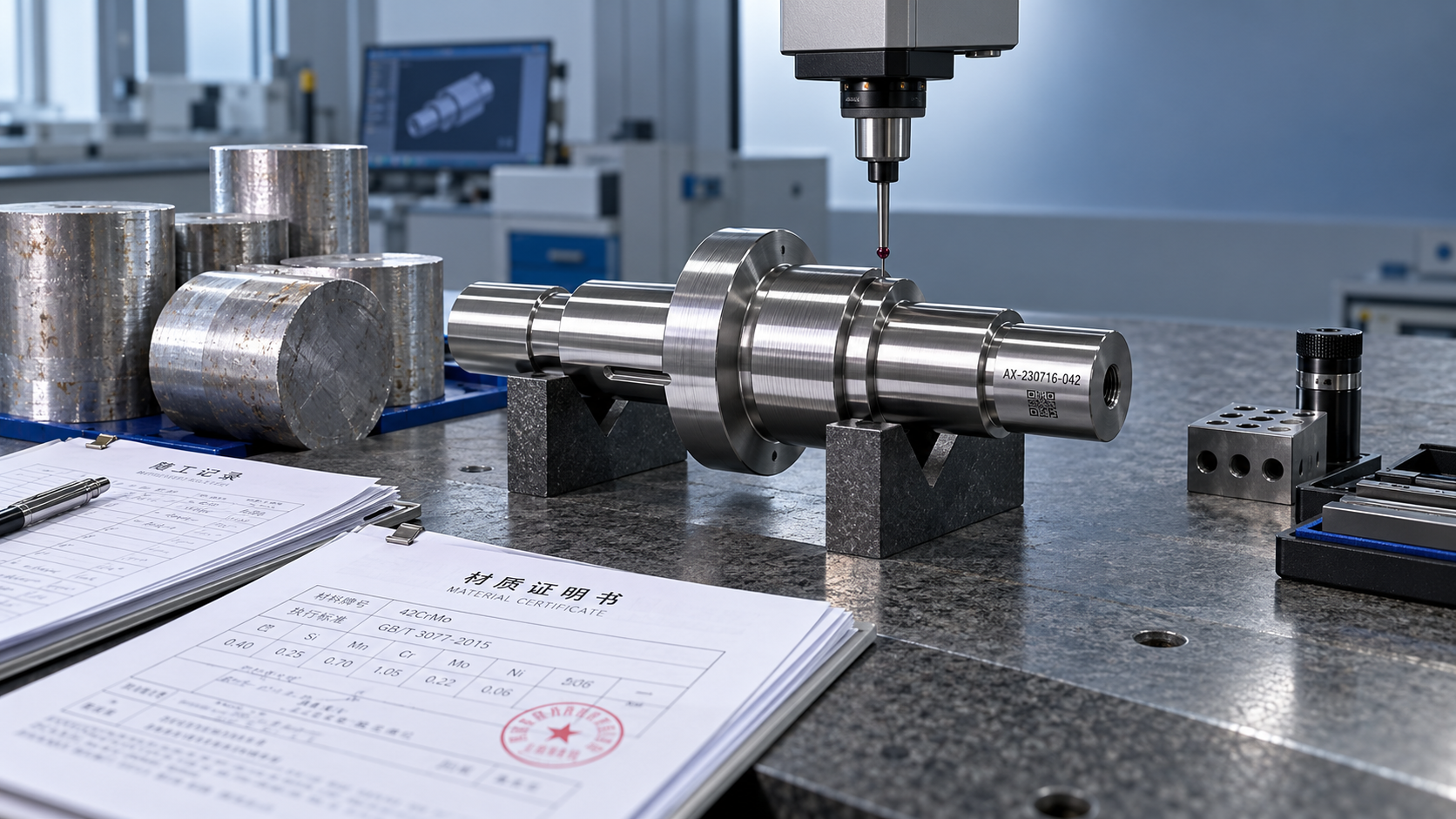
CNC-machined parts entering Turkey for integration into agricultural machinery must meet CE-equivalent conformity requirements under the Turkish Product Safety Law. Pre-certification of materials and dimensional tolerances—especially for wear-prone components—reduces clearance delays at port.
Editorial Observation / Industry Perspective
Observably, this policy functions less as an immediate market expansion trigger and more as a structural enabler: it removes a cost barrier that previously constrained mechanization investment decisions. Analysis shows the impact will unfold unevenly—strongest where Turkish farms operate at scale and rely on imported equipment for yield optimization. From an industry standpoint, the move signals growing policy alignment between input affordability and equipment modernization—suggesting longer-term opportunities beyond the 2026–2027 window. Current attention should focus on procurement timing shifts rather than wholesale market entry assumptions.
This development underscores how fiscal adjustments in upstream agricultural inputs can propagate downstream to precision manufacturing segments—particularly those tied to CNC-enabled durability and repeatability. It is not yet a realized demand surge, but rather a calibrated signal that procurement conditions are improving for specific, technically demanding agricultural hardware.
Information Source: Official announcement by the Republic of Turkey Ministry of Trade, effective 1 June 2026. Note: Projected 20%+ import volume increase is cited in the original announcement as an internal government forecast; actual figures remain subject to verification via Turkish Statistical Institute (TÜİK) trade data releases, expected quarterly beginning Q3 2026.
Recommended for You
![]() Mitsubishi Electric Announces Physical AI System Linking Humanoid Robots and CNC MachinesMachine Tool Industry Editorial Team
Mitsubishi Electric Announces Physical AI System Linking Humanoid Robots and CNC MachinesMachine Tool Industry Editorial Team Precision Machining for Defense: Supplier Quality and Traceability ChecksManufacturing Market Research Center
![]() Nidec Machine Tool Launches MVR-5X Five-Axis Gantry MachineMachine Tool Industry Editorial Team
Nidec Machine Tool Launches MVR-5X Five-Axis Gantry MachineMachine Tool Industry Editorial Team Choosing a Precision Disc Parts Manufacturer in China: Tolerances and Quality ChecksManufacturing Market Research Center
![]() Siemens Executive Says AI Could Raise Factory Automation to 80%Manufacturing Market Research Center
Siemens Executive Says AI Could Raise Factory Automation to 80%Manufacturing Market Research Center Choosing Automated Machine Tools for High-Mix, Low-Volume ProductionMachine Tool Industry Editorial Team

Aris Katos
Future of Carbide Coatings
15+ years in precision manufacturing systems. Specialized in high-speed milling and aerospace grade alloy processing.
▶
Mitsubishi Electric Announces Physical AI System Linking Humanoid Robots and CNC MachinesMachine Tool Industry Editorial Team▶
Precision Machining for Defense: Supplier Quality and Traceability ChecksManufacturing Market Research Center▶
Nidec Machine Tool Launches MVR-5X Five-Axis Gantry MachineMachine Tool Industry Editorial Team▶
Choosing a Precision Disc Parts Manufacturer in China: Tolerances and Quality ChecksManufacturing Market Research Center▶
Siemens Executive Says AI Could Raise Factory Automation to 80%Manufacturing Market Research Center
▶
Mastering 5-Axis Workholding Strategies
Join our technical panel on Nov 15th to learn about reducing vibrations in thin-wall components.

Providing you with integrated sanding solutions
Before-sales and after-sales services
Comprehensive technical support