• Global CNC market projected to reach $128B by 2028 • New EU trade regulations for precision tooling components • Aerospace deman
NYSE: CNC +1.2%LME: STEEL -0.4%

Where Industrial Robotics for Warehouse Automation Delivers the Fastest ROI
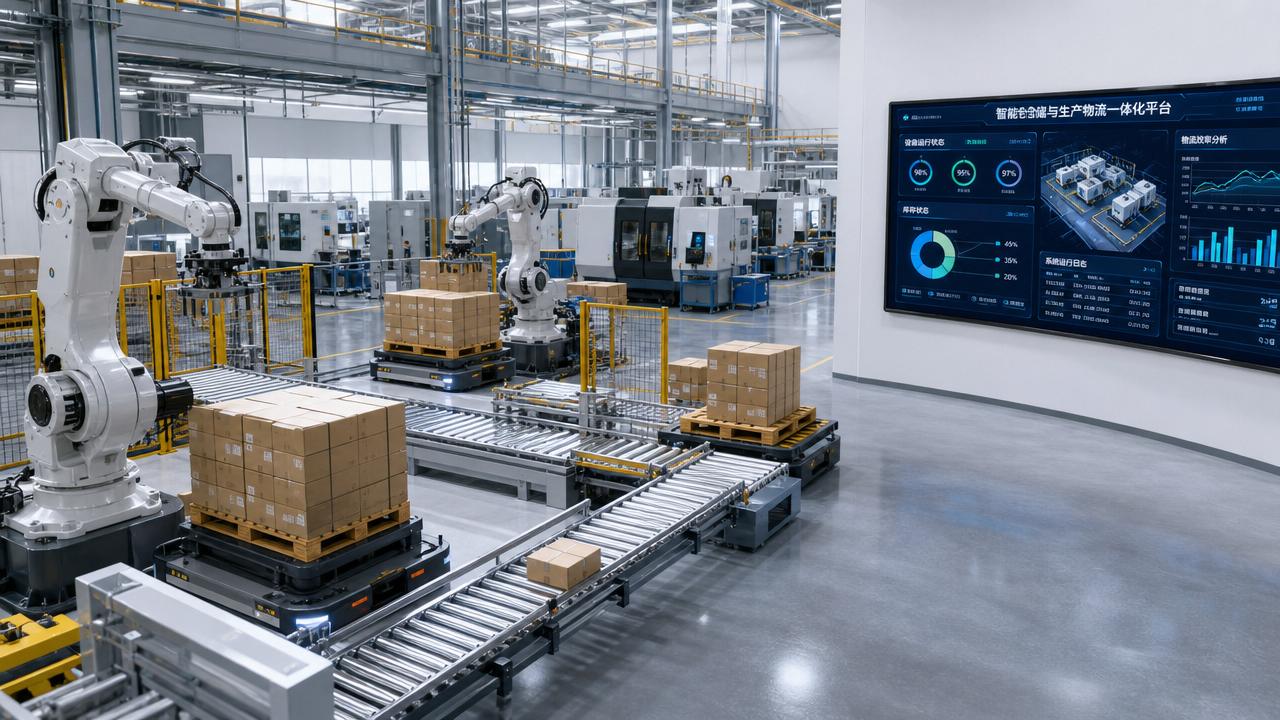
Where Industrial Robotics for Warehouse Automation Delivers the Fastest ROI
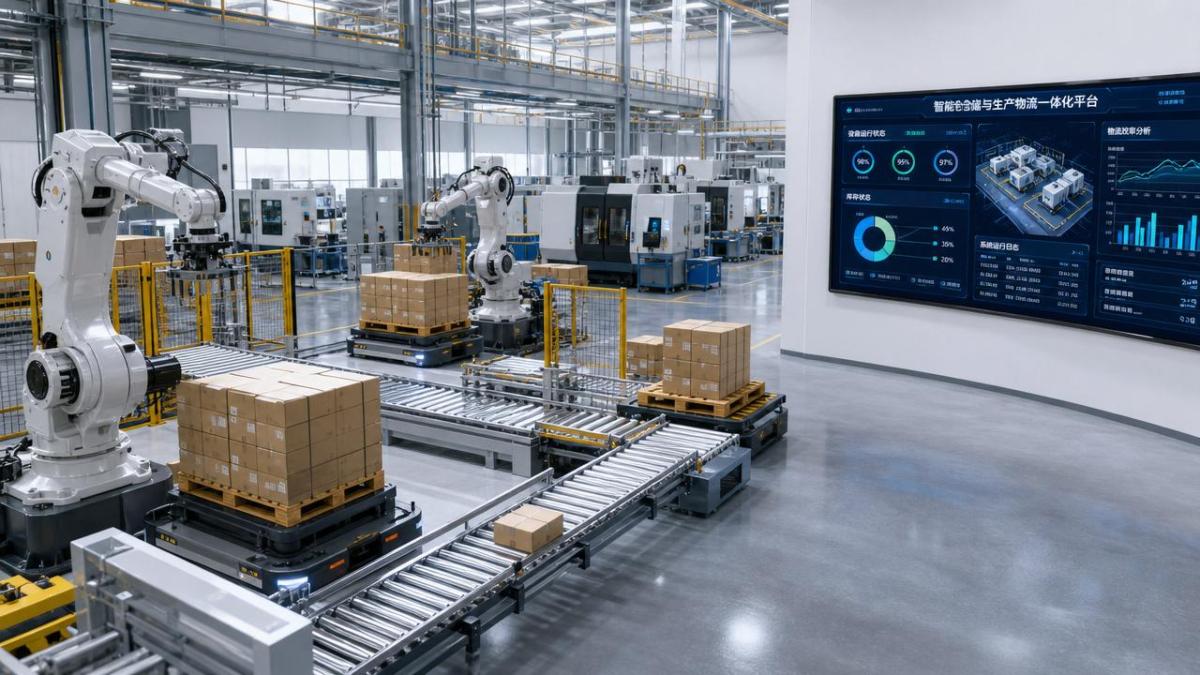
For many manufacturers, warehouse performance now shapes overall competitiveness. Speed, accuracy, and labor stability directly affect output, delivery promises, and customer confidence.
That is why Industrial Robotics for Warehouse Automation has moved from an experimental upgrade to a practical investment decision.
The strongest returns usually do not come from automating everything at once. They come from fixing repetitive, high-volume bottlenecks first.
In precision manufacturing, this matters even more. CNC machining, machine tools, cutting systems, and automated lines all depend on predictable material flow.
When inbound parts, finished components, pallets, and work-in-process move inefficiently, even advanced production cells lose value.
So the core question is simple: where does Industrial Robotics for Warehouse Automation pay back fastest, with the lowest execution risk?
Why ROI appears faster in warehouse robotics than many expect
A warehouse contains many tasks that are repetitive, measurable, and easy to benchmark. That makes automation gains easier to calculate.
Unlike broad factory transformation programs, warehouse robotics projects can start with one workflow, one shift, or one product family.
This phased model reduces capital risk. It also helps operations teams prove value before expanding into adjacent processes.
In real operations, ROI comes from several levers working together:
- Lower direct labor dependence in hard-to-staff tasks
- Higher throughput during peak periods
- Fewer picking, sorting, and palletizing errors
- Better equipment utilization across shifts
- Improved safety in lifting and repetitive handling
- More reliable data for planning and traceability
These benefits are especially visible in industries that already value precision, uptime, and standardized workflows.
That includes automotive parts, aerospace components, electronics, energy equipment, and CNC-driven production environments.
The warehouse tasks where Industrial Robotics for Warehouse Automation pays back fastest
The fastest ROI usually appears where volume is high, variability is manageable, and manual handling adds little strategic value.
1. Palletizing and depalletizing
This is often the easiest entry point. The movement is repetitive, the cycle is predictable, and labor fatigue is a constant issue.
Robotic palletizing improves stacking consistency, reduces product damage, and keeps output stable during long shifts.
For machine tool and parts manufacturers, this matters when shipping boxed components, tooling sets, castings, and finished assemblies.
2. Piece picking and order consolidation
Picking has a direct connection to service quality. Errors create returns, delays, rework, and internal confusion.
Industrial Robotics for Warehouse Automation supports faster picking in stable SKU ranges, especially when paired with vision and warehouse software.
The strongest case appears when fast-moving items dominate daily order volume.
3. Sorting and routing
Sorting becomes expensive when order lines rise and labor coordination becomes harder.
Robotic sorting improves accuracy and timing. It also helps standardize outbound flow for multi-channel distribution.
That is useful for facilities serving distributors, OEMs, and service-part channels at the same time.
4. Machine tending between warehouse and production
This is where warehouse automation connects directly with CNC productivity.
Robots can move blanks, trays, bins, and finished parts between storage zones and machining cells with better timing.
When machine waiting time drops, the ROI calculation becomes much stronger than labor savings alone.
How to identify the best ROI scenario in your own operation
Not every workflow deserves immediate automation. The best candidates show a clear mix of pain, repetition, and measurable business value.
A simple evaluation framework can keep decisions practical.
- Map labor-heavy tasks by shift, zone, and product type.
- Measure errors, downtime, travel time, and throughput loss.
- Separate stable workflows from highly irregular ones.
- Check whether data systems can support robotic execution.
- Estimate gains from utilization, not labor alone.
This approach often reveals hidden priorities. A visually impressive process may not be the best financial starting point.
By contrast, a simple handling task may deliver faster payback because it runs every hour of every day.
What a strong ROI model should include
A credible business case for Industrial Robotics for Warehouse Automation should be grounded in operating reality.
Too many projects are delayed because teams focus only on purchase price and ignore system-wide gains.
In sectors tied to CNC machining and precision manufacturing, utilization often becomes the most overlooked value driver.
If robotics keeps parts flowing into machining centers on time, output rises without adding equivalent labor pressure.
Common mistakes that slow down warehouse automation returns
Fast ROI is possible, but only when the project scope stays disciplined.
Several mistakes appear again and again in Industrial Robotics for Warehouse Automation projects.
- Choosing a process with high variability and weak data visibility
- Automating around poor layout instead of fixing flow first
- Ignoring software integration with WMS, ERP, or MES systems
- Underestimating change management for supervisors and operators
- Expecting one robot cell to solve a network-wide problem
A better approach is to target one valuable flow, stabilize it, and build a repeatable deployment model.
That model scales much better across multiple sites, especially for global manufacturing groups.
Why this matters now for CNC and precision manufacturing businesses
From a market perspective, the pressure is growing from both sides. Customers want faster delivery, while operations face tighter labor conditions.
At the same time, machine tool builders and component manufacturers are investing in smarter, more connected production systems.
This means warehouse performance can no longer sit outside automation strategy.
Industrial Robotics for Warehouse Automation now supports a broader shift toward digital traceability, flexible manufacturing, and resilient supply planning.
For companies managing tools, parts, semifinished goods, and finished assemblies, this creates a more synchronized operation from storage to shipment.
A practical path forward
The fastest win rarely starts with a full smart warehouse redesign.
It usually starts with one repeatable workflow where Industrial Robotics for Warehouse Automation can reduce labor strain and unlock steady throughput gains.
For many facilities, that means palletizing, picking, sorting, or machine-connected material handling.
The key is to evaluate each scenario through real operating data, not assumptions.
When the workflow is stable, the metrics are clear, and integration is planned early, returns can appear faster than expected.
For manufacturers building the next stage of precision, flexibility, and global competitiveness, that is a strong place to act now.
NEXT ARTICLE
Recommended for You
![]() BIS Widens CNC Software License Exception for China University ProjectsManufacturing Policy Research Center
BIS Widens CNC Software License Exception for China University ProjectsManufacturing Policy Research Center![]() Yangshan Launches CNC Cold-Chain Export SlotsManufacturing Market Research Center
Yangshan Launches CNC Cold-Chain Export SlotsManufacturing Market Research Center![]() Vietnam, Indonesia Open CNC Q3 Order Window EarlyMachine Tool Industry Editorial Team
Vietnam, Indonesia Open CNC Q3 Order Window EarlyMachine Tool Industry Editorial Team![]() EU Sets Nickel Release Limit for CNC Cutting FluidsManufacturing Policy Research Center
EU Sets Nickel Release Limit for CNC Cutting FluidsManufacturing Policy Research Center![]() Russia Lowers Tariffs on Chinese CNC MachinesGlobal Machine Tool Trade Research Center
Russia Lowers Tariffs on Chinese CNC MachinesGlobal Machine Tool Trade Research Center Where Industrial Robotics for Warehouse Automation Delivers the Fastest ROICNC Machining Technology Center


Aris Katos
Future of Carbide Coatings
15+ years in precision manufacturing systems. Specialized in high-speed milling and aerospace grade alloy processing.
▶
Where Industrial Robotics for Warehouse Automation Delivers the Fastest ROICNC Machining Technology Center▶
Automation Line for Automotive Assembly: Key Equipment and Layout FactorsCNC Machining Technology Center▶
Industrial Automation projects fail when handoff is poorly plannedCNC Machining Technology Center▶
Industrial Robotics adoption problems hidden in early planningCNC Machining Technology Center▶
Industrial Automation projects that underperform after launchCNC Machining Technology Center
Mastering 5-Axis Workholding Strategies
Join our technical panel on Nov 15th to learn about reducing vibrations in thin-wall components.

Providing you with integrated sanding solutions
Before-sales and after-sales services
Comprehensive technical support