• Global CNC market projected to reach $128B by 2028 • New EU trade regulations for precision tooling components • Aerospace deman
NYSE: CNC +1.2%LME: STEEL -0.4%

Automation Line for Automotive Assembly: Key Equipment and Layout Factors
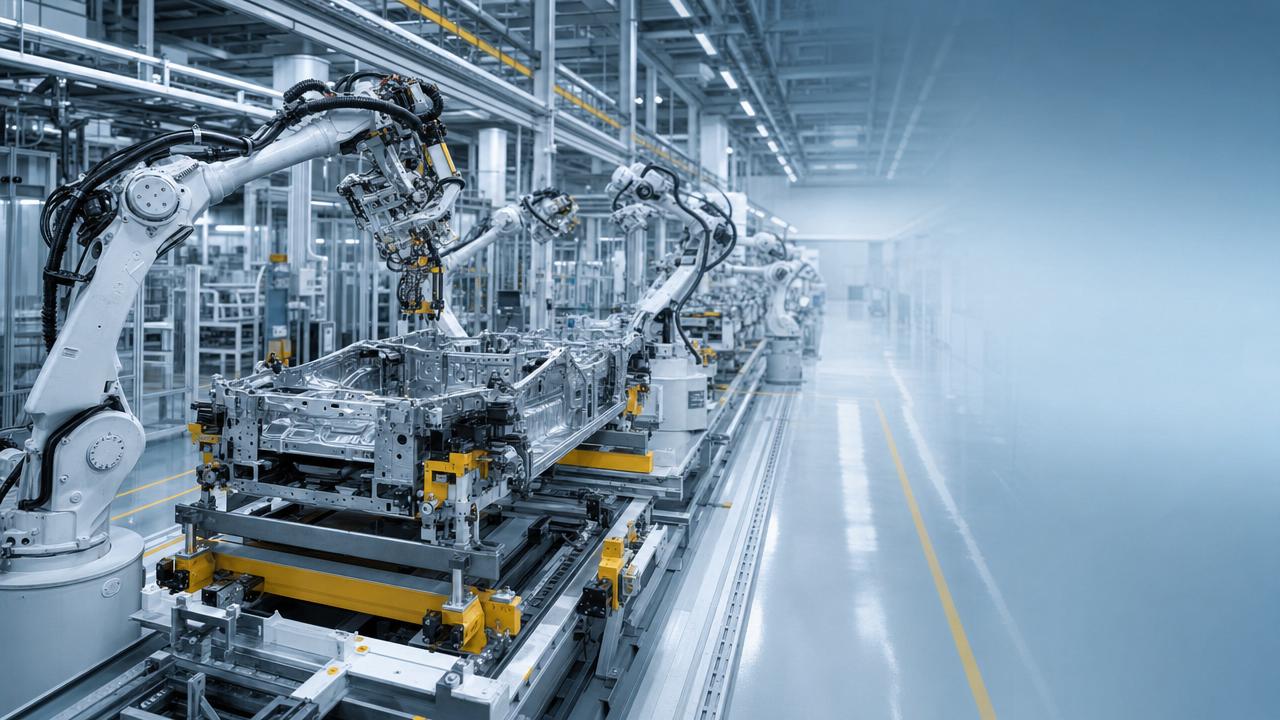
An Automation Line for Automotive Assembly is no longer just a collection of conveyors, robots, and fixtures.
It is a strategic production system that determines throughput, quality consistency, labor efficiency, and project ROI.
For project managers and engineering leaders, the core question is not whether automation is valuable.
The real question is how to configure equipment and layout so the line delivers stable output without locking the plant into inflexible processes.
A successful project balances takt time, capital investment, maintainability, quality control, and future model changes from the earliest planning stage.
What Project Leaders Should Decide Before Equipment Selection
Before choosing robots, conveyors, or tightening systems, project leaders need a clear production strategy and measurable operating targets.
The most important inputs include planned annual volume, model mix, takt time, quality requirements, available floor space, and labor strategy.
If these parameters are unclear, suppliers may propose technically impressive equipment that does not match real production conditions.
For an Automation Line for Automotive Assembly, the first decision is often the level of automation appropriate for each process.
Full automation can reduce manual variation, but it requires higher investment, stronger maintenance capability, and more disciplined process control.
Hybrid automation may be more practical for stations involving complex judgment, frequent model variation, or low to medium production volume.
Project managers should therefore evaluate automation by business impact, not by the appearance of technological advancement.
A useful planning approach is to classify each process by risk, repeatability, cycle time pressure, and ergonomic burden.
Processes with high quality risk, heavy labor load, or strict torque control are stronger candidates for automation.
Processes with frequent engineering changes may require flexible fixtures, modular tooling, and operator-assisted stations instead of fixed automation.
Key Equipment in an Automotive Assembly Automation Line
The equipment structure of an automotive assembly line depends on product type, process depth, and production volume.
However, most projects share several core equipment categories that directly affect performance, uptime, and quality consistency.
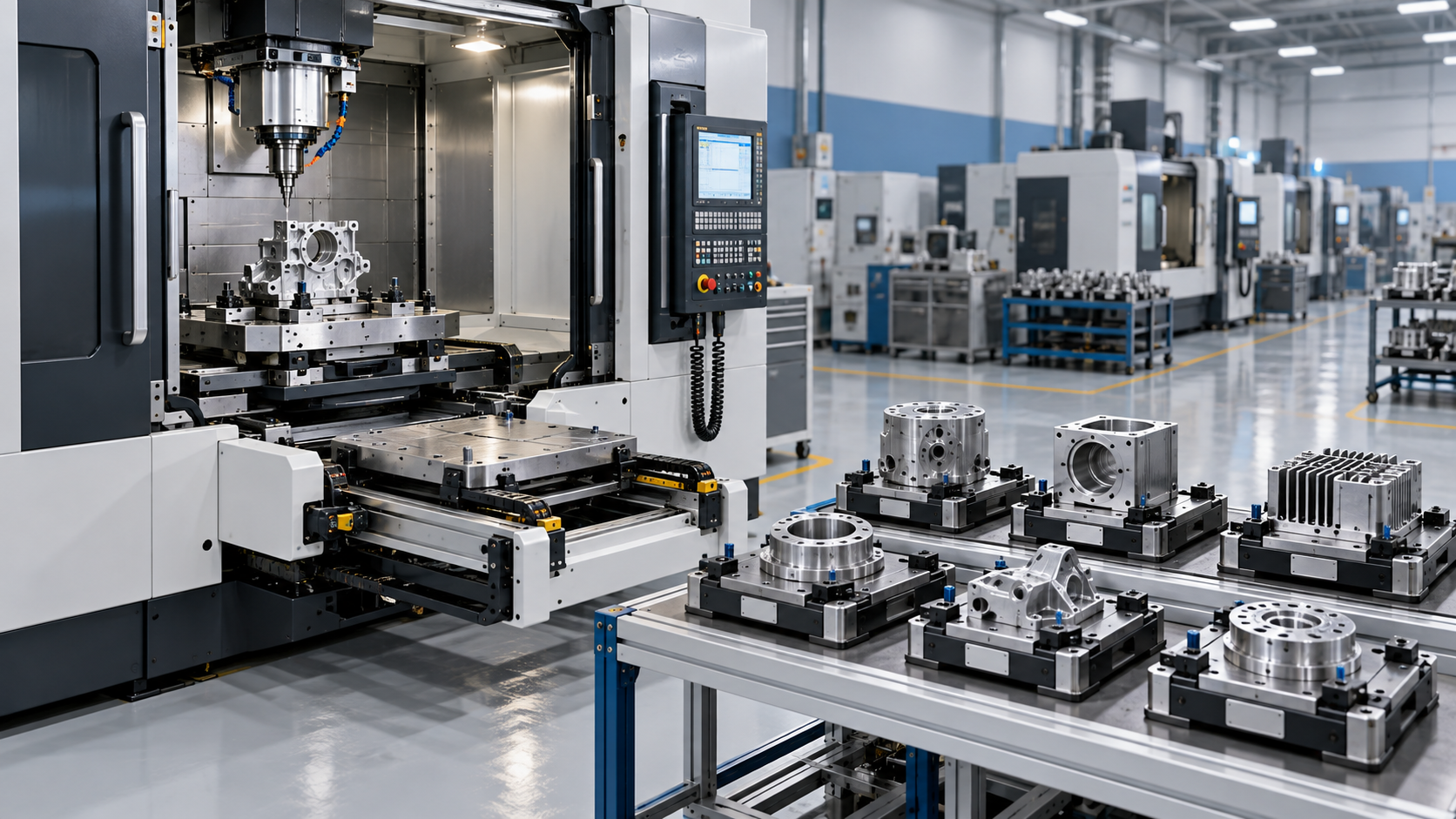
Conveying systems form the backbone of the line, moving bodies, chassis, modules, or subassemblies between stations at controlled intervals.
Common options include roller conveyors, skid conveyors, pallet conveyors, friction drive systems, AGVs, AMRs, and overhead conveyors.
The right choice depends on payload, positioning accuracy, route complexity, takt time, and required flexibility for future changes.
Industrial robots are widely used for welding, adhesive dispensing, material handling, fastening, inspection, and component loading.
Robot selection should consider reach, payload, repeatability, cycle time, end-effector design, service access, and programming complexity.
For body-in-white or structural assembly, robotic welding cells and precision fixtures often become the quality-critical equipment group.
For final assembly, tightening tools, dispensing systems, vision guidance, lift assists, and ergonomic devices may bring greater operational value.
Fixtures and locating systems are sometimes underestimated, yet they determine dimensional accuracy, repeatability, and ease of model changeover.
A strong fixture concept should support reliable clamping, fast maintenance, sensor feedback, and simple replacement of wear components.
Automated fastening systems are essential where torque, angle, sequence, and traceability must be controlled for safety-related components.
Modern tightening systems can record data for every joint, helping teams identify process drift and support warranty analysis.
Vision systems and inspection equipment provide inline quality confirmation, reducing dependence on end-of-line rework and manual inspection.
They may check part presence, orientation, weld quality, adhesive bead continuity, label accuracy, or dimensional conformity.
Control systems connect the entire line, including PLCs, HMIs, safety controllers, sensors, drives, robots, and manufacturing execution systems.
For project leaders, control architecture should be assessed for scalability, cybersecurity, diagnostics, data transparency, and supplier support.
Layout Factors That Determine Throughput and Stability
Layout planning is where engineering decisions become business results, because a poor layout creates delays that equipment upgrades cannot fully solve.
The first layout factor is process sequence, which should minimize unnecessary handling, reverse flow, and repeated positioning operations.
A smooth sequence reduces cycle losses, improves safety, and makes bottlenecks easier to identify during production ramp-up.
The second factor is takt time balance across stations, especially when manual and automated processes operate together.
If one station regularly exceeds target cycle time, downstream equipment waits and overall line efficiency declines quickly.
Project managers should require simulation or detailed cycle analysis before freezing layout and equipment specifications.
The third factor is buffer strategy, which influences how the line responds to short stoppages and station-level instability.
Too little buffering makes the entire line vulnerable, while excessive buffering consumes space and hides process problems.
The best buffer design reflects equipment reliability, repair time, quality inspection points, and the cost of work-in-process inventory.
Accessibility is another critical layout issue, particularly for maintenance technicians, quality engineers, and material replenishment teams.
Equipment should not be packed so tightly that routine service requires long shutdowns or unsafe working conditions.
Good layouts provide clear maintenance doors, robot recovery zones, tool change access, spare part routes, and safe walking paths.
Material flow should be planned together with assembly flow, not added after the main equipment arrangement is complete.
Part presentation, kitting areas, line-side storage, container return routes, and forklift or AMR movement all affect daily efficiency.
For high-mix production, modular layouts and flexible logistics can be more valuable than maximum equipment density.
How to Evaluate ROI Beyond the Purchase Price
The investment case for an Automation Line for Automotive Assembly should include more than initial equipment cost.
A realistic ROI model should include labor savings, quality improvement, reduced rework, higher throughput, energy use, maintenance cost, and scrap reduction.
Project leaders also need to consider ramp-up speed, training requirements, spare parts, software licenses, and long-term supplier service.
A low-cost line may become expensive if it creates frequent stoppages, difficult troubleshooting, or excessive dependency on external experts.
Conversely, a higher initial investment may be justified when it improves uptime, shortens changeovers, and protects product quality.
The strongest business case connects automation decisions to specific operating metrics rather than broad claims about modernization.
Useful metrics include overall equipment effectiveness, first-pass yield, direct labor hours per unit, downtime frequency, and mean time to repair.
For automotive projects, warranty exposure and safety-critical assembly data may also carry significant financial value.
Traceability can help manufacturers respond faster to quality issues and limit the scope of recalls when problems occur.
Project managers should ask suppliers to quantify expected gains, explain assumptions, and provide references from similar applications.
Designing for Flexibility and Future Model Changes
Automotive product lifecycles are shortening, and assembly lines must handle new variants without excessive reconstruction.
Flexibility should be designed into fixtures, controls, conveyors, tooling, and software from the beginning of the project.
Modular tooling allows teams to replace model-specific elements without rebuilding the entire station or changing the base structure.
Programmable robots and servo-driven devices can support variant changes more easily than purely mechanical dedicated systems.
However, flexibility should not be unlimited, because excessive customization can increase cost and complicate maintenance.
The practical goal is to define the expected product envelope and design the line to handle realistic future variation.
Engineering leaders should document maximum part size, weight range, locating features, fastening patterns, and model introduction assumptions.
Digital simulation and virtual commissioning can reduce risk by testing cycle time, robot reach, collision zones, and control logic before installation.
These tools are especially valuable when line downtime during installation must be minimized or when multiple suppliers are involved.
A flexible line also requires standardized interfaces, clear software architecture, and disciplined change management after launch.
Quality, Safety, and Data Integration Requirements
Quality planning must be integrated with line design, not treated as a final inspection function.
Inline verification helps prevent defective assemblies from moving forward and reduces the cost of late-stage correction.
For safety-related automotive components, the line should capture process data such as torque values, weld parameters, and inspection results.
This information supports traceability, process improvement, customer audits, and root cause analysis when failures appear.
Safety design is equally important, particularly around robots, conveyors, lift systems, presses, and automated guided vehicles.
Risk assessments should define guarding, light curtains, safety scanners, emergency stops, lockout procedures, and safe maintenance modes.
Good safety design protects workers without making equipment unnecessarily difficult to operate or maintain.
Data integration is becoming a major differentiator as manufacturers move toward smart factories and predictive maintenance.
Line data should be structured so production teams can identify downtime causes, quality trends, tool wear, and bottleneck behavior.
Project leaders should avoid isolated equipment islands that cannot share useful information with plant-level systems.
Common Project Risks and How to Control Them
Many automation projects fail to meet expectations because the early specification stage is too vague or overly optimistic.
Unclear product data, incomplete cycle time assumptions, and late engineering changes can cause cost overruns and commissioning delays.
Another common risk is underestimating the time needed for debugging, operator training, and maintenance team preparation.
A line may perform well during supplier trials but struggle under real production variation and material supply conditions.
Project teams should use staged acceptance, including design review, factory acceptance testing, site acceptance testing, and production ramp-up validation.
Acceptance criteria should be specific, measurable, and linked to throughput, quality, safety, and equipment availability.
Supplier coordination is also critical when robots, conveyors, fixtures, tooling, and control systems come from different vendors.
Clear interface responsibility prevents disputes during commissioning and reduces the risk of integration gaps.
Change control should be strict once layout, tooling, and control logic are approved, because late changes can affect many connected systems.
A practical risk plan includes contingency time, spare part planning, escalation paths, and defined ownership for every critical subsystem.
Choosing the Right Automation Partner
The right supplier is not simply the company offering the lowest quotation or the largest equipment catalog.
Project leaders should evaluate application experience, engineering capability, commissioning support, local service, and understanding of automotive quality standards.
A strong partner can challenge weak assumptions, optimize layout, and recommend automation levels that match production realities.
They should also provide transparent documentation, maintainable designs, spare parts support, and training for operators and technicians.
References from similar assembly projects are valuable because they reveal how the supplier performs after installation.
During supplier evaluation, project teams should discuss uptime targets, response times, software ownership, documentation language, and upgrade strategy.
For international projects, communication quality and standards alignment can be as important as machine performance.
A well-managed supplier relationship reduces technical uncertainty and helps the project reach stable production faster.
Conclusion: Build the Line Around Production Outcomes
An Automation Line for Automotive Assembly should be planned around measurable production outcomes, not isolated equipment features.
The best projects begin with clear takt time, quality, flexibility, safety, and ROI targets before any equipment is purchased.
Key equipment such as conveyors, robots, fixtures, fastening tools, vision systems, and controls must work as one integrated system.
Layout decisions should support smooth process flow, maintainability, balanced cycle times, and practical material logistics.
For project managers and engineering leaders, the strongest approach is to combine technical evaluation with business discipline.
When automation level, layout, supplier capability, and data strategy are aligned, the line becomes a long-term production asset.
Instead of merely increasing automation, manufacturers should design assembly systems that remain reliable, scalable, and economically justified.
Recommended for You
![]() Mitsubishi Electric Announces Physical AI System Linking Humanoid Robots and CNC MachinesMachine Tool Industry Editorial Team
Mitsubishi Electric Announces Physical AI System Linking Humanoid Robots and CNC MachinesMachine Tool Industry Editorial Team Precision Machining for Defense: Supplier Quality and Traceability ChecksManufacturing Market Research Center
![]() Nidec Machine Tool Launches MVR-5X Five-Axis Gantry MachineMachine Tool Industry Editorial Team
Nidec Machine Tool Launches MVR-5X Five-Axis Gantry MachineMachine Tool Industry Editorial Team Choosing a Precision Disc Parts Manufacturer in China: Tolerances and Quality ChecksManufacturing Market Research Center
![]() Siemens Executive Says AI Could Raise Factory Automation to 80%Manufacturing Market Research Center
Siemens Executive Says AI Could Raise Factory Automation to 80%Manufacturing Market Research Center Choosing Automated Machine Tools for High-Mix, Low-Volume ProductionMachine Tool Industry Editorial Team


Aris Katos
Future of Carbide Coatings
15+ years in precision manufacturing systems. Specialized in high-speed milling and aerospace grade alloy processing.
▶
How to Evaluate an Automation Line for Automotive Assembly Before Project LaunchCNC Machining Technology Center▶
EU Tightens Conformity Rules for Automated LinesCNC Machining Technology Center▶
Where Industrial Robotics for Warehouse Automation Delivers the Fastest ROICNC Machining Technology Center▶
Automation Line for Automotive Assembly: Key Equipment and Layout FactorsCNC Machining Technology Center▶
Industrial Automation projects fail when handoff is poorly plannedCNC Machining Technology Center
▶
Mastering 5-Axis Workholding Strategies
Join our technical panel on Nov 15th to learn about reducing vibrations in thin-wall components.

Providing you with integrated sanding solutions
Before-sales and after-sales services
Comprehensive technical support