• Global CNC market projected to reach $128B by 2028 • New EU trade regulations for precision tooling components • Aerospace deman
NYSE: CNC +1.2%LME: STEEL -0.4%

Industrial Automation projects fail when handoff is poorly planned
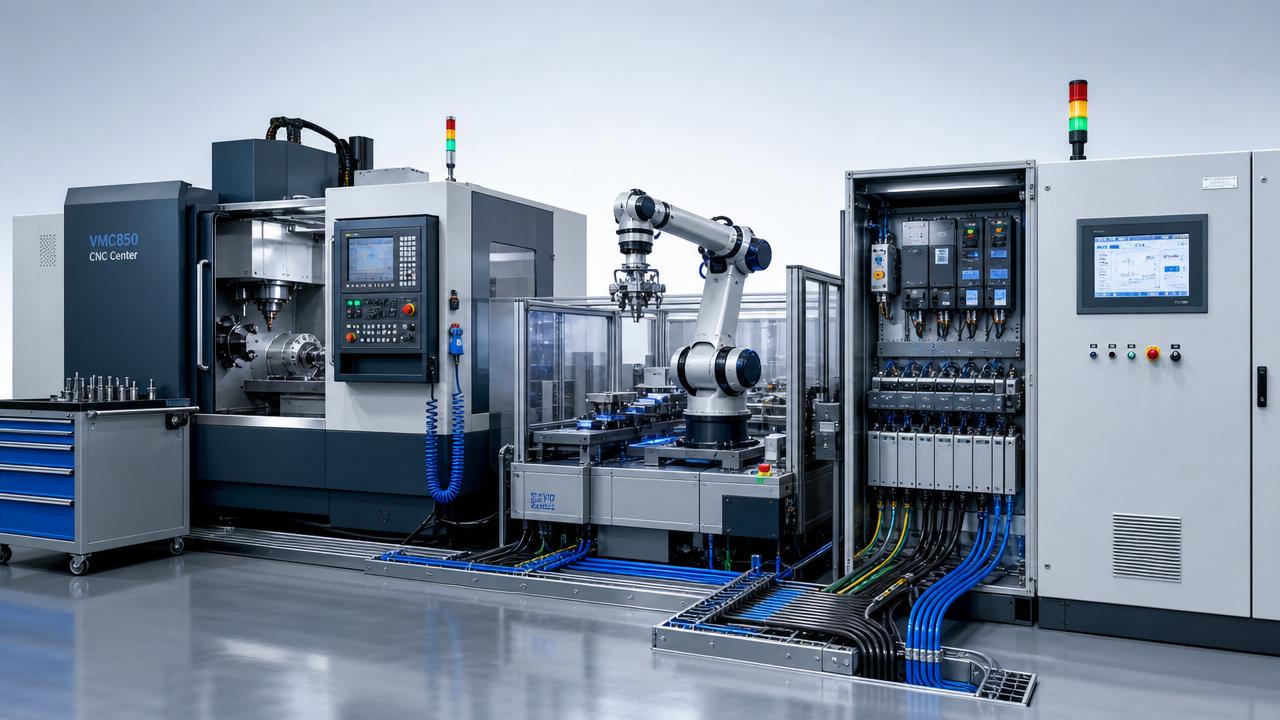
Industrial Automation projects often fail not because of technology, but because the handoff between planning, engineering, and execution is poorly managed. For project managers and engineering leaders, a weak transition can trigger delays, cost overruns, and performance gaps. Understanding how to structure a reliable handoff is essential to keeping CNC, machine tool, and automated production projects on schedule and aligned with business goals.
In CNC machining, automated production lines, and precision manufacturing environments, handoff is not a simple meeting or a document package. It is the point where design intent becomes executable work, where equipment specifications meet factory constraints, and where project risk either narrows or expands. For project leaders managing machine tools, robotic cells, flexible lines, or digital integration upgrades, this transition often determines whether a 6-month implementation stays within scope or turns into a 12-month recovery effort.
A well-planned handoff improves installation readiness, shortens commissioning cycles, and reduces disputes between owners, integrators, and plant teams. A weak handoff creates familiar problems: incomplete I/O lists, missing utility data, unclear acceptance criteria, tooling mismatch, training gaps, and production ramp-up delays. In Industrial Automation, these issues can affect machine utilization, part quality, takt time, and overall return on investment.
Why handoff becomes the critical failure point in Industrial Automation projects
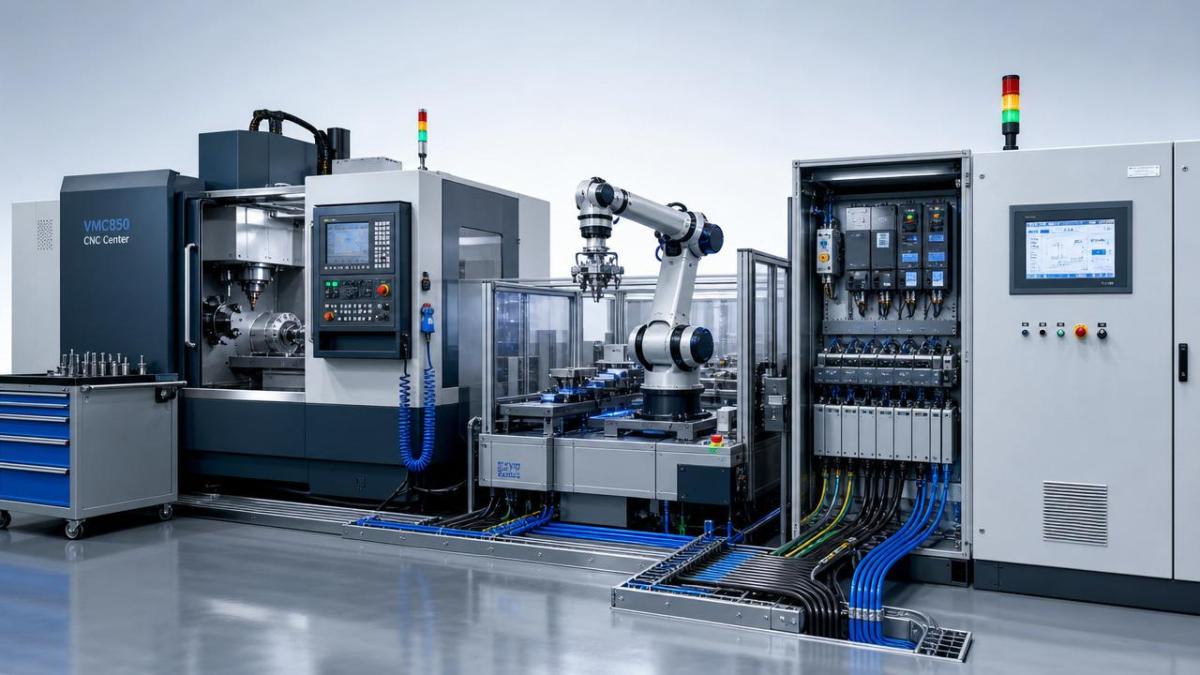
Most Industrial Automation projects are broken into 3 broad phases: planning, engineering, and execution. On paper, this seems orderly. In practice, each phase is often owned by different teams with different priorities. Planning focuses on business targets, engineering focuses on technical feasibility, and execution teams focus on installation, safety, and output. If the transfer between these groups is incomplete, project assumptions are carried forward as if they were confirmed facts.
This is especially common in CNC machine tool projects, where line layout, spindle capacity, fixture design, robot reach, cycle time, coolant handling, chip removal, and part traceability all interact. A change as small as a fixture tolerance band of ±0.02 mm instead of ±0.05 mm can affect tooling, probing strategy, inspection frequency, and throughput. If those implications are not transferred clearly, downstream teams lose time correcting issues that should have been resolved 2 to 4 weeks earlier.
Typical causes of poor handoff
- Requirements are approved before site conditions are verified.
- Mechanical, electrical, controls, and production teams use different document versions.
- Commissioning plans are created too late, often less than 7 days before installation.
- Acceptance criteria focus on machine startup, not stable output over 8 to 24 hours.
- Operator and maintenance training are treated as final-stage tasks instead of early deliverables.
For project managers, the practical lesson is simple: handoff must be managed as a controlled process, not an informal transition. It should include locked documents, risk ownership, measurable readiness checks, and defined sign-off points. In precision manufacturing, every missing detail multiplies across machines, shifts, and batches.
What a failed handoff looks like on the shop floor
A failed handoff rarely appears as one dramatic event. More often, it shows up in 5 operational signals: installation teams waiting for revised drawings, control cabinets arriving before cable routes are ready, CNC programs requiring repeated edits during commissioning, robots pausing because interlocks were not fully mapped, and first-article approval taking 2 or 3 cycles longer than planned.
These issues are expensive because they consume skilled labor at the most time-sensitive stage of the project. A one-week delay during early engineering may be manageable. A one-week delay during installation can affect contractors, production schedules, factory shutdown windows, and customer delivery commitments at the same time.
The handoff framework project managers should use
A reliable handoff structure for Industrial Automation should be built around 4 control layers: scope, technical baseline, site readiness, and acceptance logic. This approach works well for CNC cells, standalone machining centers, robotic loading systems, and multi-machine automated lines because it turns broad intent into checkable deliverables.
Before reviewing the framework in detail, the table below outlines the core transition checkpoints that project teams should complete before moving from engineering into execution.
The key conclusion is that handoff quality depends less on document quantity and more on decision clarity. A project may have 50 files, but if only 4 are current and no one knows which version is final, execution risk remains high. Project managers should insist on a single approved baseline before shipment, installation, or code release.
Handoff step 1: Lock the scope before final engineering
In machine tool and automated line projects, scope drift often begins with phrases such as “to be confirmed on site” or “supplier to advise later.” These placeholders are sometimes unavoidable early on, but they should be reduced to a small number before detailed engineering starts. A good target is to close at least 90% of open commercial and technical items before release for manufacture.
Minimum scope items to confirm
- Machine count, process sequence, and target output per shift
- Part families, tolerance levels, and fixture responsibility
- Who supplies tools, probes, vision systems, and spare parts
- Safety scope, guarding boundaries, and local compliance obligations
- Training hours, documentation language, and after-sales response expectations
This step is critical because every unresolved scope item affects cost, lead time, or interface ownership. In Industrial Automation, unclear boundaries are one of the fastest ways to create claims and project tension.
Handoff step 2: Create a usable technical package
A technical package should help the next team act without guessing. That means practical deliverables: frozen 2D or 3D layout, utility load list, foundation or anchoring requirements, controller architecture, network map, spare parts list, and commissioning prerequisites. For CNC automation, details such as chuck type, workholding repeatability, chip evacuation direction, and part orientation logic should be explicit.
If the package is too abstract, execution teams fill the gaps under time pressure. That is where avoidable errors start. A 15-minute clarification during engineering is always cheaper than a 2-day pause once the machine is on site.
How to reduce delay, cost overrun, and commissioning risk
Project leaders in Industrial Automation should treat execution readiness as a measurable status, not a subjective opinion. Instead of asking whether the site is “basically ready,” define readiness through a checklist with pass or fail criteria. This is particularly useful for CNC production lines where equipment footprint, media supply, line balancing, and software integration must align in a narrow installation window.
Execution readiness checklist for automated manufacturing projects
The following table summarizes a practical readiness model used by many project teams before delivery, installation, and site acceptance. It is relevant for standalone machines as well as robot-assisted machining cells.
The operational message is clear: commissioning problems are often readiness problems. When support teams are unavailable or utilities are untested, even well-built Industrial Automation systems appear unreliable. Readiness planning protects both schedule and equipment performance.
Use stage-gate reviews instead of one final transfer
Many projects fail because they rely on a single final handoff meeting. A better model is a 3-gate sequence: engineering release, pre-shipment review, and site readiness review. Each gate should have named approvers, open-item tracking, and a go or no-go decision. This structure prevents hidden issues from accumulating for months.
For example, a pre-shipment review can verify FAT punch-list closure, software backups, spare parts packing, and final document revision. A site readiness review can confirm floor markings, machine access width, crane availability, operator schedule, and incoming material for trial production. These are not administrative details; they directly influence how quickly the line reaches stable output.
Define acceptance in production terms, not only machine terms
A machine can power on and still fail the business case. That is why acceptance should include more than motion tests or dry cycles. In CNC and automated manufacturing, acceptance should usually cover at least 4 dimensions: safety functionality, dimensional quality, cycle time, and repeatability over a defined run period such as 8 hours, 1 shift, or a target batch quantity.
This protects project managers from premature sign-off and protects plant teams from inheriting unstable equipment. It also creates a fair standard for suppliers and integrators, because completion is tied to observable output rather than assumptions.
Common handoff mistakes in CNC and machine tool automation
Even experienced teams repeat a small set of avoidable mistakes. Recognizing them early helps project managers improve both procurement outcomes and implementation control.
Mistake 1: Treating training as an end-stage formality
Operator, programmer, and maintenance training should begin before final acceptance, not after. In many Industrial Automation projects, the first 2 weeks of production are when the real learning curve appears. If training is delayed, minor alarms, tooling issues, or HMI confusion can slow output and create unnecessary service calls.
Mistake 2: Ignoring maintenance handoff
Maintenance teams need preventive service intervals, lubrication points, spare part references, backup procedures, and fault recovery instructions. If this information is incomplete, plants rely too heavily on external support. For high-precision CNC equipment, even routine tasks such as alignment checks, coolant care, and filter replacement can affect uptime and part quality within 30 to 90 days.
Mistake 3: Underestimating interface ownership
In automated lines, failures often occur at interfaces rather than inside the machine itself. Robot-to-CNC handshake logic, MES or ERP signals, barcode readers, gauging systems, pallet transfer units, and safety interlocks all require clear ownership. If 3 vendors are involved and no one is responsible for the complete interface test, delay becomes likely.
Practical safeguards
- Assign one interface owner per system boundary.
- Run simulation or signal verification before shipment where possible.
- Document abnormal conditions, not just normal operating sequences.
- Include recovery logic for power loss, part jams, and sensor faults.
These safeguards are especially valuable in smart factory projects where digital integration is expected to deliver traceability, OEE visibility, and faster decision-making. Without a disciplined handoff, connectivity features are often the first items to slip.
What project managers should ask suppliers and internal teams before sign-off
Strong questions improve project outcomes. Before authorizing shipment, installation, or final acceptance, project managers should challenge both suppliers and internal stakeholders with precise, operation-focused checks.
Key review questions
- Which documents are frozen, and what revision date controls execution?
- What open items remain, and which ones can stop installation or startup?
- Has the full part family or only one sample part been validated?
- What production rate is expected in week 1, week 2, and after stabilization?
- What spare parts are required for the first 6 months of operation?
- Who responds first if software, mechanics, or process quality fails during startup?
These questions shift the conversation from general confidence to measurable readiness. They also help procurement and project teams align commercial terms with operational risk, which is essential in global machine tool sourcing where suppliers, plants, and end users may be in different countries and time zones.
Industrial Automation succeeds when transitions are engineered as carefully as the equipment itself. In CNC, precision machining, and automated production environments, the handoff between planning, engineering, and execution is where schedule control, cost discipline, and stable output are either secured or lost. A structured process built around scope clarity, technical readiness, site verification, and production-based acceptance gives project managers a practical way to reduce risk and accelerate ramp-up.
If your team is evaluating CNC automation, machine tool integration, or smart manufacturing upgrades, now is the right time to review your handoff model before the next project enters execution. Contact us to discuss your application, get a tailored implementation approach, or learn more about practical Industrial Automation solutions for precision manufacturing.
Recommended for You
 Machine Tool Standards by Country: What Importers Must Verify Before PurchaseManufacturing Policy Research Center
 CNC Lathe Quick Installation Guide: Alignment Checks Before First Production RunCNC Machining Technology Center
 How to Select a CNC Lathe for Small Parts Without Sacrificing Accuracy or Cycle TimeCNC Machining Technology Center
 How to Select a Slant Bed Lathe for High-Precision Shaft and Chuck WorkCNC Machining Technology Center
 Smart Manufacturing for Small Businesses: Where Automation Delivers the Fastest ROIMachine Tool Industry Editorial Team
 How to Specify a CNC Lathe for High-Volume Automotive Shaft ProductionCNC Machining Technology Center

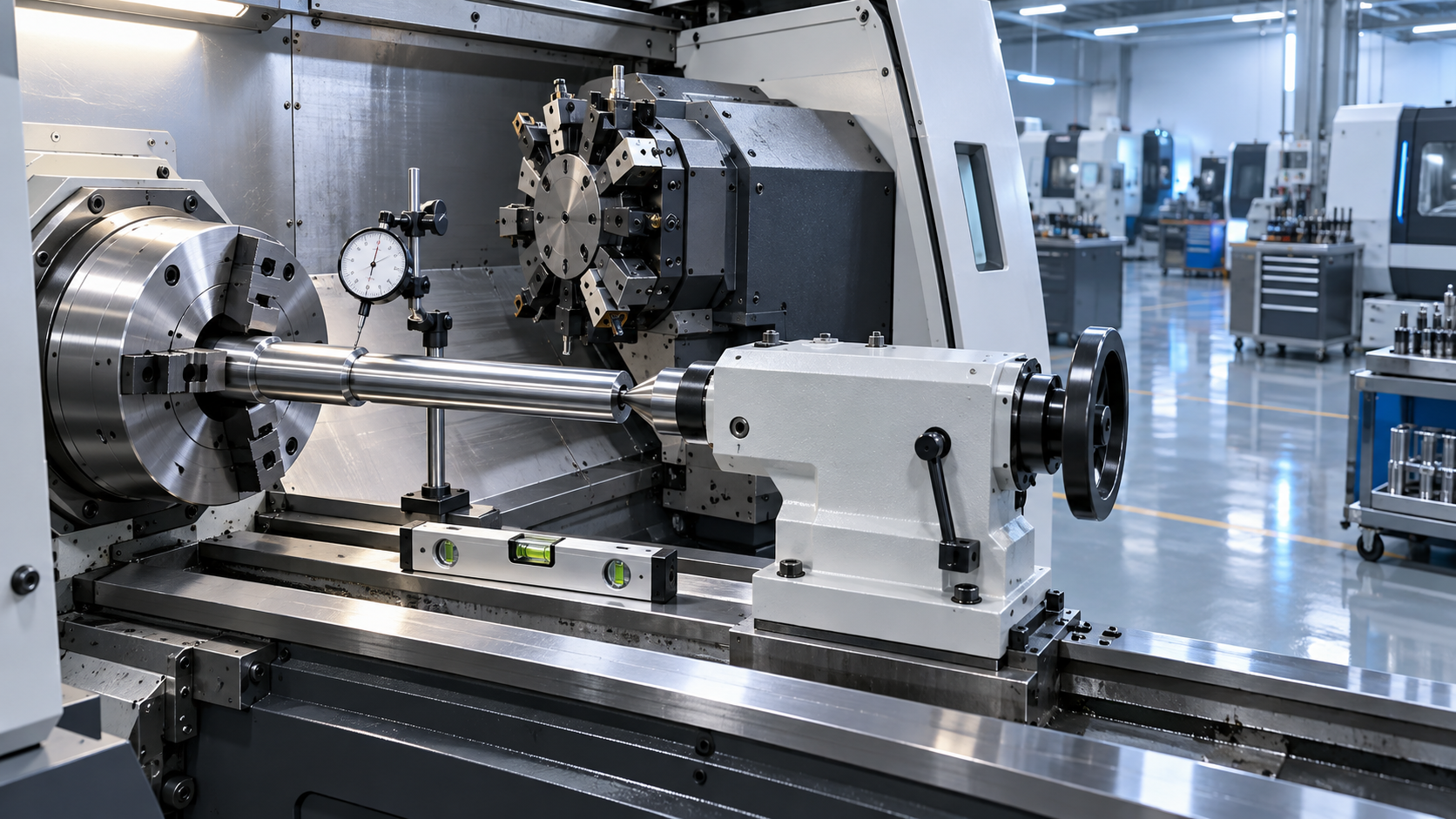





Aris Katos
Future of Carbide Coatings
15+ years in precision manufacturing systems. Specialized in high-speed milling and aerospace grade alloy processing.
▶
How to Evaluate an Automation Line for Automotive Assembly Before Project LaunchCNC Machining Technology Center▶
EU Tightens Conformity Rules for Automated LinesCNC Machining Technology Center▶
Where Industrial Robotics for Warehouse Automation Delivers the Fastest ROICNC Machining Technology Center▶
Automation Line for Automotive Assembly: Key Equipment and Layout FactorsCNC Machining Technology Center▶
Industrial Automation projects fail when handoff is poorly plannedCNC Machining Technology Center
Mastering 5-Axis Workholding Strategies
Join our technical panel on Nov 15th to learn about reducing vibrations in thin-wall components.

Providing you with integrated sanding solutions
Before-sales and after-sales services
Comprehensive technical support