• Global CNC market projected to reach $128B by 2028 • New EU trade regulations for precision tooling components • Aerospace deman
NYSE: CNC +1.2%LME: STEEL -0.4%

Industrial turning isn’t slowing down—but the tool life gap just widened again
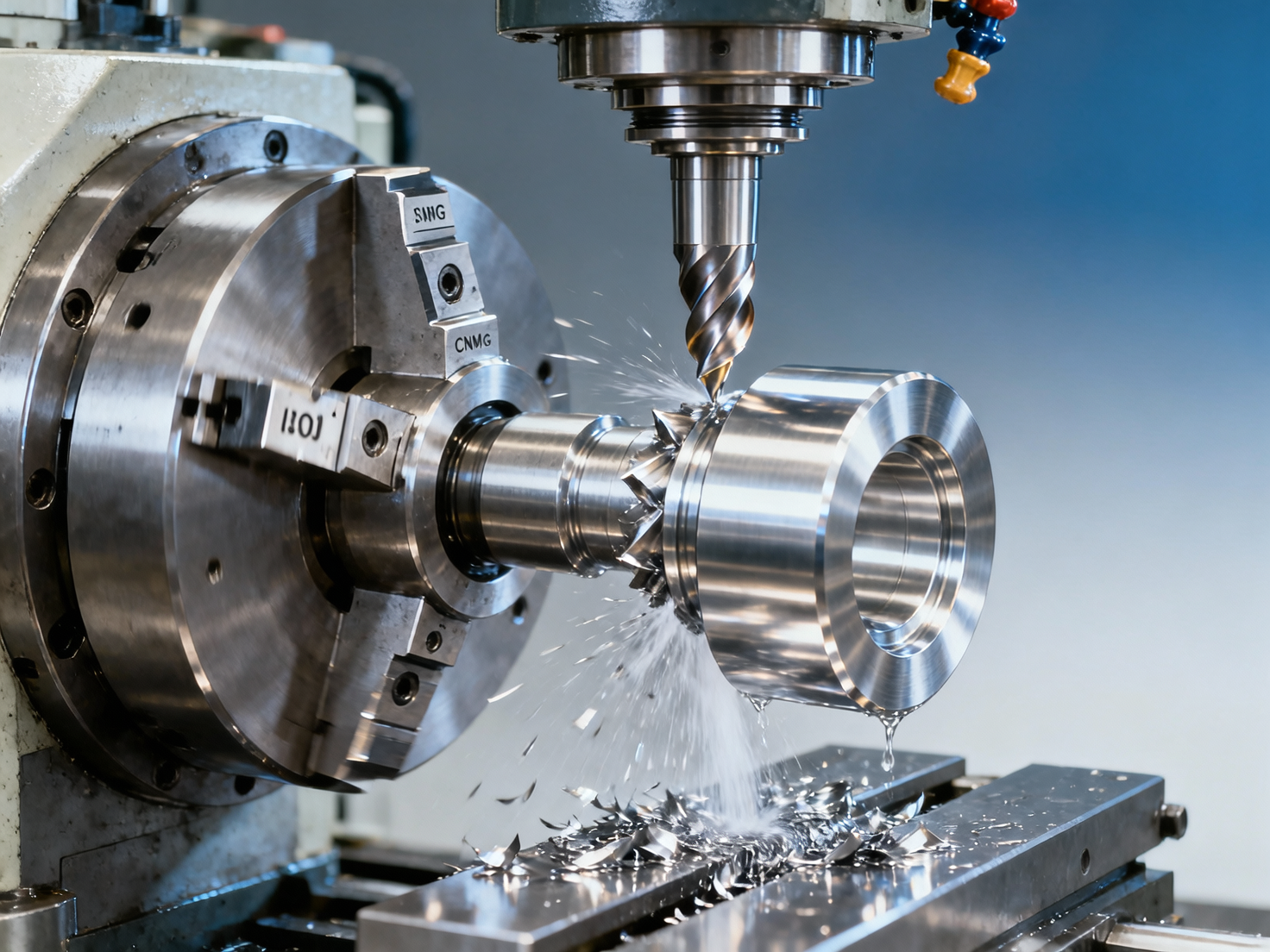
Industrial turning remains a cornerstone of modern manufacturing—but rising demands for efficiency, accuracy, and uptime are exposing a growing tool life gap. As automated industrial systems scale up, CNC industrial machines—especially high precision lathes and CNC metal lathes—are under unprecedented pressure. From automotive to aerospace, industrial machining equipment must deliver consistent CNC metal cutting performance while supporting automated production and CNC production equipment longevity. This widening gap impacts operators, procurement teams, and decision-makers alike—driving urgent innovation in CNC industrial equipment, metal machining solutions, and smart CNC metalworking strategies.
Why Tool Life Is No Longer Just a Maintenance Metric
Tool life has evolved from a shop-floor reliability indicator into a strategic KPI that directly affects OEE (Overall Equipment Effectiveness), part cost per unit, and production line resilience. In high-volume CNC turning applications—such as automotive axle shafts or aerospace turbine discs—tool change frequency now averages every 8–12 minutes on legacy carbide inserts under aggressive feed rates (0.25–0.4 mm/rev) and cutting speeds (180–280 m/min). That translates to 40–60 tool changes per shift—each consuming 90–150 seconds for manual verification, re-zeroing, and compensation updates.
The gap isn’t just about wear resistance. It’s rooted in mismatched system dynamics: modern CNC lathes achieve sub-micron repeatability (±0.002 mm), yet many cutting tools still rely on ±0.02 mm tolerance holders and analog wear monitoring. Meanwhile, Industry 4.0 integration demands real-time tool condition data—yet only 37% of mid-tier CNC lathe installations deploy IoT-enabled tool monitoring sensors (per 2024 Global Machine Tool Intelligence Survey).
This misalignment creates cascading effects: unplanned downtime spikes by 22% when tool life variance exceeds ±15% of nominal rating; scrap rates climb 1.8× when insert edge degradation goes undetected beyond 3% flank wear; and programming conservatism—adding 15–20% safety margins to feeds/speeds—lowers throughput by 11–14% across multi-shift operations.
Three Critical Dimensions of the Widening Gap
The tool life gap manifests across three interdependent layers: material science, digital integration, and operational workflow. Each layer introduces distinct failure modes—and distinct mitigation paths.
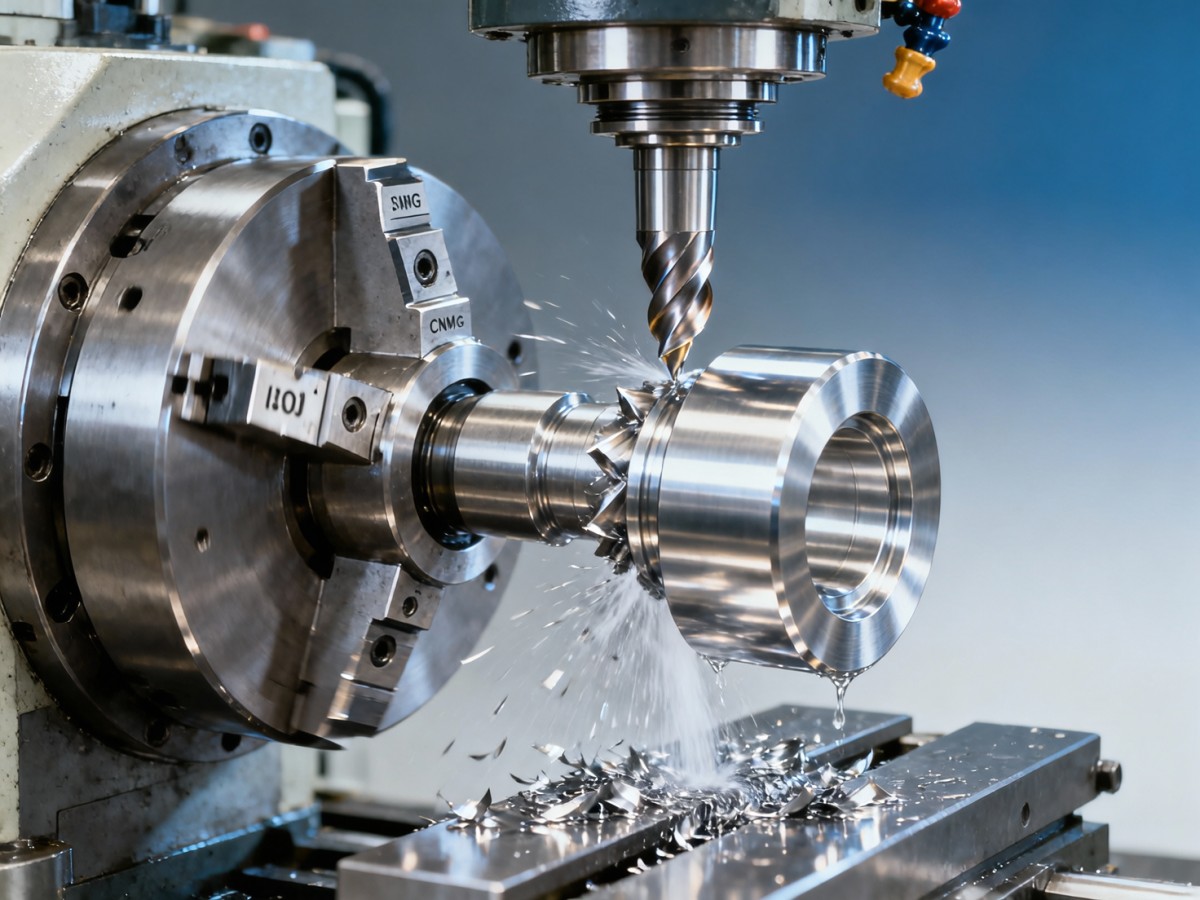
First, substrate–coating–geometry co-optimization lags behind machine capability. While CNC lathes now support 5-axis simultaneous contour turning at 4,000 rpm, most standard ISO-class CNMG inserts are rated for ≤2,200 rpm and lack nanostructured TiAlN+MoS₂ dual-layer coatings needed for high-temp nickel alloy machining. Second, digital feedback loops remain fragmented: spindle load signals rarely trigger automatic feed compensation, and acoustic emission sensors often operate offline due to calibration drift over 7–10 shifts.
Third, human–machine interface gaps persist. Operators manually log tool usage in paper-based logs or generic CMMS fields—not linked to specific part numbers, batch IDs, or thermal history. Procurement teams then renew contracts based on average life (e.g., “300 parts per insert”), ignoring that actual life varies from 192 to 417 parts depending on coolant concentration (5–12%), workpiece hardness deviation (±8 HB), and chuck runout (<0.01 mm vs. 0.03 mm).
This table reveals why “just buying better inserts” fails: consistency—not peak performance—is the bottleneck. Achieving Cpk ≥1.33 requires synchronized upgrades across toolholder rigidity (ISO 50 vs. CAPTO C5), coolant delivery (minimum quantity lubrication flow stability ±1.5% vs. ±8%), and real-time chatter detection algorithms trained on 12+ vibration frequency bands—not just RMS amplitude.
Procurement & Deployment: A 5-Step Alignment Framework
Closing the gap demands cross-functional alignment—not isolated hardware swaps. Here’s how procurement, operations, and engineering teams can jointly execute:
- Baseline tool life variance across 3 product families (e.g., aluminum housings, stainless steel flanges, titanium fasteners) using standardized test cuts—measuring flank wear (VBmax), crater depth (KT), and surface roughness (Ra) after every 50 parts.
- Evaluate holder–insert–machine compatibility via dynamic rigidity testing: measure deflection under 1,500 N radial load at 3 spindle speeds (800/1,600/2,400 rpm) with laser interferometry.
- Deploy sensor fusion modules that merge spindle current, acoustic emission, and coolant temperature data—calibrated to detect micro-chipping onset at <0.05 mm VB.
- Integrate tool life analytics into MES via OPC UA, mapping each insert’s usage to specific lot numbers, operator IDs, and environmental logs (ambient temp/humidity, coolant pH).
- Adopt adaptive control protocols that auto-adjust feed rate within ±12% range when thermal expansion exceeds 0.008 mm—verified via in-process laser micrometry.
Teams applying this framework report 31% reduction in unplanned tool-related stops and 19% lower tooling cost per thousand parts within 90 days—without changing base insert grade.
What Decision-Makers Should Prioritize Now
For enterprise leaders evaluating capital expenditures or vendor partnerships, prioritize investments that close systemic gaps—not incremental specs. Avoid “best-in-class insert” claims without validation against your actual workpiece materials, coolant chemistry, and machine thermal drift profile.
Instead, demand proof points tied to your production reality: Can the supplier demonstrate ≥95% tool life prediction accuracy across 3+ of your top-volume parts? Does their digital twin model include your exact chuck type, drawbar force decay curve, and hydraulic tailstock stiffness? Are maintenance intervals for monitoring hardware aligned with your preventive maintenance schedule (e.g., calibrated every 14 shifts, not annually)?
These criteria shift procurement from price-per-insert to total cost of tooling intelligence—where ROI is measured in reduced secondary operations, fewer inspection holds, and extended machine service life.
Final Thoughts: Closing the Gap Starts with Shared Metrics
The widening tool life gap isn’t a sign of stagnation—it’s evidence that industrial turning is maturing into a tightly coupled cyber-physical system. Success no longer belongs to those who push limits hardest, but to those who synchronize materials, machines, and metrics most precisely.
Operators gain predictability. Procurement gains leverage through verifiable performance benchmarks. Decision-makers gain resilience—knowing that every 0.01 mm of uncontrolled variation is now a quantified, controllable variable.
If your team is measuring tool life in “parts per insert” without linking it to spindle power signatures, coolant conductivity logs, or thermal imaging of the tool–workpiece interface—you’re already operating in the gap. The next step isn’t speculation. It’s measurement, correlation, and closed-loop adaptation.
Get a free tool life diagnostic assessment—including baseline variance analysis, compatibility scoring, and a prioritized 90-day action plan tailored to your CNC lathe fleet and top five part families. Contact our precision machining specialists today.
PREVIOUS ARTICLE
Recommended for You
 Zero-Point Clamping or Modular Fixtures? Choosing a Faster CNC Changeover SystemCNC Machining Technology Center
 How to Cut CNC Fixture Changeover Time Without Sacrificing Part AccuracyCNC Machining Technology Center
 When Does CNC Turning Pay Off? A Break-Even Guide by Annual Part VolumeMachine Tool Industry Editorial Team
 Machine Tool Standards by Country: What Importers Must Verify Before PurchaseManufacturing Policy Research Center
 CNC Lathe Quick Installation Guide: Alignment Checks Before First Production RunCNC Machining Technology Center
 How to Select a CNC Lathe for Small Parts Without Sacrificing Accuracy or Cycle TimeCNC Machining Technology Center

Aris Katos
Future of Carbide Coatings
15+ years in precision manufacturing systems. Specialized in high-speed milling and aerospace grade alloy processing.
▶
CNC Lathe Quick Installation Guide: Alignment Checks Before First Production RunCNC Machining Technology Center▶
How to Select a CNC Lathe for Small Parts Without Sacrificing Accuracy or Cycle TimeCNC Machining Technology Center▶
How to Select a Slant Bed Lathe for High-Precision Shaft and Chuck WorkCNC Machining Technology Center▶
How to Specify a CNC Lathe for High-Volume Automotive Shaft ProductionCNC Machining Technology Center▶
CNC Turning Explained: How It Works, Key Tolerances, and Best-Fit Part TypesCNC Machining Technology Center
Mastering 5-Axis Workholding Strategies
Join our technical panel on Nov 15th to learn about reducing vibrations in thin-wall components.

Providing you with integrated sanding solutions
Before-sales and after-sales services
Comprehensive technical support