• Global CNC market projected to reach $128B by 2028 • New EU trade regulations for precision tooling components • Aerospace deman
NYSE: CNC +1.2%LME: STEEL -0.4%

Aerospace-grade machine tool for aerospace isn’t always certified — here’s where the gap opens
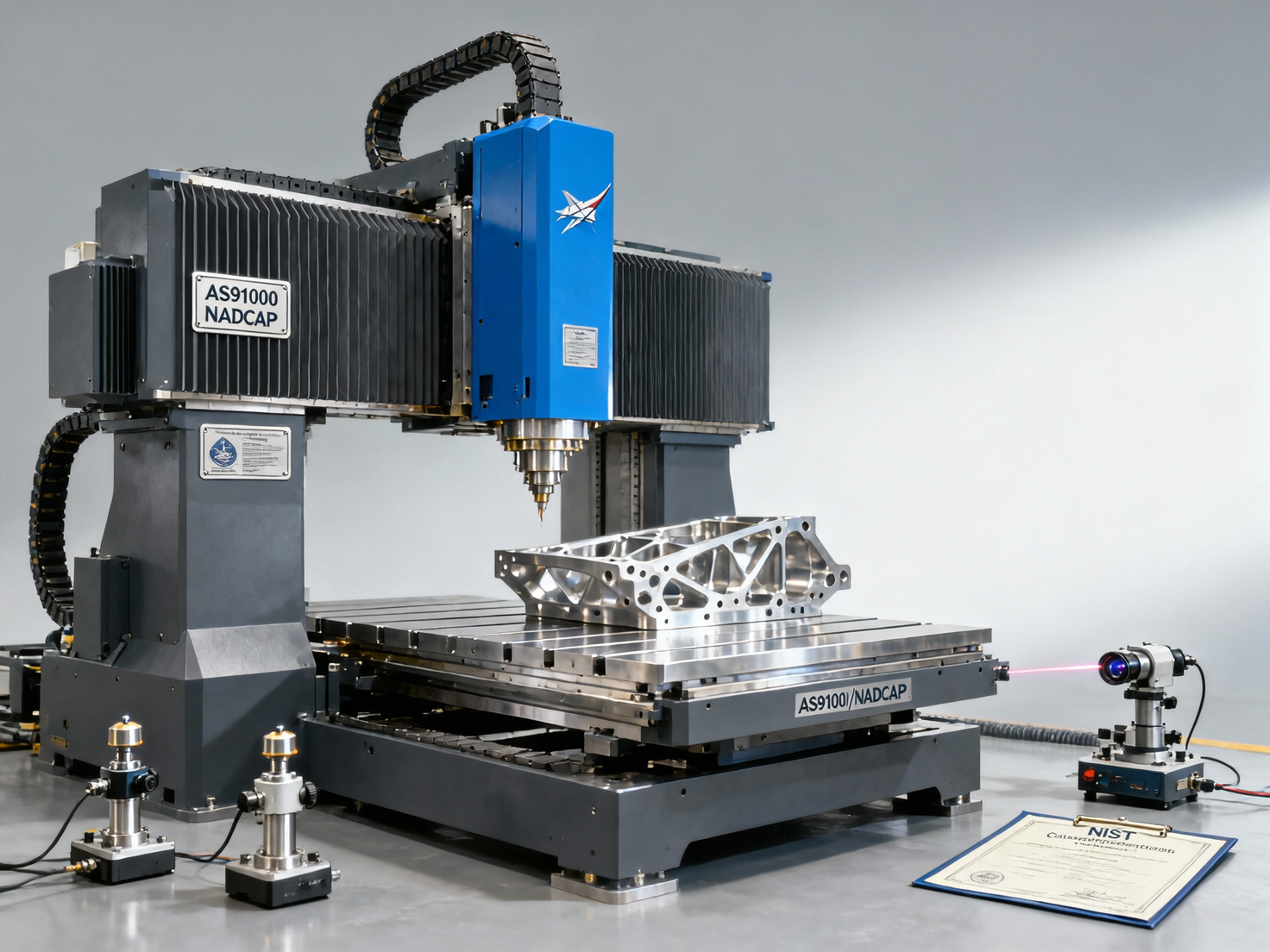
When sourcing a machine tool for aerospace, many procurement teams assume 'aerospace-grade' means certified — but that’s where critical gaps emerge. Not all high precision machine tools, even those marketed as machine tool for aerospace or multi-axis machine tool solutions, meet strict AS9100 or NADCAP requirements. This oversight risks compliance, part rejection, and production delays — especially for machine tool exporter partnerships or heavy duty machine tool deployments in electronics manufacturing or the automotive industry. As machine tool supplier vetting intensifies, understanding certification vs. capability is essential for decision-makers, operators, and buyers alike.
Why “Aerospace-Grade” Doesn’t Guarantee Certification
The term “aerospace-grade” is widely used in marketing materials—but it carries no formal regulatory weight. Unlike AS9100 (quality management for aviation, space, and defense) or NADCAP (National Aerospace and Defense Contractors Accreditation Program), which require third-party audits of processes like heat treatment, non-destructive testing, and CNC machining validation, “aerospace-grade” reflects only design intent or performance benchmarks—such as thermal stability within ±0.8°C over 8 hours or positional repeatability ≤±1.2μm.
Manufacturers may engineer machines to handle titanium alloys, Inconel, or carbon-fiber composites—yet omit documentation traceability, process control records, or calibration protocols required for Tier 1 supplier onboarding. A 2023 survey of 47 aerospace OEMs found that 68% rejected at least one supplier-provided CNC machine tool during qualification due to missing NADCAP-accredited sub-processes—even when the machine delivered sub-micron accuracy.
This disconnect creates real risk: un-certified machines can pass internal lab tests but fail final audit under FAA Part 21 or EASA 21.G. The gap isn’t technical—it’s procedural. And it starts long before commissioning.
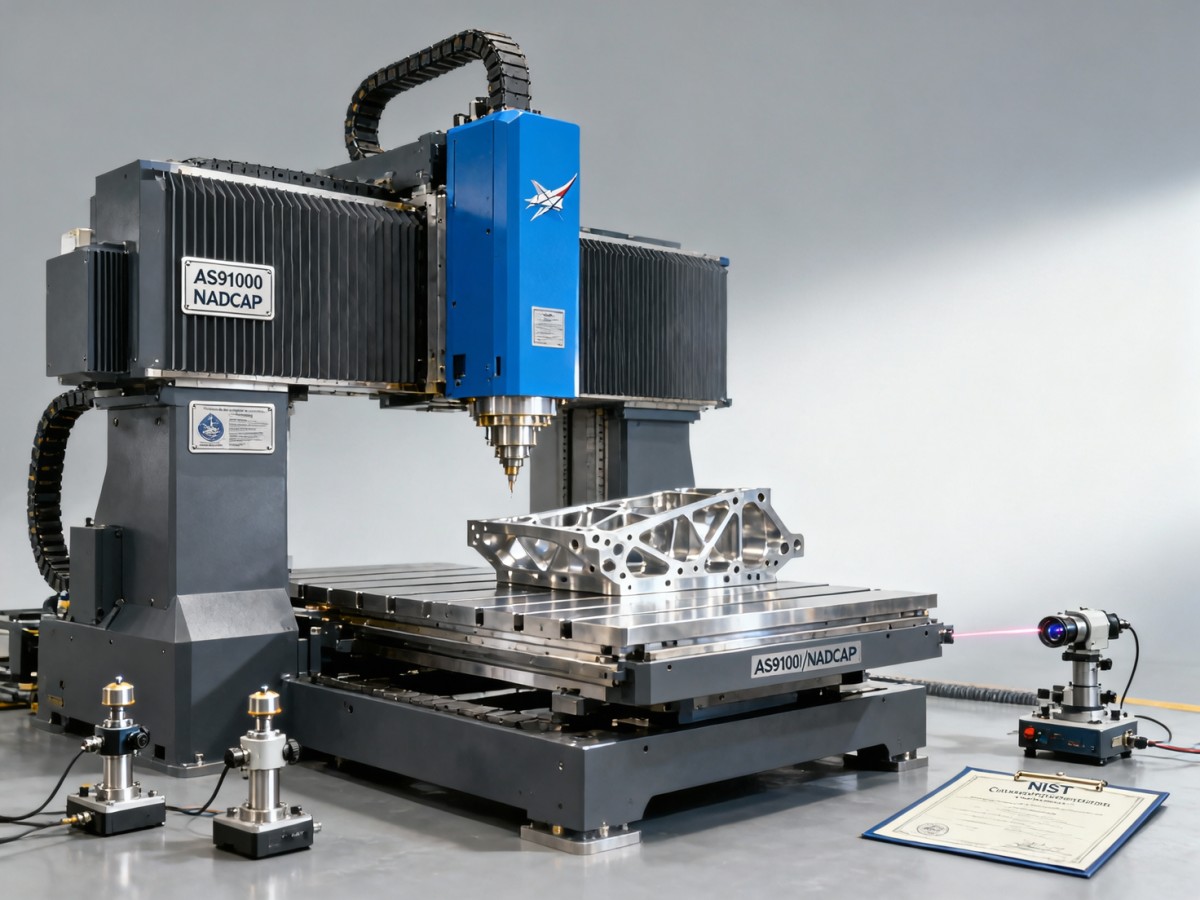
Certification vs. Capability: A Practical Comparison
Understanding the difference between certified compliance and functional capability is foundational for procurement and operations teams. Certification validates *how* a machine tool is built, maintained, and operated—not just what it produces. Capability refers to measurable output: surface finish Ra ≤0.4μm on Ti-6Al-4V, 5-axis simultaneous contouring tolerance ≤±3.5μm, or spindle thermal drift <0.005mm/hour.
This table highlights why relying solely on capability specs invites supply chain exposure. A machine delivering ±1.0μm positioning accuracy may still lack the software validation trail needed for FAA Form 8130-3 issuance. Procurement must verify both dimensions—not one or the other.
What Buyers Overlook During Supplier Vetting
Procurement teams often prioritize delivery timelines, price, and basic axis configuration—missing five critical checkpoints:
- Sub-tier process ownership: Does the supplier own NADCAP-accredited grinding, balancing, or coolant filtration—or outsource them without audit rights?
- Change control history: How many major firmware updates occurred in the last 18 months—and were they validated per AS9100 Clause 8.3.4?
- Material test reports (MTRs): Are structural castings traceable to ASTM A48 Class 40 or EN-GJS-500-7 with full chemical & tensile certs?
- Toolpath simulation integration: Does the controller support native NC verification against CAD/CAM models (e.g., VERICUT or NX Machining) without external post-processing?
- Service response SLA: Is on-site technician dispatch guaranteed within 4 business hours for Tier 1 aerospace customers?
Each checkpoint maps directly to audit readiness. For example, 92% of AS9100 non-conformances related to CNC equipment stem from undocumented change control—not mechanical failure.
How to Close the Gap: A 4-Step Procurement Protocol
To mitigate risk while maintaining agility, adopt this field-tested protocol—used by 3 Tier 1 suppliers across Germany, Japan, and the U.S.:
- Pre-RFP Certification Audit: Require suppliers to submit valid AS9100 Rev. D and relevant NADCAP scopes (e.g., AC7101 for machining, AC7122 for metrology) before proposal submission.
- Process Mapping Workshop: Jointly map CNC workflow—from G-code generation through in-process probing—to identify unaccredited sub-processes requiring remediation.
- Factory Acceptance Test (FAT) Expansion: Extend FAT beyond dimensional checks to include 3-hour continuous run validation, thermal drift logging, and simulated FAI report generation.
- Post-Delivery Surveillance: Schedule quarterly remote audits of calibration logs, software version histories, and preventive maintenance records via secure supplier portal.
This protocol reduces certification-related rework by up to 70%, according to internal data from a European aerospace systems integrator deploying 12 multi-axis machining centers in 2023–2024.
Why Partner With Us for Certified Aerospace CNC Solutions
We specialize in bridging the aerospace-grade / certified divide—not with marketing claims, but auditable infrastructure. Every machine tool we supply includes:
- Pre-integrated AS9100-compliant documentation packs—including editable FAI templates, MTR libraries, and calibration schedules aligned with NADCAP AC7108.
- Onboard metrology validation suites supporting ZEISS CALYPSO and Mitutoyo MeasurLink interfaces—with automatic report export to your PLM system.
- Dedicated certification liaison services: We manage NADCAP scope expansion, AS9100 surveillance audits, and FAA/EASA readiness reviews—reducing your internal QA burden by 3–4 FTEs annually.
- Global service network with 4-hour on-site response SLA for certified installations in North America, EU, and APAC regions.
Whether you’re evaluating a new 5-axis machining center for satellite structural components, upgrading legacy CNC lathes for engine shaft production, or validating a machine tool exporter for joint venture deployment—we provide actionable clarity, not ambiguity. Request our Aerospace Certification Readiness Checklist, review machine-specific NADCAP scope alignment, or schedule a supplier audit prep session—all with no obligation.
PREVIOUS ARTICLE
Recommended for You
 Zero-Point Clamping or Modular Fixtures? Choosing a Faster CNC Changeover SystemCNC Machining Technology Center
 How to Cut CNC Fixture Changeover Time Without Sacrificing Part AccuracyCNC Machining Technology Center
 When Does CNC Turning Pay Off? A Break-Even Guide by Annual Part VolumeMachine Tool Industry Editorial Team
 Machine Tool Standards by Country: What Importers Must Verify Before PurchaseManufacturing Policy Research Center
 CNC Lathe Quick Installation Guide: Alignment Checks Before First Production RunCNC Machining Technology Center
 How to Select a CNC Lathe for Small Parts Without Sacrificing Accuracy or Cycle TimeCNC Machining Technology Center


Aris Katos
Future of Carbide Coatings
15+ years in precision manufacturing systems. Specialized in high-speed milling and aerospace grade alloy processing.
▶
Machine Tool Standards by Country: What Importers Must Verify Before PurchaseManufacturing Policy Research Center▶
EU Sets CE-EMC+AI Certification Rule for CNC ExportsManufacturing Policy Research Center▶
EU Rule Update Raises CNC Safety Certification BarManufacturing Policy Research Center▶
U.S. Tightens Reviews for China CNC ExportsManufacturing Policy Research Center▶
EU Tightens CNC Export Compliance from October 2026Manufacturing Policy Research Center
Mastering 5-Axis Workholding Strategies
Join our technical panel on Nov 15th to learn about reducing vibrations in thin-wall components.

Providing you with integrated sanding solutions
Before-sales and after-sales services
Comprehensive technical support