• Global CNC market projected to reach $128B by 2028 • New EU trade regulations for precision tooling components • Aerospace deman
NYSE: CNC +1.2%LME: STEEL -0.4%

How Global Procurement Trends Are Changing CNC Supply
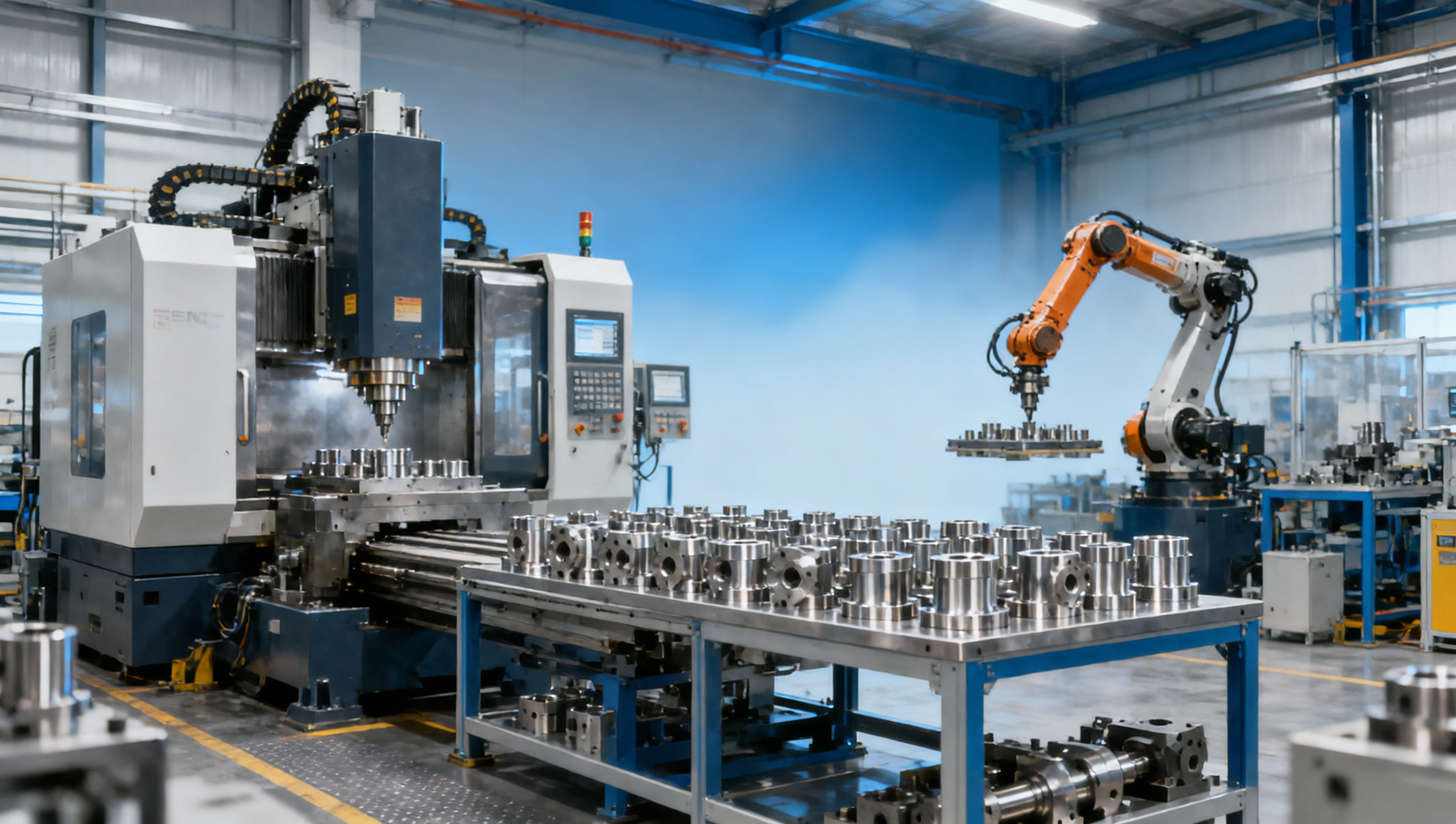
Global procurement trends are reshaping the Machine Tool Market and the broader Manufacturing Industry, forcing buyers and suppliers to rethink CNC production, metal machining, and automated production strategies. From industrial CNC sourcing to smarter CNC milling, CNC cutting, and automated production line investment, companies across Global Manufacturing are adapting to cost pressure, supply risks, and rising demand for precision and Industrial Automation.
Why global procurement shifts now have a direct impact on CNC supply
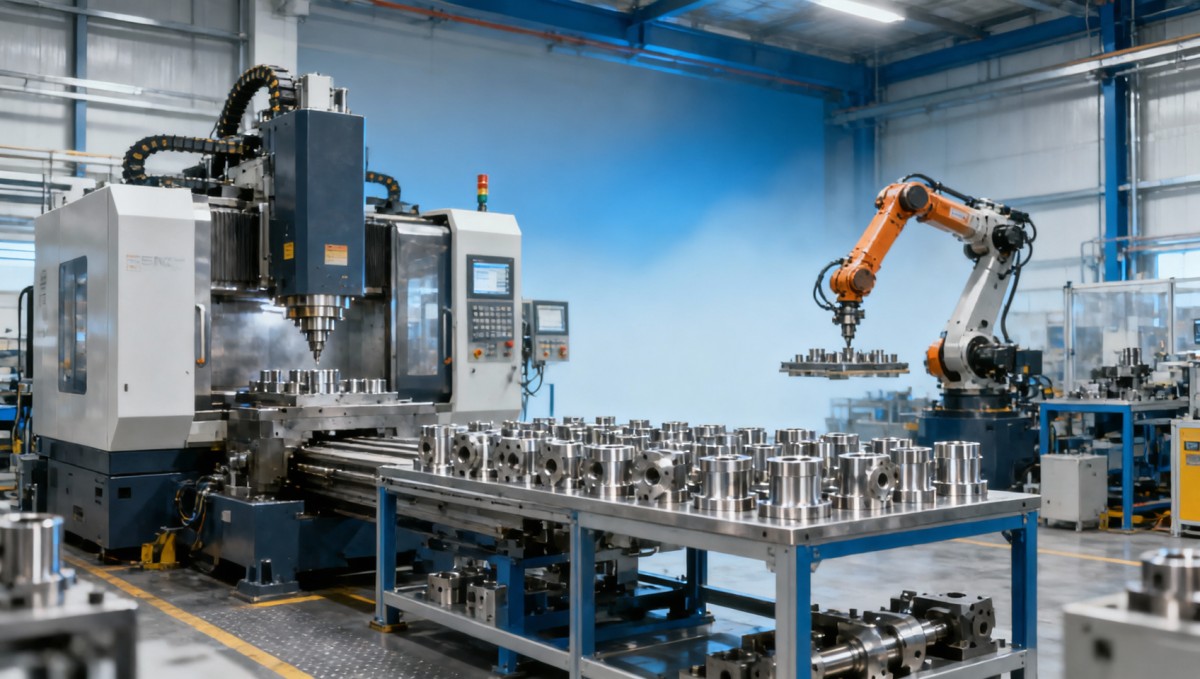
CNC supply is no longer driven only by machine specifications or catalog price. Procurement teams now evaluate supplier location, component traceability, lead-time stability, after-sales response, and the ability to support digital manufacturing. In many projects, the real decision is not simply which CNC machine tool to buy, but which supply chain can keep production stable for the next 12–36 months.
This change matters across automotive, aerospace, energy equipment, electronics, and precision parts manufacturing. A lathe, machining center, or multi-axis system may depend on controllers, spindles, ball screws, servo systems, cutting tools, fixtures, and automation modules sourced from different regions. When one node is delayed by 2–6 weeks, the entire equipment delivery plan may shift.
For information researchers, the challenge is understanding what is changing. For operators, the concern is whether a replacement machine can maintain process accuracy and uptime. For procurement personnel, the focus is risk control, total cost, and delivery. For business evaluators, the key question is whether a supplier can support long-term production planning rather than one-time shipment.
Global manufacturing has also become more segmented. Some buyers want short-cycle standard CNC machines delivered in 4–8 weeks. Others need customized automated production lines with integration, debugging, and acceptance stages that may extend to 8–20 weeks. Procurement trends are therefore pushing CNC suppliers to become more flexible, more transparent, and more service-oriented.
What is driving the new procurement model
- Diversified sourcing: buyers increasingly compare suppliers from China, Germany, Japan, South Korea, and regional assembly partners instead of relying on a single market.
- Higher precision demand: industries now require tighter machining stability, better repeatability, and more predictable maintenance cycles.
- Automation expansion: many projects include robots, loaders, tool magazines, probes, and MES-ready interfaces rather than stand-alone machine tools.
- Risk visibility: procurement teams want 3–5 core supply indicators, including lead time, spare part support, service response, compliance, and localization capability.
Why this matters for machine tool buyers
In the past, a quotation comparison might focus on machine size, spindle speed, and price. Today, that is not enough. A competitive CNC supply solution must support commissioning, operator training, preventive maintenance, and spare parts replacement over a multi-year cycle. Even a low initial price can become expensive if installation is delayed, tooling compatibility is unclear, or local service takes more than 72 hours to respond.
As a result, the machine tool market is shifting from product-only selection to solution-based procurement. This is especially important in precision manufacturing, where downtime, tolerance drift, or poor integration with an automated production line can affect output quality across hundreds or thousands of parts.
How buyers compare CNC sourcing options in a more volatile market
When procurement teams compare CNC sourcing strategies, they usually balance four dimensions: technical fit, delivery security, lifecycle cost, and scalability. A standard 3-axis or 4-axis machine may solve current production needs, but not future workload changes. A multi-axis machining center may require a higher budget, yet reduce setups, improve consistency, and lower labor intensity over time.
Different buyer profiles also judge value differently. Operators often prioritize machine stability, HMI usability, tool change reliability, and maintenance convenience. Procurement managers care about lead time, freight, installation support, and spare parts availability. Commercial evaluators focus on output per shift, payback cycle, and the supplier’s ability to support expansion to 2, 4, or 6 connected machines.
The table below helps compare common CNC supply approaches used in global manufacturing. It is not a ranking. It is a practical decision tool for identifying which sourcing model matches project urgency, production complexity, and service expectations.
The comparison shows why global procurement trends are changing CNC supply decisions. Buyers are not only choosing equipment origin; they are choosing risk structure. A shorter lead time may support urgent launch schedules, while a more customized CNC production solution may deliver better long-term unit economics for precision parts manufacturing.
Three questions procurement teams should ask first
- Can the supplier confirm critical components, replacement cycle, and service coverage before order release?
- Does the CNC machine fit current parts only, or can it support new SKUs, tighter tolerances, or a second-shift expansion?
- What is the full implementation path, including pre-sale review, production, FAT or trial run, shipment, installation, and operator training?
These questions help reduce one of the biggest sourcing mistakes: treating every CNC purchase as a simple equipment transaction. In reality, many projects succeed or fail during integration, not ordering.
What should users and procurement teams evaluate before buying CNC equipment?
A useful CNC procurement guide starts with process reality. Buyers should define part size range, material type, tolerance target, batch volume, tooling plan, and automation level. For example, a shop producing shafts, discs, and structural parts across carbon steel, aluminum, and stainless steel may need different spindle torque, chip management, and fixture strategies than an electronics component plant focused on small, high-accuracy parts.
The evaluation should then move to machine performance. Common checkpoints include axis travel, spindle power range, tool capacity, control system compatibility, achievable surface consistency, and maintenance access. In many procurement reviews, 5 key checks are enough to remove unsuitable options early: machining envelope, tolerance stability, tool management, automation interface, and service support.
Buyers should also separate “required” from “preferred” features. A required feature could be probe integration, bar feeder compatibility, pallet changer support, or communication with existing line controls. A preferred feature could be a larger screen, extra software package, or aesthetic enclosure upgrades. This distinction protects budget and shortens the comparison cycle from several weeks to a more manageable 5–10 working days.
The table below summarizes a practical evaluation framework that supports both technical users and commercial decision-makers. It is especially helpful when comparing more than 3 suppliers at the same time.
A structured framework makes CNC sourcing more objective. It also helps internal communication. Engineers can explain process needs, operators can raise maintenance concerns, and procurement can compare commercial terms on a common basis instead of debating incomplete quotations.
Recommended pre-purchase checklist
- Confirm the part family and expected annual volume: prototype, small batch, medium batch, or continuous production.
- Define tolerance and repeatability needs, including whether the machine must hold stable quality over 8–16 hour shifts.
- Check utility and plant conditions such as power supply, floor space, coolant strategy, chip evacuation, and lifting access.
- Request a clear service scope covering installation, training hours, spare parts recommendations, and acceptance criteria.
Common mistakes to avoid
One common mistake is overemphasizing nominal machine capacity while ignoring part mix and changeover frequency. Another is selecting a machine based only on current tooling without planning for future automation or new part programs. A third mistake is treating delivery time as a shipping issue rather than a full project schedule that includes electrical testing, fixture preparation, and operator readiness.
These errors become more visible as global procurement grows more complex. A CNC machine that seems cheaper at purchase may create longer commissioning time, inconsistent cutting performance, or higher dependency on imported spare parts later.
How cost pressure is changing CNC supply, automation choices, and replacement plans
Cost pressure does not always mean buying the lowest-priced machine. In global manufacturing, cost now includes freight volatility, customs timing, installation resources, tooling consumption, operator efficiency, and downtime exposure. This is why more buyers compare three paths at once: full replacement, phased upgrade, or partial automation retrofit.
For example, a factory using conventional machining or aging CNC units may not need a complete line rebuild. In some cases, adding automatic loading, upgrading the control system, improving fixtures, or reorganizing process flow can extend asset life by 2–4 years. In other cases, the old platform limits accuracy, throughput, or labor efficiency so severely that replacement is the more economical route.
The best decision often depends on production volume and quality risk. Small-batch production may tolerate a lower automation level if setup flexibility is the priority. Medium- to large-batch production usually benefits from a more integrated CNC production cell, especially where labor availability is tight or cycle consistency directly affects downstream assembly.
A practical cost review should therefore combine direct equipment price with 4 additional factors: installation effort, maintenance load, process yield impact, and staffing requirement. This broader view aligns CNC supply decisions with actual plant performance.
Typical cost decision paths
- Replace with standard CNC equipment when lead time, budget visibility, and simpler operation are the top priorities.
- Choose a customized CNC cell when the same part family runs repeatedly and automation can reduce handling, setup loss, or operator dependency.
- Upgrade selectively when the mechanical base remains usable but controls, tooling workflow, or loading efficiency limit output.
When alternatives make sense
Alternatives are most valuable when procurement budgets are fixed but delivery goals remain strict. A buyer might accept a standard spindle range, a smaller tool magazine, or staged automation if those choices cut project time by 2–6 weeks. On the other hand, accepting too much compromise on rigidity, software compatibility, or service access can create hidden costs after startup.
That is why experienced procurement teams compare “cost to buy” and “cost to run” separately. The first is visible in quotations. The second appears over months of production, maintenance, tool wear, and operator workload.
What compliance, delivery planning, and supplier support should look like
In cross-border CNC procurement, technical fit alone is not enough. Buyers should also verify documentation, safety expectations, electrical compatibility, packaging method, installation scope, and acceptance logic. Depending on destination market and application, common requirements may include electrical conformity, operating manuals, spare parts lists, maintenance instructions, and clearly defined inspection records for shipment and commissioning.
A reliable supplier should be able to explain the project in stages. A typical equipment project often has 4 steps: requirement confirmation, engineering and production, inspection and shipment, then installation and training. For more complex automated production lines, the process may expand to 6 stages with software integration and line acceptance added before handover.
Delivery planning should be transparent. Buyers need to know what is included in the quoted schedule. Does the 6–10 week period cover only machine assembly, or also tooling preparation, fixture approval, electrical test, and export packing? Ambiguous schedules are one of the main reasons CNC supply projects drift beyond the original target date.
Support capacity is equally important. In practice, a good service structure includes remote troubleshooting, spare parts recommendation, consumable guidance, and operator training tailored to real use conditions. For plants running two shifts or critical parts, response planning should be discussed before order placement, not after startup issues appear.
Minimum compliance and service questions to ask
- What operating documents, wiring information, and maintenance instructions will be delivered with the machine?
- What are the pre-shipment inspection items and acceptance checkpoints during installation?
- Which spare parts are recommended for the first 6–12 months of operation?
- How are remote support, on-site service, and training hours defined in the quotation?
Why documentation affects procurement success
Documentation is often treated as an administrative detail, but it directly affects ramp-up speed. Clear electrical documentation supports installation. Maintenance guidance helps operators and technicians keep the machine stable. Acceptance criteria reduce disputes. In short, documentation connects procurement, operation, and long-term asset management in one chain.
This is especially relevant in international machine tool supply, where the buyer may depend on remote communication during early operation. Good documentation shortens troubleshooting time and improves confidence in global CNC sourcing.
FAQ: what buyers, operators, and evaluators often ask about CNC supply
The following questions reflect common search intent in the machine tool market. They also help clarify how global procurement trends affect CNC milling, CNC cutting, machining centers, and automated production planning in real purchasing scenarios.
How do I choose between a standard CNC machine and a customized CNC solution?
Choose a standard machine when your parts are relatively stable, the process is well defined, and fast deployment matters most. Choose a customized solution when you need robot loading, dedicated fixtures, special software logic, multi-station workflow, or repeat production across one part family. A simple test is to review whether your next 12 months will involve frequent part change or stable volume. Stable volume usually justifies deeper integration.
What is a typical CNC equipment delivery cycle?
For standard machine tools, a common range is 4–12 weeks depending on stock, configuration, and destination. For customized CNC cells or automated production lines, 8–20 weeks is a more realistic planning window because design review, assembly, testing, and installation take longer. Buyers should always confirm whether the quoted cycle includes commissioning and training.
What should procurement teams focus on besides price?
Focus on five areas: process capability, lead-time realism, component stability, service scope, and expansion potential. Price matters, but it should be reviewed alongside maintenance intervals, spare parts availability, tooling compatibility, and the risk of delayed startup. In many CNC supply projects, poor service planning costs more than the initial price difference.
Are global CNC suppliers suitable for high-precision industries?
They can be, provided the supplier can match the process requirement, verify core components, and define inspection and support clearly. High-precision sectors such as aerospace, electronics, and energy equipment usually require stronger emphasis on process review, tooling strategy, thermal stability, and acceptance planning. The key is not geography alone, but supply transparency and engineering capability.
Why work with a platform focused on global CNC machining and precision manufacturing
When procurement trends are changing quickly, buyers need more than a product list. They need market visibility, technical interpretation, supplier-side understanding, and practical decision support. A platform focused on global CNC machining and precision manufacturing can help connect machine tool sourcing with real production needs across automotive, aerospace, energy equipment, and electronics manufacturing.
We support research, comparison, and procurement communication around CNC machines, machining centers, multi-axis systems, automated production lines, cutting tools, fixtures, and related manufacturing solutions. That means the discussion can move beyond generic quotations to concrete topics such as parameter confirmation, delivery cycle planning, application fit, automation compatibility, and cross-border supply considerations.
If you are comparing suppliers, planning a new CNC production line, evaluating replacement options, or checking whether a current process should move toward higher automation, the next step should be specific. Prepare 3 core inputs: part type, target output, and timeline. With those, it becomes much easier to review technical options and commercial feasibility.
Contact us to discuss machine parameters, product selection, delivery schedules, customized solutions, certification-related concerns, sample support, or quotation planning. If your project involves CNC milling, CNC cutting, lathe selection, machining center comparison, or automated production integration, we can help you narrow the options and structure a procurement path that fits both production goals and business evaluation requirements.
NEXT ARTICLE
Recommended for You
![]() China Releases First Eastern Sea Seabed Elemental MapGlobal Machine Tool Trade Research Center
China Releases First Eastern Sea Seabed Elemental MapGlobal Machine Tool Trade Research Center![]() AIMM National Standard Advances for CNC Smart Factory CertificationManufacturing Policy Research Center
AIMM National Standard Advances for CNC Smart Factory CertificationManufacturing Policy Research Center![]() eVTOL Mass Production Drives CNC Export GrowthGlobal Machine Tool Trade Research Center
eVTOL Mass Production Drives CNC Export GrowthGlobal Machine Tool Trade Research Center![]() China Launches World's Largest Agri-Meteorological Observation NetworkManufacturing Market Research Center
China Launches World's Largest Agri-Meteorological Observation NetworkManufacturing Market Research Center![]() Robotics ToB Scaling Hits Data Bottleneck in CNC AI InspectionCNC Machining Technology Center
Robotics ToB Scaling Hits Data Bottleneck in CNC AI InspectionCNC Machining Technology Center![]() SAMR to Complete 1,800+ Standards Revisions in 2026Manufacturing Policy Research Center
SAMR to Complete 1,800+ Standards Revisions in 2026Manufacturing Policy Research Center


Aris Katos
Future of Carbide Coatings
15+ years in precision manufacturing systems. Specialized in high-speed milling and aerospace grade alloy processing.
▶
How Global Procurement Trends Are Changing CNC SupplyGlobal Machine Tool Trade Research Center▶
Taobao Factory Xinghuo 3.0 AI Workbench Launches for CNC Parts ExportersGlobal Machine Tool Trade Research Center▶
How to Judge a Precision Disc Parts Manufacturer in ChinaGlobal Machine Tool Trade Research Center▶
Machine tool distributor: How lead times shift when global inventory visibility is missingGlobal Machine Tool Trade Research Center▶
CNC metalworking orders are shifting from volume to precisionGlobal Machine Tool Trade Research Center
Mastering 5-Axis Workholding Strategies
Join our technical panel on Nov 15th to learn about reducing vibrations in thin-wall components.

Providing you with integrated sanding solutions
Before-sales and after-sales services
Comprehensive technical support