• Global CNC market projected to reach $128B by 2028 • New EU trade regulations for precision tooling components • Aerospace deman
NYSE: CNC +1.2%LME: STEEL -0.4%

How to Judge a Precision Disc Parts Manufacturer in China
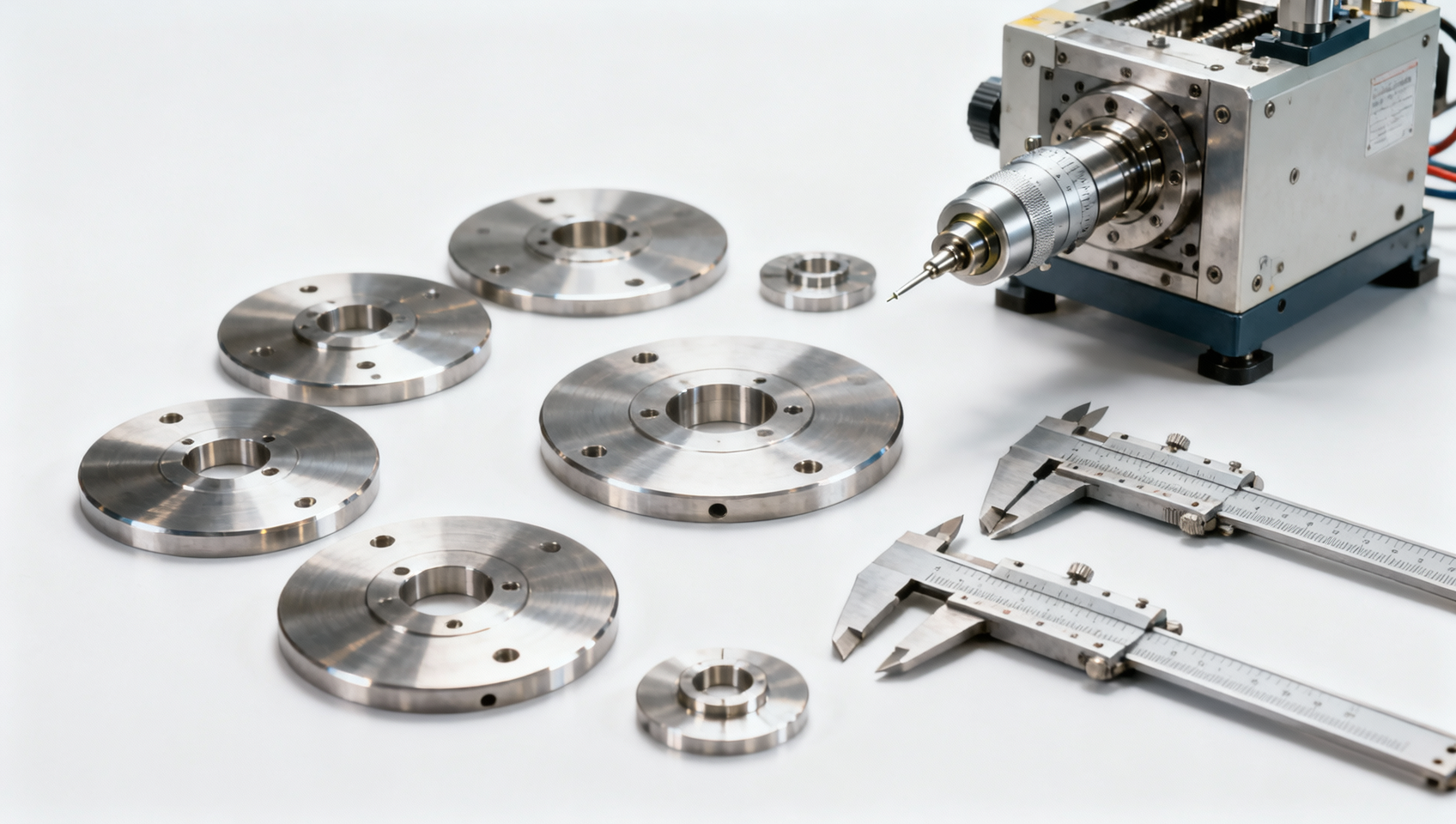
Choosing a reliable Precision Disc Parts manufacturer in China requires more than comparing prices. Buyers and engineers must assess machining accuracy, material control, delivery stability, and the ability to support Precision Disc Parts for hydraulic systems within modern smart manufacturing. This guide explains the key criteria that help procurement teams, operators, and decision-makers identify a qualified supplier with strong production capability and consistent quality.
Why judging a Precision Disc Parts manufacturer now requires a broader view
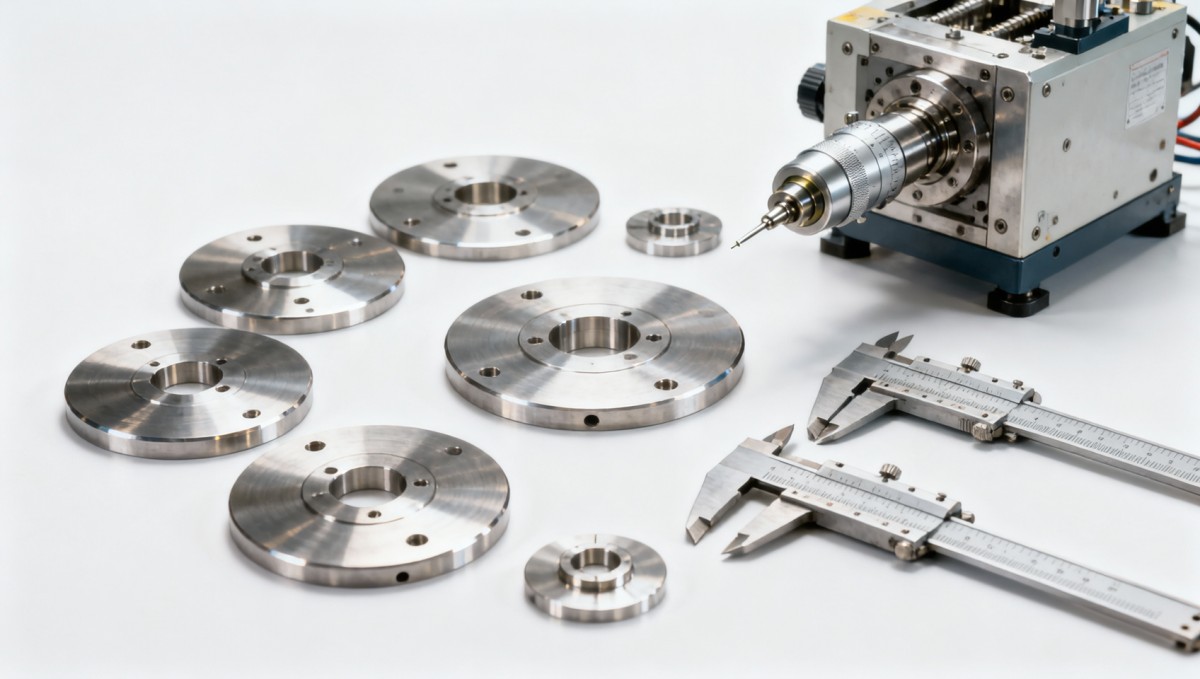
In the CNC machining and precision manufacturing industry, disc components are no longer treated as simple turned parts. They often work inside hydraulic systems, rotating assemblies, valve structures, sealing interfaces, and automated equipment where dimensional stability directly affects pressure control, vibration, and service life. That is why a Precision Disc Parts manufacturer in China should be evaluated through production capability, process discipline, and consistency across batches rather than quote alone.
For procurement teams, the challenge is practical. One supplier may offer a lower unit price, but unstable flatness, poor concentricity, or weak traceability can create hidden costs in 2–4 weeks through assembly delays, higher scrap rates, and repeated inspection. For operators and end users, the real issue is whether the parts perform reliably during continuous shifts, frequent pressure cycles, or high-speed machine operation.
China remains a major sourcing base because it combines dense machine tool clusters, broad material supply, and flexible manufacturing resources. In regions with mature CNC ecosystems, manufacturers may support prototyping, pilot runs, and volume orders under one production network. Still, capability varies significantly. Some workshops focus on basic turning only, while stronger suppliers integrate CNC lathes, machining centers, grinding, balancing, and inspection in one controlled workflow.
A sound evaluation should therefore cover at least 5 core dimensions: machining precision, material and heat-treatment control, inspection system, delivery reliability, and engineering communication. If the project involves hydraulic applications, sealing surfaces, or assembly with shafts and housings, these dimensions become even more important because tolerance stack-up can affect the entire machine rather than one isolated part.
What makes Precision Disc Parts difficult to source correctly?
Many buyers underestimate the complexity of precision disc machining because the geometry looks simple. In reality, thin-wall discs, stepped faces, precision bores, bolt circles, and sealing grooves can demand multiple operations. Depending on the application, the manufacturer may need turning, milling, grinding, deburring, surface treatment, and 100% critical-dimension checks on selected features.
Difficulty also increases when the disc part must fit into automated production lines or hydraulic systems. In such cases, the supplier must hold stable tolerances over small, medium, and large batch quantities. Typical concerns include flatness, runout, surface roughness, burr control, and distortion after heat treatment. A factory that can make one acceptable sample is not automatically qualified for repeat production over 3 months or 12 months.
Which technical and production indicators should buyers check first?
The fastest way to judge a Precision Disc Parts manufacturer is to ask how it controls the characteristics that matter most in actual machining. For disc parts used in pumps, valves, couplings, transmission systems, or automated machinery, critical indicators usually include outer diameter accuracy, inner bore tolerance, concentricity, flatness, thickness consistency, and surface finish. These are not abstract numbers. They affect assembly force, sealing quality, rotation stability, and wear behavior.
Different projects require different tolerance levels. A reliable supplier will not promise unrealistic precision on every part. Instead, it will discuss what is achievable by CNC turning, grinding, or secondary finishing, and how the tolerance chain should be allocated. In many industrial projects, stable repeatability matters more than an aggressive drawing target that cannot be maintained across 500 or 5,000 pieces.
Material control is equally important. Precision disc parts may use carbon steel, alloy steel, stainless steel, aluminum, brass, or cast material depending on load, corrosion risk, and cost target. A manufacturer should be able to explain incoming material identification, batch traceability, and whether post-machining processes such as heat treatment, coating, black oxide, or plating could change dimensions or surface condition.
Production capability should also match order type. Prototype jobs often need fast programming and flexible setup within 7–15 days. Repeat orders need tool life control, fixture stability, and process sheets that reduce variation over multiple runs. If the supplier cannot explain how it manages first article approval, in-process checks, and final inspection, the risk of unstable quality remains high even when the sample looks acceptable.
A practical technical checklist for Precision Disc Parts sourcing
The following table helps buyers compare manufacturers using concrete evaluation points instead of general claims. It is especially useful when screening 3–5 Chinese suppliers for hydraulic or automated equipment applications.
This table shows why selection should be evidence-based. A capable Precision Disc Parts manufacturer in China should answer these points clearly, provide inspection examples, and identify the dimensions it treats as critical. Vague answers such as “we can do high precision” are not enough for B2B sourcing decisions.
Key signs of a stronger manufacturer
- It asks for application details such as pressure environment, mating components, rotational speed, and sealing surface requirements before quoting.
- It separates prototype, pilot batch, and mass production control methods instead of using one generic process for all orders.
- It can explain which features require 100% inspection and which are checked by sampling according to production risk.
- It discusses packaging and rust prevention, especially for export delivery cycles of 2–6 weeks.
How to compare Chinese suppliers beyond price and lead time
When buyers compare multiple Chinese manufacturers, price is usually the first visible difference. However, total procurement value depends on more than the unit quote. A lower-cost supplier may use limited inspection, outsource key operations without traceability, or lack process control for repeat orders. A higher quote may include better material documentation, fixture development, final cleaning, and export-safe packaging. These differences affect the real landed cost.
Lead time must also be interpreted correctly. A supplier promising delivery in 10 days may only be counting machining time, not raw material preparation, heat treatment, coating, first article approval, and rework allowance. A practical schedule for precision disc parts often includes 3 stages: technical review, production and inspection, then packing and shipment. For customized parts, 2–4 weeks is a common planning range, while repeat orders may move faster when process setup is stable.
Communication quality is another major differentiator. Strong manufacturers ask targeted questions about drawings, tolerances, material alternatives, and acceptance criteria. Weaker suppliers move straight to quotation without clarifying missing information. This is risky because assumptions made at RFQ stage can later cause disputes over chamfers, burr level, edge condition, coating thickness, or measurement method.
For decision-makers, the most useful comparison method is weighted evaluation. Instead of choosing the lowest quotation from 4 suppliers, score each one across precision capability, process completeness, documentation, responsiveness, and delivery confidence. This reduces the chance of selecting a low-price source that later drives up quality costs.
Supplier comparison table for procurement teams
Use the matrix below to compare a Precision Disc Parts manufacturer in China on factors that matter during sourcing, qualification, and repeat ordering.
The goal is not to eliminate every low-cost supplier. It is to identify whether a quote reflects a complete manufacturing solution or only basic machining. In sectors tied to smart manufacturing, hydraulic equipment, and automated lines, the second option is often safer because downtime and assembly loss can exceed the initial price difference.
A 4-step comparison method
- Screen 3–5 suppliers by drawings, material capability, and export communication speed.
- Request sample inspection records, not only photos or generic workshop images.
- Compare actual production route, including heat treatment, finishing, and packaging.
- Evaluate trial order performance on quality, response time, and on-time delivery before scaling volume.
What procurement, operators, and decision-makers should ask before placing an order
Different stakeholders judge a Precision Disc Parts manufacturer from different angles. Procurement focuses on cost, documentation, and supply continuity. Operators care about fit, burr condition, cleanliness, and ease of assembly. Enterprise decision-makers look at supply risk, long-term quality stability, and whether the supplier can support product upgrades. A good sourcing process brings these views together before final approval.
The first question should be whether the manufacturer understands the actual application. Disc parts for hydraulic systems may require specific sealing-face quality, edge control, and material behavior under pressure. Parts for rotating systems may place greater emphasis on concentricity, balance, and repeated dimensional stability. If the supplier treats all disc parts the same, the evaluation is incomplete from the start.
The second question is how the factory manages quality before shipment. Ask what the first article process looks like, which dimensions are measured at setup, how often in-process checks are performed, and what final records are available. For medium or large batches, a supplier should be able to explain sampling frequency per lot, reaction plan for nonconforming parts, and packaging controls for corrosion or impact protection during transport.
The third question concerns commercial resilience. Can the manufacturer support engineering revisions, urgent repeat orders, and material substitution review when market conditions change? In international sourcing, flexibility matters. Projects often evolve over 30, 60, or 90 days, especially when prototypes move into pilot production.
Key questions to include in supplier qualification
- Which dimensions are treated as critical characteristics, and how are they measured during production?
- What is the standard lead time for samples, pilot lots, and repeat orders? A realistic answer may differ between 7–15 days and 2–4 weeks depending on process route.
- How are outsourced steps such as heat treatment or coating controlled and documented?
- What packaging method is used for export, anti-rust protection, and separation of finished surfaces?
- Can the supplier support sample optimization if burrs, fit issues, or minor drawing adjustments appear after trial assembly?
Standards, compliance, and documentation to review
Not every project requires the same documentation depth, but buyers should still verify whether the manufacturer can work within standard industrial controls. Common expectations may include drawing revision management, incoming material records, first article inspection reports, dimensional inspection sheets, and packaging labels linked to lot numbers. For export-oriented projects, clear document control reduces disputes and shortens approval cycles.
If the part serves regulated or higher-risk applications, ask early about applicable material standards, tolerance references, and customer-specific requirements. The right supplier will confirm what it can support and where external certification or additional inspection may be needed. This is better than receiving an unverified “yes” that creates risk later in production.
Common mistakes, FAQ, and the next step for supplier selection
One common mistake is assuming that sample approval guarantees stable production. In fact, many quality problems appear only after longer runs when tool wear, fixture drift, or subcontract variation enters the process. Another mistake is comparing quotations without aligning scope. If one supplier includes final cleaning, anti-rust packaging, and inspection records while another does not, the prices are not directly comparable.
A third mistake is sending incomplete technical data. Drawings without surface roughness notes, edge requirements, coating details, or mating-part information force suppliers to make assumptions. These assumptions can later turn into tolerance disputes or assembly problems. Clear RFQ documents save time and usually improve quote accuracy within the first 1–2 rounds of communication.
A better approach is phased qualification. Start with technical review, move to a controlled sample order, then confirm repeatability through a pilot batch. This 3-step path is more reliable than placing a full-volume order on the basis of price and workshop photos alone. It also gives operators and quality teams a chance to verify fit, cleanliness, and usability in real conditions.
Below are common buyer questions that often appear during sourcing of Precision Disc Parts from China. They help clarify expectations before formal quotation and supplier approval.
How do I know if a manufacturer is suitable for hydraulic Precision Disc Parts?
Check whether the supplier asks about pressure environment, sealing surfaces, mating components, and surface finish requirements. Hydraulic applications usually demand closer control of flatness, burrs, groove dimensions, and cleanliness. A manufacturer with relevant experience will discuss these points early and explain how they are verified during machining and final inspection.
What is a realistic lead time for custom Precision Disc Parts in China?
It depends on material, quantity, and process route. For straightforward CNC machined samples, 7–15 days is often a practical range. For parts requiring heat treatment, coating, complex inspection, or pilot-batch validation, 2–4 weeks is more realistic. Repeat production may be faster once fixtures, programs, and inspection plans are stable.
Should I choose the supplier with the lowest quotation?
Not without checking scope. The lowest quote may exclude material certification, grinding, final cleaning, full inspection on critical dimensions, or protected export packaging. Compare total value, including rework risk, scrap exposure, delivery reliability, and engineering support. In many B2B projects, the lowest initial price does not produce the lowest total cost.
Why choose us for Precision Disc Parts sourcing and evaluation support?
We focus on the global CNC machining and precision manufacturing sector, with close attention to machine tools, precision components, automated production needs, and international industrial sourcing. That means we understand how buyers evaluate machining accuracy, material control, production stability, and delivery risk in real manufacturing environments rather than in generic catalog terms.
If you are comparing a Precision Disc Parts manufacturer in China, you can contact us for practical support on drawing review, tolerance discussion, supplier screening, sample planning, lead time evaluation, and quotation comparison. We can also help you clarify application requirements for hydraulic systems, identify key inspection points, and structure RFQ documents that reduce sourcing errors before orders are placed.
To move forward efficiently, prepare 4 items: drawings or 3D files, material preference, estimated quantity range, and target delivery timing. With these details, discussions around process route, sample support, inspection expectations, certification needs, and pricing become much faster and more reliable. This helps procurement teams and decision-makers shorten supplier evaluation cycles while improving quality confidence.
NEXT ARTICLE
Recommended for You
 What Slows Down an Automation Line in Textile Production?Machine Tool Industry Editorial Team
 High Temperature Alloy Cutting Tools Wear Out for Hidden ReasonsCNC Machining Technology Center
 Automated Production Lines in Auto Manufacturing: Key BottlenecksMachine Tool Industry Editorial Team
 What Makes a 5 Axis Machining Center Fit Aerospace Parts?Machine Tool Industry Editorial Team
 Medical Equipment Machining Centers Need Accuracy Beyond SpecsMachine Tool Industry Editorial Team
 How to Compare CNC Tooling System Suppliers in GermanyGlobal Machine Tool Trade Research Center


Aris Katos
Future of Carbide Coatings
15+ years in precision manufacturing systems. Specialized in high-speed milling and aerospace grade alloy processing.
▶
How to Judge a Precision Disc Parts Manufacturer in ChinaGlobal Machine Tool Trade Research Center▶
Machine tool distributor: How lead times shift when global inventory visibility is missingGlobal Machine Tool Trade Research Center▶
CNC metalworking orders are shifting from volume to precisionGlobal Machine Tool Trade Research Center▶
Xiaohongshu's Redshop Launches in June 2026: A DTC Gateway for Chinese BrandsGlobal Machine Tool Trade Research Center▶
Global Procurement Trends indicate growing preference for modular CNC cutting tool systemsGlobal Machine Tool Trade Research Center
Mastering 5-Axis Workholding Strategies
Join our technical panel on Nov 15th to learn about reducing vibrations in thin-wall components.

Providing you with integrated sanding solutions
Before-sales and after-sales services
Comprehensive technical support