• Global CNC market projected to reach $128B by 2028 • New EU trade regulations for precision tooling components • Aerospace deman
NYSE: CNC +1.2%LME: STEEL -0.4%

Industrial CNC buying errors that lead to hidden upgrade costs
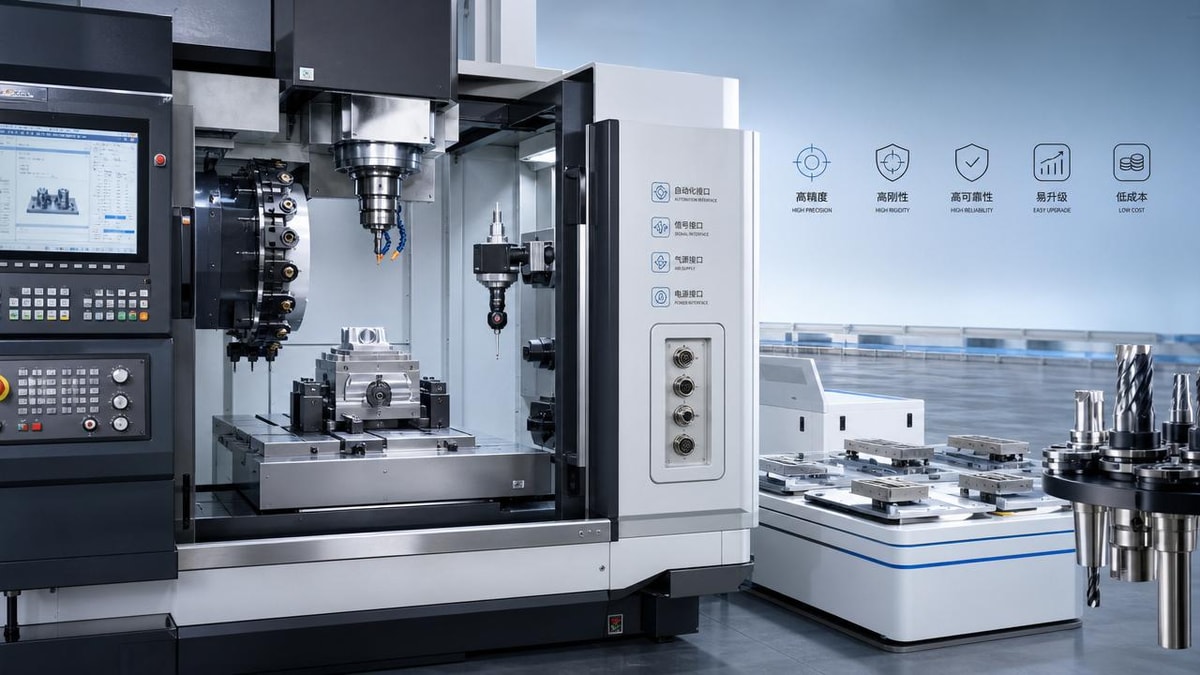
Buying an industrial CNC system is not just about machine price—it is about long-term compatibility, tooling, software, training, and upgrade paths. Many procurement teams focus on short-term budgets and overlook hidden costs that appear during expansion, automation, or precision upgrades. This article highlights the most common buying errors and shows how to avoid expensive surprises before signing a contract.
Why do hidden upgrade costs happen so often in industrial CNC purchases?
Hidden upgrade costs appear because an industrial CNC machine is rarely a standalone asset. It sits inside a larger production system that includes tooling, fixtures, CAM software, controls, operators, maintenance routines, spare parts, automation interfaces, and quality requirements. A machine that looks affordable on a quotation can become expensive when the buyer later discovers that adding a fourth axis, pallet system, probe, robot, or software license requires major retrofits.
For procurement teams, the risk is especially high when buying across multiple departments. Engineering may focus on part complexity, production may focus on throughput, finance may focus on capital cost, and maintenance may focus on serviceability. If those views are not aligned early, the selected industrial CNC platform may solve today’s output target but fail tomorrow’s digital integration, tolerance demands, or mixed-batch production needs.
This matters across the broader manufacturing landscape, from automotive components and aerospace structures to energy equipment and precision electronics. In all of these sectors, industrial CNC equipment is expected to support long service life, stable repeatability, and future process upgrades. Procurement mistakes are costly not only because of replacement expense, but also because downtime, retraining, and production disruption can outweigh the initial machine discount.
What is the most common buying error when evaluating an industrial CNC machine?
The most common error is comparing machines by base price instead of lifecycle capability. A lower-priced industrial CNC may exclude features that are essential for future growth: spindle monitoring, tool breakage detection, chip management, data connectivity, high-pressure coolant, automatic probing, or expandable I/O for automation. When those items are added later, the total cost often exceeds the price of a better-prepared machine purchased from the beginning.
Another frequent mistake is treating specifications as equivalent when they are not. Two machines may list similar travels, spindle speeds, or rapid rates, yet differ significantly in thermal stability, casting rigidity, control flexibility, servo tuning, or tool magazine design. Those differences become visible only after the industrial CNC enters real production and has to hold tolerances over long shifts, changing materials, and varied part families.
Procurement should also avoid relying only on sample parts produced under ideal demo conditions. Ask whether the machine was tested with the same material, fixture complexity, cycle time target, and surface finish requirement that your operation needs. A machine that performs well in a showroom may require expensive optimization in your plant environment.
The table above shows why industrial CNC procurement should focus on system readiness, not only machine comparison. Buyers who map hidden costs early usually make better long-term decisions.
How can procurement teams tell whether an industrial CNC is truly upgrade-ready?
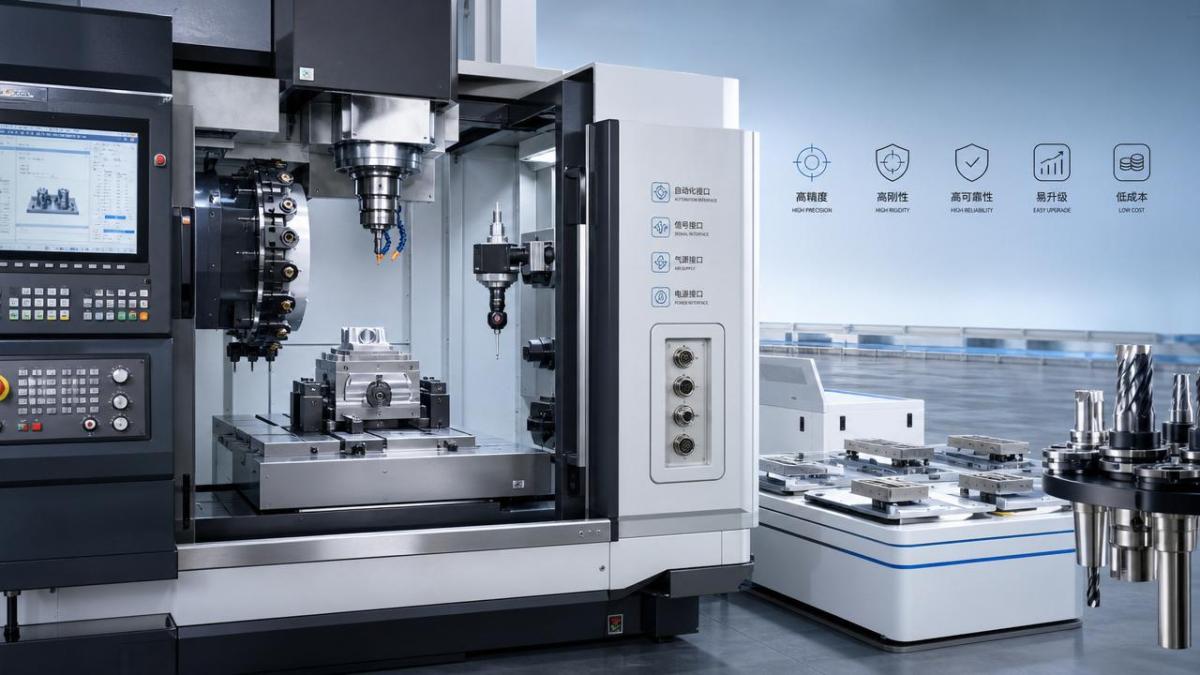
An upgrade-ready industrial CNC has technical headroom, open integration options, and practical support for expansion. Technical headroom means the structure, spindle, control, and servo package can support more demanding work later without becoming unstable or inaccurate. Open integration means the machine can connect with probing systems, robots, MES platforms, tool management, and remote diagnostics without requiring proprietary barriers that increase future dependence on a single supplier.
Procurement should ask detailed questions such as: Can the control handle additional axes? Are there preconfigured ports for automation? Is there a proven path for adding bar feeders, pallet changers, or in-process gauging? Are software licenses permanent, subscription-based, or tiered? What happens if production shifts from simple turning to multitasking or from three-axis milling to five-axis contouring?
A practical way to evaluate this is to request an “expansion map” from the supplier. This should list what can be added later, what hardware is already prepared at factory level, which upgrades require machine downtime, and which functions depend on external vendors. If a supplier cannot provide a clear upgrade path, the industrial CNC may not be as scalable as the sales presentation suggests.
Which overlooked areas usually create the biggest hidden costs after installation?
Software is one of the biggest hidden cost areas. Many buyers confirm the machine hardware but fail to verify post-processors, simulation tools, digital twins, DNC communication, and data reporting compatibility. When the industrial CNC arrives, programmers may need extra engineering support, custom code adjustment, or third-party middleware to connect the machine to existing workflows. That adds cost and delays the start of production.
Tooling and fixturing are another major source of surprise. A new industrial CNC often performs best only when paired with better toolholders, balanced tooling, presetters, modular fixtures, workholding upgrades, and coolant systems suited to the target material. Buyers sometimes budget for the machine and basic accessories but ignore the real cost of achieving stable cycle times and precision at scale.
Training is also frequently underestimated. If the control interface differs from the shop’s current standard, operators, setters, and maintenance staff may require longer onboarding. In sectors with tight delivery deadlines, even a short learning curve can create expensive output losses. For complex industrial CNC systems, advanced functions are often left unused simply because training was limited to startup basics.
Finally, service structure matters. Spare part lead times, local technical support, remote troubleshooting, and preventive maintenance policies all influence total ownership cost. A machine that is cheaper to buy but slower to recover from faults may become the more expensive option over five years.
What questions should buyers ask before signing an industrial CNC contract?
Buyers should move beyond “What is the price?” and ask “What will this industrial CNC cost when our production changes?” That shift in questioning reveals whether the supplier understands manufacturing realities or is only selling a base model. The contract stage is the best time to clarify what is included, what is optional, and what becomes expensive later.
- Which future options are factory-prepared and which require retrofit?
- What software licenses, updates, and support fees apply over three to five years?
- Can the industrial CNC integrate with current CAM, ERP, MES, or robot systems?
- What tooling, holders, probes, and fixtures are necessary to reach quoted cycle times?
- What training is included for operators, programmers, and maintenance staff?
- What are spare part availability, service response time, and local support conditions?
- What acceptance criteria will be used at FAT and SAT?
These questions help procurement convert a sales quotation into a realistic investment picture. In the industrial CNC market, clarity before purchase is usually far cheaper than correction after commissioning.
How should buyers compare a lower-cost industrial CNC with a premium model?
The right comparison is not budget model versus premium model in isolation, but total value over intended use. If the machine will run one stable part family with limited automation and moderate tolerances, a simpler industrial CNC may be entirely appropriate. But if the business expects part mix changes, unattended shifts, digital production tracking, or tighter geometric tolerances, a premium platform may reduce future spending.
Procurement should calculate at least five cost layers: acquisition, installation, process stabilization, annual operation, and future upgrades. A lower-cost machine can be attractive if it meets process needs without forcing later control replacement, spindle enhancement, or external add-ons. A premium machine is justified when it prevents recurring costs such as scrap, setup delays, unstable accuracy, or weak automation compatibility.
In many manufacturing environments, the break-even point is reached faster than expected. If an industrial CNC with better probing, more rigid construction, and stronger software connectivity reduces setup time and quality losses every day, the added upfront investment may be recovered well before the machine’s mid-life stage.
How can procurement reduce risk when buying for future automation or precision upgrades?
Start with a realistic three- to five-year production forecast. Do not specify the industrial CNC only for today’s part drawing. Instead, define possible future scenarios: larger batches, smaller mixed batches, harder materials, tighter tolerances, extended lights-out operation, robot loading, or traceability requirements. The machine should be screened against those scenarios during supplier evaluation.
Next, involve cross-functional reviewers early. Engineering, production, maintenance, quality, and IT all affect whether an industrial CNC becomes a scalable asset or a bottleneck. For example, IT may identify network protocol limitations, while maintenance may detect weak access to critical spare parts. These issues are easier to solve before purchase than after installation.
It is also wise to document non-negotiable requirements separately from optional features. This prevents valuable items such as spindle chiller capacity, probing readiness, coolant pressure, enclosure design for automation, or control openness from being removed during price negotiation. In industrial CNC procurement, many expensive future problems begin as small “cost-saving” deletions at quotation stage.
What should buyers confirm first if they want a practical next step?
Before moving forward with any industrial CNC purchase, confirm four things in order: the real part roadmap, the required production flexibility, the digital and automation environment, and the full support model after installation. Those four factors usually determine whether the selected machine remains competitive as business needs evolve.
A good procurement process does not aim to buy the cheapest machine or the most advanced machine. It aims to buy the industrial CNC platform that can deliver reliable output now without creating avoidable upgrade costs later. That means checking not only the machine specification, but also the total manufacturing ecosystem around it.
If you need to confirm a specific solution, parameters, project direction, lead time, pricing structure, or cooperation model, prioritize discussion around future options, software compatibility, tooling scope, training depth, automation readiness, and service commitments. Those are the questions that most often separate a smart industrial CNC investment from a costly procurement mistake.
PREVIOUS ARTICLE
Recommended for You
![]() Beijing’s New E-Bike Lock Regulation Spurs CNC Housing DemandGlobal Machine Tool Trade Research Center
Beijing’s New E-Bike Lock Regulation Spurs CNC Housing DemandGlobal Machine Tool Trade Research Center![]() New Drone Standard GB/T 44723–2026 Takes Effect May 2026Manufacturing Policy Research Center
New Drone Standard GB/T 44723–2026 Takes Effect May 2026Manufacturing Policy Research Center![]() New Maritime Code Takes Effect May 1, 2026: CNC Equipment Shipping Rules UpdatedManufacturing Market Research Center
New Maritime Code Takes Effect May 1, 2026: CNC Equipment Shipping Rules UpdatedManufacturing Market Research Center![]() 2026 China Cycle Shanghai: CNC E-Bike Frame Capacity Draws ODM FocusManufacturing Market Research Center
2026 China Cycle Shanghai: CNC E-Bike Frame Capacity Draws ODM FocusManufacturing Market Research Center![]() 2026 Foshan Tanzhou Auto Expo: EV Parts Sourcing FocusGlobal Machine Tool Trade Research Center
2026 Foshan Tanzhou Auto Expo: EV Parts Sourcing FocusGlobal Machine Tool Trade Research Center![]() New Hazardous Chemicals Safety Law Takes Effect May 2026Manufacturing Policy Research Center
New Hazardous Chemicals Safety Law Takes Effect May 2026Manufacturing Policy Research Center


Aris Katos
Future of Carbide Coatings
15+ years in precision manufacturing systems. Specialized in high-speed milling and aerospace grade alloy processing.
▶
2026 Foshan Tanzhou Auto Expo: EV Parts Sourcing FocusGlobal Machine Tool Trade Research Center▶
Industrial CNC buying errors that lead to hidden upgrade costsGlobal Machine Tool Trade Research Center▶
What buyers miss in CNC production equipment quotesGlobal Machine Tool Trade Research Center▶
WeChat Pay Integrates QR Codes from 5 Countries for CNC Equipment ProcurementGlobal Machine Tool Trade Research Center▶
Industrial Turning Costs That Are Easy to Miss in QuotationsGlobal Machine Tool Trade Research Center
Mastering 5-Axis Workholding Strategies
Join our technical panel on Nov 15th to learn about reducing vibrations in thin-wall components.

Providing you with integrated sanding solutions
Before-sales and after-sales services
Comprehensive technical support