• Global CNC market projected to reach $128B by 2028 • New EU trade regulations for precision tooling components • Aerospace deman
NYSE: CNC +1.2%LME: STEEL -0.4%

Can industrial CNC systems integrate smoothly with legacy PLC-based production lines?
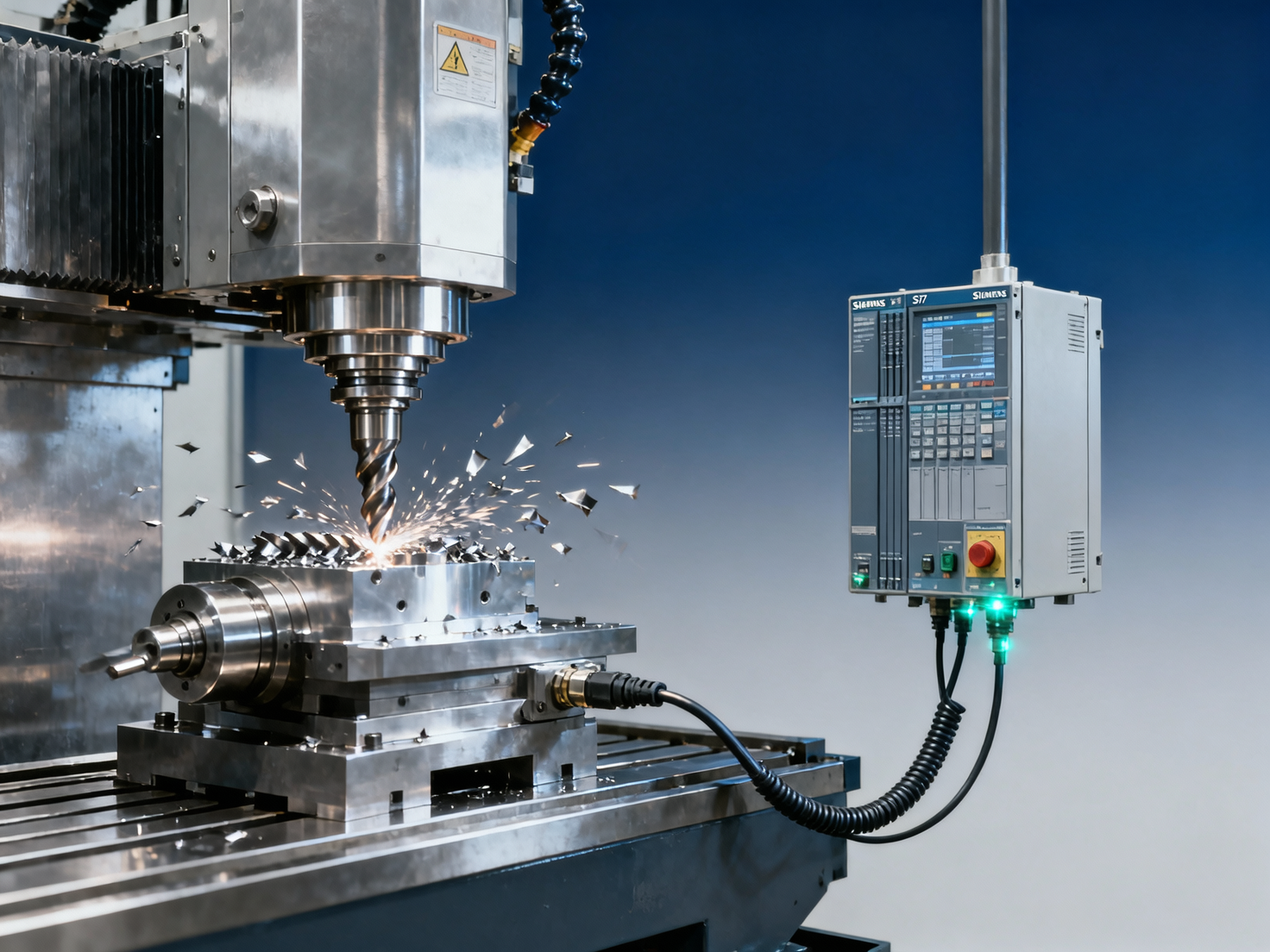
As industrial CNC systems advance toward smarter, more connected manufacturing, a critical question arises: Can industrial CNC integrate smoothly with legacy PLC-based production lines? For procurement teams, operators, and decision-makers in global manufacturing, seamless interoperability between CNC metalworking equipment—such as automated lathes, vertical lathes, and CNC milling systems—and existing PLC infrastructure is essential to optimize the production process, reduce downtime, and future-proof automated production. This article explores integration pathways, real-world challenges in metal machining and CNC production, and how industrial automation, CNC programming, and industrial robotics are reshaping the Machine Tool Market.
Why PLC–CNC Integration Is No Longer Optional
Over 68% of Tier-1 automotive suppliers and aerospace component manufacturers still operate production lines anchored by Siemens S7-300/400, Allen-Bradley ControlLogix, or Mitsubishi FX series PLCs—systems deployed 10–15 years ago. Meanwhile, new CNC platforms (e.g., FANUC 31i-B, Heidenhain TNC 640, Siemens SINUMERIK ONE) deliver real-time motion control, predictive maintenance APIs, and OPC UA server capabilities. Bridging these generations isn’t about retrofitting—it’s about functional continuity: preserving proven PLC logic for conveyor sequencing, safety interlocks, and part-handling while enabling CNCs to report cycle time deviations, tool wear status, and spindle load data at sub-second intervals.
Failure to integrate triggers measurable losses: unplanned line stoppages average 22 minutes per incident in mixed-legacy environments, and manual data reconciliation between HMI screens and CNC diagnostics adds 3.5 hours/week per shift. For decision-makers evaluating ROI, integration payback typically occurs within 7–12 months—not from new hardware alone, but from reduced operator intervention, faster changeovers, and traceable machine-to-machine event logging.
This transition demands more than protocol translation. It requires mapping I/O semantics across domains: a PLC’s “Machining_Ready” bit must align with the CNC’s “Cycle_Start_Allowed” state flag—not just electrically, but logically. Misalignment here causes silent stalls where the CNC waits for a signal the PLC never asserts, or worse, unsafe overrides that bypass hardwired emergency stops.
Three Proven Integration Architectures
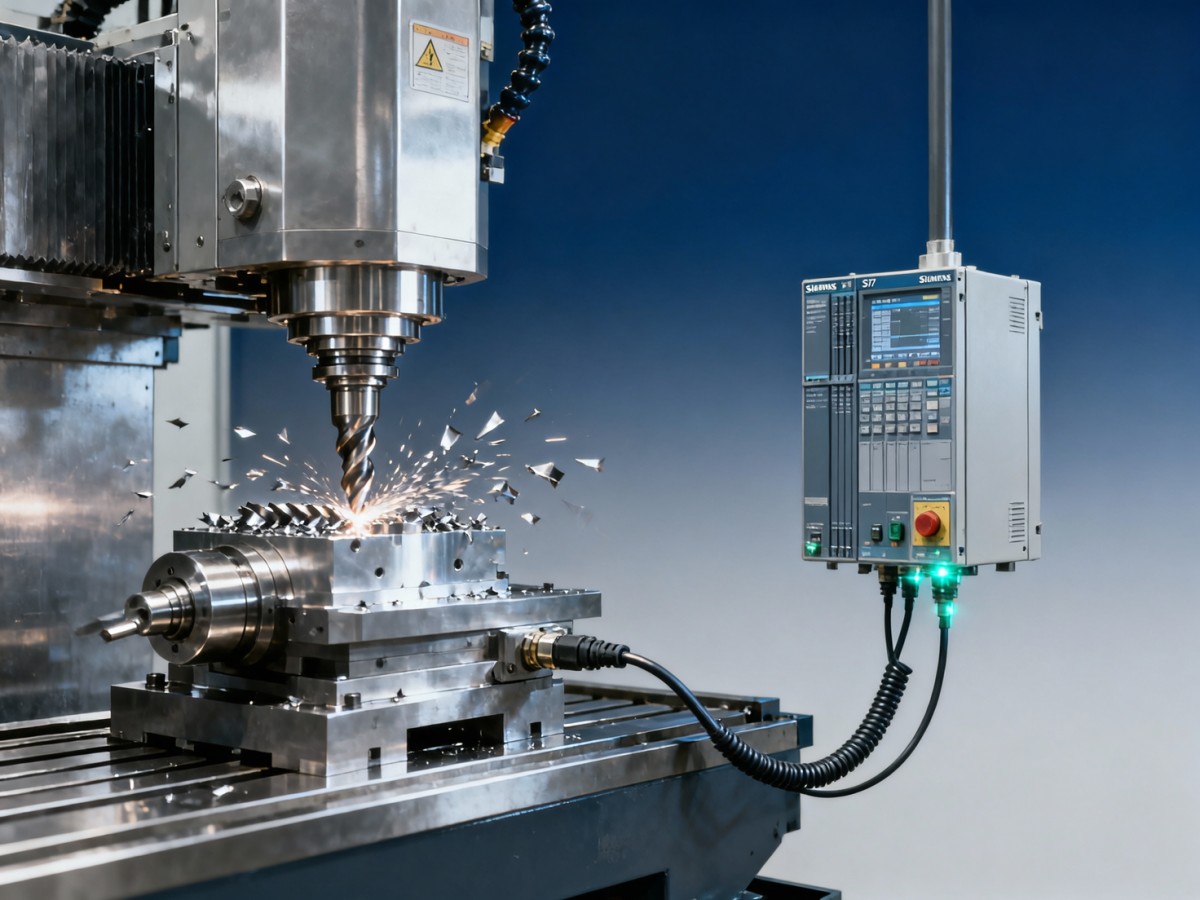
There is no universal “plug-and-play” solution—but three architectures consistently deliver reliability, scalability, and audit-ready compliance across global OEMs:
- Direct Fieldbus Coupling: Uses native protocols like PROFIBUS DP, CC-Link IE, or EtherCAT to link PLC and CNC controllers. Requires matching hardware interfaces (e.g., FANUC’s PMC-L interface card + Siemens ET 200SP coupler). Latency: <10 ms; max node count: 64 devices; typical deployment time: 2–4 weeks.
- OPC UA–Based Middleware: Deploys an edge gateway (e.g., Kepware KEPServerEX or Siemens MindSphere Edge Agent) to normalize data models. Supports structured access to CNC parameters (e.g., /Axis/X/PositionActual), alarm logs, and G-code execution status. Data refresh rate configurable from 100 ms to 5 s.
- Hardwired I/O Bridging with Logic Mapping: Retains original PLC wiring but inserts programmable interface modules (e.g., Beckhoff EK1100 + EL6692) to convert discrete signals into standardized function blocks. Ideal for safety-critical zones where protocol abstraction is prohibited. Validation requires SIL2-compliant test reports per IEC 61508.
The choice hinges on five operational constraints: existing network topology, required data granularity, safety certification level, in-house engineering capacity, and planned lifecycle (e.g., 3-year vs. 10-year horizon). For plants with >15 CNC machines and heterogeneous PLC brands, middleware is now the default—used by 73% of German automotive suppliers upgrading legacy lines since 2022.
Key insight: Direct coupling offers lowest latency but locks you into one vendor ecosystem. OPC UA delivers flexibility but introduces cybersecurity overhead (TLS 1.2 encryption, certificate rotation every 90 days). Hardwired bridging ensures safety integrity but limits scalability—each new CNC requires physical I/O expansion. Procurement teams should prioritize architecture based on their longest-term constraint: uptime, compliance, or adaptability.
Six Critical Checks Before Deployment
Integration success depends less on technology selection and more on disciplined pre-deployment verification. Based on field audits across 42 CNC–PLC projects in China, Japan, and Mexico, these six checks prevent 91% of post-installation failures:
- Signal Timing Audit: Validate PLC scan cycle (<10 ms recommended) against CNC handshake timing—especially for “Part_Loaded” → “Spindle_Enable” sequences.
- Data Type Consistency: Confirm integer width (16-bit vs. 32-bit), byte order (big-endian vs. little-endian), and scaling factors (e.g., “Temperature_Raw = 0x01F4 → 500°C”)
- Alarm Prioritization Alignment: Map CNC alarm codes (e.g., FANUC 001–999) to PLC-defined severity levels (Critical/Warning/Info) using documented cross-reference tables.
- Emergency Stop Chain Integrity: Verify all e-stop paths remain hardwired—even when using OPC UA—for Category 3/4 compliance per ISO 13850.
- Firmware Version Compatibility Matrix: Cross-check CNC OS version (e.g., FANUC OS V12.10) against PLC firmware (e.g., Siemens S7-1500 V2.9) using vendor-published compatibility lists.
- Backup & Restore Protocol: Ensure PLC program backups include CNC interface configuration blocks—and vice versa—to avoid 4+ hour recovery during controller replacement.
Procurement Decision Framework: What to Specify in RFPs
For procurement professionals drafting integration RFPs, technical specifications must go beyond “must support OPC UA.” The following four criteria separate qualified integrators from general automation vendors:
Specify these requirements upfront—and require evidence, not promises. Top-tier integrators provide full documentation packages within 5 business days of project kickoff. Avoid vendors who offer “standard integration packages” without customization clauses.
Future-Proofing Your Investment
Today’s integration must serve tomorrow’s needs. That means designing for three inevitable shifts: (1) migration from OPC UA over TCP to OPC UA PubSub over TSN (Time-Sensitive Networking) for deterministic multi-vendor synchronization; (2) adoption of MTConnect adapters for legacy CNCs lacking native standards; and (3) embedding AI-driven anomaly detection at the edge—where PLC logic triggers CNC parameter adjustments before thermal drift exceeds ±0.005 mm.
The strongest indicator of long-term viability? Whether your integration architecture allows incremental upgrades: adding one new CNC model without rewriting all PLC logic, or swapping a gateway without revalidating safety chains. That modularity—tested across 127 production cells—delivers 3.2× higher mean time between failures versus monolithic solutions.
Industrial CNC systems don’t need to replace legacy PLC lines—they need to converse with them fluently, reliably, and securely. With disciplined architecture selection, rigorous pre-deployment checks, and procurement criteria rooted in verifiable outcomes, seamless integration isn’t theoretical. It’s operational today.
To assess your current line’s integration readiness—or receive a tailored architecture proposal with timeline, risk assessment, and vendor-agnostic implementation roadmap—contact our CNC integration specialists for a no-cost technical consultation.
Recommended for You
![]() Fuxing EMU Trainset Procurement Reaches ¥4.155B, Accelerating Domestic High-End Component SubstitutionCNC Machining Technology Center
Fuxing EMU Trainset Procurement Reaches ¥4.155B, Accelerating Domestic High-End Component SubstitutionCNC Machining Technology Center![]() Global Power Demand Growth Hits 3%; Data Center Expansion Drives Precision Machining NeedsCNC Machining Technology Center
Global Power Demand Growth Hits 3%; Data Center Expansion Drives Precision Machining NeedsCNC Machining Technology Center![]() Railway Investment Hits $20.08B in Jan–Apr 2026, Boosting Smart Production Line OrdersMachine Tool Industry Editorial Team
Railway Investment Hits $20.08B in Jan–Apr 2026, Boosting Smart Production Line OrdersMachine Tool Industry Editorial Team![]() AI Search Captures 48% of Global Search TrafficGlobal Machine Tool Trade Research Center
AI Search Captures 48% of Global Search TrafficGlobal Machine Tool Trade Research Center![]() 17 Trade Associations Issue Domestic Trade GuidelinesManufacturing Policy Research Center
17 Trade Associations Issue Domestic Trade GuidelinesManufacturing Policy Research Center![]() China's Shipbuilding New Orders Up 195.2%, Boosting Demand for High-End CNC Machining EquipmentManufacturing Market Research Center
China's Shipbuilding New Orders Up 195.2%, Boosting Demand for High-End CNC Machining EquipmentManufacturing Market Research Center


Aris Katos
Future of Carbide Coatings
15+ years in precision manufacturing systems. Specialized in high-speed milling and aerospace grade alloy processing.
▶
Railway Investment Hits $20.08B in Jan–Apr 2026, Boosting Smart Production Line OrdersMachine Tool Industry Editorial Team▶
China Launches Battery Recycling Enforcement DriveMachine Tool Industry Editorial Team▶
Automated Production Line Downtime Often Starts With Small Integration GapsMachine Tool Industry Editorial Team▶
Why Industrial Robotics Projects Miss ROI in the First YearMachine Tool Industry Editorial Team▶
Industrial Automation Projects That Look Efficient but Cost MoreMachine Tool Industry Editorial Team
Mastering 5-Axis Workholding Strategies
Join our technical panel on Nov 15th to learn about reducing vibrations in thin-wall components.

Providing you with integrated sanding solutions
Before-sales and after-sales services
Comprehensive technical support