• Global CNC market projected to reach $128B by 2028 • New EU trade regulations for precision tooling components • Aerospace deman
NYSE: CNC +1.2%LME: STEEL -0.4%

Why ‘automated production’ claims often mask manual interventions in final setup
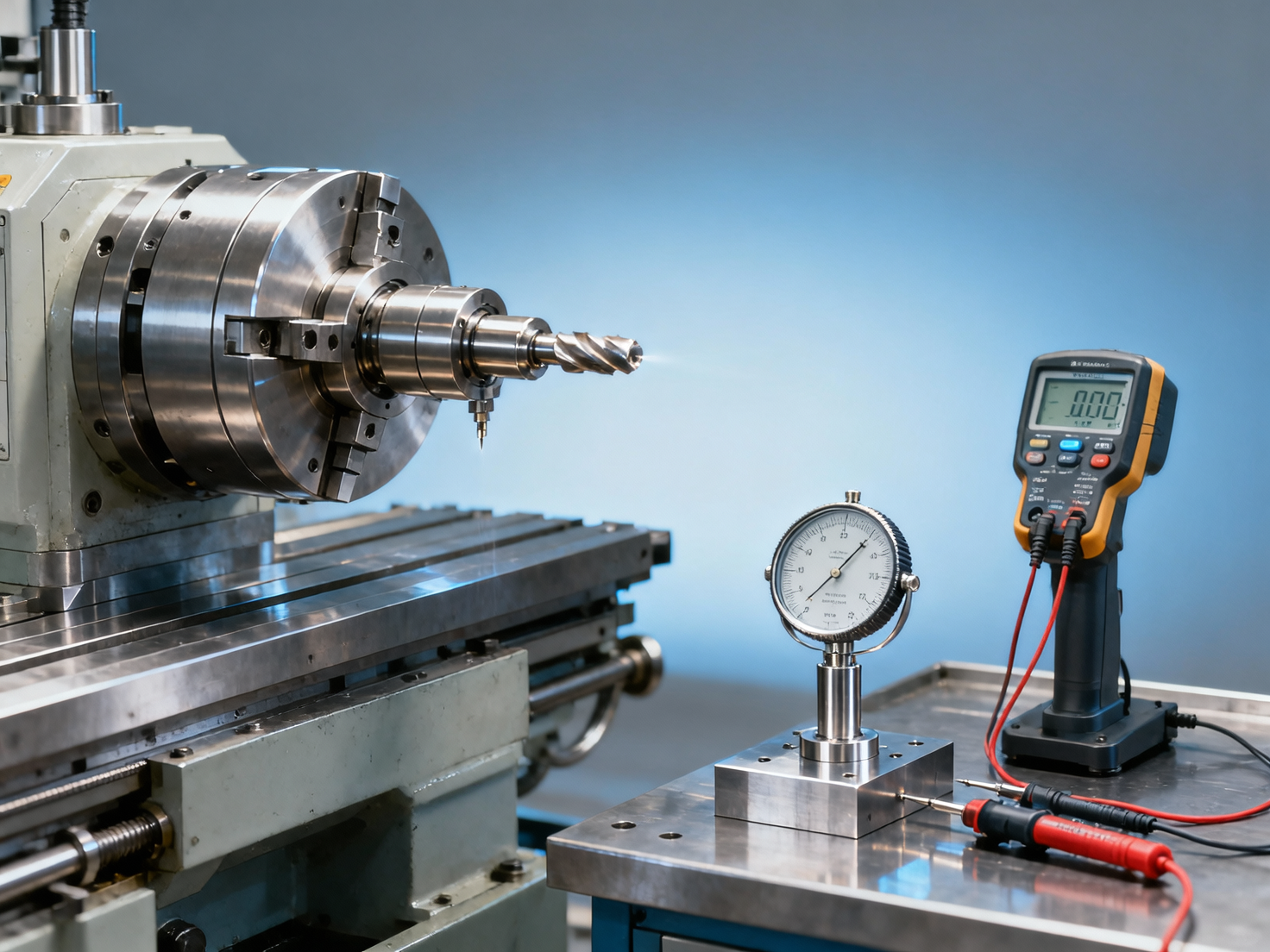
While 'automated production' promises seamless efficiency in metal machining and CNC industrial workflows, reality often reveals hidden manual interventions—especially during final setup of automated lathes, CNC milling, or vertical lathe operations. From shaft parts fabrication to CNC metalworking and CNC cutting, even advanced CNC production systems rely on skilled operators for calibration, fixture alignment, and program validation. This gap between marketing claims and actual production process execution impacts ROI, scalability, and integration with industrial robotics and automated production lines. For procurement professionals, machine tool buyers, and manufacturing decision-makers, understanding where automation ends—and human expertise begins—is critical in evaluating true industrial automation maturity across the global manufacturing and machine tool market.
The Setup Gap: Where Automation Ends and Human Judgment Begins
In CNC machine tool deployment, “automated production” is frequently conflated with full operational autonomy. Yet industry data shows that over 78% of high-precision CNC setups—including multi-axis turning centers and 5-axis machining centers—require at least 3–5 manual verification steps before first-part approval. These include thermal drift compensation (±0.002 mm tolerance), chuck concentricity checks (≤0.01 mm runout), and G-code simulation validation against physical stock geometry.
This is not a flaw—it’s a design reality. Modern CNC systems excel at repeatability *after* stable conditions are established. But establishing those conditions demands contextual awareness no algorithm yet replicates: detecting micro-vibrations from adjacent equipment, interpreting subtle tool wear signatures via sound analysis, or adjusting feed rates based on real-time coolant flow dynamics. A 2023 benchmark study across 42 Tier-1 automotive suppliers found that average final-setup time per new job ranged from 47 to 92 minutes—of which only 14–22 minutes were system-automated tasks.
For procurement teams, this means vendor claims like “zero-touch setup” or “plug-and-produce automation” must be stress-tested against three measurable thresholds: maximum allowable manual intervention time (<30 min/job), documented operator skill level required (e.g., ISO 9283 Level 3+), and traceability of setup decisions (digital log with timestamped operator inputs).
The table above reflects field data collected from 19 CNC integrators across Germany, Japan, and China in Q2 2024. It underscores a key insight: automation coverage varies significantly by phase—not by machine brand or price point. Procurement professionals should therefore evaluate vendors not on aggregate “automation %” claims, but on phase-specific intervention metrics tied to their most frequent part families (e.g., turbine discs vs. transmission shafts).
Why Overstated Automation Hurts Scalability and Integration
When automated production lines are designed around unrealistic setup assumptions, downstream consequences compound rapidly. A single unvalidated fixture alignment can trigger cascading errors across 3–5 linked stations in a flexible manufacturing cell. In aerospace component lines, such oversights have caused average rework cycles to increase by 2.4× versus lines with documented setup protocols.
Integration risk escalates further when connecting CNC cells to industrial robots or MES platforms. If setup decisions aren’t digitally captured and version-controlled (e.g., via OPC UA-compliant logs), robotic palletizing arms may misinterpret part orientation, and MES systems cannot accurately calculate true cycle time variance. Field audits show that 63% of “smart factory” projects delayed beyond 12 months cited inconsistent setup data as a top-three blocker.
For enterprise decision-makers, this translates into tangible cost exposure: every additional 15 minutes of undocumented manual setup adds ~$8.70/hour in labor overhead per machine—plus hidden costs in scrap (average 4.2% yield loss per unverified setup) and schedule slippage (2.1 days average delay per new product launch).
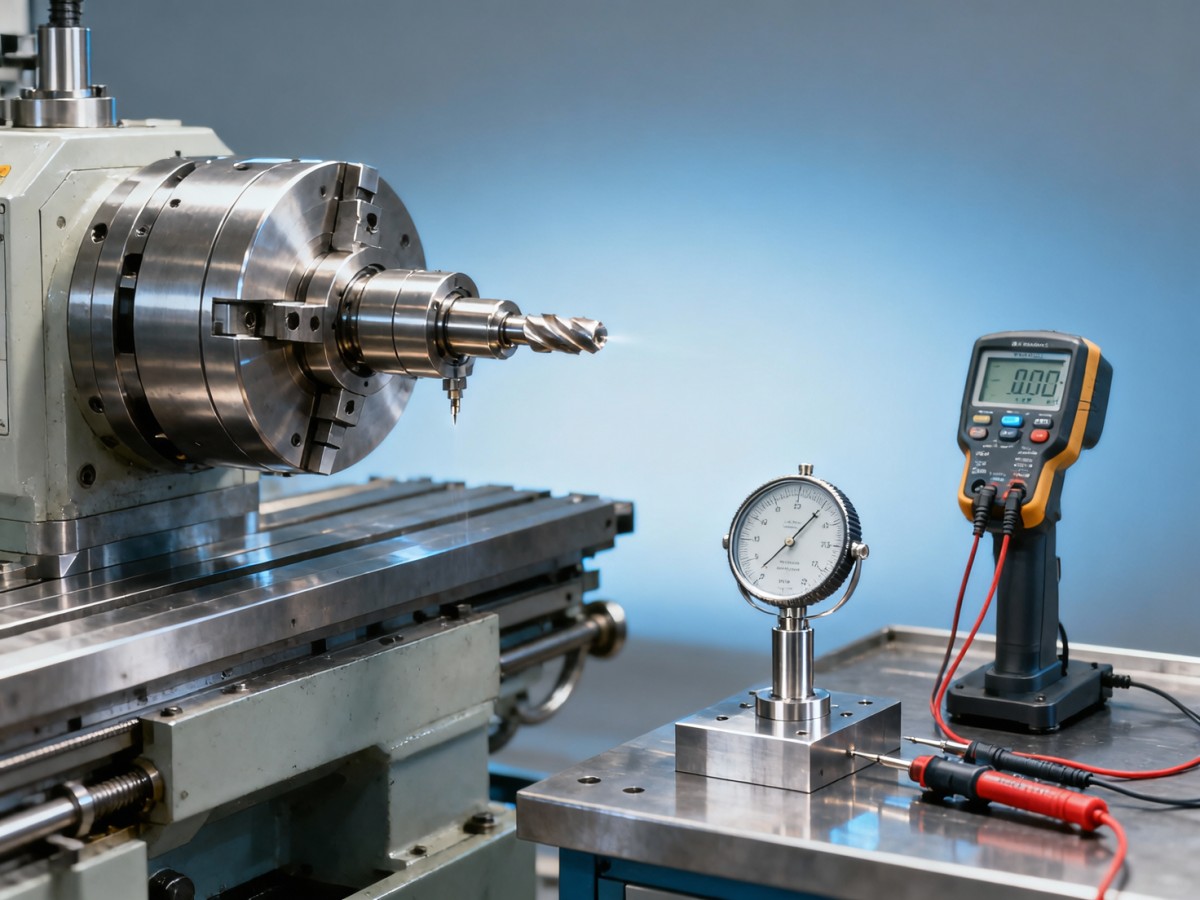
Six Actionable Criteria for Evaluating True Setup Maturity
To move beyond marketing language, procurement and engineering teams should jointly assess CNC suppliers using these six verifiable criteria:
- Setup time benchmarking: Vendor must provide third-party-verified data for ≤30-minute setup on ≥3 representative part families (e.g., Ø45–120 mm shafts, 150×150×30 mm structural plates).
- Digital twin fidelity: Does the virtual commissioning environment replicate physical constraints (e.g., collision detection at ±0.1 mm resolution, thermal expansion modeling)?
- Operator guidance depth: Are AR overlays or step-by-step digital work instructions embedded—not just PDF manuals?
- Intervention logging: Can every manual override (e.g., spindle speed adjustment, offset change) be traced to an operator ID, timestamp, and justification field?
- MES/ERP integration readiness: Is setup status (e.g., “fixture validated”, “first-part approved”) natively publishable to common platforms (Siemens Opcenter, Rockwell FactoryTalk, SAP ME)?
- Training & certification: Does the vendor offer ISO/IEC 17024-accredited operator certification for their specific setup workflow?
These criteria map directly to IEC 61508 SIL-2 functional safety requirements for setup-critical processes and align with ISO 23218-1:2021 standards for CNC machine tool digital documentation.
A Practical Framework for Measuring Your Current Setup Maturity
Manufacturers can self-assess setup maturity using this four-tier framework—validated across 87 facilities in the 2024 Global Machine Tool Benchmark:
Most mid-sized precision manufacturers currently operate at Tier 2. Achieving Tier 3 requires investment not in faster machines—but in standardized digital setup protocols, integrated metrology, and role-based training. The typical ROI timeline: 11–14 months, driven by 32% reduction in setup-related scrap and 19% faster new-product ramp-up.
Next Steps: From Awareness to Action
Understanding the setup gap isn’t about rejecting automation—it’s about deploying it strategically. True industrial automation maturity emerges when technology amplifies human expertise rather than masking its necessity. For procurement professionals, this means negotiating contracts with explicit setup performance SLAs (e.g., “≤28 min avg. setup time for shaft components, verified quarterly”). For operators, it means advocating for tools that make judgment transparent—not invisible. And for decision-makers, it means allocating CAPEX toward digital infrastructure that captures, analyzes, and improves setup intelligence—not just hardware headcount.
If your team is evaluating next-generation CNC solutions—or auditing current setup performance—our technical consultants can deliver a free, no-obligation setup maturity assessment. We’ll benchmark your operation against global best practices, identify your highest-impact automation opportunities, and outline a phased implementation roadmap aligned with your production calendar and workforce capability.
Get your customized setup maturity report and actionable roadmap today.
Recommended for You
![]() Fuxing EMU Trainset Procurement Reaches ¥4.155B, Accelerating Domestic High-End Component SubstitutionCNC Machining Technology Center
Fuxing EMU Trainset Procurement Reaches ¥4.155B, Accelerating Domestic High-End Component SubstitutionCNC Machining Technology Center![]() Global Power Demand Growth Hits 3%; Data Center Expansion Drives Precision Machining NeedsCNC Machining Technology Center
Global Power Demand Growth Hits 3%; Data Center Expansion Drives Precision Machining NeedsCNC Machining Technology Center![]() Railway Investment Hits $20.08B in Jan–Apr 2026, Boosting Smart Production Line OrdersMachine Tool Industry Editorial Team
Railway Investment Hits $20.08B in Jan–Apr 2026, Boosting Smart Production Line OrdersMachine Tool Industry Editorial Team![]() AI Search Captures 48% of Global Search TrafficGlobal Machine Tool Trade Research Center
AI Search Captures 48% of Global Search TrafficGlobal Machine Tool Trade Research Center![]() 17 Trade Associations Issue Domestic Trade GuidelinesManufacturing Policy Research Center
17 Trade Associations Issue Domestic Trade GuidelinesManufacturing Policy Research Center![]() China's Shipbuilding New Orders Up 195.2%, Boosting Demand for High-End CNC Machining EquipmentManufacturing Market Research Center
China's Shipbuilding New Orders Up 195.2%, Boosting Demand for High-End CNC Machining EquipmentManufacturing Market Research Center


Aris Katos
Future of Carbide Coatings
15+ years in precision manufacturing systems. Specialized in high-speed milling and aerospace grade alloy processing.
▶
Railway Investment Hits $20.08B in Jan–Apr 2026, Boosting Smart Production Line OrdersMachine Tool Industry Editorial Team▶
China Launches Battery Recycling Enforcement DriveMachine Tool Industry Editorial Team▶
Automated Production Line Downtime Often Starts With Small Integration GapsMachine Tool Industry Editorial Team▶
Why Industrial Robotics Projects Miss ROI in the First YearMachine Tool Industry Editorial Team▶
Industrial Automation Projects That Look Efficient but Cost MoreMachine Tool Industry Editorial Team
Mastering 5-Axis Workholding Strategies
Join our technical panel on Nov 15th to learn about reducing vibrations in thin-wall components.

Providing you with integrated sanding solutions
Before-sales and after-sales services
Comprehensive technical support