• Global CNC market projected to reach $128B by 2028 • New EU trade regulations for precision tooling components • Aerospace deman
NYSE: CNC +1.2%LME: STEEL -0.4%

Industrial Automation Projects That Look Efficient but Cost More
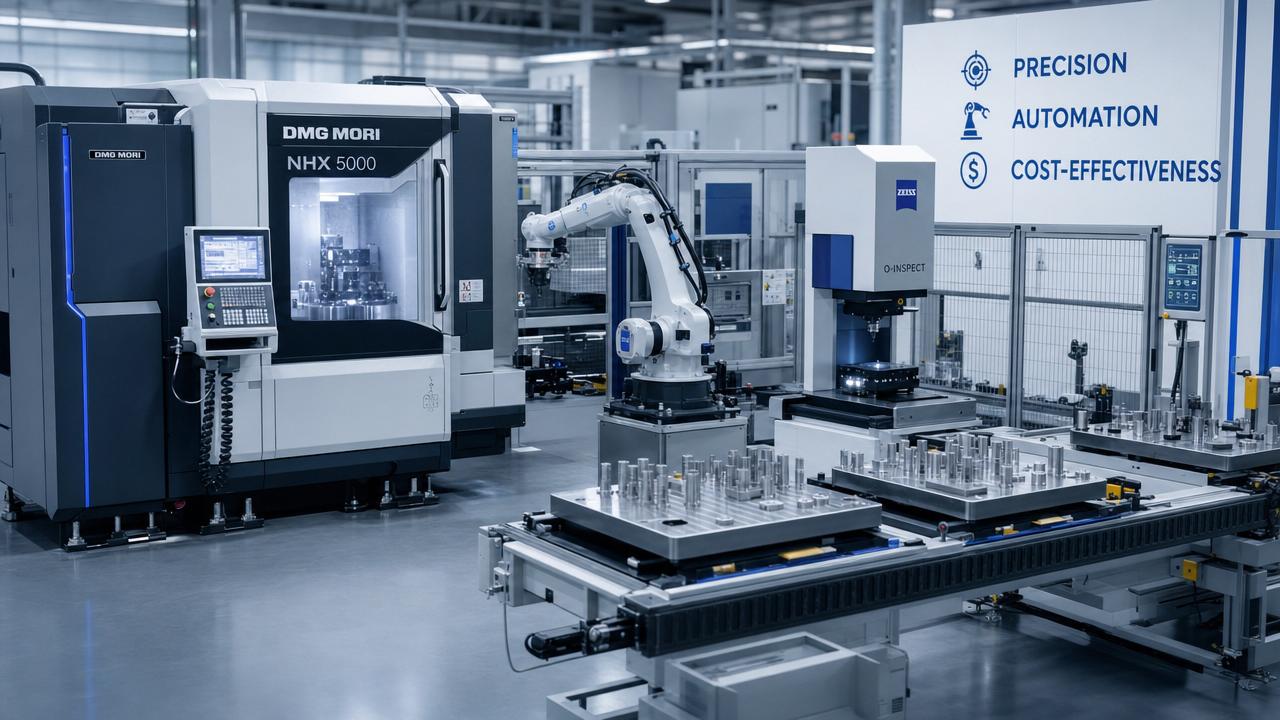
Industrial Automation promises faster output, tighter quality control, and lower labor dependence, but not every project delivers real savings. For business decision-makers in manufacturing, some automation investments look efficient on paper while creating hidden costs in integration, maintenance, training, and production flexibility. Understanding where these projects go wrong is essential to making smarter capital decisions and building sustainable operational efficiency.
In the CNC machine tool and precision manufacturing sector, this issue is especially important. Automated loading cells, robotic tending, in-line inspection, pallet systems, and digital monitoring platforms can improve output, but they can also lock a factory into a cost structure that is hard to reverse.
For companies serving automotive, aerospace, electronics, and energy equipment markets, the wrong Industrial Automation project may increase unit cost by 8% to 20% within 12 to 24 months, even if the initial business case looked positive. The gap usually comes from poor fit, not from automation itself.
This article examines the types of Industrial Automation projects that often appear efficient in boardroom presentations but become expensive in production reality. It also outlines how decision-makers can evaluate automation investments with better financial discipline, stronger operational visibility, and a more practical understanding of manufacturing risk.
Why Some Industrial Automation Projects Underperform in CNC Manufacturing
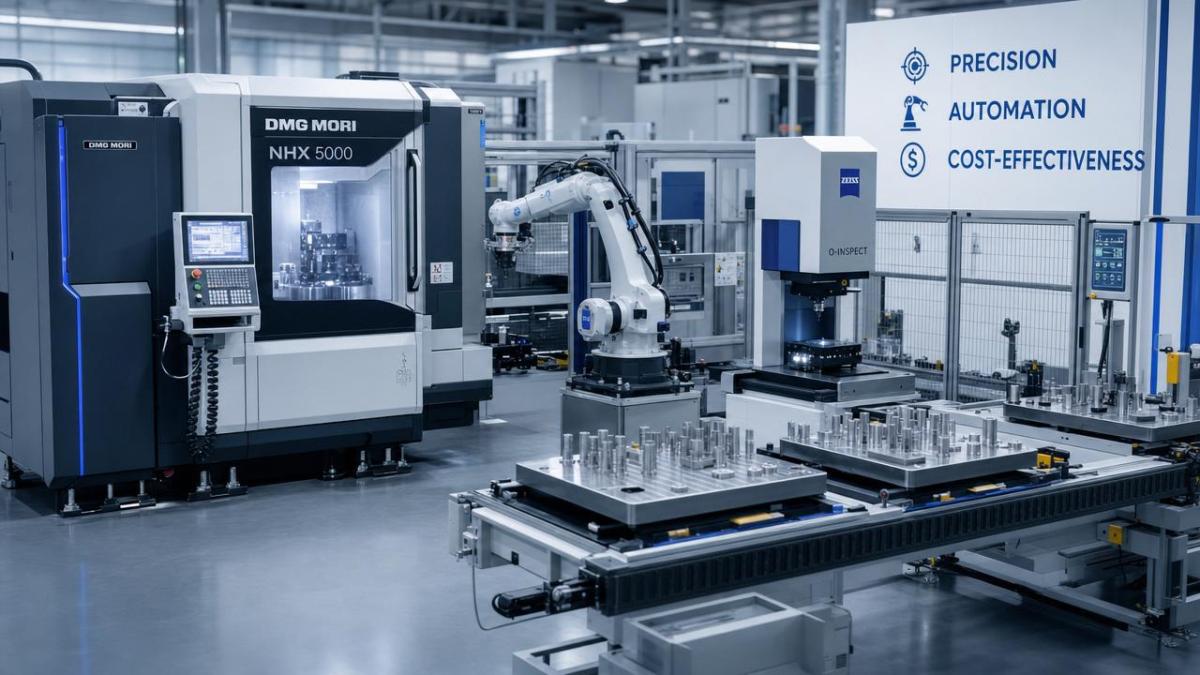
In high-precision machining environments, efficiency is not only about cycle time. It also depends on uptime, changeover speed, fixture compatibility, operator response, tool life, and quality stability across multiple part families. A project that improves one metric while weakening three others is not truly efficient.
Many Industrial Automation projects fail because planners assume stable production volumes, limited part variation, and predictable staffing. In reality, most mid-sized and large manufacturers deal with fluctuating order quantities, engineering changes, customer audits, and supply interruptions at least once every quarter.
The hidden cost categories that are often underestimated
Decision-makers commonly focus on purchase price and labor reduction. However, the total cost of ownership often includes 6 major cost groups: mechanical integration, controls integration, safety compliance, training, preventive maintenance, and production loss during ramp-up. In many facilities, ramp-up alone lasts 6 to 16 weeks.
For example, adding a robotic tending system to CNC lathes may reduce one operator position per shift. Yet if the robot requires dedicated grippers for 12 part variants, new guarding, PLC modifications, and fixture redesign, the actual payback period can move from 18 months to 32 months.
Where the business case usually breaks down
- Cycle time savings are calculated without including loading exceptions, tool break alarms, or inspection holds.
- Labor savings assume full headcount reduction, while actual factories often redeploy staff instead of eliminating positions.
- Maintenance assumptions ignore spare parts lead times of 2 to 8 weeks for imported motion components or control modules.
- Production planning does not account for low-volume, high-mix orders that reduce robot utilization below 60%.
- Management underestimates the cost of software updates, interface debugging, and vendor coordination after commissioning.
The table below highlights common automation investments in CNC and precision manufacturing that appear efficient at first glance but often become more expensive when production conditions are unstable or product mix is broad.
The key lesson is simple: Industrial Automation is most cost-effective when matched to process stability and part-family logic. If the production environment is highly variable, rigid automation often creates more cost than labor-intensive but flexible operations.
Three patterns that signal an automation project may be overpriced
First, the proposal depends on labor elimination greater than 25% without a detailed staffing redeployment plan. Second, changeover time remains above 20 minutes while part volume per batch is below 50 units. Third, the project requires custom interfaces across 3 or more suppliers with no single accountability point.
When these conditions appear together, even technically sound Industrial Automation can struggle to deliver expected returns. Decision-makers should treat them as commercial warning signs rather than engineering details.
The Most Common Automation Projects That Look Efficient but Cost More
Not every automation category carries the same risk. Some projects become expensive because they are too rigid. Others fail because they digitize weak processes instead of fixing them first. In CNC and precision manufacturing, the following project types deserve closer review before capital approval.
1. Over-automated machine tending for low-volume, high-mix parts
Robot tending works best when part geometry, loading orientation, chucking logic, and cycle time remain stable. If a facility runs 15 to 30 part families with frequent setup changes, every new gripper jaw, tray format, and pick routine adds engineering and validation time.
In such cases, a semi-automated approach may outperform a fully robotic cell. A bar feeder, quick-change fixture, or collaborative loading aid can reduce operator burden without creating programming overhead for every engineering revision.
2. Fully linked lines where one interruption stops multiple machines
Integrated lines are attractive because they promise continuous flow. However, in real production, one spindle alarm, probe error, or chip evacuation problem can stop 4 to 8 connected stations. The result is not only downtime but also scheduling complexity, WIP imbalance, and delayed delivery.
For plants machining high-value parts, the better model is often modular automation. Independent cells with shared material handling preserve redundancy and allow maintenance teams to isolate faults without freezing the entire process chain.
3. Excessive in-line inspection that slows throughput
Quality control is essential in aerospace, medical component supply, and high-precision electronics. Yet not every dimension needs 100% automated inspection in real time. Measuring too much too often can create bottlenecks, especially when gauge cycle time reaches 25 to 40 seconds per part.
A risk-based inspection plan is usually more effective. Critical dimensions can be checked in-process, while stable features move to periodic sampling every 30 to 60 parts. This approach reduces capital cost and preserves machine availability without sacrificing traceability.
4. Data platforms deployed before process discipline exists
Digital dashboards often look like a quick path to smart manufacturing. But if machine states are defined inconsistently, downtime reasons are entered manually with poor discipline, and tooling records are incomplete, the platform will report noise instead of insight.
Many plants spend 3 to 6 months connecting equipment and building dashboards, then discover that OEE figures are not trusted by production, maintenance, or finance. Industrial Automation at the software layer only works when the underlying workflow is standardized.
The comparison below helps decision-makers distinguish between automation concepts that are often oversold and alternatives that may provide better cost control in machining and precision manufacturing environments.
The pattern across these examples is consistent. Industrial Automation delivers better economics when flexibility, maintenance access, and implementation scope are controlled from the beginning rather than added later at premium cost.
How Decision-Makers Should Evaluate Automation Before Approval
A strong automation decision should pass operational, financial, and organizational tests. If one of these three dimensions is weak, the project may still be technically impressive but commercially disappointing. The review process should be disciplined enough to challenge optimistic assumptions before capital is committed.
A five-step review framework
- Define the exact bottleneck: labor shortage, quality drift, spindle idle time, or material flow delay.
- Measure the current baseline for at least 4 to 8 weeks, including uptime, scrap, changeover, and maintenance calls.
- Test part-family stability, order repeatability, and engineering change frequency over the last 12 months.
- Model total cost of ownership for 3 years, not only purchase and installation cost.
- Run a pilot or phased rollout on one line, one machine group, or one product family before expansion.
This review structure helps identify whether Industrial Automation is solving the root problem or simply adding capital to an unstable process. In many CNC operations, the biggest gains come from process simplification first, then automation second.
Questions that finance and operations should ask together
- What utilization rate is required to meet payback within 24 months?
- How many part numbers can the system handle before extra tooling or programming is needed?
- What is the expected mean time to repair if the robot, PLC, or vision system fails?
- Which components have lead times longer than 30 days?
- Can production continue in manual or semi-automatic mode during a fault?
These questions are practical because they connect board-level capital logic with shop-floor continuity. A project that cannot tolerate a single-point failure or a 2-week spare part delay may be too fragile for a high-demand production environment.
What a realistic ROI model should include
A realistic ROI model should include capital expenditure, commissioning labor, software integration, fixtures, guarding, operator training, maintenance parts, validation runs, and expected downtime during the first 90 days. It should also include at least 3 scenarios: stable demand, mixed demand, and low utilization.
If the project only works financially under the best-case scenario, it is not a robust investment. In Industrial Automation, resilience often matters more than peak efficiency because market demand, customer mix, and engineering requirements rarely remain static.
Practical Ways to Reduce Cost Risk Without Slowing Automation Progress
Avoiding expensive automation mistakes does not mean delaying modernization. It means choosing a sequence that protects cash flow while building capability. Many manufacturers achieve stronger returns by implementing Industrial Automation in layers rather than pursuing full-scale transformation in a single phase.
Start with flexible assets and standardized interfaces
Quick-change fixtures, standardized machine signals, modular guarding, and common communication protocols reduce future integration cost. These may seem less impressive than a turnkey smart cell, but they often cut expansion cost by 10% to 18% over a 2 to 3 year period.
In CNC machining, flexibility is a financial asset. A machine that can change from one shaft component to another in under 15 minutes often delivers more value than a highly automated station designed around one part family with limited future adaptability.
Use phased implementation instead of one-step full automation
Phase 1 may focus on monitoring and baseline data. Phase 2 may add semi-automated handling or error-proofing. Phase 3 may introduce robotics or advanced scheduling once the process is stable. This staged path reduces commissioning pressure and gives management real operating data before additional spending.
A phased program also improves internal adoption. Teams that learn one system at a time usually absorb training faster and maintain equipment more confidently than teams asked to adapt to several new technologies within the same quarter.
Build supplier accountability into the project structure
When a project includes CNC machines, robot integrators, fixture suppliers, gauging vendors, and software providers, unclear responsibility can become a major cost driver. A clear acceptance matrix with 4 to 6 measurable criteria helps prevent disputes after installation.
Examples of measurable criteria include target uptime after stabilization, changeover time, first-pass yield, alarm response workflow, and spare part availability. Industrial Automation projects perform better when technical responsibility and business accountability are aligned from the contract stage.
What Smart Manufacturers Do Differently
The most successful manufacturers do not chase automation because it is fashionable. They apply Industrial Automation where process repetition, cost pressure, labor risk, and quality sensitivity justify the investment. They also reject projects that score high on presentation value but low on operational fit.
In global CNC and precision manufacturing, especially across production hubs in China, Germany, Japan, and South Korea, leading firms are moving toward balanced automation. They combine robotics, machine connectivity, flexible cells, and disciplined process engineering rather than relying on one oversized capital project.
For decision-makers, the priority is not to automate everything. It is to automate the right constraints, at the right scale, with the right level of flexibility. That is how Industrial Automation supports margin protection, delivery reliability, and long-term manufacturing competitiveness.
If you are evaluating CNC machine tools, automated production lines, robotic tending, or precision manufacturing upgrades, a careful project review can prevent costly missteps and reveal better-fit alternatives. Contact us to discuss your application, get a tailored automation assessment, and explore practical solutions for more resilient manufacturing performance.
PREVIOUS ARTICLE
NEXT ARTICLE
Recommended for You
![]() Changsha Housing Fund Policy Boosts Smart Manufacturing Real Estate DemandManufacturing Market Research Center
Changsha Housing Fund Policy Boosts Smart Manufacturing Real Estate DemandManufacturing Market Research Center![]() SGX April Trading Volume Up 6%; Equipment Financing Gains TractionGlobal Machine Tool Trade Research Center
SGX April Trading Volume Up 6%; Equipment Financing Gains TractionGlobal Machine Tool Trade Research Center![]() China's Avg. Mobile Data Usage Hits 23.4GB, Boosting CNC Cloud Services AbroadManufacturing Market Research Center
China's Avg. Mobile Data Usage Hits 23.4GB, Boosting CNC Cloud Services AbroadManufacturing Market Research Center![]() Germany's DAX Surges 3% on Resurgent Machine Tool DemandGlobal Machine Tool Trade Research Center
Germany's DAX Surges 3% on Resurgent Machine Tool DemandGlobal Machine Tool Trade Research Center![]() Canada Signs Ukraine ICC Treaty, Sanctions Extend to Industrial Equipment ExportsManufacturing Policy Research Center
Canada Signs Ukraine ICC Treaty, Sanctions Extend to Industrial Equipment ExportsManufacturing Policy Research Center![]() MIIT Launches 'AI+Software' Initiative to Boost Smart ProgrammingCNC Machining Technology Center
MIIT Launches 'AI+Software' Initiative to Boost Smart ProgrammingCNC Machining Technology Center


Aris Katos
Future of Carbide Coatings
15+ years in precision manufacturing systems. Specialized in high-speed milling and aerospace grade alloy processing.
▶
Industrial Automation Projects That Look Efficient but Cost MoreMachine Tool Industry Editorial Team▶
Industrial Robotics Costs That Often Get Missed Early OnMachine Tool Industry Editorial Team▶
What Slows Down an Automated Production Line Most OftenMachine Tool Industry Editorial Team▶
Ningxia's Green Power + Compute Convergence Powers Cloud CNC ExportMachine Tool Industry Editorial Team▶
China Mobile Launches National Integrated Computing Power NetworkMachine Tool Industry Editorial Team
Mastering 5-Axis Workholding Strategies
Join our technical panel on Nov 15th to learn about reducing vibrations in thin-wall components.

Providing you with integrated sanding solutions
Before-sales and after-sales services
Comprehensive technical support