• Global CNC market projected to reach $128B by 2028 • New EU trade regulations for precision tooling components • Aerospace deman
NYSE: CNC +1.2%LME: STEEL -0.4%

How Industrial Robotics is changing factory ROI in 2026
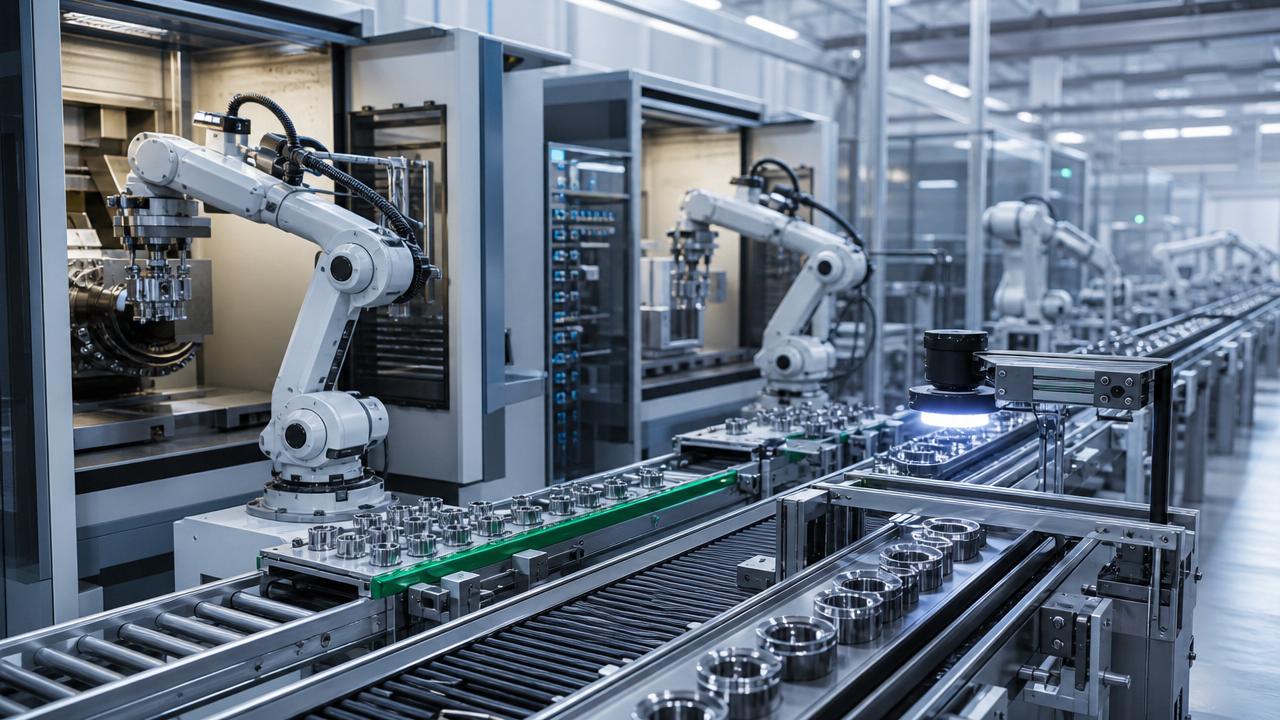
In 2026, Industrial Robotics is no longer just a production upgrade—it is a financial strategy reshaping factory ROI. For approval-focused decision-making, the value is increasingly measured in numbers, not impressions.
Across CNC machining, precision manufacturing, and integrated production lines, Industrial Robotics supports lower labor dependence, tighter process control, less downtime, and faster payback cycles.
That shift matters across the broader industrial landscape. From automotive parts to aerospace structures and electronics housings, factories now compare robotics investments against margin pressure, quality targets, and delivery reliability.
Industrial Robotics and the new ROI baseline in 2026
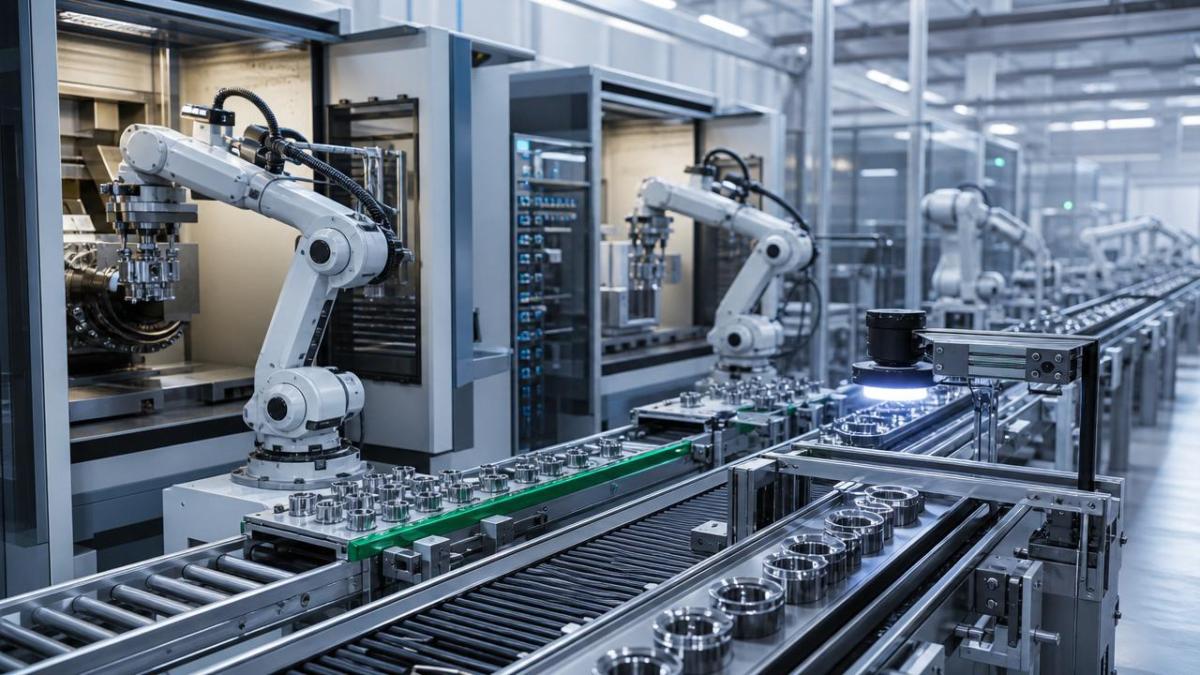
Industrial Robotics refers to programmable machines that handle repetitive, hazardous, high-speed, or precision-critical tasks inside production environments.
In 2026, the discussion is broader than robot arms alone. It includes machine tending, palletizing, inspection cells, automated assembly, vision systems, and software-linked production coordination.
ROI has also evolved. It is no longer limited to direct labor savings. Industrial Robotics now affects scrap rates, spindle utilization, setup stability, energy efficiency, maintenance planning, and on-time output.
For CNC machine tool operations, that matters greatly. Expensive equipment generates stronger returns only when uptime remains high and process variation stays low.
Industrial Robotics helps close that gap by keeping machines loaded, parts flowing, and quality data more consistent across shifts.
Core ROI metrics now linked to robotics
- Labor cost per finished part
- OEE and machine utilization
- Scrap and rework percentage
- Cycle time consistency
- Downtime linked to staffing gaps
- Payback period and cash flow impact
Why Industrial Robotics is gaining strategic attention across industry
Several industrial trends are pushing Industrial Robotics from optional equipment to strategic infrastructure.
First, labor volatility remains a structural issue. Skilled operators are harder to recruit and retain in many manufacturing regions.
Second, order patterns are changing. Customers expect shorter lead times, smaller batch flexibility, and traceable quality records.
Third, CNC and precision manufacturing are becoming more data-driven. Connected robotics systems now fit naturally into smart factory planning.
Fourth, production risk has become a financial issue. Delays, operator shortages, and inconsistent output quickly affect margins.
Current signals shaping 2026 adoption
Where Industrial Robotics delivers measurable factory ROI
The strongest financial gains often appear in repetitive bottlenecks. Industrial Robotics performs best where timing, repetition, and accuracy directly influence throughput.
1. CNC machine tending
This is one of the clearest use cases. Robots load raw parts, unload finished pieces, and support stable cycle pacing around CNC lathes and machining centers.
The return comes from fewer idle spindles, longer unattended running, and lower dependence on shift-by-shift staffing levels.
2. Precision inspection and sorting
When Industrial Robotics is paired with vision systems, inspection becomes faster and more repeatable. Defect escape rates can fall while traceability improves.
That reduces hidden quality costs, especially in aerospace, automotive, and electronics components.
3. Automated assembly and handling
Small-part assembly, fixture loading, screwdriving, and transfer operations often create fatigue and inconsistency when handled manually.
Industrial Robotics improves repeatability while supporting safer workflows and steadier takt time.
4. Palletizing and end-of-line operations
These tasks may look simple, but they absorb labor and introduce ergonomic risk. Robotics reduces non-value-added handling and improves shipment readiness.
5. Multi-machine cell coordination
A single robotic system can support several machines when part geometry and cycle timing align. This often creates a stronger ROI than one-to-one deployments.
Typical application paths across manufacturing segments
Industrial Robotics affects different sectors in different ways. The ROI model depends on part complexity, production volume, and quality sensitivity.
The business meaning behind robotics ROI calculations
A narrow ROI calculation can miss the real impact of Industrial Robotics. Capital planning works better when both direct and indirect returns are included.
Direct returns
- Reduced labor cost per shift
- Lower overtime dependence
- Higher machine output
- Lower scrap and rework cost
Indirect returns
- More predictable scheduling
- Safer operations and lower injury risk
- Stronger quality reputation
- Better use of existing CNC assets
In many factories, Industrial Robotics improves the return on equipment already installed. That can be more valuable than buying additional machine tools too early.
Practical considerations before deployment
Not every process should be automated first. The best results usually come from stable, repeatable operations with measurable constraints.
Priority checks before investing
- Map the current bottleneck clearly.
- Measure machine idle time and labor touch points.
- Confirm part variation and fixture stability.
- Review integration with CNC controls and software systems.
- Estimate maintenance, training, and spare part needs.
- Model payback using realistic utilization assumptions.
Industrial Robotics should also be phased carefully. Pilot cells often reveal tooling issues, data gaps, and changeover problems before wider expansion.
A successful rollout depends on process engineering as much as hardware selection. Robot speed alone does not guarantee better ROI.
A practical next step for 2026 factory planning
Industrial Robotics is changing factory ROI in 2026 because it improves how existing assets, labor, and quality systems perform together.
For CNC machining and precision manufacturing, the most reliable opportunities usually start with machine tending, inspection automation, and coordinated handling cells.
The next practical step is to identify one process where downtime, labor intensity, or variation already creates measurable cost. Build the ROI case from that real constraint.
When Industrial Robotics is evaluated through throughput, quality, and payback together, it becomes easier to prioritize investments that support durable industrial growth.
Recommended for You
![]() Vietnam Suspends CNC Equipment Import Licenses Amid New Tech RulesManufacturing Policy Research Center
Vietnam Suspends CNC Equipment Import Licenses Amid New Tech RulesManufacturing Policy Research Center![]() First Global CNC Machine Carbon Footprint Guide ReleasedManufacturing Policy Research Center
First Global CNC Machine Carbon Footprint Guide ReleasedManufacturing Policy Research Center![]() Japan METI Launches CNC Green Upgrade SubsidyManufacturing Market Research Center
Japan METI Launches CNC Green Upgrade SubsidyManufacturing Market Research Center![]() Brazil INMETRO Mandates IoT Modules for CNC Lathes from July 2026Manufacturing Policy Research Center
Brazil INMETRO Mandates IoT Modules for CNC Lathes from July 2026Manufacturing Policy Research Center![]() EU Launches Anti-Subsidy Investigation on Chinese Laser Cutting Heads and High-Power Fiber LasersManufacturing Policy Research Center
EU Launches Anti-Subsidy Investigation on Chinese Laser Cutting Heads and High-Power Fiber LasersManufacturing Policy Research Center![]() Red Sea Crisis Deepens: Suez Canal CNC Ship Delays Hit 11.4 DaysGlobal Machine Tool Trade Research Center
Red Sea Crisis Deepens: Suez Canal CNC Ship Delays Hit 11.4 DaysGlobal Machine Tool Trade Research Center


Aris Katos
Future of Carbide Coatings
15+ years in precision manufacturing systems. Specialized in high-speed milling and aerospace grade alloy processing.
▶
How to judge if an Automated Production Line fits your plantMachine Tool Industry Editorial Team▶
Industrial Robotics can raise output, but where is the risk?Machine Tool Industry Editorial Team▶
How to judge if an Automated Production Line will pay offMachine Tool Industry Editorial Team▶
How Industrial Robotics is changing factory ROI in 2026Machine Tool Industry Editorial Team▶
Hainan Sanya AI Tech Conference Launches, Embodied AI Production Lines Accelerate Global DeploymentMachine Tool Industry Editorial Team
Mastering 5-Axis Workholding Strategies
Join our technical panel on Nov 15th to learn about reducing vibrations in thin-wall components.

Providing you with integrated sanding solutions
Before-sales and after-sales services
Comprehensive technical support