• Global CNC market projected to reach $128B by 2028 • New EU trade regulations for precision tooling components • Aerospace deman
NYSE: CNC +1.2%LME: STEEL -0.4%

How to judge if an Automated Production Line will pay off
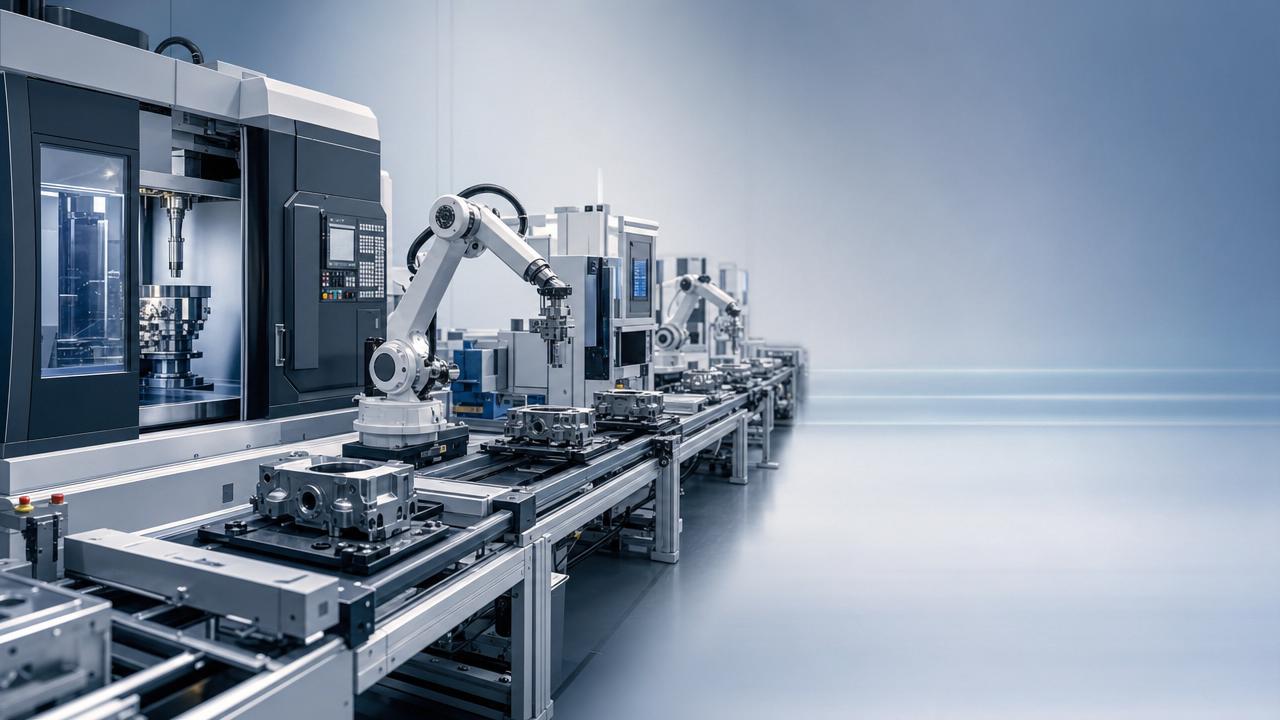
Investing in an Automated Production Line can raise output, stabilize quality, and reduce labor exposure. The harder question is whether the investment truly pays off over time.
In today’s manufacturing environment, that judgment has become more important. CNC machining, precision assembly, robotics, and digital control are moving from optional upgrades to core competitive tools.
Across automotive, aerospace, electronics, and energy equipment, production is shifting toward tighter tolerances, shorter lead times, and stronger traceability. That shift changes how an Automated Production Line should be evaluated.
A sound decision goes far beyond purchase price. It should connect cycle time, uptime, scrap reduction, labor structure, product mix, and future flexibility into one practical payback view.
Why payback analysis for an Automated Production Line matters more now
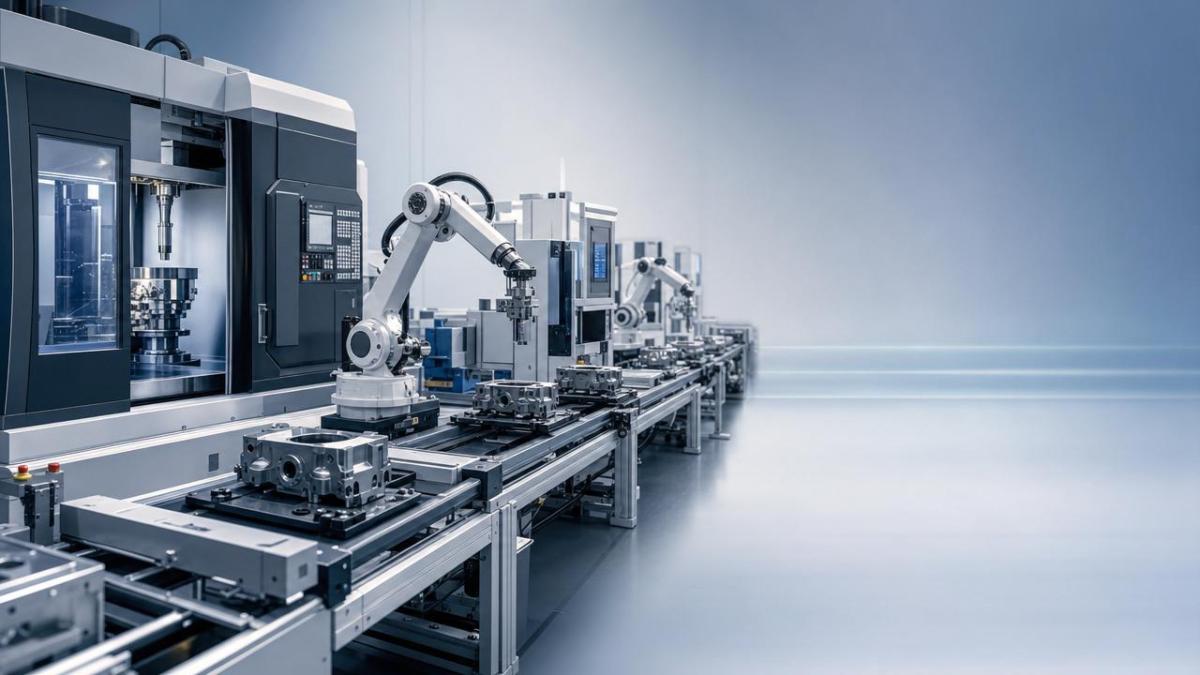
The business case for an Automated Production Line used to focus on labor savings. That is no longer enough in a market shaped by volatility and rising quality expectations.
Many factories now face mixed-batch production, unstable hiring conditions, and more frequent model changes. In that setting, automation value comes from resilience as much as direct cost reduction.
A CNC-based line can improve repeatability, support unattended hours, and feed production data into planning systems. Those gains often create hidden value not visible in a simple equipment quotation.
At the same time, a poor-fit Automated Production Line can lock capital into underused capacity. It may also create integration problems, maintenance pressure, and weak returns if demand assumptions fail.
The strongest trend signals behind Automated Production Line demand
Several industry signals explain why more companies are reviewing automation projects. These signals also shape how the return on an Automated Production Line should be judged.
- Precision requirements are rising across machined parts and assembled components.
- Delivery cycles are shrinking, especially in export-oriented manufacturing chains.
- Labor availability is less predictable in many industrial regions.
- Digital monitoring is becoming standard for quality and traceability.
- Energy efficiency and asset utilization are now board-level concerns.
- Multi-model production is replacing long, stable, single-part runs.
These trends mean payback must include operating agility. A faster line is valuable, but a line that adapts to changing parts may create stronger long-term returns.
What actually drives the return of an Automated Production Line
The return on an Automated Production Line usually comes from several combined sources. Looking at one factor alone can lead to an inaccurate investment conclusion.
In precision manufacturing, quality and uptime often matter as much as labor savings. That is especially true when CNC machining feeds downstream assembly or testing stages.
Where payback calculations often go wrong
An Automated Production Line can look attractive on paper and still miss financial expectations. Most weak decisions come from unrealistic assumptions rather than bad equipment alone.
Overestimating stable demand
If forecast volume is too optimistic, utilization falls. Even a highly capable line can deliver poor returns when fixed costs are spread across too few parts.
Ignoring integration costs
The machine itself is only part of the total investment. Tooling, fixtures, software, conveyors, safety systems, training, and plant modifications must be counted.
Using vendor cycle time without validation
Quoted takt time may exclude part changeover, in-process inspection, or upstream waiting. Real payback should be based on complete production conditions.
Undervaluing maintenance readiness
A complex Automated Production Line without service capability can lose output quickly. Spare parts lead time and troubleshooting speed directly affect return.
Forgetting product mix risk
A line optimized for one family of parts may struggle with future changes. If market requirements shift, flexibility becomes a decisive financial factor.
How an Automated Production Line changes different business functions
The effect of an Automated Production Line reaches beyond the workshop. Its value appears across planning, quality, finance, supply chain, and customer delivery performance.
- Production: Higher rhythm, lower variability, and better shift utilization.
- Quality: More consistent process output and stronger traceability records.
- Planning: More reliable capacity scheduling and less firefighting.
- Supply chain: Better material flow when automation data links to inventory systems.
- Finance: Higher depreciation but potential margin gains through yield and throughput.
- Sales support: Stronger confidence in lead time and repeat quality commitments.
This wider impact matters in sectors like aerospace components or automotive parts. A line may pay off partly through customer retention, not only through direct factory savings.
Key checkpoints before deciding if an Automated Production Line will pay off
A useful decision framework should test both present economics and future adaptability. The following checkpoints make the payback review more realistic and decision-ready.
- Measure current baseline performance, including output, labor hours, defect rate, and downtime.
- Model best-case, base-case, and low-demand utilization scenarios.
- Include all hidden costs, from tooling and software to installation and operator training.
- Check whether upstream and downstream stations can match the new line speed.
- Review changeover time for different part numbers and lot sizes.
- Confirm service support, spare parts access, and preventive maintenance routines.
- Assess digital compatibility with MES, ERP, or shop-floor monitoring systems.
- Define the expected payback period and acceptable risk threshold in advance.
For many projects, the best answer is not the largest line. It is the Automated Production Line with the strongest balance between throughput, uptime, and flexibility.
A practical way to judge payback under real market conditions
Instead of asking whether automation is good in general, ask whether this exact line fits this exact production reality. That shift leads to stronger capital decisions.
When these answers align, an Automated Production Line is more likely to pay off. When they do not, phased automation may create a better risk-return profile.
What to do next before committing capital
Start with a clear baseline and a realistic simulation. Compare current manual or semi-automatic output against the proposed Automated Production Line under normal operating conditions.
Request validated cycle data, not only design specifications. Review maintenance capability, tooling life, and software openness before final budgeting.
If uncertainty remains high, consider a staged rollout. A modular approach can prove demand, reduce integration risk, and preserve future expansion options.
The best investment choice is not simply more automation. It is the Automated Production Line that delivers measurable capacity, stable quality, and durable flexibility under real market conditions.
PREVIOUS ARTICLE
Recommended for You
![]() Vietnam Suspends CNC Equipment Import Licenses Amid New Tech RulesManufacturing Policy Research Center
Vietnam Suspends CNC Equipment Import Licenses Amid New Tech RulesManufacturing Policy Research Center![]() First Global CNC Machine Carbon Footprint Guide ReleasedManufacturing Policy Research Center
First Global CNC Machine Carbon Footprint Guide ReleasedManufacturing Policy Research Center![]() Japan METI Launches CNC Green Upgrade SubsidyManufacturing Market Research Center
Japan METI Launches CNC Green Upgrade SubsidyManufacturing Market Research Center![]() Brazil INMETRO Mandates IoT Modules for CNC Lathes from July 2026Manufacturing Policy Research Center
Brazil INMETRO Mandates IoT Modules for CNC Lathes from July 2026Manufacturing Policy Research Center![]() EU Launches Anti-Subsidy Investigation on Chinese Laser Cutting Heads and High-Power Fiber LasersManufacturing Policy Research Center
EU Launches Anti-Subsidy Investigation on Chinese Laser Cutting Heads and High-Power Fiber LasersManufacturing Policy Research Center![]() Red Sea Crisis Deepens: Suez Canal CNC Ship Delays Hit 11.4 DaysGlobal Machine Tool Trade Research Center
Red Sea Crisis Deepens: Suez Canal CNC Ship Delays Hit 11.4 DaysGlobal Machine Tool Trade Research Center


Aris Katos
Future of Carbide Coatings
15+ years in precision manufacturing systems. Specialized in high-speed milling and aerospace grade alloy processing.
▶
How to judge if an Automated Production Line fits your plantMachine Tool Industry Editorial Team▶
Industrial Robotics can raise output, but where is the risk?Machine Tool Industry Editorial Team▶
How to judge if an Automated Production Line will pay offMachine Tool Industry Editorial Team▶
How Industrial Robotics is changing factory ROI in 2026Machine Tool Industry Editorial Team▶
Hainan Sanya AI Tech Conference Launches, Embodied AI Production Lines Accelerate Global DeploymentMachine Tool Industry Editorial Team
Mastering 5-Axis Workholding Strategies
Join our technical panel on Nov 15th to learn about reducing vibrations in thin-wall components.

Providing you with integrated sanding solutions
Before-sales and after-sales services
Comprehensive technical support