• Global CNC market projected to reach $128B by 2028 • New EU trade regulations for precision tooling components • Aerospace deman
NYSE: CNC +1.2%LME: STEEL -0.4%

How to judge if an Automated Production Line fits your plant
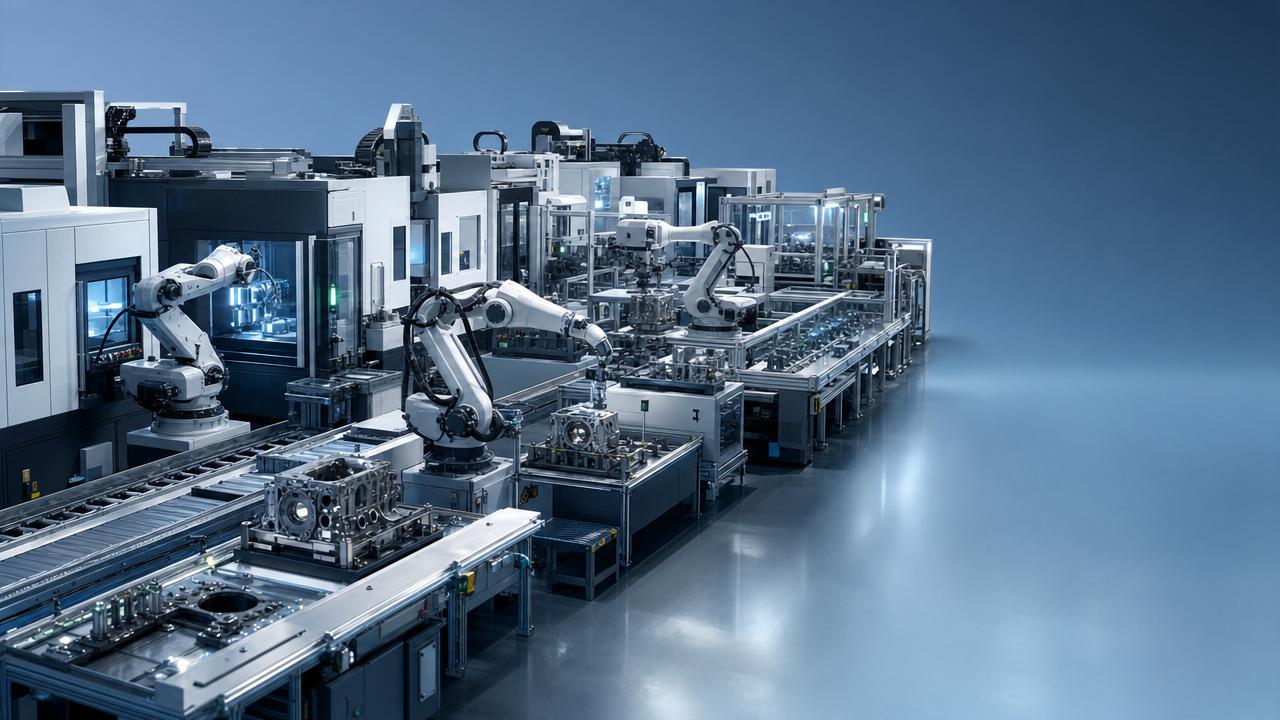
Choosing the right Automated Production Line is not just about faster output. It affects cost control, quality stability, floor utilization, maintenance effort, and future expansion across a modern plant.
In CNC machining, precision manufacturing, and mixed industrial environments, an Automated Production Line must match real products, process routes, takt targets, data systems, and workforce capability.
The key question is simple: does the line fit the plant, or does the plant need to change too much to fit the line? The answer requires structured evaluation.
What does a good Automated Production Line fit actually mean?
A good fit means the system supports current production goals without creating hidden operational strain. It should improve output, not introduce bottlenecks in loading, tooling, inspection, or scheduling.
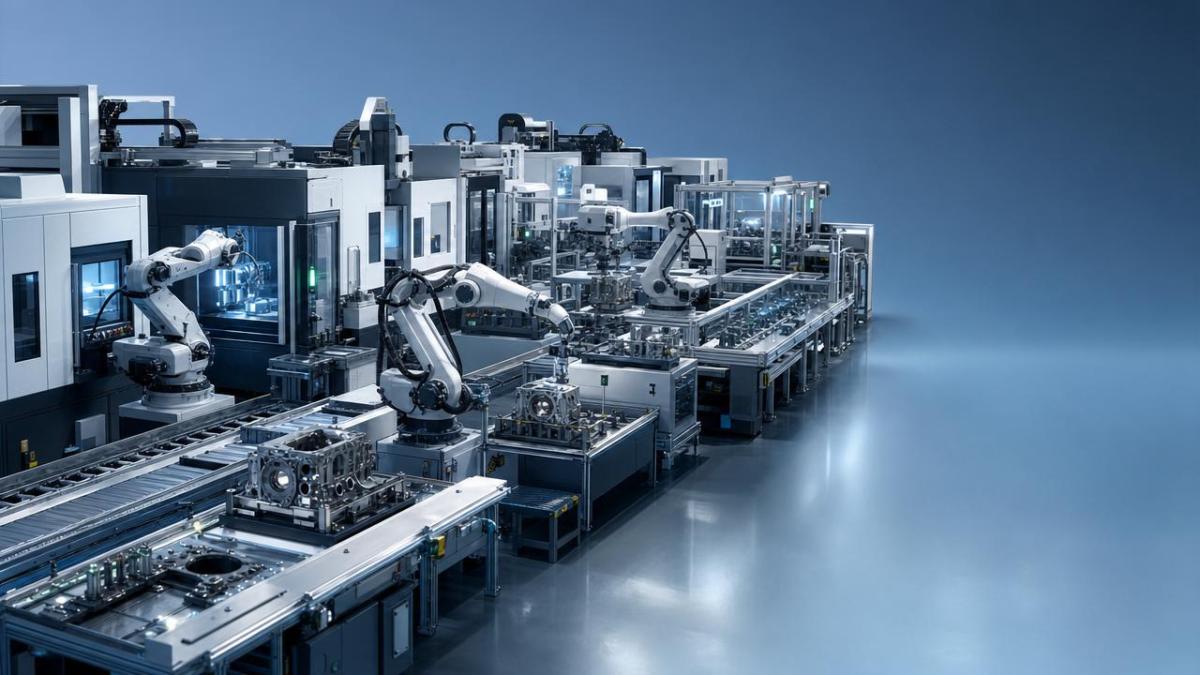
In practical terms, fit is measured across five dimensions:
- process compatibility with parts and machining steps
- capacity alignment with real production demand
- layout suitability for plant space and material flow
- system integration with CNC, MES, ERP, and inspection tools
- operational sustainability for maintenance, changeover, and staffing
An Automated Production Line may look advanced on paper, yet still be unsuitable. Over-automation is a common issue when the product mix changes often or demand remains unstable.
A proper fit also depends on industry realities. Automotive parts, aerospace structures, energy components, and electronics housings require different line logic, traceability levels, and process control depth.
How can you judge whether your products and processes suit an Automated Production Line?
Start with the parts, not the equipment brochure. Product geometry, tolerance range, batch size, material type, and process sequence determine whether an Automated Production Line will work efficiently.
Several process questions should be answered early:
- Are part families standardized enough for repeatable automated handling?
- Do machining times vary greatly between models?
- Can fixtures support fast positioning and stable clamping?
- Will tool wear create unpredictable cycle deviations?
- Is in-line measurement needed to protect quality?
High-volume, repeatable components often benefit most. Examples include shafts, brake parts, valve bodies, motor housings, precision discs, and standard structural parts for industrial equipment.
Low-volume, high-mix environments need caution. If changeovers are frequent, a rigid Automated Production Line may reduce flexibility and increase downtime between product switches.
A useful screening method is to group parts into families. Compare dimensions, process steps, fixture needs, spindle requirements, and inspection points. Similar families are much easier to automate economically.
It is also important to review process balance. If one operation takes twice as long as the rest, the Automated Production Line may inherit a bottleneck that no robot can solve.
What capacity, layout, and flexibility factors matter most?
Many projects fail because nameplate capacity replaces realistic planning. A line should be judged against actual demand variation, planned uptime, maintenance windows, and product growth over several years.
Review these capacity indicators carefully:
- required annual output
- peak monthly demand
- takt time per station
- overall equipment effectiveness assumptions
- buffer capacity between critical operations
Layout matters just as much. An Automated Production Line must fit existing logistics routes, crane access, chip handling, coolant systems, power supply, compressed air, and safety separation zones.
Space should not be judged only by footprint. Service clearance, tool loading access, robot reach envelopes, and inspection stations also consume valuable plant area.
Flexibility is another deciding factor. A transfer line may deliver strong volume efficiency, while a modular cell-based Automated Production Line can adapt better to model changes and phased expansion.
If future product change is likely, ask whether stations can be reprogrammed, whether fixtures are convertible, and whether additional CNC machines can be added without redesigning the entire system.
How important are software, data, and equipment integration?
Integration often determines whether an Automated Production Line becomes a productivity asset or a troubleshooting burden. Mechanical automation alone is no longer enough in precision manufacturing.
A modern line usually interacts with CNC controllers, robots, tool management software, barcode or RFID systems, quality stations, MES platforms, and ERP planning tools.
Before approval, check these integration topics:
Integration should also include exception handling. What happens if a spindle alarm appears, a robot misses a pick, or a gauge reading fails tolerance? Recovery logic must be defined in advance.
In multi-industry plants, data standardization becomes even more important. Mixed equipment brands and legacy systems can create communication barriers that reduce line effectiveness.
What hidden risks and cost traps should be checked before investing?
The purchase price is only one part of the decision. A complete Automated Production Line should be evaluated through total cost of ownership and operational risk, not just initial capital spending.
Common hidden costs include fixture redesign, plant modification, software customization, spare parts inventory, operator training, and higher maintenance complexity.
The most frequent risk signals are:
- cycle time promises without verified sample data
- no clear FAT and SAT acceptance criteria
- limited local service support or slow spare supply
- custom software with weak documentation
- line design that depends on one expert operator
Implementation timing is another trap. Installation, debugging, process tuning, and operator stabilization often take longer than expected, especially with precision machining and traceability requirements.
A safer approach is phased validation. Pilot parts, trial fixtures, and simulated production runs reveal whether the Automated Production Line can meet quality and throughput under real conditions.
How can you make a confident final decision?
A strong decision combines technical evidence, operational fit, and financial realism. It should compare line capability with plant readiness, rather than evaluating automation in isolation.
Use this practical decision checklist:
If several answers remain uncertain, delay full commitment. Refine the process map, validate takt assumptions, and request stronger proof from the supplier before final approval.
If the answers are positive, the Automated Production Line is more likely to deliver measurable gains in consistency, productivity, traceability, and long-term manufacturing competitiveness.
The best next step is to create a fit assessment sheet. Score product suitability, layout readiness, integration depth, flexibility, lifecycle cost, and implementation risk on one decision page.
That simple discipline turns an automation purchase into a plant strategy decision. In advanced CNC and precision manufacturing, that difference often determines whether investment results are average or transformative.
PREVIOUS ARTICLE
NEXT ARTICLE
Recommended for You
![]() Vietnam Suspends CNC Equipment Import Licenses Amid New Tech RulesManufacturing Policy Research Center
Vietnam Suspends CNC Equipment Import Licenses Amid New Tech RulesManufacturing Policy Research Center![]() First Global CNC Machine Carbon Footprint Guide ReleasedManufacturing Policy Research Center
First Global CNC Machine Carbon Footprint Guide ReleasedManufacturing Policy Research Center![]() Japan METI Launches CNC Green Upgrade SubsidyManufacturing Market Research Center
Japan METI Launches CNC Green Upgrade SubsidyManufacturing Market Research Center![]() Brazil INMETRO Mandates IoT Modules for CNC Lathes from July 2026Manufacturing Policy Research Center
Brazil INMETRO Mandates IoT Modules for CNC Lathes from July 2026Manufacturing Policy Research Center![]() EU Launches Anti-Subsidy Investigation on Chinese Laser Cutting Heads and High-Power Fiber LasersManufacturing Policy Research Center
EU Launches Anti-Subsidy Investigation on Chinese Laser Cutting Heads and High-Power Fiber LasersManufacturing Policy Research Center![]() Red Sea Crisis Deepens: Suez Canal CNC Ship Delays Hit 11.4 DaysGlobal Machine Tool Trade Research Center
Red Sea Crisis Deepens: Suez Canal CNC Ship Delays Hit 11.4 DaysGlobal Machine Tool Trade Research Center


Aris Katos
Future of Carbide Coatings
15+ years in precision manufacturing systems. Specialized in high-speed milling and aerospace grade alloy processing.
▶
How to judge if an Automated Production Line fits your plantMachine Tool Industry Editorial Team▶
Industrial Robotics can raise output, but where is the risk?Machine Tool Industry Editorial Team▶
How to judge if an Automated Production Line will pay offMachine Tool Industry Editorial Team▶
How Industrial Robotics is changing factory ROI in 2026Machine Tool Industry Editorial Team▶
Hainan Sanya AI Tech Conference Launches, Embodied AI Production Lines Accelerate Global DeploymentMachine Tool Industry Editorial Team
Mastering 5-Axis Workholding Strategies
Join our technical panel on Nov 15th to learn about reducing vibrations in thin-wall components.

Providing you with integrated sanding solutions
Before-sales and after-sales services
Comprehensive technical support