• Global CNC market projected to reach $128B by 2028 • New EU trade regulations for precision tooling components • Aerospace deman
NYSE: CNC +1.2%LME: STEEL -0.4%

What Slows Down an Automated Production Line Most Often
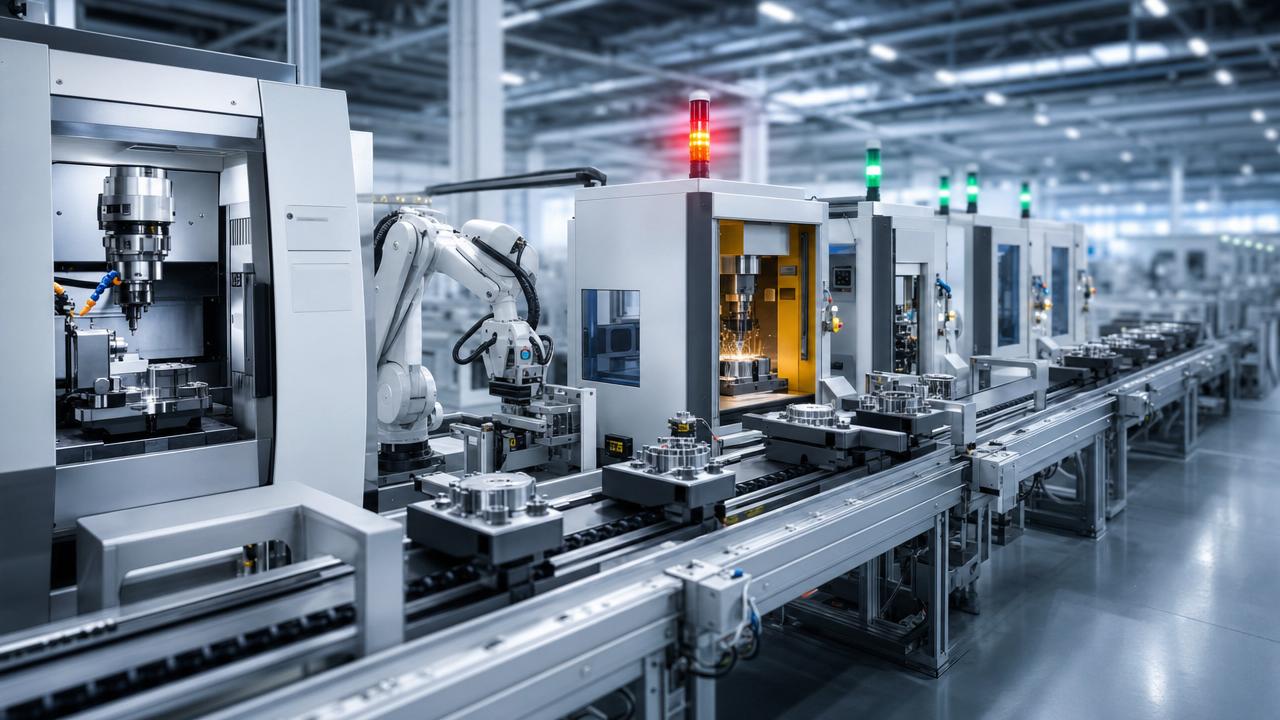
In modern manufacturing, an Automated Production Line is expected to deliver speed, precision, and consistency. Yet daily output often slows for smaller reasons.
A single machine alarm may be visible, but hidden delays usually come from imbalance, waiting time, setup loss, and weak coordination between machines, tooling, and people.
Understanding what slows an Automated Production Line most often helps improve throughput, stabilize quality, and reduce unplanned production costs across many manufacturing sectors.
What slows down an Automated Production Line most often?
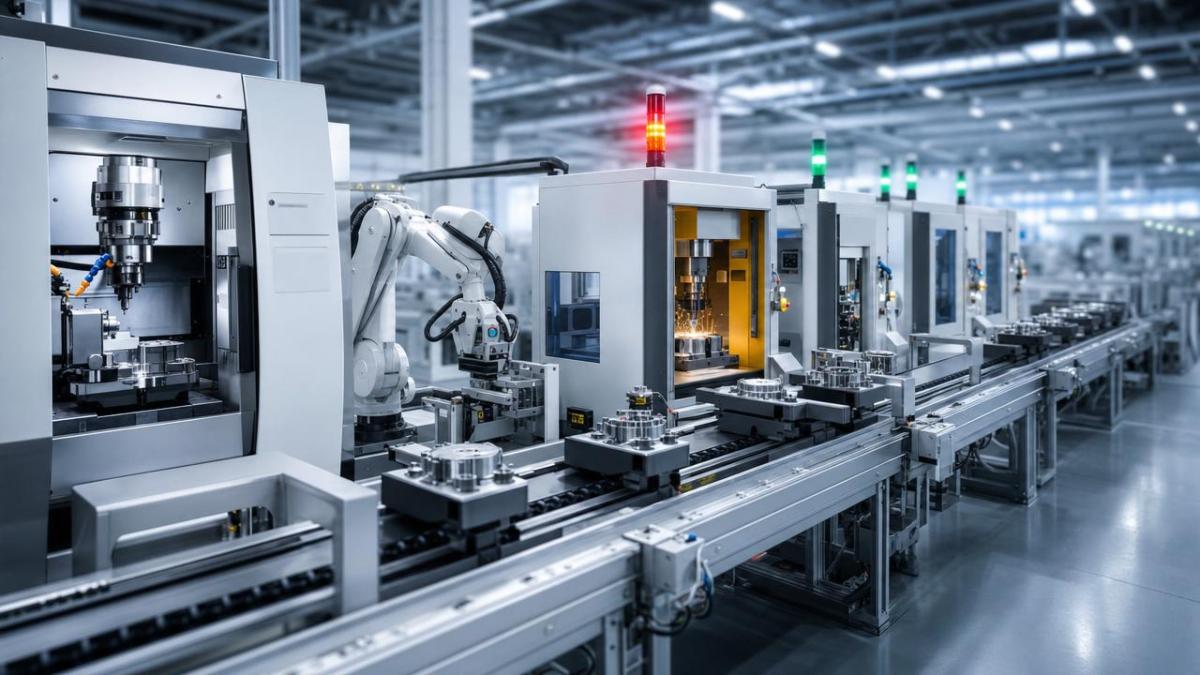
The most common cause is not one dramatic breakdown. It is usually a bottleneck at the slowest process step inside the Automated Production Line.
In CNC machining, this may be a longer cycle time on one machining center, delayed tool change, chip removal limits, or fixture loading inconsistency.
In assembly or mixed production, bottlenecks often come from conveyor pauses, robot path conflicts, sensor errors, and insufficient buffer capacity between stations.
Even when every machine appears productive, a small mismatch can force upstream waiting and downstream starvation. That lowers line efficiency more than expected.
Typical slowdown sources include:
- Cycle time imbalance between stations
- Frequent minor stops and resets
- Tool wear and delayed replacement
- Material supply interruptions
- Weak preventive maintenance
- Poor process sequencing and handoff logic
For most facilities, recurring micro-delays slow an Automated Production Line more often than complete equipment failure.
Why do bottlenecks appear even when machines are highly automated?
Automation improves repeatability, but it also exposes imbalance. When one station runs slower, the entire Automated Production Line follows that limit.
A fast robot cannot compensate for a slow spindle, unstable clamping, or a vision system that needs repeated confirmation.
In precision manufacturing, tolerance control can also slow output. A machine may pause for in-process inspection, tool offset correction, or thermal stabilization.
Digital integration adds another layer. If MES, PLC, and machine data are not aligned, stations may wait for permission signals or recipe confirmation.
Several automation-related issues are common:
- Robots moving safely but not optimally
- Conveyors without enough accumulation space
- Inspection stations set tighter than process capability
- Automatic tool changers adding hidden idle seconds
- Program revisions not synchronized across equipment
An Automated Production Line performs best when machine speed, handling logic, inspection rhythm, and software timing are engineered together.
How do tooling, fixtures, and maintenance create hidden delays?
Tooling issues are among the most underestimated causes of line slowdown. A worn tool may still cut, yet it often forces lower feeds or extra inspection.
In a CNC-based Automated Production Line, unstable fixtures can add seconds at each station through repositioning, reclamping, or repeated quality checks.
Maintenance problems are similar. Equipment may not be fully down, but degraded lubrication, contamination, or sensor drift can reduce actual operating speed.
These losses are dangerous because they seem small. Over a shift, repeated micro-stoppages can remove a large amount of productive time.
Watch for these warning signs:
- Tool life varies too widely between batches
- Fixture cleaning is required too frequently
- Spindle warm-up time is increasing
- Sensors need frequent manual adjustment
- Chip evacuation affects machining continuity
A stable Automated Production Line depends on predictable tool life, rigid workholding, and preventive maintenance scheduled before performance visibly drops.
Which process coordination mistakes slow the line more than expected?
Process coordination is often more important than machine speed. A well-equipped Automated Production Line can still lose output through poor sequencing.
For example, if material arrives in large uneven batches, one area becomes overloaded while another station waits empty. Both conditions reduce total efficiency.
Changeovers are another major source of delay. Recipe switching, fixture exchange, tool presetting, and first-piece approval can extend nonproductive time.
Quality feedback loops also matter. When defects are discovered too late, the Automated Production Line keeps producing waste before correction reaches upstream stations.
Common coordination mistakes include:
- No clear takt time target for each station
- Buffers sized without real cycle data
- Tool preparation separated from production timing
- Inspection isolated from process control decisions
- Software alarms classified too broadly for fast response
When coordination improves, an Automated Production Line usually gains output without major capital investment.
How can you identify the real constraint on an Automated Production Line?
The real constraint is not always the machine with the most alarms. It is the point that limits total flow over time.
Start with measured data, not assumptions. Record cycle time, idle time, starved time, blocked time, scrap rate, and recovery time by station.
Then compare planned takt against actual output. A station with stable but longer cycle time may slow the Automated Production Line more than a station with occasional stops.
Video review, machine logs, and tool consumption records often reveal where seconds are lost repeatedly.
Use this quick evaluation table to focus improvement work:
A data-led review prevents misjudgment and helps target the true limit within the Automated Production Line.
What improvements usually deliver the fastest results?
The fastest gains usually come from removing repeated small losses rather than buying new equipment.
First, stabilize the current process. Standardize tool replacement, fixture cleaning, startup checks, and alarm response. This alone can improve an Automated Production Line noticeably.
Second, rebalance work content. Shift noncritical tasks away from bottleneck stations and reduce unnecessary dwell time in handling and inspection.
Third, improve visibility. Real-time dashboards for blocked time, starved time, and OEE help expose where speed is being lost.
Practical actions often include:
- Shorten tool preset and exchange routines
- Adjust robot paths to reduce non-cutting motion
- Add buffer where starvation is frequent
- Use predictive maintenance for key spindles and sensors
- Link quality feedback directly to upstream parameter control
When applied consistently, these changes help an Automated Production Line run closer to designed capacity with fewer interruptions.
FAQ: what should be checked first when line speed drops?
Check whether the line is blocked, starved, or truly stopped. This distinction quickly shows whether the root issue is upstream, downstream, or local.
Review the slowest station first. In many cases, the bottleneck already defines the maximum speed of the Automated Production Line.
Look at recent tool changes, quality checks, and alarm history. Hidden changes in these areas often explain performance decline.
Do not assume full automation means full optimization. An Automated Production Line needs regular balancing, maintenance, and data review to stay efficient.
Most delays come from repeatable, correctable issues rather than rare failures. The best next step is to map losses by station, rank them, and fix the top recurring causes first.
A stronger Automated Production Line starts with accurate measurement, disciplined process control, and steady improvement across equipment, tooling, maintenance, and coordination.
PREVIOUS ARTICLE
Recommended for You
![]() Changsha Housing Fund Policy Boosts Smart Manufacturing Real Estate DemandManufacturing Market Research Center
Changsha Housing Fund Policy Boosts Smart Manufacturing Real Estate DemandManufacturing Market Research Center![]() SGX April Trading Volume Up 6%; Equipment Financing Gains TractionGlobal Machine Tool Trade Research Center
SGX April Trading Volume Up 6%; Equipment Financing Gains TractionGlobal Machine Tool Trade Research Center![]() China's Avg. Mobile Data Usage Hits 23.4GB, Boosting CNC Cloud Services AbroadManufacturing Market Research Center
China's Avg. Mobile Data Usage Hits 23.4GB, Boosting CNC Cloud Services AbroadManufacturing Market Research Center![]() Germany's DAX Surges 3% on Resurgent Machine Tool DemandGlobal Machine Tool Trade Research Center
Germany's DAX Surges 3% on Resurgent Machine Tool DemandGlobal Machine Tool Trade Research Center![]() Canada Signs Ukraine ICC Treaty, Sanctions Extend to Industrial Equipment ExportsManufacturing Policy Research Center
Canada Signs Ukraine ICC Treaty, Sanctions Extend to Industrial Equipment ExportsManufacturing Policy Research Center![]() MIIT Launches 'AI+Software' Initiative to Boost Smart ProgrammingCNC Machining Technology Center
MIIT Launches 'AI+Software' Initiative to Boost Smart ProgrammingCNC Machining Technology Center


Aris Katos
Future of Carbide Coatings
15+ years in precision manufacturing systems. Specialized in high-speed milling and aerospace grade alloy processing.
▶
Industrial Automation Projects That Look Efficient but Cost MoreMachine Tool Industry Editorial Team▶
Industrial Robotics Costs That Often Get Missed Early OnMachine Tool Industry Editorial Team▶
What Slows Down an Automated Production Line Most OftenMachine Tool Industry Editorial Team▶
Ningxia's Green Power + Compute Convergence Powers Cloud CNC ExportMachine Tool Industry Editorial Team▶
China Mobile Launches National Integrated Computing Power NetworkMachine Tool Industry Editorial Team
Mastering 5-Axis Workholding Strategies
Join our technical panel on Nov 15th to learn about reducing vibrations in thin-wall components.

Providing you with integrated sanding solutions
Before-sales and after-sales services
Comprehensive technical support