• Global CNC market projected to reach $128B by 2028 • New EU trade regulations for precision tooling components • Aerospace deman
NYSE: CNC +1.2%LME: STEEL -0.4%

Industrial Robotics Costs That Often Get Missed Early On
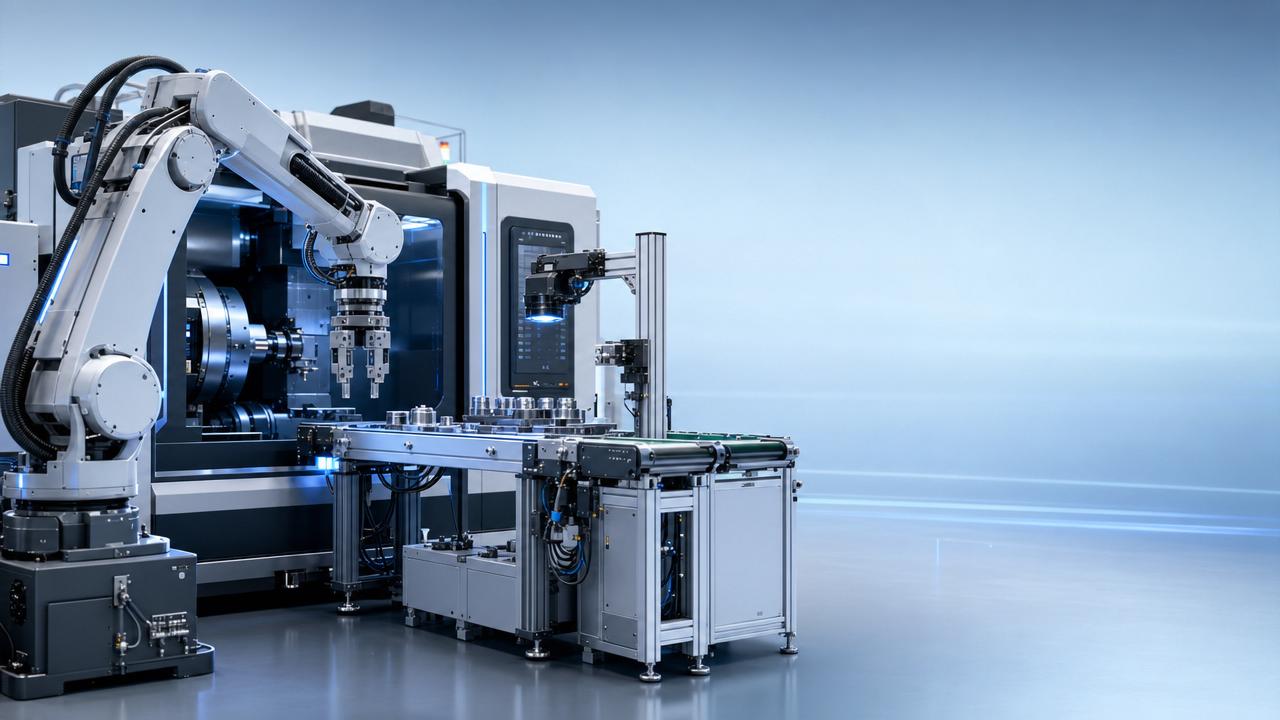
Industrial Robotics projects rarely fail because the robot itself was mispriced.
They fail because early budgets ignore surrounding costs that appear before stable output begins.
In CNC machining, precision assembly, and automated production lines, these overlooked items can distort ROI calculations fast.
The current shift toward digital manufacturing makes Industrial Robotics more attractive, but also more interconnected, customized, and cost-sensitive.
A realistic investment view must include integration, tooling, software, validation, workforce readiness, and hidden downtime exposure.
Why early Industrial Robotics budgets are becoming less reliable
Industrial Robotics used to be evaluated mainly as equipment purchases.
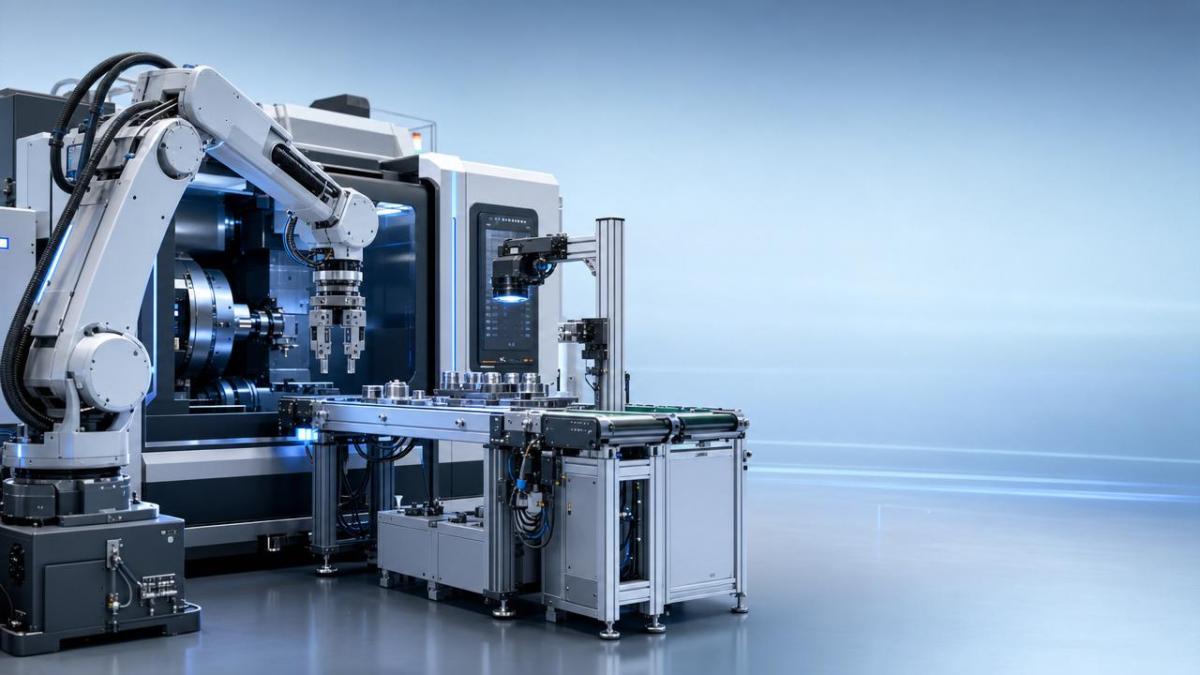
Now they are production systems tied to CNC machines, vision units, conveyors, tooling, MES links, and safety controls.
That broader scope raises early-stage uncertainty.
Machine tool environments add complexity because part variation, fixture precision, spindle timing, and tolerance demands shape robot performance.
A robotic loading cell may look simple in a proposal.
Yet the final system often needs custom grippers, guarding changes, part-present sensing, communication drivers, and process verification.
These missing line items explain why Industrial Robotics budgets often expand before commissioning is complete.
The strongest trend signals behind hidden Industrial Robotics costs
Several manufacturing trends are pushing hidden costs upward, even when robot hardware prices become more competitive.
- Higher mix production requires more end-of-arm tooling changes and more programming scenarios.
- Precision expectations in CNC operations demand tighter repeatability across fixtures, sensors, and machine interfaces.
- Digital integration adds software licenses, data mapping, cybersecurity reviews, and protocol compatibility testing.
- Labor shortages increase training urgency, but ramp-up periods still reduce output initially.
- Safety compliance now involves more detailed risk assessment and validation than many early estimates assume.
These signals matter across automotive, aerospace, electronics, energy equipment, and general fabrication.
In each case, Industrial Robotics value depends on system fit, not arm price alone.
Where hidden Industrial Robotics expenses usually appear first
The earliest cost surprises usually appear in supporting engineering work rather than in the robot quotation.
1. Integration engineering
Industrial Robotics need electrical, mechanical, control, and process integration.
This includes PLC logic, I/O mapping, machine handshake design, cycle balancing, and fault recovery planning.
If a CNC machine uses proprietary communication, the integration cost can rise sharply.
2. End-of-arm tooling and fixtures
Grippers are often underestimated.
Part geometry, surface sensitivity, coolant presence, chip contamination, and orientation tolerance all affect tooling design.
Fixture upgrades may also be needed to ensure robotic loading consistency.
3. Safety systems and compliance
Industrial Robotics cells require guarding, interlocks, scanners, emergency stops, and documented risk reduction measures.
Validation time can extend schedules, especially in shared human-robot spaces or retrofitted lines.
4. Software and digital connectivity
Offline programming, simulation, vision software, and analytics dashboards may involve recurring fees.
Data exchange with ERP, MES, or quality systems often needs custom middleware or engineering support.
5. Commissioning and ramp-up losses
Start-up rarely matches target cycle time.
Industrial Robotics cells may need several optimization rounds before uptime stabilizes.
That temporary output loss should be treated as a real cost.
A practical view of the cost drivers shaping Industrial Robotics projects
This pattern is common in Industrial Robotics deployments linked to machining centers, robotic tending, palletizing, inspection, and flexible manufacturing cells.
How these missed costs affect operations beyond the robot cell
Hidden Industrial Robotics costs do not stay isolated within automation budgets.
They influence production planning, quality stability, spare parts policy, and delivery commitments.
In CNC environments, poor fixture compatibility can cause part handling variation.
That variation may increase scrap, spindle waiting time, and inspection load.
When software links are weak, Industrial Robotics data may not support traceability or predictive maintenance goals.
This limits the expected benefit of smart factory investment.
Training gaps also create operational risk.
Without structured skill development, troubleshooting takes longer and external support costs remain high.
What deserves closer attention before approving Industrial Robotics spending
A stronger early review can reduce budget surprises and improve implementation speed.
- Map every interface between Industrial Robotics, CNC machines, sensors, and business systems.
- Test part families, not just one ideal sample.
- Budget separately for grippers, fixtures, guarding, and consumables.
- Include downtime during installation, validation, and operator learning.
- Check recurring fees for software, remote support, and updates.
- Define acceptance criteria for cycle time, yield, and uptime before sign-off.
These steps help align Industrial Robotics expectations with production reality.
A better decision framework for early-stage Industrial Robotics planning
A useful planning model should compare visible and invisible costs side by side.
- Start with process objectives, not robot specifications.
- Estimate full lifecycle cost over three to five years.
- Run a pre-integration audit for controls, tooling, safety, and data links.
- Model ramp-up losses using conservative throughput assumptions.
- Reserve contingency for engineering changes and validation tasks.
This approach gives Industrial Robotics projects a more credible financial baseline.
It also supports smarter comparisons between retrofit automation and greenfield cell design.
What to do next as Industrial Robotics adoption expands
Industrial Robotics will remain central to global manufacturing modernization.
However, stronger outcomes depend on treating automation as a system investment rather than a hardware purchase.
The most effective next step is a structured cost review before final approval.
List every engineering dependency, verify process assumptions, and attach cost ranges to uncertainty areas.
For CNC and precision manufacturing environments, this discipline can protect margins, reduce commissioning delays, and improve Industrial Robotics ROI from the start.
PREVIOUS ARTICLE
Recommended for You
![]() Changsha Housing Fund Policy Boosts Smart Manufacturing Real Estate DemandManufacturing Market Research Center
Changsha Housing Fund Policy Boosts Smart Manufacturing Real Estate DemandManufacturing Market Research Center![]() SGX April Trading Volume Up 6%; Equipment Financing Gains TractionGlobal Machine Tool Trade Research Center
SGX April Trading Volume Up 6%; Equipment Financing Gains TractionGlobal Machine Tool Trade Research Center![]() China's Avg. Mobile Data Usage Hits 23.4GB, Boosting CNC Cloud Services AbroadManufacturing Market Research Center
China's Avg. Mobile Data Usage Hits 23.4GB, Boosting CNC Cloud Services AbroadManufacturing Market Research Center![]() Germany's DAX Surges 3% on Resurgent Machine Tool DemandGlobal Machine Tool Trade Research Center
Germany's DAX Surges 3% on Resurgent Machine Tool DemandGlobal Machine Tool Trade Research Center![]() Canada Signs Ukraine ICC Treaty, Sanctions Extend to Industrial Equipment ExportsManufacturing Policy Research Center
Canada Signs Ukraine ICC Treaty, Sanctions Extend to Industrial Equipment ExportsManufacturing Policy Research Center![]() MIIT Launches 'AI+Software' Initiative to Boost Smart ProgrammingCNC Machining Technology Center
MIIT Launches 'AI+Software' Initiative to Boost Smart ProgrammingCNC Machining Technology Center


Aris Katos
Future of Carbide Coatings
15+ years in precision manufacturing systems. Specialized in high-speed milling and aerospace grade alloy processing.
▶
Industrial Automation Projects That Look Efficient but Cost MoreMachine Tool Industry Editorial Team▶
Industrial Robotics Costs That Often Get Missed Early OnMachine Tool Industry Editorial Team▶
What Slows Down an Automated Production Line Most OftenMachine Tool Industry Editorial Team▶
Ningxia's Green Power + Compute Convergence Powers Cloud CNC ExportMachine Tool Industry Editorial Team▶
China Mobile Launches National Integrated Computing Power NetworkMachine Tool Industry Editorial Team
Mastering 5-Axis Workholding Strategies
Join our technical panel on Nov 15th to learn about reducing vibrations in thin-wall components.

Providing you with integrated sanding solutions
Before-sales and after-sales services
Comprehensive technical support