• Global CNC market projected to reach $128B by 2028 • New EU trade regulations for precision tooling components • Aerospace deman
NYSE: CNC +1.2%LME: STEEL -0.4%

Is space-saving CNC manufacturing worth the layout tradeoff
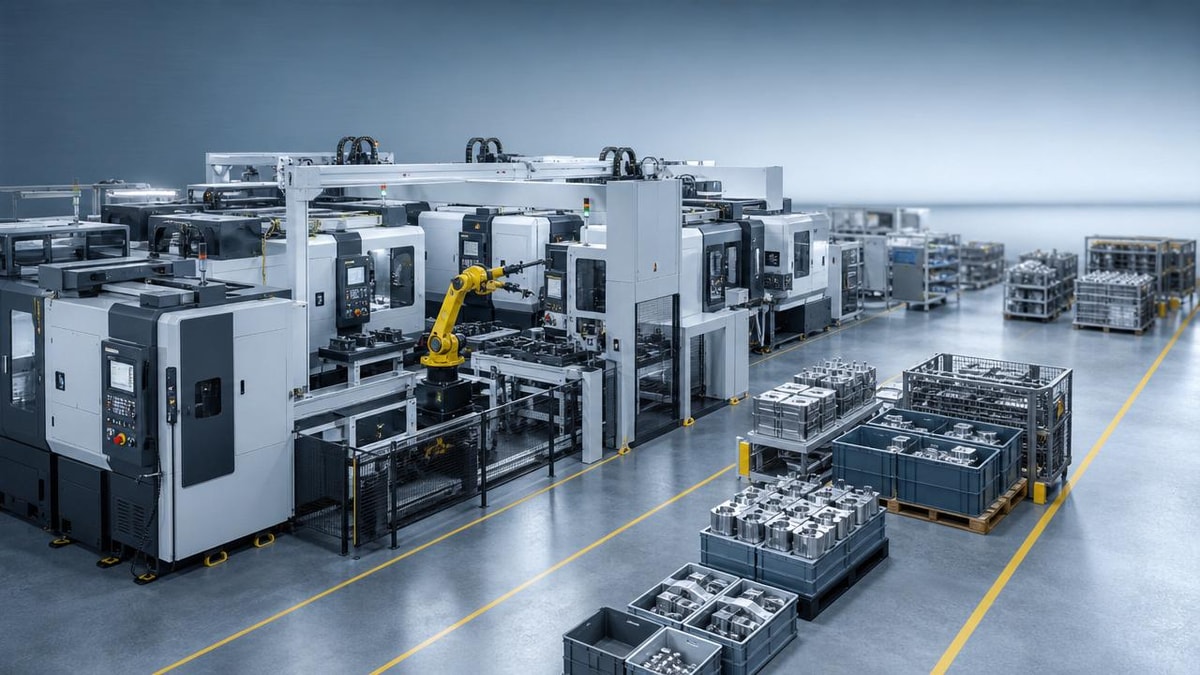
For project managers balancing floor space, throughput, and capital efficiency, the question is practical: is space-saving CNC manufacturing worth the layout tradeoff? As factories pursue smarter, denser production environments, compact machine configurations can improve utilization and flexibility—but they may also affect workflow, maintenance access, and future expansion. Understanding these tradeoffs is essential before redesigning a production layout.
In CNC machining, floor space is never just a real estate issue. It influences spindle utilization, operator travel distance, material flow, chip evacuation, maintenance windows, safety clearances, and the economics of future line changes. For project leaders managing new capacity, plant relocation, or brownfield upgrades, space-saving CNC manufacturing can deliver real value, but only when the layout decision is tied to production logic rather than square-meter reduction alone.
The most effective evaluation usually combines 4 dimensions: part mix, takt time, support access, and expansion potential. A compact cell that saves 15% to 25% of floor area may look attractive on a layout drawing, yet if tool loading, pallet movement, or maintenance access slows output by 8% to 12%, the net benefit becomes less obvious. That is why layout tradeoffs should be assessed as an operational decision, not only a facilities decision.
What Space-Saving CNC Manufacturing Really Means in Practice
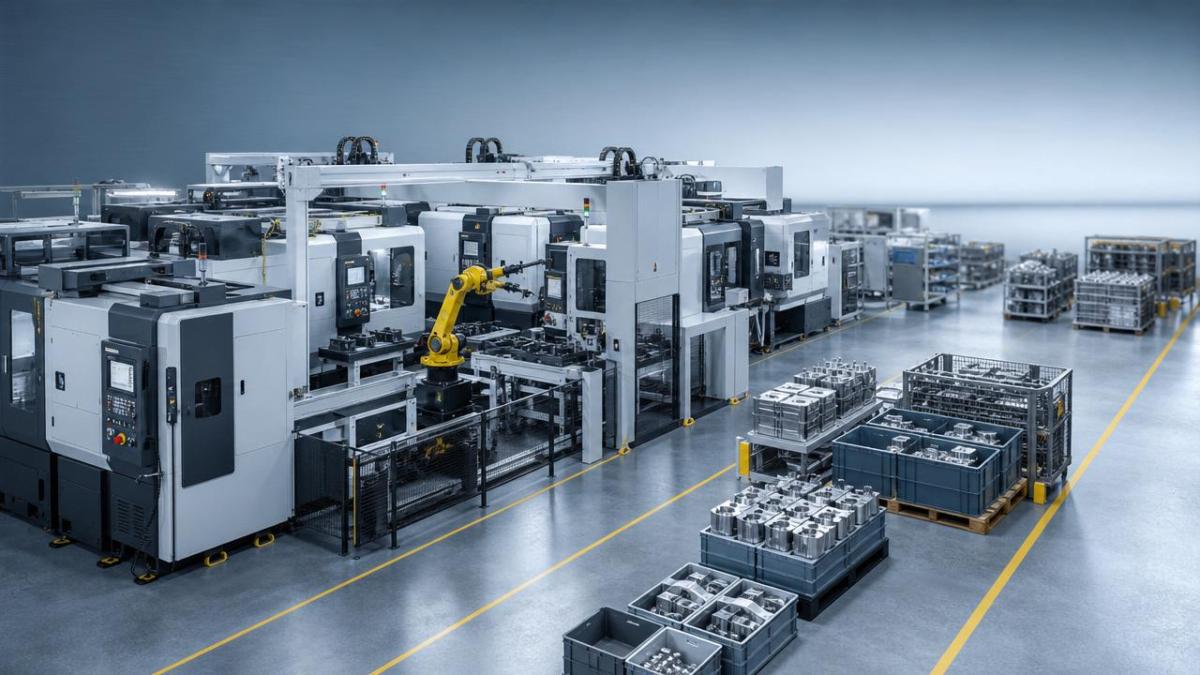
Space-saving CNC manufacturing usually refers to machine and cell configurations designed to increase output per square meter. In practical terms, this can include compact machining centers, twin-spindle lathes, multi-function turn-mill systems, vertical storage integration, robot tending inside smaller footprints, and reduced aisle spacing where safety codes allow. The goal is not only to fit more machines into a plant, but to raise production density without creating hidden bottlenecks.
For project managers, the concept matters most in 3 scenarios: when existing buildings cannot expand, when rental or utility costs are high, and when production must be added within 8 to 16 weeks rather than through a long greenfield project. In these cases, space-saving CNC manufacturing may help avoid civil construction, shorten installation lead times, and keep capital focused on productive equipment.
Common compact layout approaches
- Back-to-back machine placement for shared service corridors
- U-shaped CNC cells to reduce operator walking distance by 20% to 40%
- Multi-axis or mill-turn equipment replacing 2 to 3 separate process steps
- Overhead or vertical tool and material storage instead of floor racks
- Robot-loaded compact cells with enclosed raw and finished part buffers
Why compact does not always mean efficient
A smaller footprint can improve utilization, but only if supporting flows remain stable. CNC production depends on more than machine placement. Tool presetting, coolant filtration, chip handling, fixture staging, forklift paths, inspection points, and electrical access all require room. If these support functions are compressed too aggressively, downtime may rise even though the machine footprint falls.
In mixed production environments such as automotive components, energy equipment parts, and precision electronics structures, layout density should be evaluated against changeover frequency. A line with 6 to 10 product variants per week needs wider support logic than a dedicated line running one part family for 3 months. The more often setups change, the more dangerous an over-compressed layout becomes.
The table below compares typical layout models used in CNC manufacturing and shows where the layout tradeoff is usually acceptable for project planning.
The key takeaway is that space-saving CNC manufacturing is most valuable when it reduces wasted movement, duplicated handling, or unnecessary machine separation. It becomes risky when it limits service access, creates single points of failure, or leaves no room for process variation. In other words, the footprint gain must be matched by operational resilience.
How to Evaluate the Layout Tradeoff Before You Commit
Project managers should treat layout evaluation as a cross-functional review with at least 5 inputs: production engineering, maintenance, quality, logistics, and EHS. A compact layout that looks efficient in CAD may fail once real tool carts, work-in-process bins, coolant systems, and operator access zones are added. A solid review process usually takes 2 to 4 weeks for a medium-size CNC cell and prevents expensive rework after installation.
Four decision filters that matter most
1. Throughput per square meter
Measure not just machine count, but completed parts per hour per square meter. If a compact layout increases output density from 0.8 to 1.1 finished parts per square meter per hour, the gain is meaningful. If density rises only on paper while waiting time, queue time, or manual transfer time increase, the real benefit disappears.
2. Access for maintenance and changeover
A good rule is to preserve enough service space for routine tasks every 1 to 4 weeks and major interventions every 6 to 12 months. If rear electrical cabinets, chip conveyors, hydraulic units, or spindle service panels become difficult to reach, mean time to repair can extend from 45 minutes to more than 90 minutes. That change alone may offset floor-space savings.
3. Material flow and internal logistics
Compact CNC cells often work well when raw material, semi-finished parts, and finished parts follow one-direction flow. Problems start when the layout forces crossing paths between forklifts, operators, inspection carts, and chip disposal. For safety and productivity, many factories try to limit crossing points and maintain predictable replenishment intervals such as every 30 to 60 minutes.
4. Expansion and product change flexibility
The layout should still work if demand rises by 20% or a new part family requires larger fixtures, different automation, or extra inspection. Space-saving CNC manufacturing is less attractive if it locks the plant into a fixed configuration with no room for one more machine, an in-line washing station, or a CMM cell. What looks optimal today can become restrictive within 12 to 24 months.
The following table gives a practical screening framework for determining whether a compact CNC layout is worth the tradeoff in a real factory setting.
This framework helps separate meaningful density gains from cosmetic layout compression. In many CNC facilities, the best answer is not the smallest possible footprint but the smallest footprint that still protects maintenance, changeover, and material flow performance.
Where Compact CNC Layouts Deliver the Best Return
Not every production environment benefits equally from space-saving CNC manufacturing. The highest returns usually appear in operations with predictable routing, moderate to high machine utilization, and relatively standardized part handling. Industries such as automotive components, electronics enclosures, hydraulic parts, and small aerospace subcomponents often gain more than heavy, irregular, or low-repeat work.
Strong-fit use cases
- Plants with high facility costs where every 100 to 200 square meters released can support another productive process.
- Brownfield sites where adding 2 to 4 machines is easier than expanding the building shell.
- Operations moving from separate turning, milling, and inspection islands into integrated cells.
- Automated lines that can run 16 to 24 hours with low operator intervention.
Less suitable use cases
Compact layouts are less effective for oversized castings, long shafts, unstable demand profiles, or prototype-heavy environments. If crane access, large fixture swap-outs, or frequent engineering changes are common, tight layouts can create daily friction. In such conditions, preserving 10% to 15% more open space may produce better overall equipment effectiveness than maximizing density.
Another caution applies to single-machine process consolidation. Replacing 3 machines with 1 multi-task platform can reduce floor area and handling steps, but it also concentrates risk. If that machine stops, the entire route stops. Project teams should evaluate backup strategy, spare parts lead time, and operator skill depth before approving aggressive consolidation.
Hidden cost categories to include
- Utility rerouting for air, coolant, power, and data drops
- Additional guarding or safety interlocks in tighter cells
- Temporary production loss during relocation, often 3 to 10 days
- Programming and commissioning time for integrated automation
- Longer service interventions if access points are constrained
These costs do not automatically make compact design a poor choice. They simply need to be included in the payback model. A layout that saves building expansion may still be financially superior even with a 6 to 9 month implementation payback, especially when capacity demand is immediate and construction timelines are long.
Implementation Checklist for Project Managers
A disciplined rollout reduces layout risk significantly. In CNC projects, the most successful teams validate the future-state layout through simulation, operator review, maintenance walkthroughs, and phased startup planning rather than approving a compact design from a 2D drawing alone.
Recommended 5-step process
Step 1: Map the current state
Measure actual operator travel, WIP staging zones, service access points, tool replenishment frequency, and unplanned stoppage causes over at least 2 to 3 production weeks. This creates a baseline that reveals whether the space issue is truly layout-related or caused by scheduling, tooling, or process imbalance.
Step 2: Build two layout options
Compare a conservative option and a high-density option. Evaluate each against output, safety clearance, maintenance reach, and future expansion. In many cases, the better answer is a hybrid design that saves 12% to 18% of space without pushing all machines into the tightest possible configuration.
Step 3: Run failure-mode reviews
Ask practical questions. Can a spindle motor be replaced without moving adjacent equipment? Can a pallet jack turn safely during peak replenishment? Can chips and coolant be removed at the required frequency? These checks often reveal 3 to 5 layout weaknesses before capital is committed.
Step 4: Protect startup continuity
If production cannot stop, phase the change in modules. Many factories relocate one cell at a time during weekends or planned maintenance windows. A phased approach may extend the project by 2 to 6 weeks, but it reduces delivery risk and protects customer commitments.
Step 5: Define acceptance metrics
Before handover, agree on 4 to 6 measurable targets such as cycle time, OEE trend, changeover time, operator walking distance, first-pass yield, and mean time to repair. Without acceptance metrics, teams may celebrate floor-space savings while missing the real production outcome.
Frequently overlooked details
Project managers often focus on machine positions and overlook support equipment. Tool preset stations, part washing, scrap bins, electrical cabinets, coolant tanks, fire access, and digital terminals all need deliberate placement. In compact CNC environments, these peripheral elements often determine whether the layout performs well over 12 months, not just during the first week after installation.
Is space-saving CNC manufacturing worth the layout tradeoff? For many manufacturers, yes—when the redesign improves output density, simplifies process flow, and preserves access for maintenance and future growth. It is less worthwhile when space reduction is pursued as an isolated target and critical production support functions are squeezed out of the plan.
For project managers and engineering leaders, the best decision comes from balancing 3 results at once: usable floor area, stable throughput, and manageable lifecycle risk. If you are evaluating a compact CNC cell, a machine relocation, or a denser automation layout, now is the right time to compare options with realistic operational criteria. Contact us to discuss your production goals, get a tailored layout review, or explore more CNC manufacturing solutions for your facility.
PREVIOUS ARTICLE
Recommended for You
![]() ANVISA New Rule: Portuguese Biocompatibility Labels for Medical CNC Machines in BrazilManufacturing Policy Research Center
ANVISA New Rule: Portuguese Biocompatibility Labels for Medical CNC Machines in BrazilManufacturing Policy Research Center![]() EMO Hannover 2027 Booth Booking Opens: China AI-Machining Pavilion LaunchesGlobal Machine Tool Trade Research Center
EMO Hannover 2027 Booth Booking Opens: China AI-Machining Pavilion LaunchesGlobal Machine Tool Trade Research Center![]() KATS Updates KC Rules: CNC Cybersecurity Modules Must Meet IEC 62443-4-2Manufacturing Policy Research Center
KATS Updates KC Rules: CNC Cybersecurity Modules Must Meet IEC 62443-4-2Manufacturing Policy Research Center![]() Shanghai Port Launches Green Clearance Channel for CNC EquipmentManufacturing Market Research Center
Shanghai Port Launches Green Clearance Channel for CNC EquipmentManufacturing Market Research Center![]() ISO 23218-3:2026 Published: CNC Digital Twin Interoperability StandardCNC Machining Technology Center
ISO 23218-3:2026 Published: CNC Digital Twin Interoperability StandardCNC Machining Technology Center![]() Vietnam Cuts CNC Equipment Import Tariff to 3.8% from June 2026Global Machine Tool Trade Research Center
Vietnam Cuts CNC Equipment Import Tariff to 3.8% from June 2026Global Machine Tool Trade Research Center


Aris Katos
Future of Carbide Coatings
15+ years in precision manufacturing systems. Specialized in high-speed milling and aerospace grade alloy processing.
▶
MIIT Launches 2026 'Model-Data Resonance' Initiative for AI-Enabled CNC LinesMachine Tool Industry Editorial Team▶
What breaks first in an Automated Production Line upgradeMachine Tool Industry Editorial Team▶
Is space-saving CNC manufacturing worth the layout tradeoffMachine Tool Industry Editorial Team▶
Why automated production lines stall after early efficiency gainsMachine Tool Industry Editorial Team▶
Why Some Automated Production Lines Stall After InstallationMachine Tool Industry Editorial Team
Mastering 5-Axis Workholding Strategies
Join our technical panel on Nov 15th to learn about reducing vibrations in thin-wall components.

Providing you with integrated sanding solutions
Before-sales and after-sales services
Comprehensive technical support