• Global CNC market projected to reach $128B by 2028 • New EU trade regulations for precision tooling components • Aerospace deman
NYSE: CNC +1.2%LME: STEEL -0.4%

Why automated production lines stall after early efficiency gains
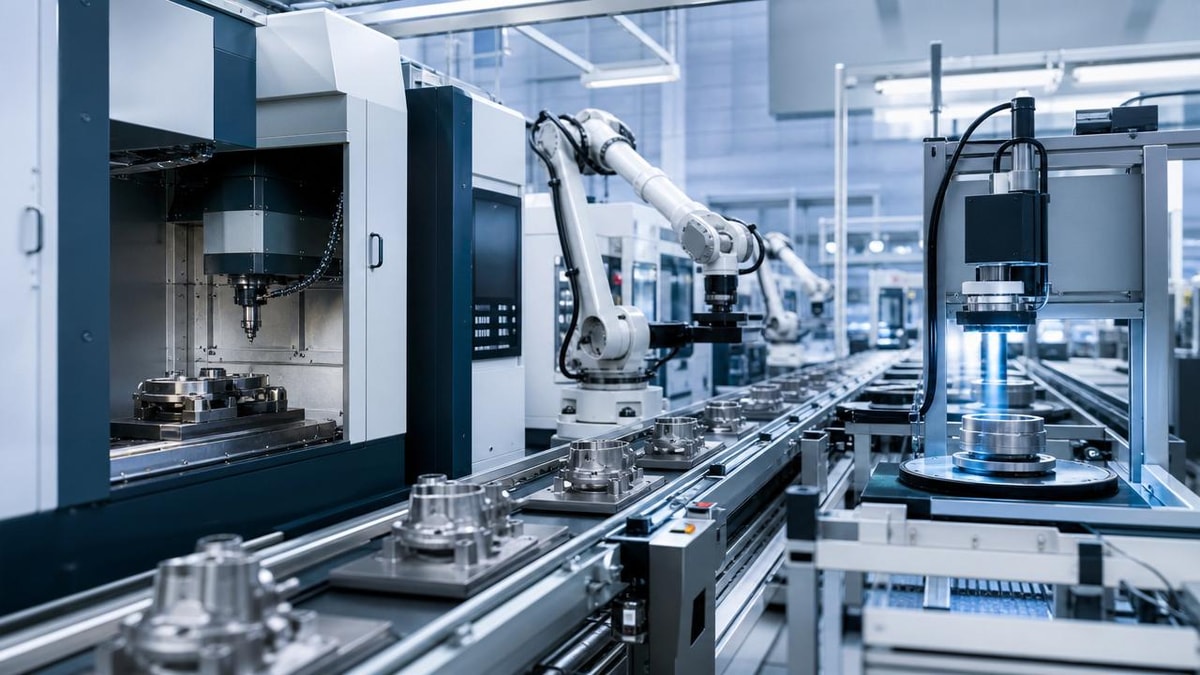
Many automated production lines deliver impressive gains in their first phase, only to stall when complexity, variability, and coordination issues begin to surface. For project managers and engineering leaders, the real challenge is not launching automated production, but sustaining efficiency as demand, precision requirements, and system integration pressures increase across modern manufacturing environments.
Why early wins in automated production often fade
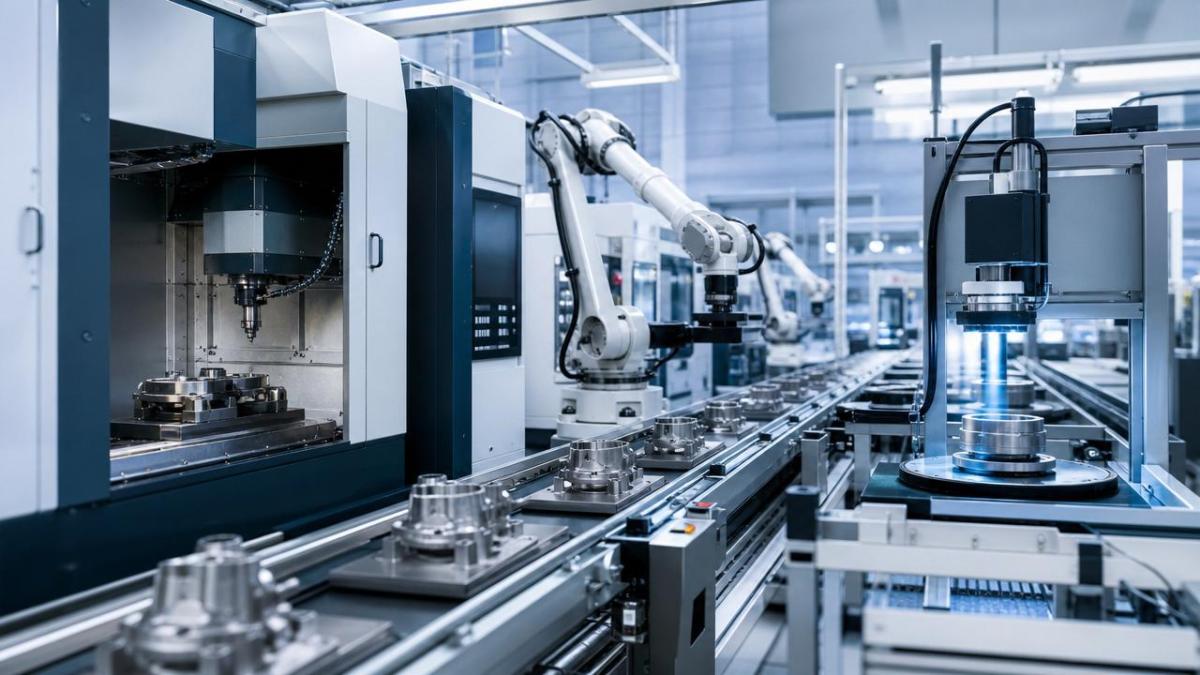
In CNC machining, precision assembly, and flexible manufacturing cells, the first phase of automated production usually targets obvious bottlenecks. A company may add robotic loading, pallet systems, in-line gauging, or linked machining centers and quickly see higher output, lower labor dependency, and more stable cycle times. These gains are real, but they are often achieved under limited product mix, controlled scheduling, and close engineering supervision.
The stall begins when the line moves from a pilot condition to a business condition. More part numbers enter the schedule. Tolerance chains become tighter. Upstream and downstream stations stop behaving like isolated assets and start exposing each other’s weaknesses. What looked like a machine problem becomes a system problem involving tooling life, fixture repeatability, data consistency, maintenance response, ERP communication, and operator escalation paths.
For project leaders in automotive, aerospace, electronics, and energy equipment production, this is where automated production becomes a management discipline rather than only an equipment investment. Sustained line efficiency depends on how well machine tools, tooling, robots, conveyors, inspection devices, and scheduling logic perform together under variability.
- Initial optimization often focuses on machine utilization, but long-term output is usually constrained by coordination losses between stations.
- Automated production becomes fragile when changeovers, part tolerances, and exception handling were underestimated during line design.
- As throughput rises, minor issues such as chip evacuation, probe drift, fixture wear, or queue imbalance can create recurring stoppages.
What actually causes automated production lines to stall?
Project teams often ask whether a stalled line is caused by poor machine capacity, weak automation design, or inadequate planning. In practice, the answer is usually a combination. The table below summarizes the most common failure points seen after early efficiency gains in automated production environments that rely on CNC lathes, machining centers, multi-axis systems, and automated material handling.
The pattern is important: many stalled lines do not fail because the equipment is fundamentally unsuitable. They stall because automated production was designed for nominal conditions, while daily manufacturing operates in non-nominal conditions. The more precision-focused the process, the more sensitive the line becomes to variation in material, tooling, handling, and data flow.
Complexity rises faster than visible output
A transfer line or flexible cell may be rated for target takt time, but once part complexity grows, hidden losses accumulate. Multi-axis machining, fine surface finish requirements, thermal stability, burr control, and in-process measurement all add time and decision points. The output target remains the same, yet the process now contains more variables than the original line model assumed.
Local optimization hurts system-level performance
It is common to improve one machine by increasing spindle utilization or reducing manual intervention, only to shift the bottleneck elsewhere. In automated production, the highest-performing station does not guarantee the highest-performing line. If inspection, washing, deburring, loading, or buffer logic cannot absorb the output rhythm, the benefit is diluted across the system.
Which warning signs should project managers track early?
For engineering leaders, line stall rarely arrives as a single dramatic breakdown. It usually emerges through recurring small losses. Recognizing these signals early is critical in automated production projects, especially where machine tool investment is high and customer delivery windows are strict.
- Cycle time variation grows even though nominal machine time remains unchanged. This often indicates fixture instability, tool wear behavior, or handshaking delays between stations.
- Short stoppages increase. A line may still report acceptable daily uptime, yet repeated micro-stops reduce actual output and create operator fatigue.
- Changeover recovery takes too long. If first-pass yield drops after each part switch, the line is not truly flexible.
- Quality escapes shift downstream. This means automated production is moving defects efficiently rather than preventing them at source.
- Maintenance becomes reactive. When spare parts, alarm history, and wear prediction are not integrated, line resilience declines quickly.
These indicators matter across the CNC machine tool industry because precision manufacturing depends on repeatability, not just speed. In sectors such as aerospace components or automotive drivetrain parts, a stalled line is not only a throughput issue. It can affect traceability, audit readiness, rework cost, and customer confidence.
How line design choices affect long-term automated production stability
When evaluating or upgrading automated production, project managers need to compare line architectures beyond headline capacity. A rigid transfer approach may achieve strong output in stable, high-volume programs, while a flexible cell arrangement may better handle product variation and phased expansion. The right decision depends on demand volatility, tolerance sensitivity, maintenance capability, and digital integration maturity.
This comparison shows why line stall is often built into the original assumption set. If the production strategy expects frequent engineering changes, global sourcing variation, or demand swings, then automated production should be designed around recovery, modularity, and traceable control logic rather than peak-speed claims alone.
Do not separate machine performance from process capability
A high-spec CNC machine tool cannot compensate for weak datum control, inconsistent raw material, unstable coolant management, or unsuitable clamping. The most sustainable automated production projects treat spindle power, axis dynamics, probing, chip management, tool presetting, and fixture repeatability as one capability chain.
Procurement and upgrade decisions: what should buyers evaluate?
When project managers source a new line or retrofit an existing one, the evaluation should go beyond machine count and quoted takt time. The following table can be used as a practical selection framework for automated production investments in CNC and precision manufacturing settings.
This type of procurement review is especially relevant in global machine tool sourcing. Suppliers from major manufacturing clusters may offer different strengths in machine rigidity, automation integration, lead time, control systems, and service depth. The best option is the one that matches your production reality, not just your launch presentation.
A practical buyer checklist
- Confirm the target part families, annual volume range, and expected engineering changes before final line selection.
- Request a clear boundary map showing who is responsible for CNC, robot, fixture, metrology, software, and commissioning interfaces.
- Review recoverability after alarms, not only nominal cycle time. Restart logic often determines actual daily output.
- Check whether spare parts, tool management, and calibration practices are included in the ramp-up plan.
Implementation methods that keep automated production moving
If a line has already stalled, recovery should begin with flow analysis rather than immediate hardware replacement. Many output losses can be corrected by rebalancing stations, refining fixture control, improving tool life management, adjusting inspection frequency, or rewriting interlock logic. In other cases, a modular retrofit is more cost-effective than a full replacement.
A disciplined recovery sequence
- Map actual losses by category: machine stop, waiting, quality hold, tool change, material supply, and software handshake delay.
- Identify the true system constraint rather than the loudest alarm source.
- Validate process capability at the fixture, tooling, and measurement level before changing machine parameters.
- Run controlled trials on one shift or one part family, then scale proven changes line-wide.
- Build operator and maintenance response standards so minor interruptions do not become long outages.
This approach is particularly effective in precision manufacturing because it respects the interaction between equipment and process. In many CNC-based automated production systems, stable output comes from reducing variation before increasing speed.
Standards, traceability, and digital integration: often ignored until problems grow
Automated production becomes harder to stabilize when compliance and data architecture are treated as late-stage tasks. In industries with strict quality expectations, teams should consider process traceability, calibration discipline, machine safety, and digital record integrity from the beginning. Common references may include ISO-based quality management practices, machine safety requirements, and sector-specific customer audit expectations, depending on the application.
For project managers, the practical lesson is simple: a line that cannot clearly show which machine, tool offset, inspection result, and material batch produced a part is harder to troubleshoot and harder to defend during customer review. Digital integration is not only a smart factory concept. It is a risk-control tool for automated production at scale.
FAQ: common questions before expanding automated production
How do we know if our line needs optimization or full replacement?
If the core machines still meet accuracy and reliability needs, optimization is often the first step. Review bottlenecks in handling, fixtures, probing, software logic, and changeover. Full replacement is more likely when part families have changed dramatically, maintenance burden is structurally high, or integration limits prevent traceable control.
Which automated production setup is better for mixed-product manufacturing?
In most cases, flexible cells or modular hybrid layouts are better than rigid linked lines for mixed-product demand. They allow phased expansion and easier recovery from product changes. However, they require stronger scheduling logic, fixture standardization, and data visibility to avoid hidden inefficiencies.
What should we prioritize when budgets are limited?
Prioritize the constraint that most directly affects stable throughput. That may be fixture repeatability, tool management, buffering, in-line inspection, or software interlocks rather than buying another machine. In many automated production projects, a targeted upgrade delivers more benefit than broad but shallow spending.
How long does it typically take to stabilize a newly launched line?
There is no universal timeline because part complexity, operator readiness, and supplier integration depth vary widely. What matters is whether ramp-up milestones include process capability checks, alarm recovery validation, tool life baselines, and part-change verification. Lines that skip these gates often appear fast at launch but stall soon after.
Why choose us for automated production insight and sourcing support
Our focus is the global CNC machining and precision manufacturing industry, where automated production depends on more than a single machine specification. We track machine tool development, flexible line trends, component manufacturing needs, and international supply dynamics across key industrial regions. That makes it easier for project managers and engineering teams to compare options with a system view.
If you are evaluating a new line, upgrading an existing cell, or trying to diagnose why automated production has plateaued, you can reach out for practical support around parameter confirmation, machine and line selection, expected delivery timelines, customization scope, process compatibility, traceability requirements, sample or trial discussion, and quotation planning. A clear technical discussion at the start often prevents expensive corrections later.
PREVIOUS ARTICLE
Recommended for You
![]() ANVISA New Rule: Portuguese Biocompatibility Labels for Medical CNC Machines in BrazilManufacturing Policy Research Center
ANVISA New Rule: Portuguese Biocompatibility Labels for Medical CNC Machines in BrazilManufacturing Policy Research Center![]() EMO Hannover 2027 Booth Booking Opens: China AI-Machining Pavilion LaunchesGlobal Machine Tool Trade Research Center
EMO Hannover 2027 Booth Booking Opens: China AI-Machining Pavilion LaunchesGlobal Machine Tool Trade Research Center![]() KATS Updates KC Rules: CNC Cybersecurity Modules Must Meet IEC 62443-4-2Manufacturing Policy Research Center
KATS Updates KC Rules: CNC Cybersecurity Modules Must Meet IEC 62443-4-2Manufacturing Policy Research Center![]() Shanghai Port Launches Green Clearance Channel for CNC EquipmentManufacturing Market Research Center
Shanghai Port Launches Green Clearance Channel for CNC EquipmentManufacturing Market Research Center![]() ISO 23218-3:2026 Published: CNC Digital Twin Interoperability StandardCNC Machining Technology Center
ISO 23218-3:2026 Published: CNC Digital Twin Interoperability StandardCNC Machining Technology Center![]() Vietnam Cuts CNC Equipment Import Tariff to 3.8% from June 2026Global Machine Tool Trade Research Center
Vietnam Cuts CNC Equipment Import Tariff to 3.8% from June 2026Global Machine Tool Trade Research Center


Aris Katos
Future of Carbide Coatings
15+ years in precision manufacturing systems. Specialized in high-speed milling and aerospace grade alloy processing.
▶
MIIT Launches 2026 'Model-Data Resonance' Initiative for AI-Enabled CNC LinesMachine Tool Industry Editorial Team▶
What breaks first in an Automated Production Line upgradeMachine Tool Industry Editorial Team▶
Is space-saving CNC manufacturing worth the layout tradeoffMachine Tool Industry Editorial Team▶
Why automated production lines stall after early efficiency gainsMachine Tool Industry Editorial Team▶
Why Some Automated Production Lines Stall After InstallationMachine Tool Industry Editorial Team
Mastering 5-Axis Workholding Strategies
Join our technical panel on Nov 15th to learn about reducing vibrations in thin-wall components.

Providing you with integrated sanding solutions
Before-sales and after-sales services
Comprehensive technical support