• Global CNC market projected to reach $128B by 2028 • New EU trade regulations for precision tooling components • Aerospace deman
NYSE: CNC +1.2%LME: STEEL -0.4%

Why Some Automated Production Lines Stall After Installation
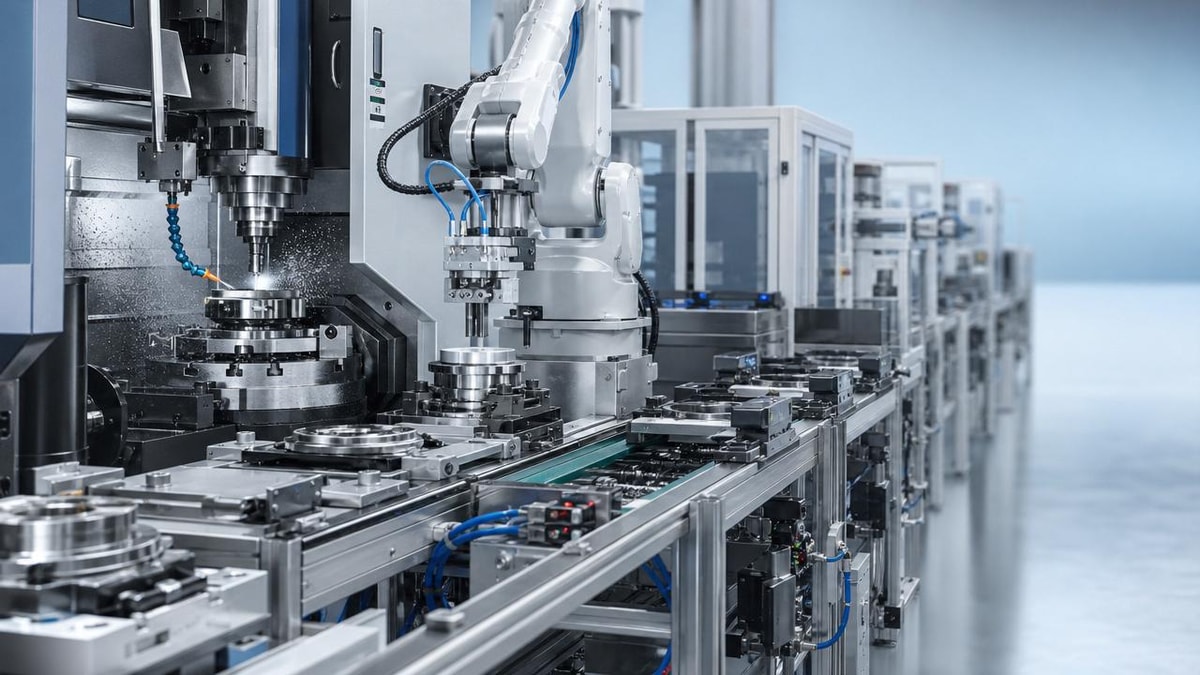
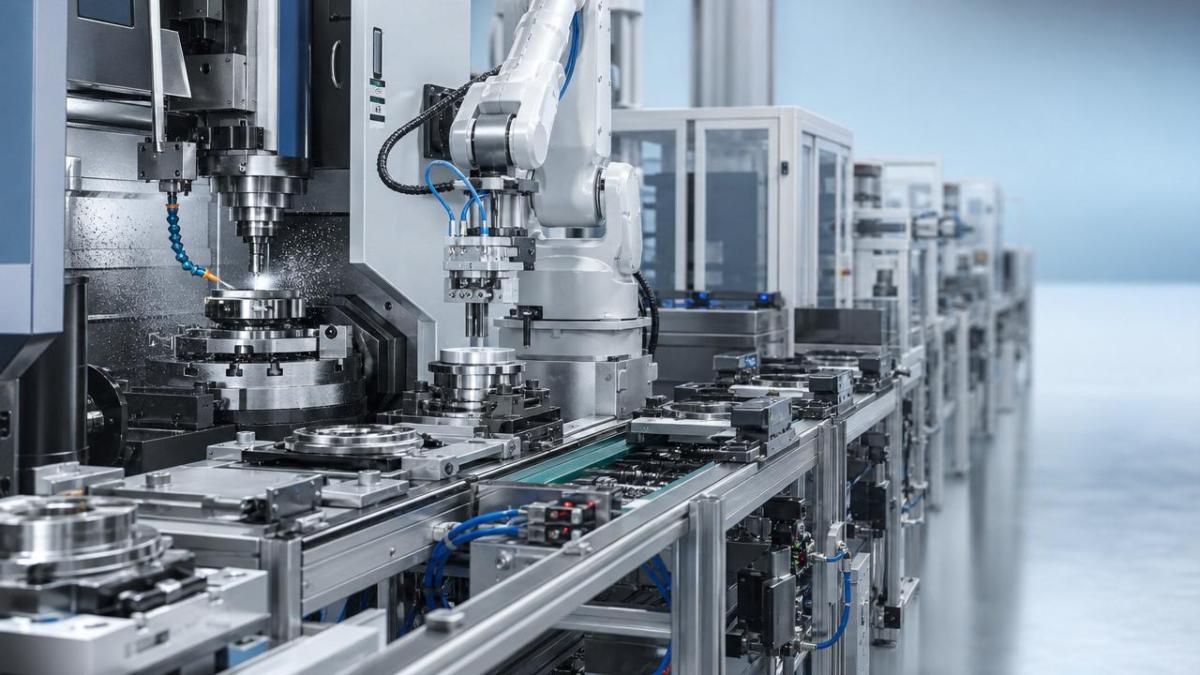
An Automated Production Line may pass acceptance tests yet begin to stall once real production starts. For after-sales maintenance teams, these interruptions often trace back to hidden issues in integration, parameter settings, material flow, or operator coordination. Understanding why post-installation slowdowns happen is the first step toward restoring stable output, reducing downtime, and protecting long-term equipment performance.
Why scenario differences matter after an Automated Production Line goes live
In the CNC machine tool and precision manufacturing industry, a newly installed Automated Production Line rarely fails for only one reason. A line serving automotive shafts, aerospace structural parts, energy equipment housings, or electronics assemblies may use similar automation architecture, but the operating stress is very different in each case. That is why post-installation stalling should be judged by production scenario rather than by equipment model alone.
For after-sales maintenance personnel, the key question is not simply whether the line can run. The practical question is whether the line can run continuously under real order mix, actual takt time, true material variation, shift changes, and operator habits. During factory acceptance tests, product types are often limited, raw material quality is controlled, and engineering staff remain on site. Once the line enters day-to-day production, those protections disappear, and hidden weaknesses become visible.
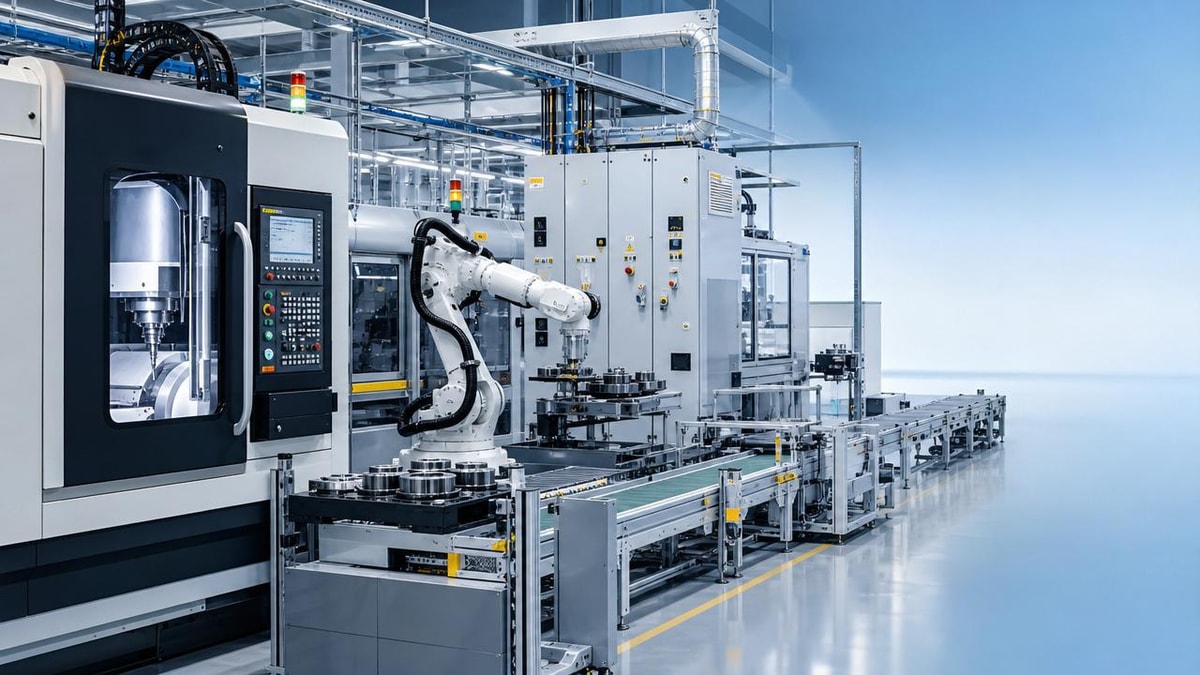
This is especially common in integrated systems that combine CNC lathes, machining centers, transfer units, robots, fixtures, sensors, and traceability software. A stall may appear as a machine problem, but in many cases it is caused by the mismatch between process design and the actual production scenario. Understanding the scenario first helps maintenance teams diagnose faster and recommend changes that truly fit the user’s operation.
Typical business scenarios where stalling appears after installation
An Automated Production Line can stall in almost any manufacturing environment, but several scenarios repeatedly create post-installation trouble. Each one has its own failure pattern, maintenance priority, and corrective path.
High-volume automotive component production
In automotive manufacturing, lines for shafts, discs, and transmission parts usually face strict cycle time pressure. Even a small interruption in part loading, chip removal, gauging, or robot handoff can quickly create a queue. In this scenario, stalling is often linked to takt imbalance, fixture wear, or tool life settings that are too aggressive for continuous production.
Multi-variety aerospace machining
Aerospace production introduces frequent model changes, tighter tolerances, and more complex machining paths. Here, an Automated Production Line may not stop because of speed issues, but because changeover logic, program interlocks, or clamping confirmation is not robust enough for mixed production. A line that ran well on one qualified sample batch may become unstable when multiple part numbers enter the schedule.
Energy equipment and heavy-part machining
For heavy components, stalling often comes from handling limits rather than spindle limits. Load deviation, workpiece deformation, delayed positioning, and coolant contamination can disrupt automation flow. In this scenario, maintenance teams must inspect the full transfer path, not just the CNC station that first reports an alarm.
Electronics and precision batch production
Electronics-related precision manufacturing usually works with smaller parts, shorter cycles, and stricter consistency requirements. Stalls may arise from sensor sensitivity, misfeeds, static-related handling issues, or communication delays between compact stations. Because stoppages are brief but frequent, the true root cause is often underestimated until output loss becomes significant.
Scenario comparison: what after-sales teams should check first
The table below helps after-sales maintenance teams match common stalling symptoms with the most likely scenario-specific causes on an Automated Production Line.
The most common reasons an Automated Production Line stalls after installation
Integration looked complete, but the interfaces were never stress-tested
A line may pass installation checks because every unit can operate individually. However, real production depends on the handoff between units: CNC to robot, robot to conveyor, conveyor to inspection, inspection to sorting, and all of them to the control system. If one signal arrives late, repeats unexpectedly, or fails under high load, the Automated Production Line starts to hesitate. These are classic post-installation problems because they rarely appear during short acceptance runs.
Parameters were set for demonstration conditions, not full-shift production
Installers often tune acceleration, feed timing, tool offsets, alarm windows, and sensor thresholds under stable trial conditions. Once the line runs for long hours, thermal growth, chip accumulation, tool wear, coolant concentration change, and material lot variation can push those settings outside a safe range. The result is not always a hard failure. More often, the Automated Production Line experiences recurring pauses, retries, and slow recovery cycles.
Material flow in the workshop does not match line design assumptions
Many stalls begin outside the machine itself. Raw parts may arrive with inconsistent orientation, pallets may not be returned on time, in-process inventory may block transfer space, or finished parts may not be removed quickly enough. In flexible production lines, poor material presentation can make a healthy station appear defective. For after-sales teams, this means every diagnosis should include upstream and downstream flow, not just machine alarms.
Operator coordination is weaker than expected
An Automated Production Line depends on people even in highly automated factories. If shift teams use different reset methods, skip standard cleaning, delay tool replacement, or mis-handle changeovers, the line will stall in ways that seem random. This is common after the supplier leaves and local teams take over daily operation. A strong maintenance response includes retraining, visual work instructions, and alarm history review by shift.
Production mix changed faster than the line could adapt
A line designed for one batch structure may struggle when the customer adds smaller lot sizes, tighter tolerances, or more urgent order switching. In this case, stalling is not a simple defect but a mismatch between line configuration and current business demand. This is especially relevant in global manufacturing, where orders shift quickly across regions and product variants increase without warning.
How priorities change by maintenance scenario
After-sales maintenance teams should not use the same troubleshooting path for every Automated Production Line. The right starting point depends on the operating scenario, customer pressure, and type of interruption.
When the customer cares most about output recovery
In high-volume manufacturing, the first goal is to restore flow. Focus on bottleneck stations, inter-station timing, tool condition, and bypass logic. Temporary stabilization can be valuable if it protects delivery, but every temporary setting should be documented and reviewed later for long-term reliability.
When the customer cares most about quality consistency
In precision or aerospace applications, maintenance must confirm whether the stall is linked to measurement failures, offset drift, fixture repeatability, or traceability data mismatch. Restarting quickly is not enough if hidden instability may create nonconforming parts. In such scenarios, slow but verified recovery is often the correct choice.
When the customer runs mixed models or frequent changeovers
For a flexible Automated Production Line, review recipe management, barcode logic, part identification, and station permissions. Many repeated stops come from invalid combinations that only appear during real scheduling. Maintenance teams should compare the intended process route with the actual production route observed on site.
Common misjudgments that delay the fix
One frequent mistake is replacing components too early. If the line stalls at the same point every time, the visible device may only be reacting to an earlier problem. Another mistake is treating a software issue as a mechanical one, or the reverse. For example, repeated clamp alarms may come from fixture wear, but they may also come from timing mismatch in the confirmation signal.
A third misjudgment is assuming that successful acceptance proves process readiness. Acceptance proves that the system can work under planned conditions. It does not prove that the Automated Production Line is ready for every material lot, every shift, and every product combination. After-sales teams create value when they help customers close that gap between planned operation and real operation.
Practical adaptation steps for a more stable Automated Production Line
To reduce post-installation stalling, maintenance personnel can use a structured adaptation approach:
- Collect alarm history together with production context, including shift, part number, material batch, and tool life stage.
- Separate hard stops from micro-stops, because brief interruptions often reveal the earliest signs of instability.
- Check station-to-station timing under peak load, not just under single-cycle testing.
- Review whether current recipes, fixtures, and programs still match the customer’s actual order mix.
- Confirm operator response consistency by observing different shifts using the same fault recovery process.
- Recommend preventive updates such as threshold optimization, buffer redesign, fixture maintenance, and targeted retraining.
FAQ for after-sales maintenance teams
Why does an Automated Production Line pass testing but fail in mass production?
Because testing usually covers limited products, shorter run time, and stronger engineering support. Mass production adds real variability in materials, tools, operators, schedules, and logistics.
What should be checked first when stalls are frequent but short?
Start with sensor thresholds, communication timing, small transfer delays, and repeated reset actions. Micro-stops often point to coordination issues before they become major shutdowns.
When is the problem more about application fit than equipment failure?
If the line runs reliably on one product type but struggles when the mix changes, the issue may be scenario fit. The process route, buffer capacity, changeover logic, or staffing method may no longer match the current production model.
Final takeaway: judge the stall by the scenario, not by the alarm alone
For professionals supporting CNC machines, precision machine tools, and integrated automation, the best way to restore a stalled Automated Production Line is to connect every symptom to its real production scenario. Automotive flow lines, aerospace mixed-model cells, heavy-part systems, and precision batch operations all stall for different reasons, even when the alarm screen looks similar. When after-sales maintenance teams evaluate integration, parameters, material flow, and human coordination in context, they can move beyond repeated emergency fixes and help customers achieve stable, long-term production.
If a customer’s line continues to slow down after installation, the next step is to review the actual application scenario in detail: part family, takt target, shift pattern, transfer method, and changeover frequency. That scenario-based review often reveals the fastest path to a more reliable Automated Production Line and stronger equipment performance over time.
PREVIOUS ARTICLE
NEXT ARTICLE
Recommended for You
 CNC Milling Capacity Gaps Can Hurt Small Batch ProfitabilityManufacturing Market Research Center
 Industrial Robotics Payback Is Changing in Mid-Size PlantsManufacturing Market Research Center
 Shaft Parts Machining Problems That Show Up at Final InspectionCNC Machining Technology Center
 Production Process Delays Usually Start Before Machining BeginsCNC Machining Technology Center
 Industrial Automation Projects Often Miss This Integration StepCNC Machining Technology Center
 CNC Metal Cutting Tool Wear Is Costing More Than You ThinkCNC Machining Technology Center

Aris Katos
Future of Carbide Coatings
15+ years in precision manufacturing systems. Specialized in high-speed milling and aerospace grade alloy processing.
▶
Why Some Automated Production Lines Stall After InstallationMachine Tool Industry Editorial Team▶
Space-Saving CNC Manufacturing Without Sacrificing WorkflowMachine Tool Industry Editorial Team▶
What Slows Automated Production More Than Machine SpeedMachine Tool Industry Editorial Team▶
2026 Roller Conveyor Trends: Flexibility & Digital Twin Drive Overseas ProcurementMachine Tool Industry Editorial Team▶
Automated Production Line faults that disrupt output for hoursMachine Tool Industry Editorial Team
Mastering 5-Axis Workholding Strategies
Join our technical panel on Nov 15th to learn about reducing vibrations in thin-wall components.

Providing you with integrated sanding solutions
Before-sales and after-sales services
Comprehensive technical support