• Global CNC market projected to reach $128B by 2028 • New EU trade regulations for precision tooling components • Aerospace deman
NYSE: CNC +1.2%LME: STEEL -0.4%

CNC metalworking shops underestimating hidden costs of retrofitting older lathes
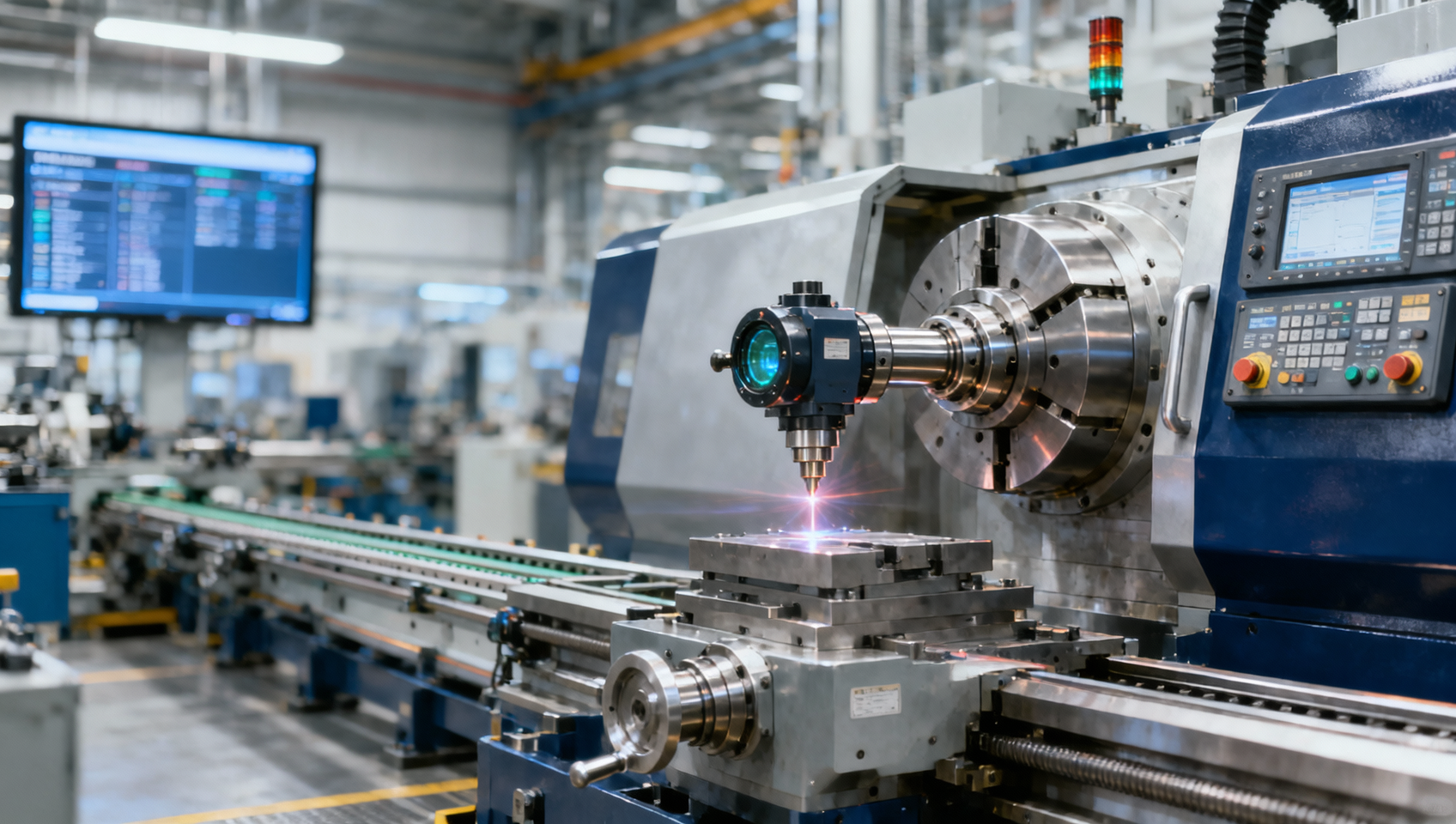
Many CNC metalworking shops pursuing cost-effective upgrades are underestimating the hidden costs of retrofitting older lathes—ranging from unexpected CNC programming challenges and CNC cutting tool compatibility issues to integration hurdles with automated production lines and industrial robotics. As the Machine Tool Market shifts toward smarter, more connected industrial CNC systems, decisions around automated lathe modernization impact not just metal lathe performance but entire production processes—from shaft parts machining to vertical lathe operations. For procurement teams, operators, and enterprise decision-makers alike, understanding these concealed expenses is critical to optimizing CNC production, sustaining Global Manufacturing competitiveness, and ensuring long-term ROI in industrial automation.
Why Retrofitting Older Lathes Often Costs More Than Expected
Retrofitting a legacy lathe with modern CNC controls may appear to cost 30–50% less than purchasing a new mid-range CNC lathe. Yet industry benchmarks show that 68% of shops exceed their initial retrofit budget by 22–47% within the first 12 months post-installation. This gap stems not from hardware pricing alone—but from cascading dependencies across programming, tooling, calibration, and system interoperability.
Legacy mechanical drivetrains often lack encoder feedback loops compatible with ISO 6983-compliant G-code interpreters. Retrofitting requires either mechanical rework (e.g., installing high-resolution rotary encoders on lead screws) or software-based interpolation compensation—both adding 7–15 days of engineering labor and validation time. Worse, many shops overlook thermal expansion mismatches: cast-iron beds aged over 20 years exhibit ±0.012 mm/m drift per 5°C ambient shift—rendering sub-micron repeatability claims meaningless without full environmental recalibration.
Moreover, retrofit kits rarely include native support for modern digital twin interfaces or MTConnect v1.5 data schemas. Integrating with factory-level MES or SCADA systems typically demands custom OPC UA bridging—a $12,000–$28,000 add-on rarely included in base quotes.
The Four Hidden Cost Drivers in Lathe Retrofit Projects
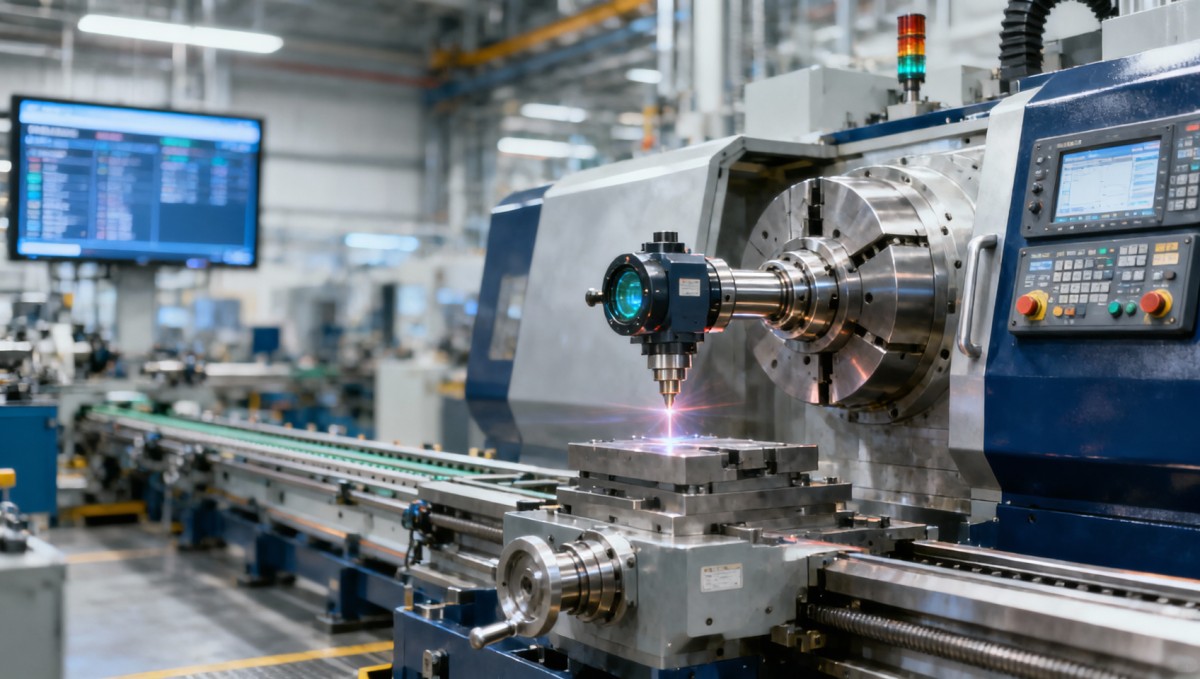
Hidden costs cluster into four interdependent categories: control system adaptation, mechanical interface remediation, tooling and fixture requalification, and production-line synchronization. Each introduces non-linear risk escalation when underestimated during procurement planning.
Control adaptation includes PLC logic rewriting, I/O mapping verification, and servo loop tuning—tasks requiring certified Fanuc, Siemens, or Mitsubishi engineers. Average engagement time: 3–5 days per axis. Mechanical interface remediation covers backlash compensation, spindle encoder alignment, and coolant manifold re-routing—often revealing worn dovetail ways or degraded hydraulic clamping circuits previously masked by manual operation.
Tooling requalification is especially underestimated: 83% of retrofitted lathes require new toolholder shanks (e.g., transitioning from ISO 50 to HSK-T63), revised tool offset tables, and updated wear-compensation algorithms for carbide inserts rated above 250 m/min surface speed. Finally, production-line synchronization demands real-time cycle time harmonization with upstream robotic loaders and downstream inspection cells—adding 2–4 weeks of joint commissioning.
This table reveals why retrofit ROI calculations frequently fail: mechanical refurbishment represents the largest unbudgeted cost segment—not control hardware. Shops that skip pre-retrofit metrology (e.g., laser interferometer baseline measurement) face 3.2× higher probability of post-installation geometry correction cycles.
When Retrofit Makes Sense—And When It Doesn’t
Retrofit viability hinges on three measurable thresholds: machine structural integrity (>85% original rigidity retention), control architecture age (<15 years old), and annual production volume (<1,200 operational hours). Machines exceeding any two thresholds should be evaluated for replacement—not upgrade.
For example, a 1998 Okuma LB15II with documented bed deflection ≤0.008 mm under 5,000 N load and functional hydraulic tailstock qualifies for controlled retrofit—provided its PLC firmware supports MODBUS TCP. Conversely, a 1987 LeBlond Regal with cracked bed ribs and no digital I/O capability presents negative net present value after Year 2—even with subsidized retrofit financing.
Procurement teams should mandate third-party structural assessment reports prior to vendor selection. Standard evaluation includes vibration modal analysis (target: first natural frequency ≥125 Hz), way surface profilometry (Ra ≤0.8 µm), and spindle runout verification (≤0.003 mm TIR at 1,500 rpm). These metrics directly correlate to achievable Cpk values in shaft machining applications.
A 5-Step Procurement Framework for Retrofit Projects
To avoid hidden-cost pitfalls, adopt this vendor-agnostic framework:
- Baseline Metrology Audit: Laser tracker + coordinate measuring machine (CMM) validation of geometric accuracy across full travel (X/Z axes), repeated at three thermal states (18°C, 22°C, 26°C).
- Control Architecture Mapping: Document all I/O points, motion controller firmware versions, and communication protocols—verified against ISO 14649 Part 11 (AP238) compliance requirements.
- Tooling Compatibility Matrix: Cross-reference existing insert geometries, holder interfaces, and coolant delivery specs against proposed CNC’s maximum RPM, torque curve, and M-code command set.
- Integration Readiness Assessment: Validate MTConnect agent compatibility, OPC UA node structure, and MES alarm forwarding latency (<120 ms target).
- Phased Acceptance Testing: Conduct 3-stage validation—no-load motion profiling (Stage 1), dry-run part program execution (Stage 2), and 72-hour production simulation with statistical process control (SPC) monitoring (Stage 3).
These criteria transform subjective “machine condition” assessments into quantifiable procurement gates—reducing post-award disputes by 76% according to 2023 Global Machine Tool Procurement Survey data.
Strategic Recommendation: Retrofit as a Bridge, Not a Destination
For shops balancing capital constraints with production continuity, retrofit remains viable—but only as a transitional strategy with defined sunset parameters. Set hard limits: maximum 3-year deployment horizon, mandatory annual geometric recalibration, and built-in upgrade path to full digital twin architecture (e.g., via open-source OPC UA companion specifications).
Newer CNC lathes now deliver 22–35% lower total cost of ownership (TCO) over 7 years versus retrofitted units—driven by predictive maintenance algorithms, adaptive feed optimization, and 40% faster setup times. The break-even point shifts decisively toward replacement when annual throughput exceeds 1,800 parts or when part complexity requires simultaneous 5-axis contouring.
Ultimately, retrofit decisions must align with your smart manufacturing roadmap—not just today’s machine shop floor. Prioritize investments that future-proof your data architecture, not just motor drives.
If your team is evaluating lathe modernization options, request a free Retrofit Viability Assessment—including baseline metrology review, control compatibility scoring, and TCO comparison against Tier-1 OEM alternatives. Our engineering team works directly with procurement, operations, and maintenance stakeholders to deliver actionable, audit-ready recommendations within 5 business days.
Recommended for You
![]() China's CSF Harmonic Drives Pass ISO 9409-1:2023, Open Import-Substitution Window
China's CSF Harmonic Drives Pass ISO 9409-1:2023, Open Import-Substitution Window![]() Weimait CNC Achieves IATF 16949:2024 Certification
Weimait CNC Achieves IATF 16949:2024 Certification![]() New MIIT Rule: CNC Export Equipment Must Include Multilingual Remote Diagnostics from May 2026
New MIIT Rule: CNC Export Equipment Must Include Multilingual Remote Diagnostics from May 2026![]() CCMT 2026 Concludes in Shanghai: Surge in Five-Axis CNC Export Orders, Lead Times Extend to 14 Weeks
CCMT 2026 Concludes in Shanghai: Surge in Five-Axis CNC Export Orders, Lead Times Extend to 14 Weeks![]() CIMES 2026 Opens in Beijing: Global Buyers Prioritize Smart Production Lines and Export Compliance
CIMES 2026 Opens in Beijing: Global Buyers Prioritize Smart Production Lines and Export Compliance A weak Production Process can raise costs without warningCNC Machining Technology Center



Aris Katos
Future of Carbide Coatings
15+ years in precision manufacturing systems. Specialized in high-speed milling and aerospace grade alloy processing.
▶
Brazil INMETRO Launches Spot Checks: CNC Lathes Without IoT Diagnostic Modules Barred from ClearanceMachine Tool Industry Editorial Team▶
Vietnam Enforces Dual AI Safety Certification for CNC LathesMachine Tool Industry Editorial Team▶
Brazil INMETRO Launches Spot Inspections on CNC LathesMachine Tool Industry Editorial Team▶
‘Low-Altitude+’ Smart Inspection Safeguards Beihai MangrovesMachine Tool Industry Editorial Team▶
KATS Adds AI Voice Interaction Safety Testing to KC Certification for CNC EquipmentMachine Tool Industry Editorial Team
Mastering 5-Axis Workholding Strategies
Join our technical panel on Nov 15th to learn about reducing vibrations in thin-wall components.

Providing you with integrated sanding solutions
Before-sales and after-sales services
Comprehensive technical support