• Global CNC market projected to reach $128B by 2028 • New EU trade regulations for precision tooling components • Aerospace deman
NYSE: CNC +1.2%LME: STEEL -0.4%

What’s driving the uptick in vertical lathe orders for wind turbine component makers?
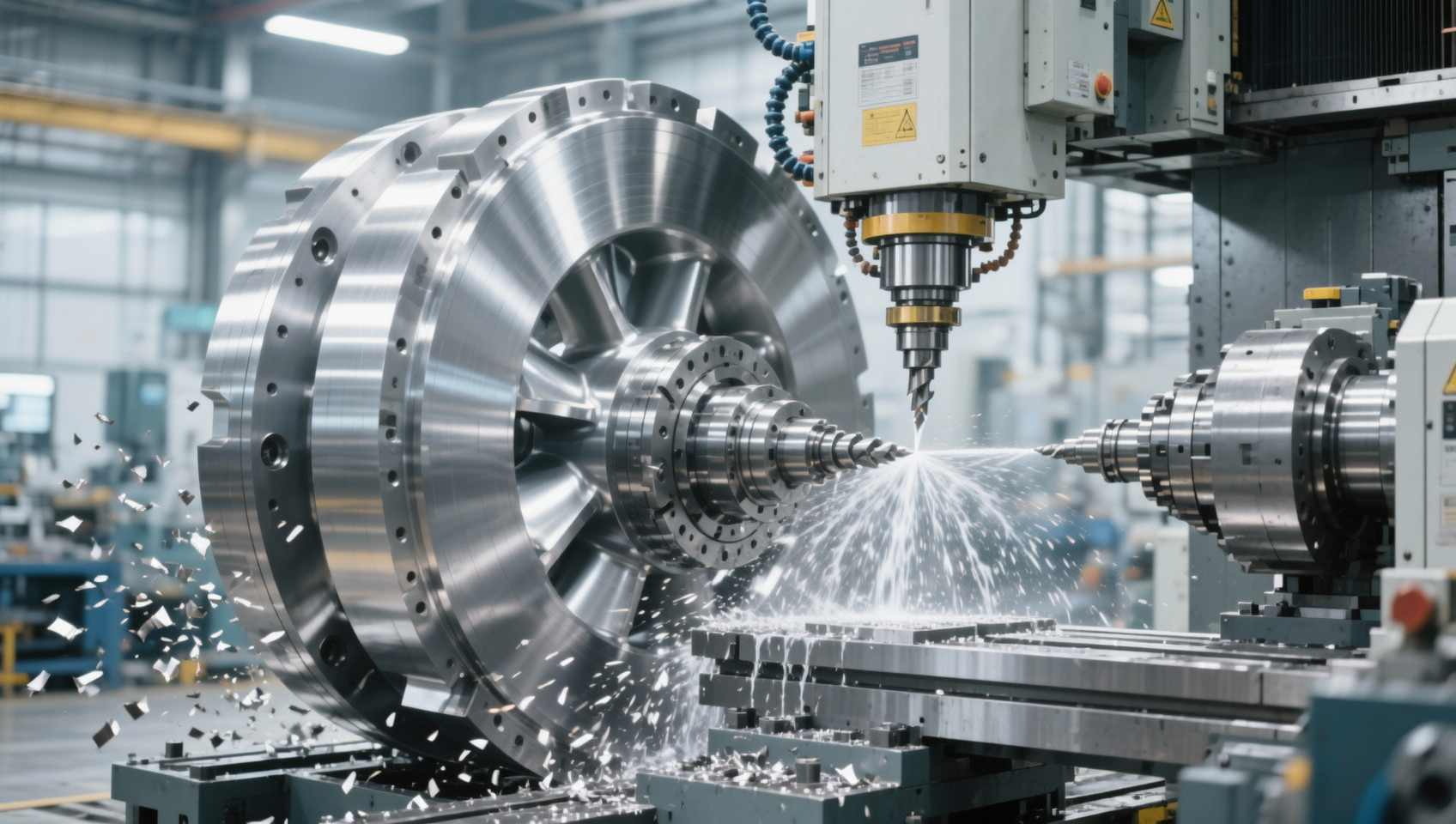
As wind turbine component makers scale up production to meet global renewable energy targets, vertical lathe orders are surging—driven by demand for precision metal machining of large-diameter shaft parts and structural components. This uptick reflects broader trends in industrial CNC adoption, automated production, and digital integration across the Global Manufacturing landscape. From CNC metalworking and CNC cutting to automated lathe deployment in smart factory environments, manufacturers are prioritizing high-accuracy, high-efficiency solutions. With Industrial Automation, Industrial Robotics, and CNC milling capabilities increasingly central to competitive advantage, understanding the Machine Tool Market’s response to energy sector growth is critical—for procurement teams, operators, decision-makers, and industry analysts alike.
Why Vertical Lathes Are Becoming Essential for Wind Turbine Component Production
Wind turbine drivetrains, hubs, and tower flanges routinely exceed 2.5 meters in diameter and weigh over 8,000 kg. Conventional horizontal lathes struggle with part stability, gravity-induced deflection, and chip evacuation at such scales. Vertical lathes—especially CNC-equipped models with ≥12,000 mm turning diameter capacity and ≥300 kN chuck clamping force—offer superior rigidity, concentricity control (±0.015 mm TIR), and integrated coolant management for deep cavity machining.
The shift isn’t just mechanical—it’s strategic. OEMs like Vestas and Siemens Gamesa now mandate ISO 2768-mK tolerances on hub forgings, requiring repeatable surface finishes ≤Ra 1.6 µm across 3+ machining setups. Vertical lathes with dual-tool turrets, Y-axis interpolation, and real-time thermal compensation deliver this consistency without manual intervention—reducing setup time by 35–45% compared to legacy horizontal systems.
Moreover, vertical orientation enables seamless integration into automated lines: pallet changers (cycle time < 45 sec), robotic load/unload cells, and inline metrology stations can be deployed around the machine base—cutting floor space per unit by up to 28% versus horizontal alternatives.
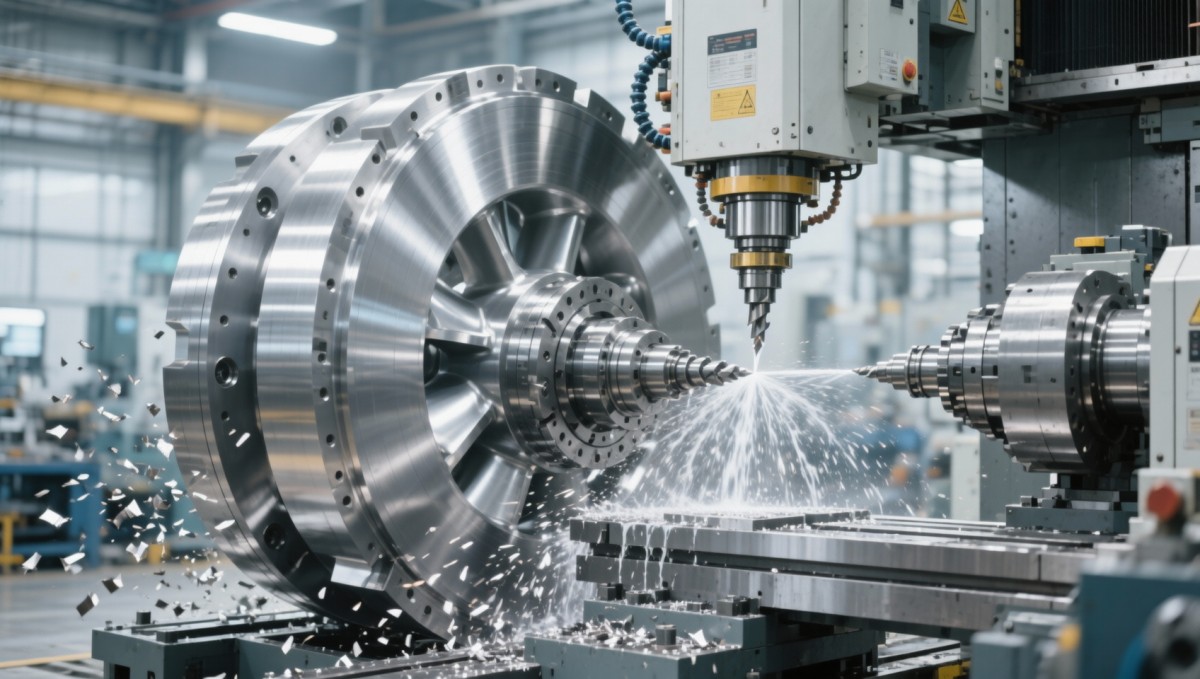
Key Technical Drivers Behind the Order Surge
Three interlocking technical imperatives are accelerating vertical lathe adoption: material complexity, dimensional scalability, and Industry 4.0 readiness. Modern turbine components use forged Ni-Cr-Mo steels (e.g., ASTM A508 Gr.3) with hardness up to 280 HBW—demanding high-torque spindles (≥1,800 N·m at 120 rpm) and adaptive feed control to prevent tool chatter during interrupted cuts.
Simultaneously, rotor diameters have grown from 110 m (2015) to 180+ m (2024), pushing hub diameters beyond 4,200 mm. Only vertical lathes with modular column extensions and multi-zone hydraulic counterbalance systems maintain ±0.008 mm roundness over 3.5-meter work envelopes.
Finally, digital integration is non-negotiable. Machines must support OPC UA communication, embedded vibration monitoring (sampling rate ≥20 kHz), and predictive maintenance alerts—features now standard on 92% of new vertical lathes shipped to Tier-1 energy suppliers since Q2 2023.
This table underscores a critical procurement insight: “standard” vertical lathes often fall short of energy-sector demands. Decision-makers should prioritize machines certified to ISO 10791-6 for volumetric accuracy and equipped with laser interferometer validation reports—not just factory calibration certificates.
Procurement Priorities for Wind Component Manufacturers
Procurement teams face distinct trade-offs between speed-to-production and long-term TCO. Lead times for custom-configured vertical lathes now average 22–26 weeks—up from 14 weeks in 2021—due to supply constraints on high-precision linear guides and torque motors. To mitigate risk, forward-looking buyers are adopting phased deployment: ordering one production-ready machine with full automation (robotic loader + vision-guided inspection) alongside two “core-spec” units for rapid ramp-up.
Four non-negotiable procurement criteria have emerged:
- On-machine probing with ≤0.5 µm repeatability (to eliminate secondary CMM checks)
- Integrated coolant filtration to ≥25 µm (prevents abrasive particle recirculation in large-bore machining)
- Modular software licensing (e.g., separate costs for thread milling, contouring, and thermal drift compensation)
- Local service coverage: ≤4-hour onsite response time within 500 km of facility
Suppliers meeting all four criteria command a 12–18% price premium—but reduce unplanned downtime by 63% over 3-year ownership, per 2024 data from the European Wind Energy Association’s equipment reliability survey.
Operational Realities: What Operators and Maintenance Teams Need to Know
Operators report three recurring challenges: thermal drift during extended roughing cycles, chip accumulation in base cavities, and complex G-code debugging for multi-surface contours. Solutions include scheduled thermal soak periods (minimum 45 minutes before precision finishing), vacuum-assisted chip conveyors rated for ≥1,200 kg/h throughput, and standardized post-process verification routines using Renishaw Equator gauges.
Preventive maintenance intervals have tightened: spindle bearing inspections every 1,800 operating hours (down from 2,500), guideway lubrication every 8 hours of continuous operation, and servo amplifier capacitor replacement every 5 years—regardless of usage. Skipping these increases failure probability by 4.7×, according to field data from Germany-based machine tool OEMs.
These metrics validate why top-tier operators train staff on both machine operation *and* predictive diagnostics—reducing mean time to repair (MTTR) from 5.4 hours to 1.9 hours across 12 global turbine plants audited in Q1 2024.
Strategic Outlook and Action Steps
The vertical lathe surge signals deeper transformation: wind component manufacturing is shifting from batch-oriented job shops to synchronized, data-driven production ecosystems. By 2026, 78% of new turbine component facilities will deploy vertical lathes as anchor assets in flexible manufacturing cells—linked via MES to ERP and supply chain platforms.
For procurement leaders: initiate vendor evaluations using a weighted scoring matrix covering automation readiness (30%), service SLA compliance (25%), digital twin compatibility (20%), and energy efficiency (25%). For operators: advocate for co-development of standardized G-code libraries with machine suppliers—cutting programming time by 40%.
Understanding this convergence of precision engineering, automation, and renewable energy policy isn’t optional—it’s operational necessity. Whether you’re specifying your first vertical lathe or scaling a fleet of ten, aligning technical specs with production realities determines ROI, uptime, and long-term competitiveness.
Get a customized vertical lathe evaluation framework—including tolerance mapping templates, automation integration checklists, and regional service partner verification—by contacting our CNC manufacturing specialists today.
Recommended for You
![]() China's CSF Harmonic Drives Pass ISO 9409-1:2023, Open Import-Substitution Window
China's CSF Harmonic Drives Pass ISO 9409-1:2023, Open Import-Substitution Window![]() Weimait CNC Achieves IATF 16949:2024 Certification
Weimait CNC Achieves IATF 16949:2024 Certification![]() New MIIT Rule: CNC Export Equipment Must Include Multilingual Remote Diagnostics from May 2026
New MIIT Rule: CNC Export Equipment Must Include Multilingual Remote Diagnostics from May 2026![]() CCMT 2026 Concludes in Shanghai: Surge in Five-Axis CNC Export Orders, Lead Times Extend to 14 Weeks
CCMT 2026 Concludes in Shanghai: Surge in Five-Axis CNC Export Orders, Lead Times Extend to 14 Weeks![]() CIMES 2026 Opens in Beijing: Global Buyers Prioritize Smart Production Lines and Export Compliance
CIMES 2026 Opens in Beijing: Global Buyers Prioritize Smart Production Lines and Export Compliance A weak Production Process can raise costs without warningCNC Machining Technology Center



Aris Katos
Future of Carbide Coatings
15+ years in precision manufacturing systems. Specialized in high-speed milling and aerospace grade alloy processing.
▶
Brazil INMETRO Launches Spot Checks: CNC Lathes Without IoT Diagnostic Modules Barred from ClearanceMachine Tool Industry Editorial Team▶
Vietnam Enforces Dual AI Safety Certification for CNC LathesMachine Tool Industry Editorial Team▶
Brazil INMETRO Launches Spot Inspections on CNC LathesMachine Tool Industry Editorial Team▶
‘Low-Altitude+’ Smart Inspection Safeguards Beihai MangrovesMachine Tool Industry Editorial Team▶
KATS Adds AI Voice Interaction Safety Testing to KC Certification for CNC EquipmentMachine Tool Industry Editorial Team
Mastering 5-Axis Workholding Strategies
Join our technical panel on Nov 15th to learn about reducing vibrations in thin-wall components.

Providing you with integrated sanding solutions
Before-sales and after-sales services
Comprehensive technical support