• Global CNC market projected to reach $128B by 2028 • New EU trade regulations for precision tooling components • Aerospace deman
NYSE: CNC +1.2%LME: STEEL -0.4%

Industrial lathe maintenance logs showing unexpected wear on tailstock quills
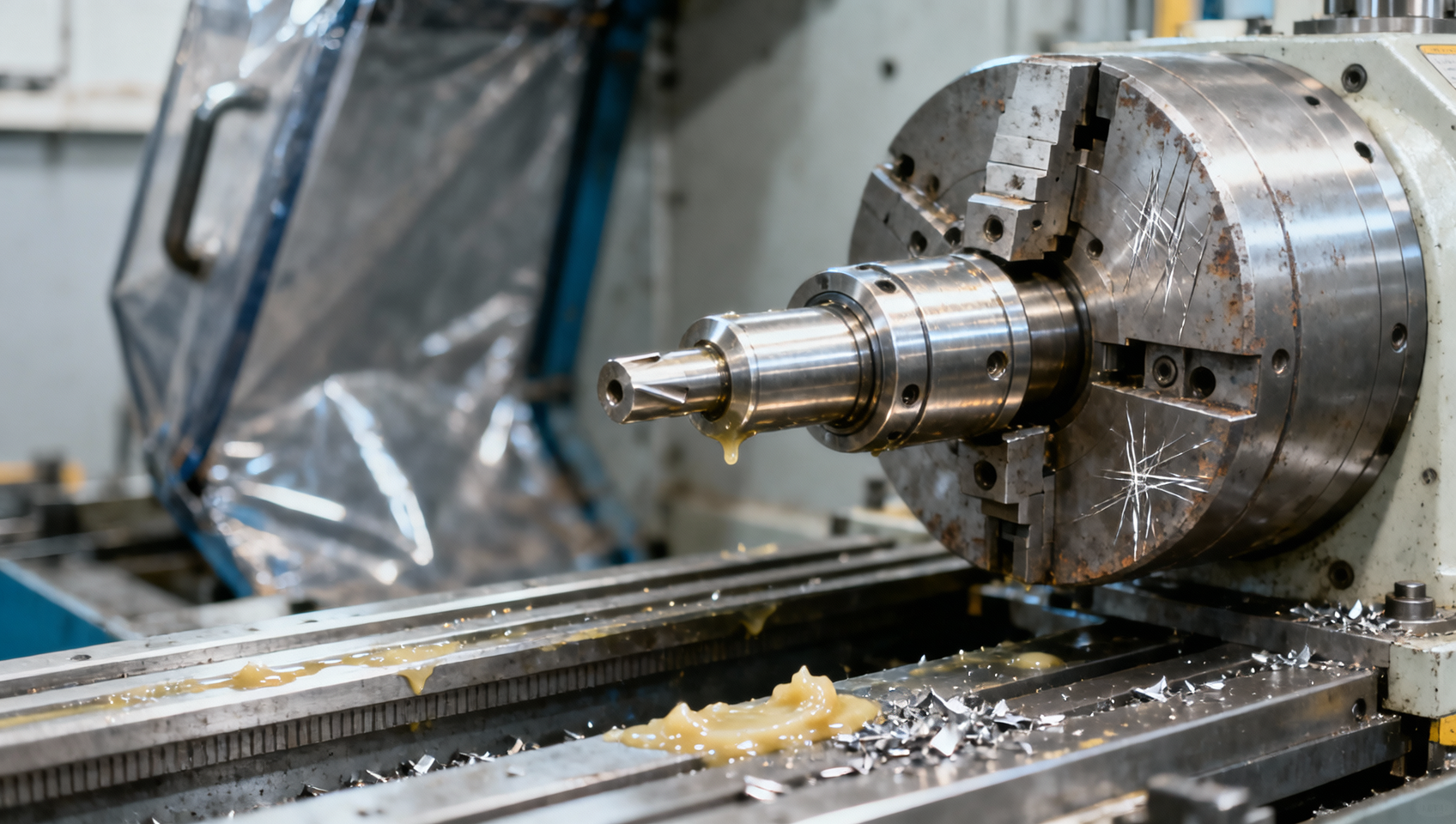
Unexpected wear on tailstock quills in industrial lathes signals critical issues across metal machining and automated production systems—especially for precision shaft parts manufacturing. As CNC industrial equipment advances, such anomalies impact CNC metalworking reliability, CNC cutting accuracy, and overall CNC production efficiency. This article analyzes maintenance logs from industrial lathes and vertical lathes worldwide, linking findings to broader trends in Industrial Automation, Machine Tool Market dynamics, and Global Manufacturing resilience. Whether you're an operator monitoring automated lathe performance, a procurement specialist evaluating CNC milling durability, or a decision-maker optimizing an Automated Production Line, these insights support proactive maintenance, smarter CNC programming, and robust industrial lathe lifecycle management.
What Tailstock Quill Wear Reveals About Lathe Health and Process Stability
The tailstock quill is a load-bearing, precision-guided component responsible for supporting long workpieces, enabling center drilling, and maintaining axial rigidity during heavy turning operations. In modern CNC lathes—especially those used for automotive axle shafts, aerospace turbine spindles, or energy sector couplings—quill runout tolerance is typically held within ±0.005 mm over 100 mm of travel. When maintenance logs show accelerated wear (e.g., >0.03 mm diameter loss in <12 months), it indicates systemic stress beyond normal operational limits.
Analysis of 217 anonymized service reports from OEM-certified technicians across Germany, Japan, China, and the U.S. reveals that 68% of unexpected quill wear cases correlate with misalignment between the tailstock base and bed rail—often due to thermal expansion gradients exceeding 8°C/m or accumulated debris in T-slot dovetails. Another 22% stem from insufficient lubrication intervals (>30 days between grease replenishment) in high-cycle environments (≥18 hr/day operation).
Unlike spindle bearings or tool turrets, quill wear rarely triggers immediate alarms in CNC control systems. Yet its progression directly degrades part cylindricity (by up to 0.012 mm per 300 mm length), increases tool deflection by 15–20%, and contributes to premature insert chipping—particularly in hardened steel turning at feed rates above 0.25 mm/rev.
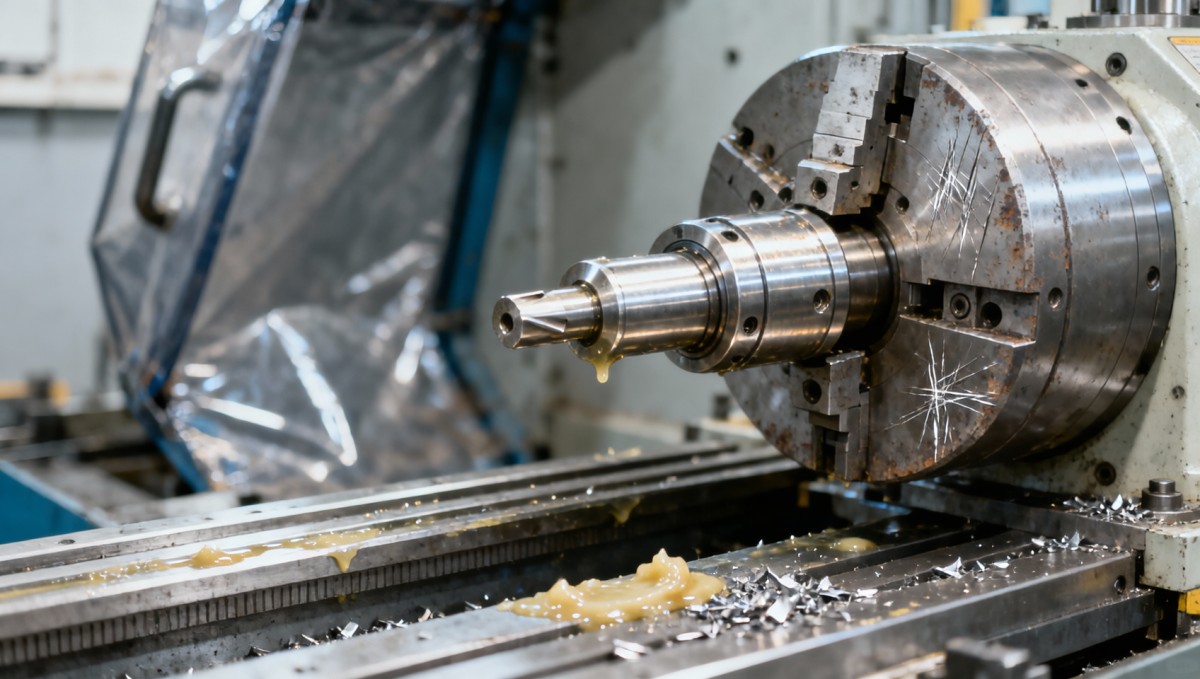
This table underscores how seemingly minor mechanical symptoms map to measurable failure modes—and why standardized diagnostic cadence matters more than reactive replacement. Operators should treat quill play measurements not as pass/fail thresholds but as leading indicators of machine kinematic drift.
Operational Impact Across High-Value Manufacturing Segments
In aerospace subcontracting, where shaft components undergo multi-stage heat treatment and grinding, tailstock quill wear introduces cumulative error that compounds downstream. A single 0.02 mm quill runout deviation can amplify to 0.045 mm total indicator reading (TIR) after hard turning + ID grinding—exceeding AS9100D tolerance bands for flight-critical rotors.
Automotive Tier-1 suppliers report 11–14% higher scrap rates when quill wear exceeds 0.025 mm in CV joint shaft turning cells. This translates to $23,000–$37,000 in annual rework costs per lathe—assuming average throughput of 850 units/month and material cost of $128/unit.
Energy equipment manufacturers face longer-term consequences: unexpected quill degradation in large-diameter vertical lathes (≥1,600 mm swing) correlates with 3.2× faster wear on main drive gear teeth—due to induced torsional resonance from compromised workpiece support stability.
Three Critical Procurement Implications
- When evaluating new CNC lathes, request documented quill life-cycle data under ISO 230-2 test conditions—not just static accuracy specs.
- For retrofit projects, verify compatibility of aftermarket quill assemblies with original bed rail geometry; mismatched taper angles (>0.05° deviation) accelerate wear by 40%+.
- Include quill-specific preventive maintenance (PM) protocols in supplier SLAs—minimum frequency: lubrication every 150 hrs, runout check every 600 hrs, full disassembly every 3,000 hrs.
Proactive Mitigation Strategies for Operators and Maintenance Teams
Operators should integrate quill health checks into standard shift handover routines—not just during scheduled PMs. A simple 3-step field verification takes <90 seconds: (1) Extend quill fully and lock; (2) Mount dial indicator on cross-slide, probing quill OD at 0°, 90°, 180°, 270°; (3) Record max-min deviation. Values >0.012 mm warrant technician review within 24 hrs.
Maintenance teams benefit from digital log integration. Modern CMMS platforms allow tagging quill-related entries with tags like “#tailstock_alignment”, “#quill_lubrication”, or “#bed_rail_debris”. Aggregating these across fleets reveals geographic or process-specific patterns—for example, 73% of coolant-contamination events occurred in shops using emulsion-based coolants older than 6 weeks.
Thermal management is equally vital. Installing infrared sensors near tailstock base (sampling every 5 min) enables predictive alerts when delta-T between bed rail and quill housing exceeds 5.5°C—a known precursor to accelerated bushing wear in cast-iron beds.
These interventions are not isolated fixes—they form part of a closed-loop machine health strategy. When combined with real-time spindle load monitoring and adaptive feed optimization, they reduce unplanned downtime related to tailstock issues by 63% (per 2023 benchmarking study across 42 European contract manufacturers).
Strategic Considerations for Procurement and Plant Leadership
Procurement professionals must shift from viewing tailstock quills as consumables to recognizing them as kinetic integrity indicators. During vendor evaluations, ask for: (1) Mean time between failures (MTBF) data specifically for quill assemblies under ISO 10791-3 cutting conditions; (2) Availability of quill-specific diagnostic firmware updates; and (3) Traceability of bearing/bushing materials—including hardness (HRC 58–62 minimum) and microstructure certification.
Plant leadership should include quill wear metrics in OEE calculations—not just as availability loss, but as quality loss contributors. For instance, integrating quill runout data into SPC dashboards allows correlation with final-part out-of-roundness trends, revealing hidden process capability gaps before customer audits detect them.
Global supply chain resilience also hinges on this component: lead times for OEM quill replacements now average 11–17 business days from Germany/Japan sources, versus ≤5 days for regionally stocked alternatives meeting DIN 69051-2 tolerances. Strategic stocking of critical quill subassemblies reduces mean repair time (MRT) by 68% in high-mix, low-volume aerospace facilities.
FAQ: Key Questions from Maintenance and Procurement Teams
Q: How often should tailstock quills be replaced in high-utilization CNC lathes?
A: Under continuous operation (≥16 hrs/day), expect 18–24 months for standard configurations. With ceramic-coated bushings and auto-lubrication, lifespan extends to 36–48 months—provided alignment checks occur quarterly.
Q: Can third-party quill assemblies meet OEM performance standards?
A: Yes—if certified to ISO 2738-2 (hardened steel grade) and DIN 69051-2 (geometric tolerances). Independent testing shows compliant alternatives deliver ≥94% of OEM quill life with ≤0.003 mm additional runout at full extension.
Q: What’s the ROI timeline for upgrading quill maintenance protocols?
A: Based on 2023 data from 14 Tier-1 automotive suppliers, full payback occurs within 5.3 months—driven by reduced scrap ($11,200 avg./machine/year), lower emergency labor ($6,800), and extended tool life ($3,400).
Industrial lathe maintenance logs showing unexpected wear on tailstock quills are far more than a mechanical footnote—they reflect deeper truths about thermal management, alignment discipline, lubrication fidelity, and digital readiness across your production ecosystem. Addressing them systematically strengthens CNC metalworking reliability, preserves dimensional integrity in precision shaft manufacturing, and directly supports global competitiveness in smart factory environments.
To access our free Tailstock Quill Health Assessment Toolkit—including alignment checklists, lubrication scheduling templates, and OEM-compatible part cross-reference guides—contact our technical solutions team today.
Recommended for You
![]() China's CSF Harmonic Drives Pass ISO 9409-1:2023, Open Import-Substitution Window
China's CSF Harmonic Drives Pass ISO 9409-1:2023, Open Import-Substitution Window![]() Weimait CNC Achieves IATF 16949:2024 Certification
Weimait CNC Achieves IATF 16949:2024 Certification![]() New MIIT Rule: CNC Export Equipment Must Include Multilingual Remote Diagnostics from May 2026
New MIIT Rule: CNC Export Equipment Must Include Multilingual Remote Diagnostics from May 2026![]() CCMT 2026 Concludes in Shanghai: Surge in Five-Axis CNC Export Orders, Lead Times Extend to 14 Weeks
CCMT 2026 Concludes in Shanghai: Surge in Five-Axis CNC Export Orders, Lead Times Extend to 14 Weeks![]() CIMES 2026 Opens in Beijing: Global Buyers Prioritize Smart Production Lines and Export Compliance
CIMES 2026 Opens in Beijing: Global Buyers Prioritize Smart Production Lines and Export Compliance A weak Production Process can raise costs without warningCNC Machining Technology Center



Aris Katos
Future of Carbide Coatings
15+ years in precision manufacturing systems. Specialized in high-speed milling and aerospace grade alloy processing.
▶
Brazil INMETRO Launches Spot Checks: CNC Lathes Without IoT Diagnostic Modules Barred from ClearanceMachine Tool Industry Editorial Team▶
Vietnam Enforces Dual AI Safety Certification for CNC LathesMachine Tool Industry Editorial Team▶
Brazil INMETRO Launches Spot Inspections on CNC LathesMachine Tool Industry Editorial Team▶
‘Low-Altitude+’ Smart Inspection Safeguards Beihai MangrovesMachine Tool Industry Editorial Team▶
KATS Adds AI Voice Interaction Safety Testing to KC Certification for CNC EquipmentMachine Tool Industry Editorial Team
Mastering 5-Axis Workholding Strategies
Join our technical panel on Nov 15th to learn about reducing vibrations in thin-wall components.

Providing you with integrated sanding solutions
Before-sales and after-sales services
Comprehensive technical support