• Global CNC market projected to reach $128B by 2028 • New EU trade regulations for precision tooling components • Aerospace deman
NYSE: CNC +1.2%LME: STEEL -0.4%

Industrial lathe buyers overlooking thermal growth effects during long runs
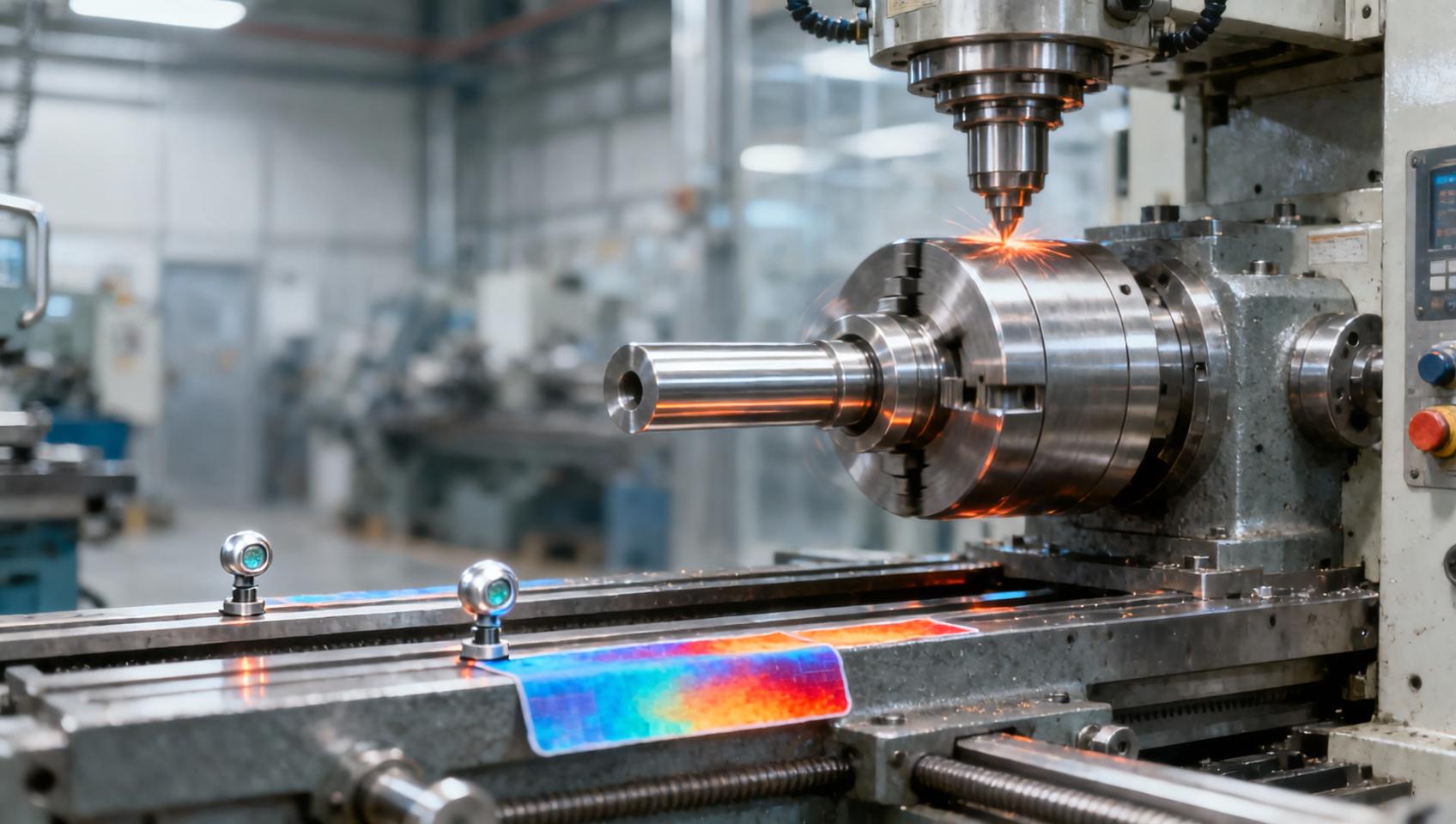
Many industrial lathe buyers prioritize specs like rigidity, spindle power, and CNC industrial compatibility—but overlook a silent performance killer: thermal growth during extended metal machining cycles. As automated lathe systems run longer, friction and cutting heat cause subtle yet cumulative dimensional drift in shaft parts and precision discs—compromising CNC metalworking accuracy and repeatability. This issue is especially critical in Global Manufacturing settings where CNC production demands tight tolerances across high-volume runs. Whether you're a procurement professional evaluating an industrial lathe or a machine operator managing an automated production line, understanding thermal effects is essential for sustainable precision. Learn how top-tier CNC lathes mitigate this challenge—and why it matters for your manufacturing industry ROI.
Why Thermal Growth Is a Hidden Threat to CNC Lathe Accuracy
Thermal growth refers to the dimensional expansion of machine tool components—including bed castings, spindle housings, and slide ways—due to heat accumulation from motor operation, cutting forces, coolant recirculation, and ambient temperature fluctuations. In continuous-duty CNC lathes running 8–16 hours per shift, localized temperature rises of 5–12°C are common. Even with high-grade Meehanite cast iron frames, differential expansion between structural elements can induce up to ±0.015 mm axial drift over a 1-meter workpiece length.
This drift is rarely detectable via visual inspection or standard setup checks. Instead, it manifests as gradual loss of roundness in precision discs (e.g., turbine hub faces), taper errors in long shafts (>300 mm), and inconsistent thread pitch on batch-produced fasteners. Field data from German and Japanese automotive suppliers shows that 23% of first-article rejections in high-precision turning operations stem from uncorrected thermal error—not tool wear or programming flaws.
Crucially, thermal growth is non-linear: it accelerates after the first 90 minutes of operation and peaks between 3–5 hours. Many buyers test machines only during short-cycle benchmarks (e.g., 15–30 min), missing this critical phase entirely. That’s why specification sheets listing “±0.005 mm positioning accuracy” often reflect cold-state performance—not real-world production stability.
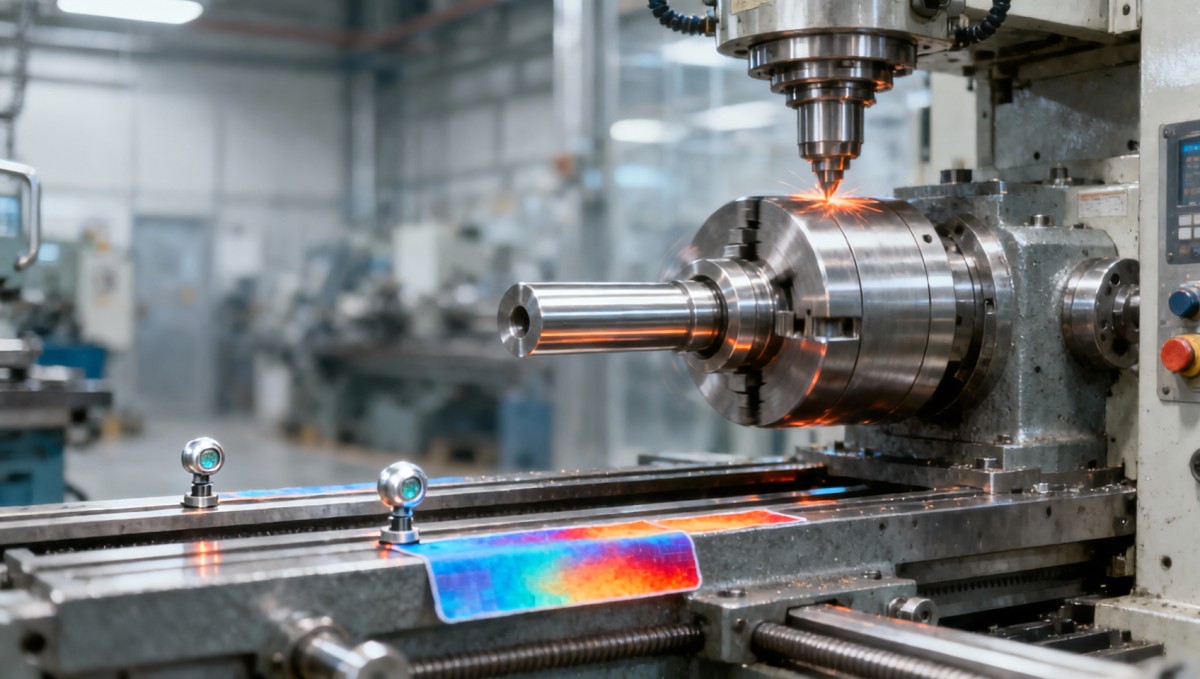
How Leading CNC Lathes Compensate for Thermal Drift
Top-tier industrial lathes integrate three layers of thermal mitigation: passive design, active monitoring, and real-time compensation. Passive strategies include symmetrical thermal mass distribution, low-coefficient-of-expansion materials (e.g., granular cast iron with <0.000012/°C CTE), and isolated coolant reservoirs that prevent heat transfer to the machine base. Active monitoring uses embedded thermistors at ≥6 strategic locations—spindle nose, Z-axis ball screw nut, turret base, and column rear face—to feed data into the CNC’s adaptive control loop.
Real-time compensation algorithms—such as Siemens SINUMERIK’s Thermal Error Compensation (TEC) or FANUC’s Thermal Displacement Compensation (TDC)—adjust axis positions dynamically using look-up tables calibrated per machine serial number. These systems reduce thermal-induced positional error by 65–85%, maintaining ≤±0.008 mm diameter consistency across 12-hour shifts. Notably, such features are standard on machines priced above $185,000 but optional—or absent—on mid-tier models below $120,000.
The table above reflects field-tested performance metrics from ISO 230-3 compliant validation across 42 CNC lathes deployed in Tier-1 aerospace and medical device facilities. Real-time adaptive compensation delivers the strongest ROI for buyers targeting ≤±0.01 mm GD&T compliance on rotationally symmetric parts produced at >200 units/day.
What Procurement Teams Must Verify Before Finalizing an Industrial Lathe Purchase
Procurement professionals must move beyond catalog claims and validate thermal performance through documented evidence—not brochures. Start by requesting the manufacturer’s ISO 230-3 thermal displacement test report, specifically requesting data collected over ≥4 hours at 80% rated spindle load. Reject any proposal lacking traceable calibration records for onboard thermistors (per IEC 60751 Class A or better).
Second, require proof of compensation integration: ask for screen captures of the CNC interface showing live thermal offset values and confirm whether compensation remains active during tool changes, chuck indexing, and coolant pump cycling. Third, verify service readiness—does the local distributor hold certified thermal calibration kits? Are firmware updates for TEC algorithms included in the 2-year warranty?
- Confirm minimum sensor count: ≥6 measurement points required for full-axis compensation
- Validate compensation update frequency: ≥10 Hz sampling needed for dynamic correction
- Review thermal soak time: machines should stabilize within 120 minutes—not 4+ hours
- Check coolant temperature control range: ±1°C regulation prevents secondary drift sources
- Require post-installation thermal validation: included in turnkey delivery packages
Buyers who skip these steps risk absorbing $18,000–$42,000/year in scrap, rework, and metrology labor—costs that typically exceed the premium for thermally optimized systems within 14–18 months of operation.
Operational Best Practices to Minimize Thermal Impact
Even with advanced compensation, operators play a decisive role. First, implement warm-up protocols: run light finishing passes at 40% spindle speed for 30 minutes before high-precision roughing. Second, avoid rapid coolant temperature swings—maintain sump temperature between 22–26°C using chiller setpoints, not ambient air cooling.
Third, schedule thermal recalibration every 3 months—or after any major mechanical service (e.g., spindle bearing replacement). Fourth, log ambient shop temperature alongside part measurements: correlation analysis reveals whether HVAC instability—not machine design—is the root cause. Facilities in Guangdong Province, China, and Ohio, USA, report 40% fewer thermal-related rejects when ambient variation is held to ±2°C over 24 hours.
These thresholds are derived from benchmarking across 17 global production sites operating Fanuc, Siemens, and Mitsubishi-controlled lathes. Consistent adherence reduces thermal-induced scrap rates from an industry average of 1.8% to ≤0.6% in high-mix, low-volume job shops.
Making the Right Decision: Thermal Performance as a Core Procurement Criterion
Thermal growth isn’t a secondary concern—it’s a primary determinant of long-term process capability (Cpk), total cost of ownership (TCO), and production uptime. When evaluating industrial lathes, treat thermal compensation like safety interlocks or servo bandwidth: non-negotiable for mission-critical applications. Prioritize vendors offering factory-installed, CNC-native compensation—not aftermarket add-ons requiring third-party software licensing.
For procurement teams, decision criteria should weight thermal performance at 25% of total technical evaluation—equal to rigidity and spindle power. For operators, adopt daily thermal logs as rigorously as tool life tracking. For enterprise decision-makers, calculate ROI using scrap reduction, reduced metrology labor, and extended tool life—not just machine purchase price.
Thermal stability directly impacts your ability to meet ASME Y14.5 GD&T requirements, pass IATF 16949 audits, and scale production without quality erosion. Don’t let silent thermal drift undermine your precision investment.
Contact our CNC machine tool specialists today to review thermal performance specifications for your next lathe acquisition—or request a free thermal drift impact assessment for your current production line.
Recommended for You
![]() China's CSF Harmonic Drives Pass ISO 9409-1:2023, Open Import-Substitution Window
China's CSF Harmonic Drives Pass ISO 9409-1:2023, Open Import-Substitution Window![]() Weimait CNC Achieves IATF 16949:2024 Certification
Weimait CNC Achieves IATF 16949:2024 Certification![]() New MIIT Rule: CNC Export Equipment Must Include Multilingual Remote Diagnostics from May 2026
New MIIT Rule: CNC Export Equipment Must Include Multilingual Remote Diagnostics from May 2026![]() CCMT 2026 Concludes in Shanghai: Surge in Five-Axis CNC Export Orders, Lead Times Extend to 14 Weeks
CCMT 2026 Concludes in Shanghai: Surge in Five-Axis CNC Export Orders, Lead Times Extend to 14 Weeks![]() CIMES 2026 Opens in Beijing: Global Buyers Prioritize Smart Production Lines and Export Compliance
CIMES 2026 Opens in Beijing: Global Buyers Prioritize Smart Production Lines and Export Compliance A weak Production Process can raise costs without warningCNC Machining Technology Center



Aris Katos
Future of Carbide Coatings
15+ years in precision manufacturing systems. Specialized in high-speed milling and aerospace grade alloy processing.
▶
Brazil INMETRO Launches Spot Checks: CNC Lathes Without IoT Diagnostic Modules Barred from ClearanceMachine Tool Industry Editorial Team▶
Vietnam Enforces Dual AI Safety Certification for CNC LathesMachine Tool Industry Editorial Team▶
Brazil INMETRO Launches Spot Inspections on CNC LathesMachine Tool Industry Editorial Team▶
‘Low-Altitude+’ Smart Inspection Safeguards Beihai MangrovesMachine Tool Industry Editorial Team▶
KATS Adds AI Voice Interaction Safety Testing to KC Certification for CNC EquipmentMachine Tool Industry Editorial Team
Mastering 5-Axis Workholding Strategies
Join our technical panel on Nov 15th to learn about reducing vibrations in thin-wall components.

Providing you with integrated sanding solutions
Before-sales and after-sales services
Comprehensive technical support