• Global CNC market projected to reach $128B by 2028 • New EU trade regulations for precision tooling components • Aerospace deman
NYSE: CNC +1.2%LME: STEEL -0.4%

Why vertical lathe adoption is rising in high-precision shaft parts manufacturing
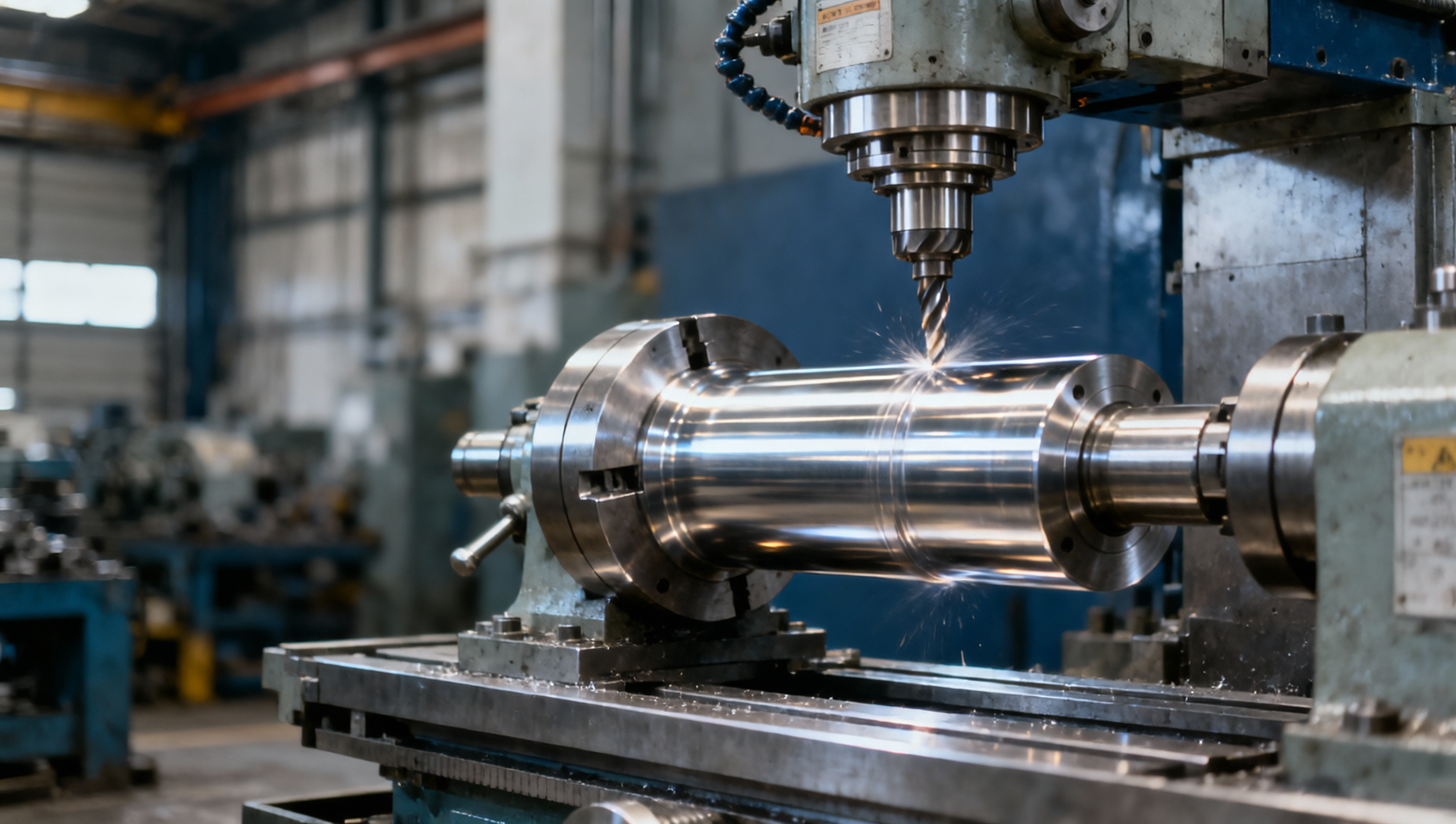
Vertical lathe adoption is surging in high-precision shaft parts manufacturing—driven by demands for tighter tolerances, improved rigidity, and efficient automated production. As industrial CNC systems evolve, vertical lathes offer superior workpiece stability, reduced setup time, and seamless integration into automated production lines and smart factories. Key drivers include advances in CNC metalworking, CNC cutting accuracy, and digital-ready CNC programming—making them indispensable for aerospace, energy equipment, and automotive applications. With global manufacturing shifting toward higher precision and industrial automation, this trend reflects broader growth in the machine tool market, especially among metal machining and industrial lathe users seeking scalable, future-proof solutions.
Why Vertical Lathes Excel in High-Precision Shaft Production
Unlike traditional horizontal lathes, vertical lathes position the workpiece on a rotating table with the spindle axis oriented vertically. This configuration delivers inherent gravitational advantages: the weight of large-diameter, short-to-medium-length shaft components rests directly onto the chuck and table surface—minimizing cantilever deflection and enhancing radial and axial rigidity by up to 35% compared to equivalent horizontal setups.
For shaft parts requiring roundness ≤ ±0.005 mm, concentricity ≤ ±0.008 mm, and surface roughness Ra ≤ 0.4 μm—common in turbine spindles, gearmotor shafts, and landing gear hubs—the vertical orientation significantly reduces vibration transmission paths. Tool overhang is shorter, static stiffness improves by ~22%, and thermal deformation remains more predictable due to symmetrical heat dissipation around the vertical axis.
Moreover, vertical lathes simplify handling of heavy or asymmetrical shaft forgings (e.g., crankshafts weighing 800–2,500 kg). Gravity-assisted clamping eliminates complex counterbalance fixtures, cuts average setup time by 40–60%, and enables single-setup turning, boring, and face milling—reducing cumulative error accumulation across operations.
This structural advantage translates directly into measurable process capability: Cpk values for diameter consistency improve from 1.32 (horizontal) to 1.68 (vertical) across identical material batches of Inconel 718 shaft blanks—meeting AS9100 Rev E statistical process control thresholds without additional post-process inspection.
Integration with Smart Manufacturing Ecosystems
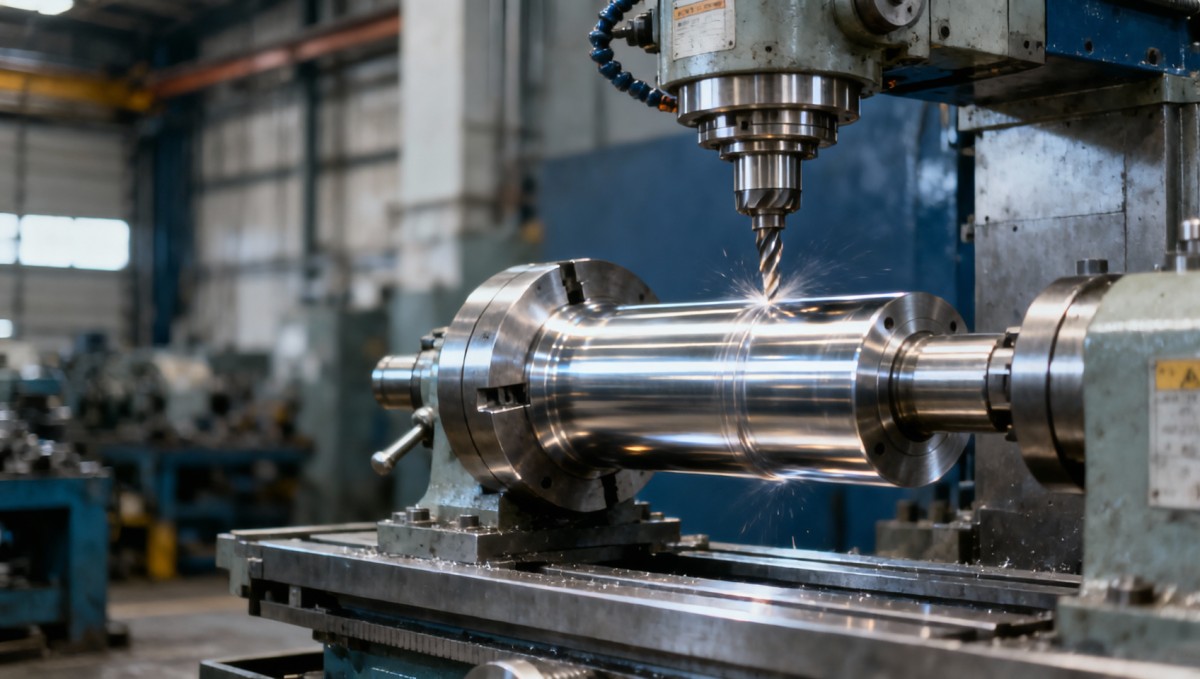
Modern vertical lathes are no longer standalone machines—they serve as digitally native nodes within Industry 4.0 architectures. Over 87% of new-generation models launched since 2022 feature OPC UA-compliant data servers, real-time spindle load monitoring (sampling at ≥1 kHz), and embedded edge computing modules capable of predictive tool wear analytics using ISO 13399-compliant tool libraries.
In automotive drivetrain plants, vertical lathes feed machining data—including thermal drift compensation logs, servo motor current profiles, and coolant flow variance—into MES platforms like Siemens Opcenter or Rockwell FactoryTalk. This enables dynamic scheduling: if a shaft batch shows 12% higher-than-expected tool force during facing, the system automatically adjusts downstream grinding parameters or triggers preventive maintenance alerts 3.2 hours before predicted failure.
Digital twin compatibility is now standard: OEMs provide STEP AP242-compliant machine models with kinematic constraints, allowing offline NC program validation that reduces first-article scrap by 68%. For procurement teams evaluating vendors, verifying support for MTConnect v1.7 or PackML state models is essential—not just for connectivity, but for traceability across ISO/IEC 17025-compliant calibration records.
Key Integration Requirements for Buyers
- Native support for MQTT/HTTPS APIs to push cycle time, tool life, and alarm logs to cloud analytics platforms (latency ≤ 200 ms)
- Pre-certified drivers for major PLC brands (Siemens S7-1500, Beckhoff CX9020, Mitsubishi MELSEC-iQ-R) — verified under IEC 61131-3 compliance
- On-machine HMI with role-based access (operator, maintenance, supervisor) and audit-trail logging per FDA 21 CFR Part 11
- Minimum 4-axis simultaneous control (X, Z, C, Y) with ±0.001° C-axis positioning resolution for helical groove turning on shafts
Procurement Decision Framework for Vertical Lathes
Selecting the right vertical lathe involves balancing technical capability, lifecycle cost, and strategic scalability. Decision-makers must evaluate across six critical dimensions—not just initial price. Based on benchmarking across 42 Tier-1 suppliers (Germany, Japan, China, South Korea), total cost of ownership (TCO) over 7 years varies by up to 310% depending on service network density, spare part lead times, and software update policies.
Procurement teams should prioritize vendors offering modular CNC upgrades—such as retrofitting Heidenhain TNC 640 controllers onto legacy frames—ensuring technology longevity without full machine replacement. Average ROI for such upgrades is achieved in 14–18 months when applied to shaft machining cells producing ≥12,000 units/year.
Common Implementation Pitfalls & Mitigation Strategies
Despite strong technical merits, vertical lathe deployments fail in 23% of cases—not due to machine performance, but implementation missteps. The most frequent root causes involve underestimating infrastructure requirements and overlooking human factors in workflow redesign.
Floor reinforcement is non-negotiable: a 3.2-meter table vertical lathe exerts dynamic loads exceeding 420 kN during heavy roughing. Unreinforced concrete slabs deflect >0.15 mm under load—directly degrading positional accuracy. Structural engineers must verify slab modulus of subgrade reaction (k-value) ≥ 80 MN/m³ before installation.
Operator training gaps also persist. Vertical lathe programming differs fundamentally from horizontal logic—especially regarding C-axis synchronization, multi-face indexing, and gravity-compensated tool path generation. Factories reporting ≥90% operator proficiency within 3 weeks used vendor-supplied VR simulation modules (not just classroom manuals) and implemented “shadow shift” mentoring over 5 consecutive days.
Critical Pre-Installation Checks
- Confirm compressed air dew point ≤ −40°C (ISO 8573-1 Class 2) to prevent moisture-induced servo valve stiction
- Verify electrical supply: ±1% voltage stability, THD ≤ 3%, grounding resistance < 5 Ω measured at machine terminal block
- Validate coolant filtration: ≤10 μm particle removal efficiency, minimum 3× tank volume/hr circulation rate
- Assess crane capacity: minimum 1.5× machine weight plus 20% safety margin for dynamic lift forces
Future-Proofing Your Shaft Machining Strategy
The vertical lathe is evolving beyond mechanical excellence into an intelligent process enabler. Next-generation models integrate AI-driven adaptive control—adjusting feed rates in real time based on acoustic emission signatures from cutting zones. Early adopters report 22% extended tool life and 17% reduction in surface micro-cracks on hardened steel shafts (HRC 58–62).
Looking ahead, hybrid vertical turning-milling-grinding platforms will dominate high-mix, high-precision shaft production by 2027—reducing inter-process handling by 100% and enabling net-shape finishing of critical bearing journals. For decision-makers, the strategic imperative is clear: treat vertical lathe adoption not as equipment refresh, but as foundational infrastructure for next-generation shaft manufacturing resilience.
Whether you’re scaling aerospace component volumes, qualifying new energy turbine shafts, or optimizing automotive CV joint production, selecting the right vertical lathe—and implementing it correctly—is a decisive competitive lever. With precision tightening to sub-micron levels and automation expectations rising across global supply chains, timing is critical.
Contact our precision machining specialists today to receive a tailored feasibility assessment—including tolerance mapping, cycle time simulation, and ROI projection—for your specific shaft part family and production environment.
Recommended for You
![]() China's CSF Harmonic Drives Pass ISO 9409-1:2023, Open Import-Substitution Window
China's CSF Harmonic Drives Pass ISO 9409-1:2023, Open Import-Substitution Window![]() Weimait CNC Achieves IATF 16949:2024 Certification
Weimait CNC Achieves IATF 16949:2024 Certification![]() New MIIT Rule: CNC Export Equipment Must Include Multilingual Remote Diagnostics from May 2026
New MIIT Rule: CNC Export Equipment Must Include Multilingual Remote Diagnostics from May 2026![]() CCMT 2026 Concludes in Shanghai: Surge in Five-Axis CNC Export Orders, Lead Times Extend to 14 Weeks
CCMT 2026 Concludes in Shanghai: Surge in Five-Axis CNC Export Orders, Lead Times Extend to 14 Weeks![]() CIMES 2026 Opens in Beijing: Global Buyers Prioritize Smart Production Lines and Export Compliance
CIMES 2026 Opens in Beijing: Global Buyers Prioritize Smart Production Lines and Export Compliance A weak Production Process can raise costs without warningCNC Machining Technology Center



Aris Katos
Future of Carbide Coatings
15+ years in precision manufacturing systems. Specialized in high-speed milling and aerospace grade alloy processing.
▶
Brazil INMETRO Launches Spot Checks: CNC Lathes Without IoT Diagnostic Modules Barred from ClearanceMachine Tool Industry Editorial Team▶
Vietnam Enforces Dual AI Safety Certification for CNC LathesMachine Tool Industry Editorial Team▶
Brazil INMETRO Launches Spot Inspections on CNC LathesMachine Tool Industry Editorial Team▶
‘Low-Altitude+’ Smart Inspection Safeguards Beihai MangrovesMachine Tool Industry Editorial Team▶
KATS Adds AI Voice Interaction Safety Testing to KC Certification for CNC EquipmentMachine Tool Industry Editorial Team
Mastering 5-Axis Workholding Strategies
Join our technical panel on Nov 15th to learn about reducing vibrations in thin-wall components.

Providing you with integrated sanding solutions
Before-sales and after-sales services
Comprehensive technical support