• Global CNC market projected to reach $128B by 2028 • New EU trade regulations for precision tooling components • Aerospace deman
NYSE: CNC +1.2%LME: STEEL -0.4%

Is an automated lathe worth it for short-run metal parts?
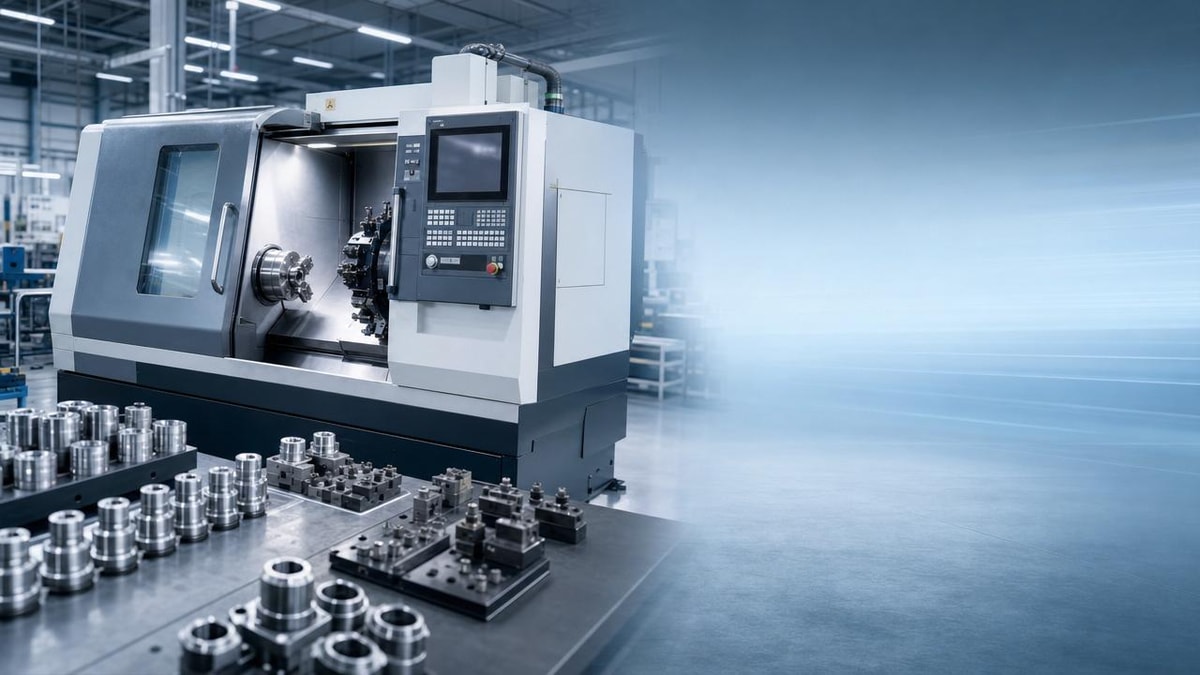
For business evaluators comparing process options for short-run metal parts, the short answer is yes—an automated lathe can absolutely be worth it, but only under the right production conditions. The decision is rarely about whether automation is “better” in general. It is about whether the machine’s setup efficiency, repeatability, labor savings, and scheduling flexibility outweigh its capital cost and programming burden for the specific mix of parts being quoted or produced.
For short-run work, that threshold is more nuanced than many buyers expect. If part families are similar, tolerances are tight, delivery speed matters, and skilled labor is expensive or limited, an automated lathe often creates a measurable commercial advantage. If jobs change constantly, setups are long, and demand is highly unpredictable, the return may be weaker unless the machine is paired with strong process planning.
For evaluators responsible for cost control, supplier capability assessment, or investment screening, the most useful question is not “Is automation good for short runs?” but “Under what operating model does an automated lathe improve margin, responsiveness, and risk exposure?” That is the question this article answers.
What business evaluators are really trying to determine
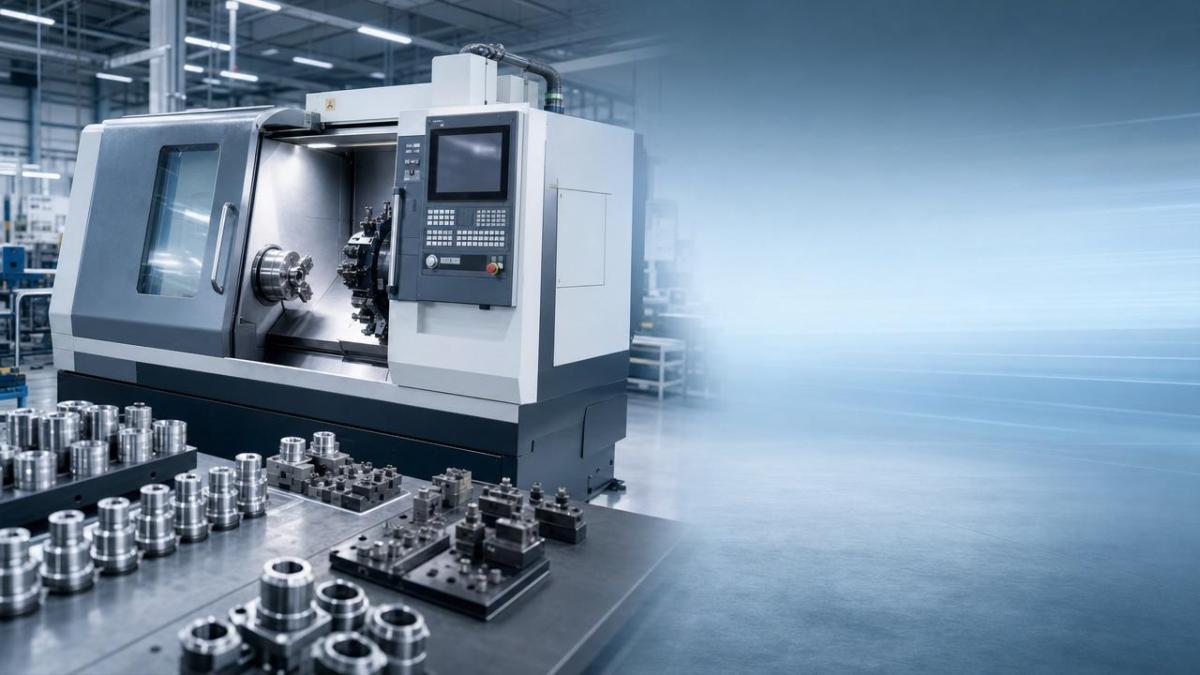
When someone searches whether an automated lathe is worth it for short-run metal parts, the real intent is usually commercial and operational. They want to know whether the machine will reduce unit cost, shorten lead times, support more stable quality, and improve capacity utilization without locking the business into a poor capital decision.
For a business evaluator, the concern is rarely the machine itself. It is the business case around it. That includes the expected job mix, annual order frequency, setup-to-cycle-time ratio, staffing availability, scrap risk, throughput needs, and the strategic value of handling more work in-house or more competitively.
In practical terms, most decision-makers want to answer five questions. First, how many parts or repeat orders are needed to justify the investment? Second, where does automation save money in short runs? Third, what hidden costs reduce the expected return? Fourth, what kinds of parts benefit most? Fifth, are there lower-risk alternatives that can deliver similar value?
Those are the questions that matter more than broad claims about Industry 4.0, smart manufacturing, or labor reduction. For short-run metal parts, the investment logic must be grounded in job economics.
When an automated lathe makes sense for short-run metal parts
An automated lathe is often worth considering for short-run work when the parts have moderate to high repeatability, even if the individual batch size is small. That may sound contradictory, but many “short-run” environments actually repeat the same part numbers across months or quarters. In those cases, automation spreads setup and programming effort across multiple future orders.
It also makes sense when the parts are rotationally symmetric, require multiple turning operations, or need stable dimensional consistency that is difficult to maintain manually. Short-run production does not eliminate the value of repeatability. In fact, when buyers expect fast turnaround on small orders, process stability becomes even more valuable because there is less room for rework and schedule disruption.
Another strong fit is a shop facing labor constraints. If experienced lathe operators are hard to hire or expensive to retain, an automated lathe can protect output by reducing dependence on constant manual intervention. This does not eliminate the need for skilled personnel, but it often shifts labor from repetitive machine attendance toward setup, inspection, and programming.
Automation is also attractive when short-run orders carry demanding delivery expectations. A machine that can load, cycle, and unload parts with less operator involvement can make production timing more predictable. That matters for quoting, due date reliability, and customer retention.
Finally, an automated lathe becomes easier to justify when the business handles families of similar components: shafts, bushings, pins, connectors, sleeves, fittings, or precision turned parts made from common materials. Standardized tooling, repeat fixtures, and reusable programs can greatly improve the economics of low-volume work.
When it may not be worth the investment
Not every short-run environment benefits from automation. If nearly every job is a one-off prototype with unique geometry, changing raw materials, highly customized tolerances, and no repeat demand, setup and programming time can dominate the cost structure. In that case, the machine may spend too much time being prepared and not enough time producing.
The same caution applies if the business lacks process discipline. An automated lathe can only create value when tooling data, program management, inspection routines, and scheduling practices are reasonably mature. Without those foundations, the machine may simply automate inconsistency.
Capital intensity is another issue. If annual volume is low, cash is constrained, or capacity can be purchased more flexibly through qualified subcontractors, the investment may not be attractive. This is especially true when the expected financial return depends on optimistic assumptions about future work that has not yet been contracted or validated.
There is also a risk of overbuying. Some companies evaluate a highly automated multi-axis turning system when a simpler CNC lathe with bar feeder or basic loading support would be enough. For short-run metal parts, the best answer is not always maximum automation. It is the right level of automation for the actual work mix.
Where the value really comes from: cost drivers that matter
To judge whether an automated lathe is worth it, evaluators should break the economics into the cost drivers that change most significantly. The first is direct labor. Even in short runs, reducing the amount of time an operator must stand at the machine can lower labor cost per part, especially across multiple small batches in one shift.
The second is setup efficiency. This point is critical. If the machine platform supports quick-change tooling, stored offsets, standardized chucking, and repeat programs, setup time may shrink enough to make short batches more profitable. If setup remains long and manual, the case for automation weakens.
The third is cycle consistency. Automated loading and repeatable machine motion can reduce variability between parts. That often lowers inspection burden, scrap rates, and the commercial cost of quality issues. For business evaluators, this is not a technical footnote. It directly affects margins, warranty exposure, and customer confidence.
The fourth value source is machine utilization. A manually tended machine may sit idle during loading, unloading, gauge checks, or operator movement between tasks. An automated lathe can compress some of that non-cutting time. Even if cycle time savings seem small per part, they accumulate quickly across dozens of short runs.
The fifth is scheduling flexibility. In a mixed-order environment, the ability to run parts with less constant supervision can improve responsiveness. That can support premium lead-time offerings, reduce backlog stress, and increase the number of orders a shop can accept without adding headcount.
How to evaluate the break-even point for short runs
Business evaluators should avoid using a single generic payback formula. Instead, use a part-family break-even approach. Group parts by material, diameter range, tooling similarity, tolerance level, and annual repeat frequency. Then compare the current production method with the proposed automated lathe across setup time, run time, scrap, labor content, and on-time delivery performance.
A practical model should include the following inputs: machine purchase price, financing or depreciation, tooling package, automation equipment cost, programming time, setup hours, operator wage burden, maintenance, energy use, expected utilization, and annual part demand by family. Add rework and quality-related costs if they are currently significant.
Then ask three break-even questions. First, at what annual number of repeat jobs does the automated lathe outperform the current process? Second, how sensitive is that result to setup time assumptions? Third, what happens if only 60 to 70 percent of forecast demand materializes?
This sensitivity analysis is important because short-run environments are volatile. A machine that looks attractive only under perfect forecast conditions may not be a sound investment. On the other hand, a machine that still delivers acceptable returns under conservative demand assumptions deserves serious attention.
It is also useful to include strategic value in the evaluation, but with discipline. For example, if automation helps win higher-margin contracts, reduce customer lead times, or bring previously outsourced turned parts in-house, that upside should be estimated separately from direct cost savings rather than blended into unrealistic base assumptions.
Part characteristics that usually favor an automated lathe
Some part profiles are naturally better candidates for automated turning, even in shorter batches. Components with consistent raw stock, repeatable diameters, multiple sequential turning features, and modest secondary operations tend to perform well. Examples include threaded fittings, valve components, shafts, spacers, hubs, and precision sleeves.
Materials also matter. If the business often machines stainless steel, brass, aluminum, alloy steel, or other common round-stock materials in recurring specifications, automation can support stable process windows. Standardized cutting conditions and tool libraries make repeat jobs easier to launch.
Tight-tolerance work is another favorable case when process repeatability matters more than sheer batch size. If customer requirements make scrap or dimensional drift expensive, a stable automated process can create business value beyond labor savings alone.
By contrast, highly irregular geometries, frequent engineering changes, unstable raw material supply, or parts requiring extensive manual deburring or post-processing may reduce the benefit. In these situations, the lathe may automate only one portion of a still-fragmented process.
Risks and hidden costs that can weaken ROI
One of the most common mistakes in automation evaluation is underestimating implementation cost. The machine price is only part of the investment. Tooling, workholding, bar feeding or part handling systems, software integration, operator training, process debugging, metrology support, and maintenance readiness can materially change the business case.
Downtime risk must also be considered. A more automated system can improve productivity, but if it is harder to troubleshoot or maintain, outages may become more expensive. That is especially relevant for businesses with a small machine fleet and limited backup capacity.
Another hidden cost is underutilization. If an automated lathe is purchased for a broad range of short-run jobs but only a narrow subset actually fits the machine well, the financial return can disappoint. This is why part-family analysis matters more than broad assumptions about future flexibility.
There is also organizational risk. If programs are not standardized, setup knowledge remains informal, and production planning changes daily, the machine may not achieve the expected turnaround gains. Automation works best when supported by process discipline, not when used as a shortcut around weak systems.
Alternatives to consider before making a capital decision
For some companies, the best path is not a full automated lathe purchase but a staged upgrade. A standard CNC lathe with a bar feeder, improved tooling strategy, quick-change workholding, and better setup documentation can sometimes capture a large share of the value at lower cost and lower risk.
Another option is outsourcing selected turned parts to specialized suppliers with automated capacity while keeping prototypes or non-repeat jobs in-house. This can be a smart choice when demand is uncertain or when capital should be preserved for core bottlenecks elsewhere in the plant.
Businesses should also compare multi-tasking capability against specialization. If the actual production mix includes both turning and secondary milling features, a turning center with live tooling may be more valuable than a simpler automated platform, even if the initial investment is higher. The correct comparison is not just machine versus machine, but process route versus process route.
A pilot approach can also reduce risk. Before buying, track three to six months of actual short-run turning demand, identify repeat part families, estimate setup frequency, and model utilization based on real data. In many cases, this produces a far better decision than relying on annual averages alone.
A practical decision framework for evaluators
If you are assessing whether an automated lathe is worth it for short-run metal parts, use a simple screening framework. First, confirm that at least a meaningful share of jobs belongs to repeatable part families rather than true one-off work. Second, verify that setup time can be reduced through standardization, not just shifted into programming complexity.
Third, calculate whether labor savings are real in your staffing model. If operators are already fully utilized across multiple machines, automation may free capacity. If labor is not a constraint, the value may need to come from quality, lead time, or growth potential instead.
Fourth, test the investment under conservative utilization assumptions. Fifth, identify whether the machine supports strategic customer needs such as faster delivery, tighter tolerances, or more dependable repeat orders. Sixth, compare the purchase against lower-risk alternatives, including staged automation or qualified outsourcing.
If the machine improves more than one value dimension—cost, quality, lead time, and labor resilience—the case becomes much stronger. If the justification depends on only one optimistic assumption, caution is warranted.
Conclusion: worth it, but only when the job mix supports it
An automated lathe can be a strong investment for short-run metal parts, but it is not automatically the right answer simply because automation sounds efficient. For business evaluators, the value comes from repeatable short-run demand, reduced labor dependency, faster and more reliable setups, better consistency, and improved scheduling flexibility.
It tends to be worth it when short-run work is not truly random, but instead built around recurring part families with commercial pressure on lead time and quality. It is less attractive when work is mostly one-off, setups remain long, and utilization forecasts are uncertain.
The best decision comes from analyzing part families, setup behavior, and realistic demand scenarios rather than relying on broad automation trends. If those numbers show repeatable savings and strategic upside, an automated lathe is not just a machine purchase—it becomes a capability investment that can improve competitiveness in precision metal manufacturing.
PREVIOUS ARTICLE
NEXT ARTICLE
Recommended for You
![]() Beijing’s New E-Bike Lock Regulation Spurs CNC Housing DemandGlobal Machine Tool Trade Research Center
Beijing’s New E-Bike Lock Regulation Spurs CNC Housing DemandGlobal Machine Tool Trade Research Center![]() New Drone Standard GB/T 44723–2026 Takes Effect May 2026Manufacturing Policy Research Center
New Drone Standard GB/T 44723–2026 Takes Effect May 2026Manufacturing Policy Research Center![]() New Maritime Code Takes Effect May 1, 2026: CNC Equipment Shipping Rules UpdatedManufacturing Market Research Center
New Maritime Code Takes Effect May 1, 2026: CNC Equipment Shipping Rules UpdatedManufacturing Market Research Center![]() 2026 China Cycle Shanghai: CNC E-Bike Frame Capacity Draws ODM FocusManufacturing Market Research Center
2026 China Cycle Shanghai: CNC E-Bike Frame Capacity Draws ODM FocusManufacturing Market Research Center![]() 2026 Foshan Tanzhou Auto Expo: EV Parts Sourcing FocusGlobal Machine Tool Trade Research Center
2026 Foshan Tanzhou Auto Expo: EV Parts Sourcing FocusGlobal Machine Tool Trade Research Center![]() New Hazardous Chemicals Safety Law Takes Effect May 2026Manufacturing Policy Research Center
New Hazardous Chemicals Safety Law Takes Effect May 2026Manufacturing Policy Research Center


Aris Katos
Future of Carbide Coatings
15+ years in precision manufacturing systems. Specialized in high-speed milling and aerospace grade alloy processing.
▶
Is an automated lathe worth it for short-run metal parts?Machine Tool Industry Editorial Team▶
CNC metal lathe problems that appear after heavy loadsMachine Tool Industry Editorial Team▶
How to tell if a metal lathe is losing precisionMachine Tool Industry Editorial Team▶
Beijing E-Bike Battery Compartment Rules Take Effect May 1, 2026Machine Tool Industry Editorial Team▶
2026 Foshan Tanzhou Auto Show: CNC Motor Housings Drive Export SurgeMachine Tool Industry Editorial Team
Mastering 5-Axis Workholding Strategies
Join our technical panel on Nov 15th to learn about reducing vibrations in thin-wall components.

Providing you with integrated sanding solutions
Before-sales and after-sales services
Comprehensive technical support