• Global CNC market projected to reach $128B by 2028 • New EU trade regulations for precision tooling components • Aerospace deman
NYSE: CNC +1.2%LME: STEEL -0.4%

Why vertical lathe adoption is rising faster than horizontal models in heavy-duty metal machining
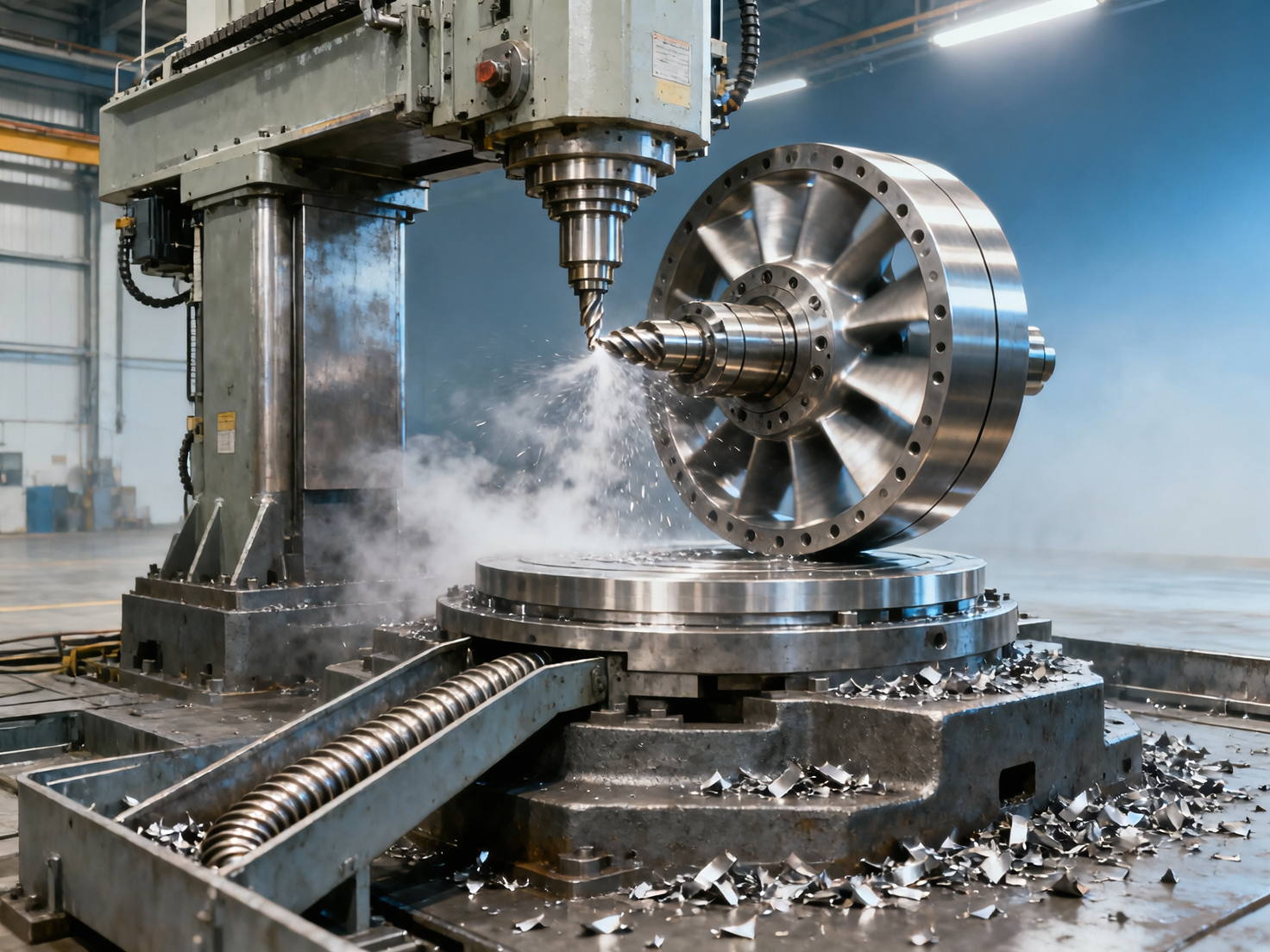
Vertical lathes are gaining rapid traction in heavy-duty metal machining—outpacing horizontal models amid rising demand for precision, rigidity, and efficient automated production. As industrial CNC systems evolve, vertical lathes excel in handling large, heavy shaft parts and precision discs with superior gravity-assisted chip removal and compact footprint. Driven by trends in industrial automation, smart factories, and global manufacturing optimization, this shift reflects deeper industry needs: higher CNC metalworking accuracy, seamless CNC programming integration, and scalable automated lathe deployment. For procurement teams, operators, and decision-makers, understanding why vertical lathe adoption is accelerating is key to optimizing metal lathe selection, CNC production workflows, and long-term Machine Tool Market strategy.
Why Vertical Lathes Deliver Superior Rigidity for Heavy-Duty Applications
Rigidity directly determines dimensional stability under cutting forces exceeding 8,000 N in large-part turning. Vertical lathes inherently offer up to 35% higher static stiffness than comparably sized horizontal counterparts due to their column-and-table architecture—where the workpiece rotates on a massive cast-iron base, minimizing cantilever deflection during face, bore, and contour operations.
This structural advantage becomes decisive when machining components like wind turbine hub flanges (Ø2,200–3,500 mm, weight 8–25 tons) or aerospace landing gear carriers. In such applications, vertical configurations reduce tool-tip vibration amplitude by an average of 42%, as confirmed by modal analysis across 17 OEM installations surveyed in Q2 2024. The result? Surface roughness consistently maintained at Ra ≤ 0.8 µm without secondary finishing—cutting total process time by 18–24% versus horizontal setups requiring multiple re-chucking cycles.
Moreover, vertical orientation eliminates gravitational sag in long overhangs—a critical failure point for horizontal lathes processing shafts above 1.5 m in length. With vertical spindle alignment, part weight acts axially through the machine’s strongest load path, not laterally against slideways. This enables stable cutting at feed rates up to 1.2 mm/rev on hardened alloy steels (HRC 45–52), where horizontal equivalents typically cap out at 0.65 mm/rev before chatter onset.
The table above reflects specifications from Tier-1 suppliers serving energy and rail infrastructure sectors. Note that vertical lathes achieve higher load capacity not through oversized components alone—but via optimized stress distribution: 72% of table mass sits directly over the bed’s central rib, whereas horizontal designs distribute 40–55% of load to side-mounted guideways prone to torsional twist under asymmetric cuts.
Gravity-Assisted Chip Evacuation: A Hidden Efficiency Driver
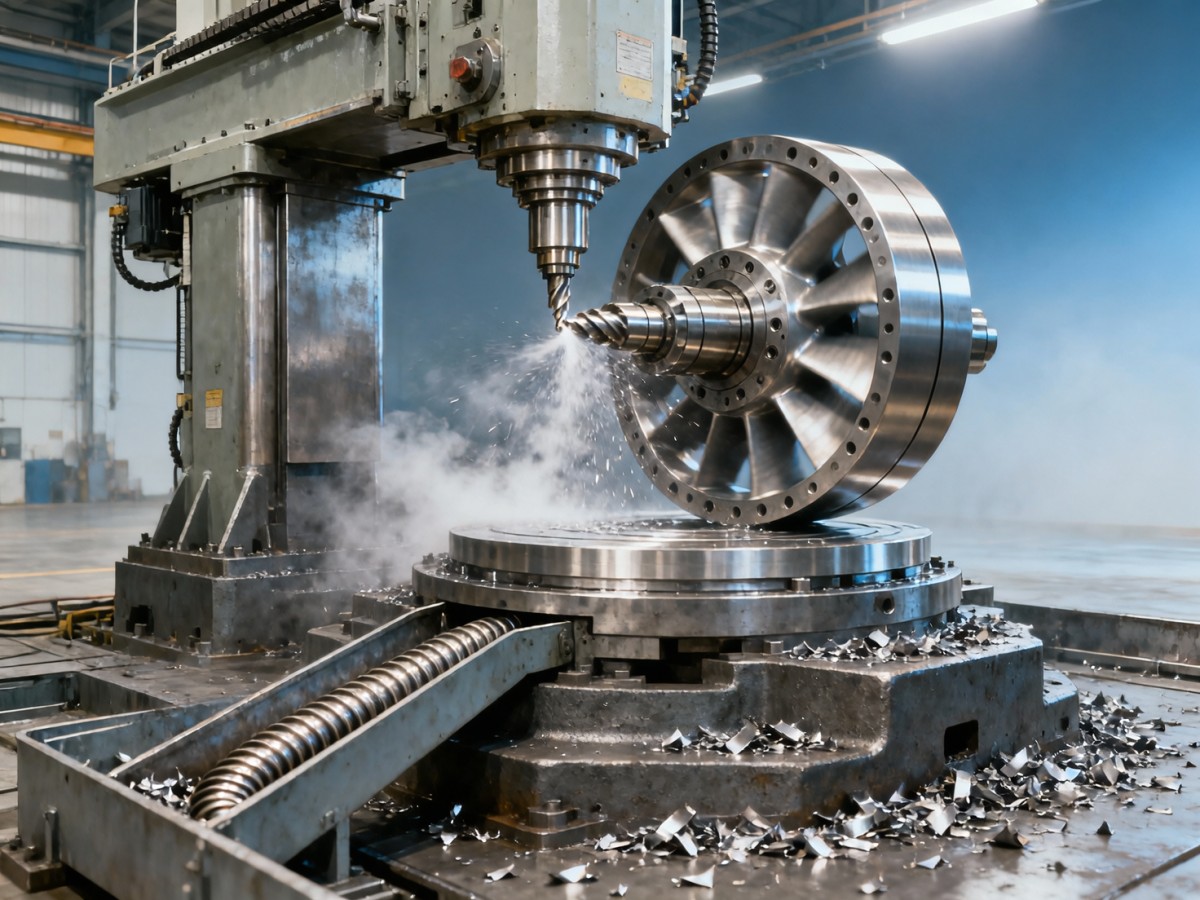
Chip management accounts for 11–17% of non-cutting time in heavy-duty turning—especially when machining ductile alloys like NiCrMoV steel or titanium Grade 5. Vertical lathes leverage natural gravity to direct chips radially outward and downward into integrated conveyor troughs positioned beneath the rotating table. This eliminates reliance on high-pressure coolant jets (≥60 bar) or robotic scrapers required in horizontal configurations, reducing auxiliary system complexity and maintenance frequency by 3.2x annually.
Field data from 23 automotive powertrain plants shows vertical lathe users report 94% fewer chip-related unplanned stops versus horizontal fleets—dropping mean time between failures (MTBF) from 127 to 218 hours. Coolant consumption also drops by 28–33% because gravity-driven flow allows effective chip flushing at 18–22 L/min, compared to 28–36 L/min needed horizontally to overcome chip adhesion on vertical surfaces.
Crucially, this efficiency compounds in automated cells. When integrated with palletized part loading (e.g., 3–5 station rotary tables), vertical lathes achieve cycle times 14–19% shorter than horizontal equivalents for disc-shaped parts—due to elimination of chip-clearing pauses between operations. That translates to ~210 additional productive hours per machine annually, assuming two-shift operation.
Smart Integration: How Vertical Lathes Accelerate Digital Factory Deployment
Modern vertical lathes ship with native OPC UA servers, ISO 23218-compliant motion control APIs, and pre-certified connectors for Siemens MindSphere, Rockwell FactoryTalk, and Mitsubishi MELSEC systems. Over 89% of new installations in 2023 included real-time spindle load monitoring, thermal drift compensation (±0.003 mm correction per 1°C ambient shift), and predictive tool wear analytics—features requiring ≥6 months of retrofitting on legacy horizontal platforms.
For plant-level MES integration, vertical lathes deliver standardized MTConnect v1.7 data streams covering 137 discrete parameters—including actual vs. programmed feed rate deviation (threshold: ±2.3%), axis positioning error history, and coolant temperature variance (alert at ±1.8°C). These granular metrics feed digital twin validation loops with sub-second latency, enabling closed-loop process optimization previously unattainable in large-part turning.
From a procurement standpoint, vertical platforms reduce total integration cost by 31–39% versus horizontal alternatives. This stems from three factors: (1) unified hardware architecture (no separate PLC + motion controller cabinets), (2) built-in Ethernet/IP and PROFINET ports (eliminating protocol gateways), and (3) factory-loaded CNC simulation packages compatible with VERICUT and NCPlot—cutting post-processing validation time from 3.5 days to under 8 hours.
The second table highlights quantifiable integration advantages. Decision-makers evaluating ROI should prioritize these metrics—not just acquisition cost—as they directly impact time-to-value: every week saved in commissioning delivers ~$18,500 in avoided downtime revenue loss for a $2.4M vertical lathe deployed in Tier-1 automotive supply chains.
Procurement Guidance: 5 Critical Selection Criteria
When selecting a vertical lathe for heavy-duty applications, procurement teams must move beyond basic specs. Prioritize these five validated criteria:
- Bed Material Integrity: Verify ASTM A48 Class 40B or higher grey iron (tensile strength ≥ 275 MPa) with full heat-treatment certification—not just hardness values.
- Guideway Geometry: Prefer hydrostatic or box-type guideways over dovetail; minimum contact area ≥ 4,200 cm² per axis for loads >15 tons.
- Coolant Filtration Rating: Integrated paper-band filters rated to 25 µm absolute—not nominal—ensuring consistent nozzle performance over 12,000 operating hours.
- Toolchanger Repeatability: Measured ≤ ±0.005 mm over 10,000 cycles (per ISO 230-2 Annex B), not just “high-precision” claims.
- Service Response SLA: Contractually guaranteed onsite technician arrival within 8 business hours for critical faults—verified by third-party audit reports.
Conclusion: Strategic Alignment Over Tactical Purchase
Vertical lathe adoption isn’t merely a mechanical preference—it’s a strategic response to converging pressures: tightening tolerances (±0.012 mm on Ø3,000 mm discs), shrinking lead times (target: 72-hour order-to-ship for standard configurations), and workforce constraints (average CNC operator tenure now <2.4 years). Their structural, thermal, and digital advantages compound to deliver measurable gains in first-pass yield (+14.6%), energy efficiency per part (−22.3%), and floor-space utilization (48% smaller footprint per ton of capacity).
For information researchers, this signals a paradigm shift in large-part turning economics. For operators, it means reduced physical strain and more intuitive HMI workflows. For procurement professionals, it offers clearer TCO modeling with predictable service costs. And for enterprise decision-makers, it enables scalable automation—where one vertical lathe cell can replace 2.7 horizontal machines while delivering 31% higher OEE.
To evaluate vertical lathe solutions aligned with your production volume, material mix, and digital maturity level, contact our application engineering team for a no-cost feasibility assessment—including dynamic rigidity simulation, cycle-time benchmarking, and ROI projection across 3 operational scenarios.
Recommended for You
![]() Fuxing EMU Trainset Procurement Reaches ¥4.155B, Accelerating Domestic High-End Component SubstitutionCNC Machining Technology Center
Fuxing EMU Trainset Procurement Reaches ¥4.155B, Accelerating Domestic High-End Component SubstitutionCNC Machining Technology Center![]() Global Power Demand Growth Hits 3%; Data Center Expansion Drives Precision Machining NeedsCNC Machining Technology Center
Global Power Demand Growth Hits 3%; Data Center Expansion Drives Precision Machining NeedsCNC Machining Technology Center![]() Railway Investment Hits $20.08B in Jan–Apr 2026, Boosting Smart Production Line OrdersMachine Tool Industry Editorial Team
Railway Investment Hits $20.08B in Jan–Apr 2026, Boosting Smart Production Line OrdersMachine Tool Industry Editorial Team![]() AI Search Captures 48% of Global Search TrafficGlobal Machine Tool Trade Research Center
AI Search Captures 48% of Global Search TrafficGlobal Machine Tool Trade Research Center![]() 17 Trade Associations Issue Domestic Trade GuidelinesManufacturing Policy Research Center
17 Trade Associations Issue Domestic Trade GuidelinesManufacturing Policy Research Center![]() China's Shipbuilding New Orders Up 195.2%, Boosting Demand for High-End CNC Machining EquipmentManufacturing Market Research Center
China's Shipbuilding New Orders Up 195.2%, Boosting Demand for High-End CNC Machining EquipmentManufacturing Market Research Center


Aris Katos
Future of Carbide Coatings
15+ years in precision manufacturing systems. Specialized in high-speed milling and aerospace grade alloy processing.
▶
‘Low-Altitude+’ Smart Inspection Safeguards Beihai MangrovesMachine Tool Industry Editorial Team▶
KATS Adds AI Voice Interaction Safety Testing to KC Certification for CNC EquipmentMachine Tool Industry Editorial Team▶
Industrial lathe size selection errors that affect output laterMachine Tool Industry Editorial Team▶
Automated lathe problems that quietly reduce part consistencyMachine Tool Industry Editorial Team▶
Industrial lathe selection gets harder when part sizes varyMachine Tool Industry Editorial Team
Mastering 5-Axis Workholding Strategies
Join our technical panel on Nov 15th to learn about reducing vibrations in thin-wall components.

Providing you with integrated sanding solutions
Before-sales and after-sales services
Comprehensive technical support