• Global CNC market projected to reach $128B by 2028 • New EU trade regulations for precision tooling components • Aerospace deman
NYSE: CNC +1.2%LME: STEEL -0.4%

Automated lathe setup time stays high for small lot production
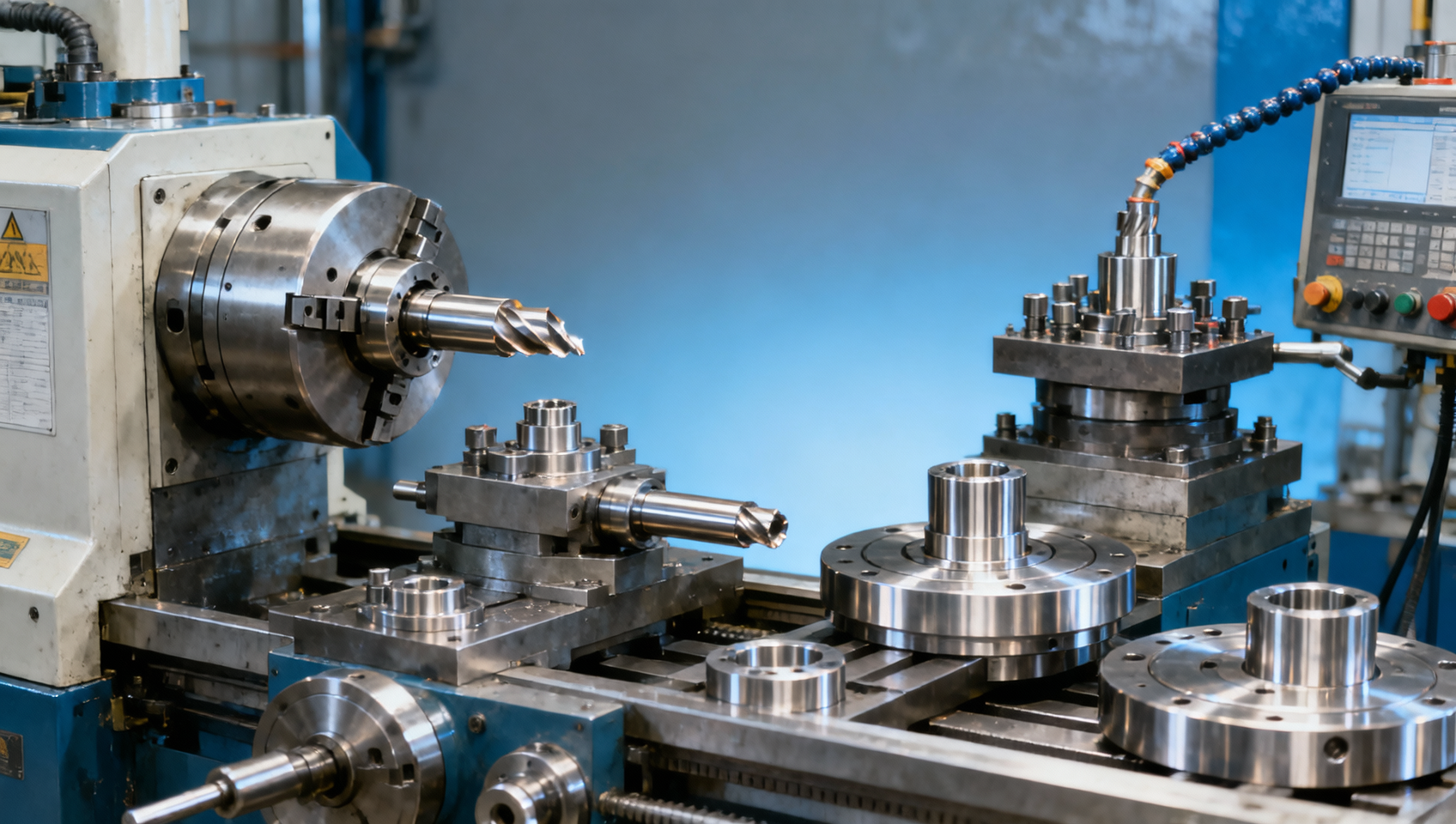
In small lot production, automated lathe setup time often remains a hidden bottleneck that limits industrial CNC efficiency, raises CNC metalworking costs, and slows the overall production process. As Global Manufacturing moves toward smarter automated production and flexible CNC production, manufacturers are seeking faster changeovers, better CNC programming, and more reliable industrial automation to keep metal machining competitive.
For researchers, machine operators, buyers, and decision-makers, setup time is no longer a narrow shop-floor issue. It directly affects spindle utilization, labor allocation, delivery reliability, and return on machine investment. In high-mix, low-volume environments, a CNC lathe may cut parts for only 20 to 200 pieces per batch, yet each new order can demand 30 to 120 minutes of preparation before the first qualified part is produced.
That gap between machine capability and actual productive time is where many small lot manufacturers lose competitiveness. Even advanced automated lathes can underperform if workholding changes are slow, offsets are unstable, tooling data is inconsistent, or first-piece approval takes too long. Understanding why setup time stays high is the first step toward reducing cost per part and building a more flexible CNC production model.
Why setup time remains stubbornly high in small lot CNC turning
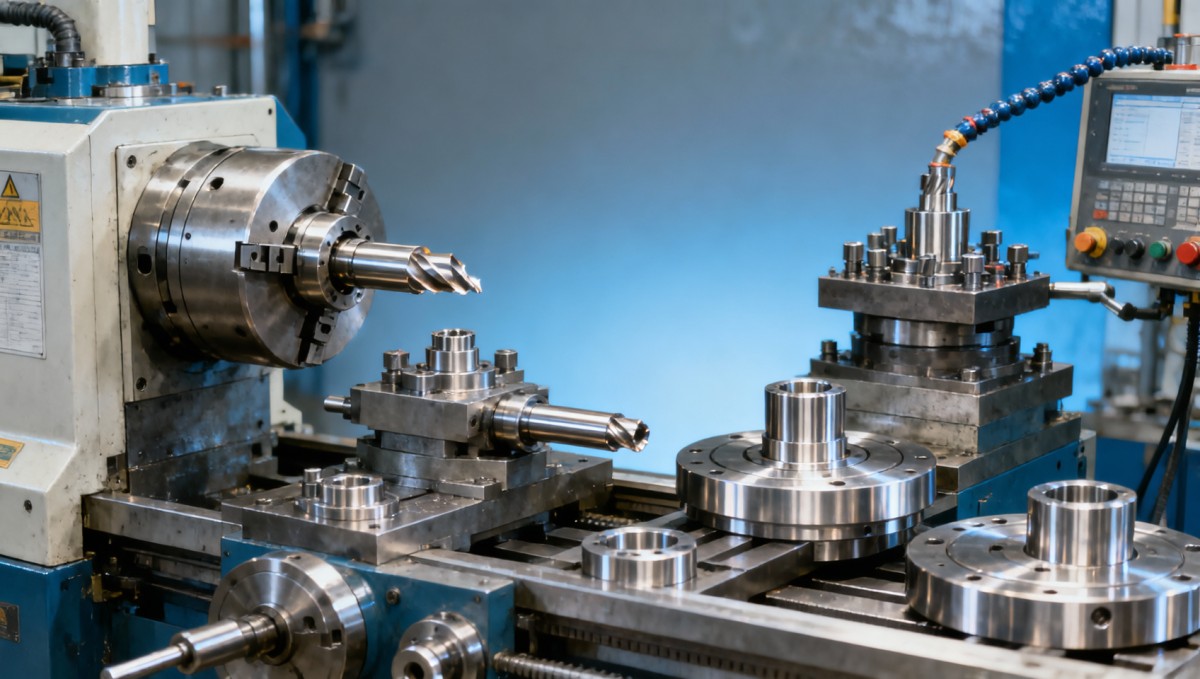
In large-batch production, setup is spread across hundreds or thousands of parts, so the time penalty becomes manageable. In small lot production, the opposite happens. A 45-minute setup on a run of 40 parts can consume more total labor value than the cutting cycle itself, especially when cycle time is only 2 to 4 minutes per component.
Automated lathe systems often promise reduced manual intervention, but automation does not automatically eliminate changeover loss. Bar feeders, automatic tool changers, part catchers, and probing systems all help, yet they also introduce additional validation steps. If one tool offset is wrong by 0.02 mm or a chuck jaw change is not repeatable, the first-piece approval loop can restart from zero.
Another common issue is the mismatch between programming standards and actual shop-floor execution. CAM and CNC programs may be technically correct, but setup documents are often incomplete. Operators may spend 10 to 25 minutes locating tools, confirming nose radius values, checking inserts, or verifying clamping lengths that were not clearly defined in the job packet.
For procurement teams and plant managers, this means the machine specification alone is not enough. The true setup performance of an automated lathe depends on fixture modularity, software integration, tool pre-setting discipline, operator training, and process standardization across at least 4 linked areas: programming, tooling, workholding, and inspection.
Main contributors to excessive setup time
- Frequent jaw and fixture changes for shafts, discs, and irregular rotational parts with different clamping diameters.
- Manual tool offset entry instead of offline pre-setting and digital tool libraries.
- Incomplete setup sheets that force operators to confirm dimensions, insert grades, coolant choice, and datum strategy on the machine.
- First-piece inspection loops that require 2 to 3 correction cycles before stable production begins.
Typical time loss pattern in small lot environments
The table below shows how setup loss accumulates in a typical automated lathe cell running high-mix orders. The numbers are common operating ranges rather than fixed benchmarks, but they help buyers and operations teams identify where the largest savings may exist.
The key takeaway is that setup time is usually not one single problem. It is the sum of multiple small delays, and each delay may only look minor in isolation. However, when 4 setup stages each add 10 to 20 avoidable minutes, the total loss can exceed 1 hour per lot.
Operational and financial impact on manufacturers and buyers
High automated lathe setup time affects more than internal efficiency metrics. It changes quotation accuracy, order acceptance strategy, and supplier selection. A shop that appears well equipped with 2-axis, Y-axis, or multi-axis turning centers may still struggle with small lot profitability if machine utilization stays below 55% to 65% due to repeated changeovers.
For operators, long setup windows create pressure to rush validation. That often leads to insert breakage, scrap during trial cutting, or tolerance adjustments made without clear process records. For example, when turning precision shafts with tolerance bands of ±0.01 mm to ±0.03 mm, even a small variation in clamping force or thermal condition can trigger extra inspection rounds.
For procurement professionals, setup inefficiency often hides inside piece-price differences. A supplier with a lower hourly rate may still produce a higher total job cost if every lot requires 60 to 90 minutes of unstable setup. This is especially important for industries such as automotive spare parts, aerospace support components, energy equipment maintenance, and electronics fixtures, where batch sizes of 10, 50, or 150 parts are common.
For enterprise decision-makers, the impact extends into delivery performance and capital planning. If an automated lathe spends 25% to 40% of scheduled production time in setup rather than cutting, adding more machines may not solve the real constraint. In many cases, process redesign delivers a faster payback than buying another spindle.
How setup time changes total production economics
The following comparison helps clarify why small lot production needs a different decision model than mass production. The cost structure is shaped by setup burden, not only machining speed.
This comparison shows why buyers should ask suppliers about changeover capability, not just spindle speed, turret positions, or axis count. In flexible CNC production, reliable setup reduction can improve delivery confidence as much as a faster machine specification.
Practical ways to reduce automated lathe setup time without sacrificing accuracy
The most effective improvement programs focus on preparation outside the machine. Every task moved offline increases productive spindle time. In many workshops, 20% to 35% of setup duration can be removed by standardizing tool assemblies, using pre-measured offsets, and keeping repeat jobs in a controlled digital library rather than rebuilding data manually for each order.
Modular workholding is another high-value lever. Quick-change jaws, standardized soft jaw blanks, collet systems, and zero-point interfaces can reduce clamp change time from 20 minutes to less than 8 minutes in repeatable part families. This matters greatly for shops processing shafts, bushings, threaded adapters, and short-run turned discs with multiple diameters.
Programming discipline also matters. A validated post-processor, simulation before release, and standardized tool naming can shorten prove-out time by 10 to 15 minutes per job. If the program includes clear setup notes, tool stick-out values, and inspection dimensions, the operator spends less time interpreting intent and more time executing a stable process.
Machine-side automation should be chosen selectively. Tool setters, part probes, and barcode-driven job loading can help, but only when the surrounding process is mature. Adding automation to a poorly standardized shop often digitizes confusion instead of reducing setup loss.
Recommended implementation priorities
- Create standard setup sheets with 6 mandatory fields: workholding method, datum definition, tool list, insert grade, offset source, and first-piece inspection points.
- Move tool assembly and presetting offline whenever possible, especially for jobs with more than 8 tools.
- Group parts by family so similar diameters, materials, and clamping styles share the same fixture logic.
- Use repeat-job libraries to store proven offsets, jaw conditions, cutting parameters, and inspection notes.
- Track setup time by job and operator for at least 8 to 12 weeks to identify the largest recurring delays.
What improvement methods fit different factory conditions
Not every factory needs the same solution level. The right setup reduction strategy depends on product mix, tolerance level, and labor capability. The matrix below can guide selection.
A disciplined combination of these methods often produces better results than a single capital investment. For small lot machining, stable repeatability is usually more valuable than maximum automation complexity.
What buyers and decision-makers should evaluate before investing in automated lathe solutions
When evaluating CNC lathe equipment, many buyers focus on swing diameter, spindle power, axis configuration, and brand reputation. These are important, but they do not reveal how well the system handles 5 changeovers per shift or 20 different part numbers per week. In small lot production, setup architecture should be treated as a purchasing criterion, not an afterthought.
A practical evaluation should include workholding flexibility, tool management compatibility, programming workflow, operator interface clarity, and service response. If spare parts or technical support take 2 to 4 weeks, even a minor setup-related subsystem failure can disrupt short-run delivery commitments. For global sourcing, this risk becomes more visible when production is split across multiple plants or export projects.
It is also important to separate machine automation from process automation. A machine may include an auto-door, bar feeder, and tool setter, but if your shop changes materials from aluminum to alloy steel to stainless in the same week, you still need robust job recipes, tool life rules, and inspection control. Without those process layers, hardware features alone may not reduce setup time enough to justify the investment.
Decision-makers should request demonstration scenarios that reflect actual lot sizes. A supplier should be able to explain what happens during a 30-part order, a 3-material weekly schedule, or a family of parts with diameter variations of 10 mm to 80 mm. That is far more useful than observing only steady-state cutting in a showroom environment.
Buyer checklist for short-run CNC turning capability
- Can tooling data be imported from a presetting system, or is offset entry manual?
- How long does a standard chuck or collet change take under real operating conditions?
- Are setup instructions visual and repeatable across 2 or 3 shifts?
- What is the recommended preventive maintenance interval for key setup-related components?
- How quickly can service support respond if probing, turret indexing, or workholding repeatability becomes unstable?
Common evaluation mistakes
A frequent mistake is choosing a highly automated lathe for a factory that lacks standard tooling management. Another is underestimating operator training time. Even a user-friendly CNC interface may require 2 to 6 weeks before a team can reliably manage program loading, setup validation, and troubleshooting without supervisor dependence. A third mistake is assuming every low-volume application needs full automation, when partial automation plus process standardization may offer a better cost-performance ratio.
FAQ: setup time, implementation risks, and next-step planning
How much setup time is considered acceptable in small lot CNC turning?
There is no universal number because part geometry, tolerance, and tooling complexity vary. However, many shops target 15 to 30 minutes for repeat jobs and 30 to 60 minutes for new short-run jobs with moderate complexity. If routine repeat orders consistently require more than 45 minutes, the process likely has standardization gaps.
Which industries are most sensitive to setup inefficiency?
Automotive aftermarket, aerospace support manufacturing, energy equipment maintenance, electronics tooling, and precision industrial components are all highly sensitive because they often combine small batches, strict tolerances, and urgent delivery windows. In these sectors, shaving even 20 minutes from setup can improve quoting flexibility and on-time shipment performance.
Is full automation always the best answer?
No. For many manufacturers, the best path is staged improvement. Step 1 may be standardized setup sheets. Step 2 may be offline tool presetting. Step 3 may be modular workholding. Step 4 may be machine-integrated probing or digital job management. This phased model controls risk and makes ROI easier to measure over 6 to 12 months.
What KPIs should management track?
The most useful indicators include average setup time per lot, first-pass approval rate, setup-related scrap, spindle utilization, repeat-job restart time, and on-time delivery for batches under 200 parts. Tracking at least 5 of these KPIs monthly creates a clearer picture than relying only on machine uptime.
Automated lathe setup time stays high in small lot production when equipment investment is not matched by process discipline, modular tooling, reliable data flow, and practical operator support. For modern CNC machining businesses, setup reduction is one of the fastest ways to improve capacity without expanding floor space or adding unnecessary machines.
If your production mix includes frequent changeovers, complex turned parts, or tight delivery windows, a structured review of setup workflow can reveal measurable gains in cost control, output stability, and purchasing decisions. To explore suitable CNC turning strategies, compare automation options, or build a tailored short-run production plan, contact us today to discuss your requirements and get a customized solution.
Recommended for You
![]() Iranian LNG Vessels Breach U.S. Strait Blockade; Shanghai Crude Surges 4%Manufacturing Market Research Center
Iranian LNG Vessels Breach U.S. Strait Blockade; Shanghai Crude Surges 4%Manufacturing Market Research Center![]() Pakistan Launches CNC Localization Tender for CPEC II Smart Manufacturing ParkGlobal Machine Tool Trade Research Center
Pakistan Launches CNC Localization Tender for CPEC II Smart Manufacturing ParkGlobal Machine Tool Trade Research Center![]() NVIDIA Joins $1T Club; AI-Driven CNC Digital Twin Gains Global TractionCNC Machining Technology Center
NVIDIA Joins $1T Club; AI-Driven CNC Digital Twin Gains Global TractionCNC Machining Technology Center![]() World's First 5-Axis Middle-Grade Wire EDM Machine Enters Mass ProductionMachine Tool Industry Editorial Team
World's First 5-Axis Middle-Grade Wire EDM Machine Enters Mass ProductionMachine Tool Industry Editorial Team![]() China’s CNC Machine Tool Export Prices Up 11.3% in Q1 2026Global Machine Tool Trade Research Center
China’s CNC Machine Tool Export Prices Up 11.3% in Q1 2026Global Machine Tool Trade Research Center![]() Saudi Energy Security Boosts CNC Import Efficiency in Middle EastGlobal Machine Tool Trade Research Center
Saudi Energy Security Boosts CNC Import Efficiency in Middle EastGlobal Machine Tool Trade Research Center


Aris Katos
Future of Carbide Coatings
15+ years in precision manufacturing systems. Specialized in high-speed milling and aerospace grade alloy processing.
▶
Can a CNC Lathe Really Improve Mass Production Consistency?Machine Tool Industry Editorial Team▶
Metal Lathe Accuracy Drifts After Warm Up for a ReasonMachine Tool Industry Editorial Team▶
Automated Lathe Bar Feeding Problems That Hurt UptimeMachine Tool Industry Editorial Team▶
Metal Lathe Bed Wear Signs That Are Easy to MissMachine Tool Industry Editorial Team▶
A metal lathe can lose accuracy long before it failsMachine Tool Industry Editorial Team
Mastering 5-Axis Workholding Strategies
Join our technical panel on Nov 15th to learn about reducing vibrations in thin-wall components.

Providing you with integrated sanding solutions
Before-sales and after-sales services
Comprehensive technical support