• Global CNC market projected to reach $128B by 2028 • New EU trade regulations for precision tooling components • Aerospace deman
NYSE: CNC +1.2%LME: STEEL -0.4%

CNC Industrial Machines That Save Floor Space Without Losing Accuracy
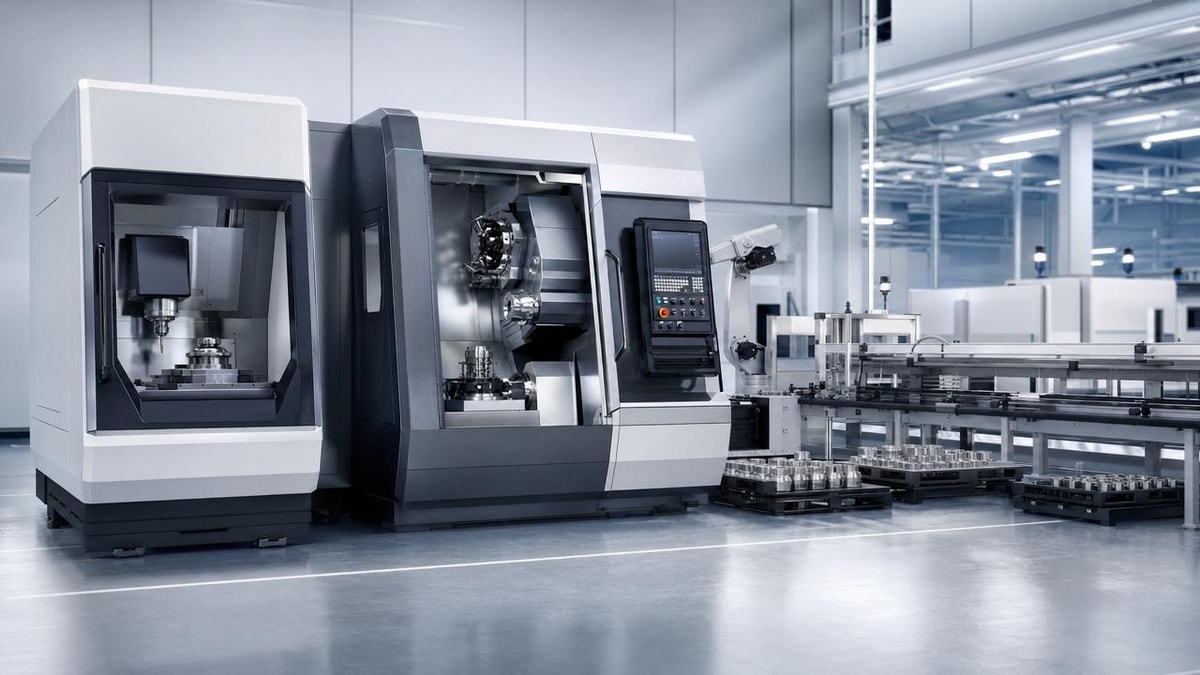
For project managers balancing throughput, layout efficiency, and precision, CNC industrial machines that reduce footprint without sacrificing accuracy are becoming a strategic investment. From compact machining centers to integrated multi-axis systems, today’s solutions help manufacturers optimize floor space, streamline workflows, and support high-performance production in demanding sectors such as automotive, aerospace, and electronics.
In many factories, floor space is no longer a passive cost. It directly affects material flow, safety clearance, staffing, automation integration, and future expansion. A machine that saves 15% to 30% of occupied area can create room for an extra inspection station, robot cell, tool preset area, or buffer inventory zone. For engineering and project leaders, the real question is not simply how small a machine can be, but how effectively a compact platform can maintain geometric accuracy, thermal stability, spindle performance, and production consistency over long operating cycles.
Across the global CNC machining and precision manufacturing industry, compact machine design is advancing together with automation, digital monitoring, and multi-process integration. This shift is especially relevant in brownfield plants where facility expansion is limited, utility routing is fixed, and every square meter must support output. Selecting the right CNC industrial machines therefore requires a practical view of machine architecture, work envelope, part mix, tolerance targets, and implementation risk.
Why Floor-Saving CNC Industrial Machines Matter in Modern Manufacturing Projects
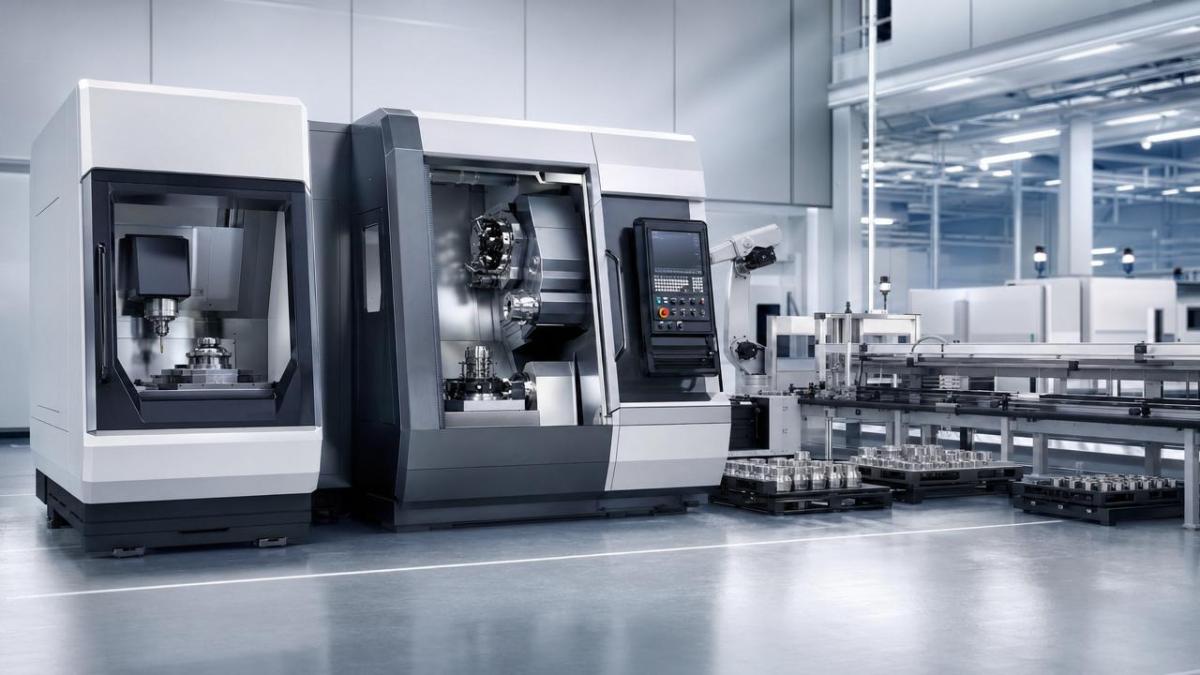
Compact equipment is often misunderstood as a compromise solution. In reality, many space-efficient CNC industrial machines are designed for high-value production where layout density, automation readiness, and fast changeover are just as important as spindle power. In sectors such as automotive subcomponents, aerospace brackets, electronics housings, and energy equipment parts, the ability to combine 2, 3, or even 4 operations into one machine footprint can reduce internal transport and setup variation.
The project-level cost of inefficient floor usage
When a machine occupies more space than necessary, the cost extends beyond rent or building depreciation. Oversized layouts often increase walking distance by 10 to 20 meters per cycle, force forklift crossings, delay chip handling, and complicate robot access. Over a 2-shift schedule, these small inefficiencies can add up to dozens of lost labor hours per month. Project managers also face higher commissioning complexity when power cabinets, coolant systems, and operator access zones are poorly arranged.
Where compact design delivers measurable value
- High-mix, medium-volume production that requires frequent setup changes
- Brownfield factory upgrades with fixed columns, low ceiling clearance, or limited aisle width
- Automated cells where robot reach, pallet flow, and guarding must fit within a tight envelope
- Precision work where reduced part transfers lower cumulative positioning error
A compact machine can support precision if the builder controls key factors such as base rigidity, axis straightness, spindle growth, servo tuning, and vibration behavior. For example, a smaller footprint machine with a cast base, short axis overhang, and enclosed thermal management may hold better repeatability than a larger but less optimized platform. For many applications, repeatability in the range of ±0.003 mm to ±0.01 mm is more relevant than headline travel size.
Machine Types That Save Space Without Sacrificing Accuracy
Not all compact machine formats serve the same production objective. Some reduce footprint by verticalizing the structure, while others save space by integrating multiple processes into one enclosure. The table below outlines common options used in precision manufacturing projects.
The key takeaway is that footprint reduction can come from either machine dimensions or process consolidation. For project planning, the second route is often more valuable. A machine that replaces 3 setups can shorten lead time, lower WIP, and improve tolerance stack control even if its individual base size is not the smallest on paper.
Compact vertical machining centers
These are common entry points for factories seeking better floor utilization. Typical table sizes may range from 600 mm to 1000 mm, with spindle speeds between 8,000 and 20,000 rpm depending on the material and finish requirement. For electronics enclosures, light automotive brackets, and aluminum structural parts, a compact VMC can offer a strong balance of capacity and precision. The most important checks are column rigidity, chip evacuation, and whether the reduced machine body still allows safe fixture access.
Turning centers with integrated milling capability
For round or shaft-based components, a slant-bed lathe with live tools can eliminate secondary milling on a separate machine. This is useful when lot sizes are between 100 and 5,000 pieces and setup time is a major cost driver. A compact turning center should be evaluated for turret stability, spindle bore size, bar feeder integration, and the practical reach of live tooling at target tolerances.
Integrated multi-axis platforms
Five-axis or mill-turn systems often have a higher purchase price, but they can be the most floor-efficient answer for complex parts. By reducing reclamping from 3 or 4 setups to 1 or 2, they improve positional accuracy and shorten queue time between processes. In aerospace, where angular features and tight profile control are common, this can significantly reduce inspection loops and fixture inventory.
How to Evaluate Accuracy in a Smaller Footprint
Project teams should avoid focusing on footprint alone. Accuracy depends on a group of mechanical, thermal, and process variables that determine whether a machine can hold tolerance after 6, 8, or 12 hours of operation. A compact footprint is valuable only when it is backed by stable engineering.
Core technical checkpoints
- Machine base material and damping behavior under continuous cutting load
- Spindle thermal growth and warm-up stability over 30–90 minutes
- Axis repeatability and backlash performance in both light and loaded conditions
- Tool magazine layout and change time, especially in high-mix production
- Coolant, chip evacuation, and enclosure design for uninterrupted operation
For many industrial buyers, positioning accuracy and repeatability should be reviewed separately. A machine may be able to position within ±0.008 mm under test conditions, yet show weaker repeatability after thermal drift or heavy-axis reversals. Precision parts in aerospace, electronics, and energy equipment often depend more on sustained repeatability than on a single factory acceptance result.
Thermal control matters more in dense layouts
Machines installed close together can experience localized heat build-up from spindles, coolant units, compressors, and nearby ovens or welding zones. If ambient temperature fluctuates by more than 3°C to 5°C during a shift, thermal compensation strategy becomes more important. Compact CNC industrial machines intended for precision production should be reviewed for spindle cooling, ball screw protection, and cabinet heat management.
Fixture strategy can preserve both space and accuracy
A smaller machine does not always mean smaller workholding performance. With zero-point clamping, modular vises, and tombstone-style setups, users can increase utilization while keeping setup repeatability stable. In many projects, fixture standardization reduces setup time by 20% or more and supports a denser cell layout without increasing operator burden.
Selection Criteria for Project Managers and Engineering Leaders
A practical procurement decision should align machine selection with part family, takt time, staffing model, and utility constraints. The following comparison framework helps teams evaluate compact CNC industrial machines beyond brochure claims.
This evaluation method shifts the discussion from machine size alone to operational fit. A machine that saves 2 square meters but blocks maintenance access or limits automation will create downstream costs. The best choice is the one that supports throughput, accuracy, maintenance, and expansion at the same time.
Questions to ask before issuing an RFQ
- What is the largest real part envelope, including fixture and tool approach clearance?
- How many setups can be removed compared with the current process route?
- What is the expected daily runtime: 8, 16, or 24 hours?
- Will the machine be manually loaded, robot loaded, or palletized within 12 to 24 months?
- What utility limits exist for power, compressed air, coolant management, and chip disposal?
Common purchasing mistakes
One common error is selecting a machine based only on travel dimensions without modeling service clearance, door swing, and material loading paths. Another is underestimating spindle and tool requirements for future parts. A compact platform that works well for aluminum prototypes may struggle with hardened steel or deep cavity cutting if spindle torque and tool capacity are undersized. It is usually better to define a 3-year application window rather than buy only for the first 6 months of production.
Implementation, Maintenance, and Long-Term Risk Control
Even the right machine can underperform if implementation is rushed. Floor-saving CNC industrial machines are often introduced into already busy plants, where installation sequencing, operator adaptation, and process validation must be carefully managed. A structured launch reduces downtime and protects expected ROI.
A practical 5-step rollout plan
- Confirm part family, annual volume, tolerance targets, and cycle time assumptions
- Verify layout with real service space, chip flow, and loading access, not catalog drawings alone
- Run sample parts or benchmark trials across at least 2 material conditions if possible
- Prepare fixtures, tools, offsets, and inspection plans before final installation
- Track the first 30 to 60 days for uptime, repeatability drift, tool life, and operator feedback
Maintenance priorities in compact cells
Smaller footprints often mean denser service environments, so preventive maintenance should focus on easy-to-overlook access points. Chip build-up, coolant contamination, and restricted airflow can affect both precision and reliability. Weekly inspection of chip conveyors, coolant concentration, lubrication delivery, and cabinet temperature is often more valuable than waiting for monthly alarms. For machines running 2 or 3 shifts, a 10-minute daily check routine can prevent longer stoppages later.
Risk areas that deserve early attention
- Insufficient rear or side clearance for service technicians
- Tool magazine limits when part complexity increases
- Robot or loader interference in narrow layouts
- Heat accumulation from adjacent equipment in tightly packed lines
- Difficulty removing long chips in unattended production
These risks are manageable when identified at the planning stage. A modest investment in simulation, layout review, and process trials can prevent expensive changes after installation. For project managers responsible for launch timing, this discipline is often the difference between a 4-week stabilization period and a 3-month correction cycle.
Space-saving CNC industrial machines are no longer niche equipment. They are becoming a practical response to tighter factory layouts, rising automation requirements, and the need to maintain precision in high-value manufacturing. The strongest solutions combine a compact footprint with stable machine structure, thermal control, flexible workholding, and clear paths for automation and maintenance.
For project managers and engineering decision-makers, the best investment is not the smallest machine on the floor plan, but the one that delivers the most reliable output per square meter across real production conditions. If you are evaluating compact CNC industrial machines for a new line, a brownfield upgrade, or a precision manufacturing expansion, now is the time to compare layouts, process consolidation options, and long-term service requirements. Contact us to discuss your application, get a tailored equipment recommendation, or learn more about floor-efficient CNC solutions for your production goals.
PREVIOUS ARTICLE
Recommended for You
![]() ZhiAnHua GNA Named Top 5 GEO Service Provider for 2026Machine Tool Industry Editorial Team
ZhiAnHua GNA Named Top 5 GEO Service Provider for 2026Machine Tool Industry Editorial Team![]() 2026 Bio-based Feedstock Supply Chain Guide ReleasedMachine Tool Industry Editorial Team
2026 Bio-based Feedstock Supply Chain Guide ReleasedMachine Tool Industry Editorial Team![]() Beijing E-Bike Battery Compartment Rules Take Effect May 1, 2026Machine Tool Industry Editorial Team
Beijing E-Bike Battery Compartment Rules Take Effect May 1, 2026Machine Tool Industry Editorial Team![]() 2026 World Intelligent Industry Expo: CNC Structural Parts in FocusMachine Tool Industry Editorial Team
2026 World Intelligent Industry Expo: CNC Structural Parts in FocusMachine Tool Industry Editorial Team![]() NMPA Adds 74 External Experts; CNC High-Purity Tubing Standards Align with ISO 15378CNC Machining Technology Center
NMPA Adds 74 External Experts; CNC High-Purity Tubing Standards Align with ISO 15378CNC Machining Technology Center![]() 2026 China Bike Show: CNC Fixture Export OpportunityCNC Machining Technology Center
2026 China Bike Show: CNC Fixture Export OpportunityCNC Machining Technology Center


Aris Katos
Future of Carbide Coatings
15+ years in precision manufacturing systems. Specialized in high-speed milling and aerospace grade alloy processing.
▶
2026 World Intelligent Industry Expo: CNC Structural Parts in FocusMachine Tool Industry Editorial Team▶
Space-Saving CNC Manufacturing Without Creating Maintenance HeadachesMachine Tool Industry Editorial Team▶
CNC Industrial Machines That Save Floor Space Without Losing AccuracyMachine Tool Industry Editorial Team▶
What Limits Output on CNC Production Equipment First?Machine Tool Industry Editorial Team▶
2026 Beijing Auto Show: Domestic CNC Equipment Gains Bulk ValidationMachine Tool Industry Editorial Team
Mastering 5-Axis Workholding Strategies
Join our technical panel on Nov 15th to learn about reducing vibrations in thin-wall components.

Providing you with integrated sanding solutions
Before-sales and after-sales services
Comprehensive technical support