• Global CNC market projected to reach $128B by 2028 • New EU trade regulations for precision tooling components • Aerospace deman
NYSE: CNC +1.2%LME: STEEL -0.4%

Space-Saving CNC Manufacturing Without Creating Maintenance Headaches
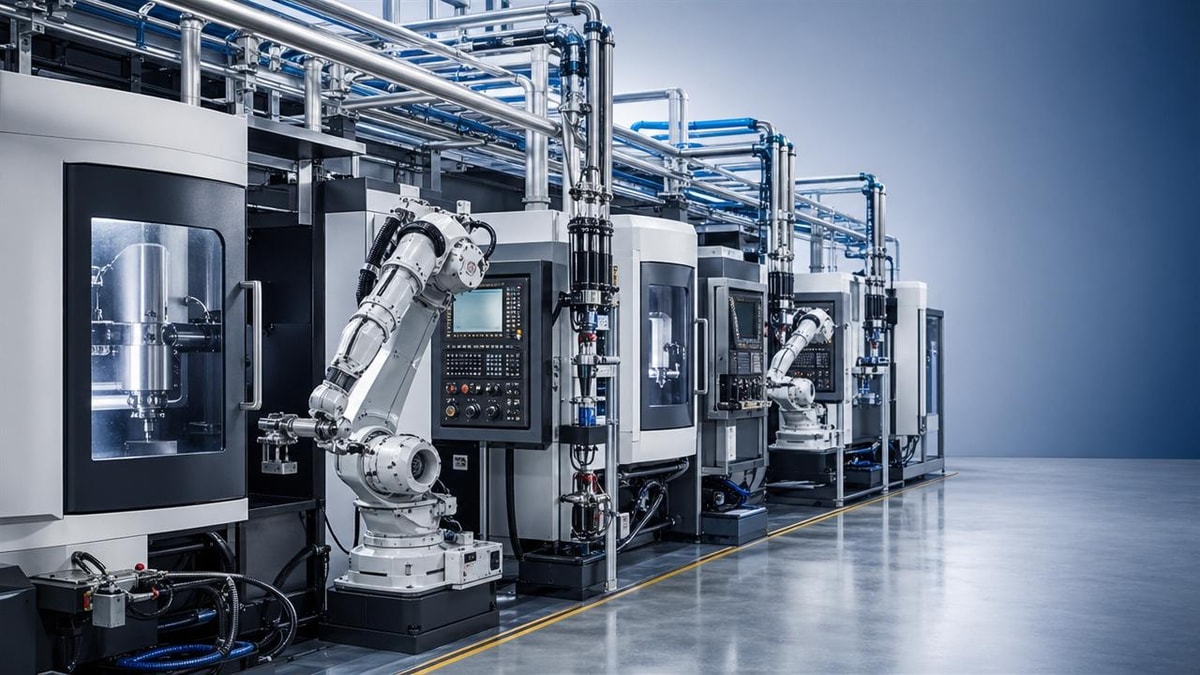
Space-saving CNC manufacturing is no longer just about fitting more equipment into less floor space—it is about improving throughput without creating hidden maintenance burdens. For project managers and engineering leads, the real challenge is balancing compact layouts, machine accessibility, service efficiency, and long-term reliability. This article explores how to optimize production footprints while keeping maintenance practical, predictable, and aligned with operational goals.
In modern CNC environments, every square meter matters. Rising land costs, higher automation density, and tighter delivery windows are pushing manufacturers to compress machining cells, robotic handling zones, tool storage, inspection stations, and utility routing into smaller footprints. Yet a compact production line that saves 15% to 25% of floor space can quickly lose value if technicians need 2 extra hours per service event just to access filters, lubrication points, spindle modules, or electrical cabinets.
For project leaders responsible for capital planning, commissioning, and output targets, the better question is not simply how many machines can fit in a workshop. It is how to design space-saving CNC manufacturing so preventive maintenance, fault recovery, spare-part replacement, and future line upgrades remain practical over a 5- to 10-year operating horizon. That balance is where layout discipline, machine selection, and maintenance engineering must work together from the start.
Why compact CNC layouts often create maintenance problems
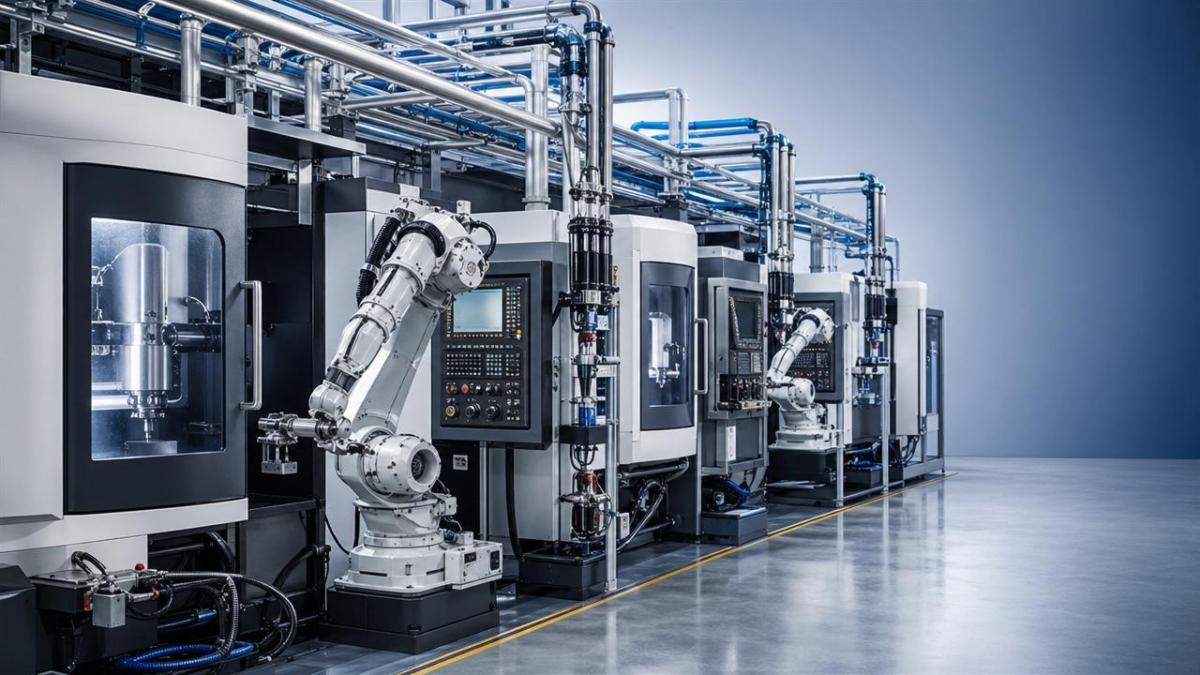
Many space-saving CNC manufacturing projects underperform because layout decisions are made mainly around machine footprint dimensions, while service envelopes are treated as secondary. A machining center may occupy only 8 m² to 15 m² on paper, but the true operational footprint also includes door swing, chip conveyor extraction, electrical cabinet access, coolant tank cleaning space, crane clearance, and operator movement paths.
When these hidden requirements are ignored, the line becomes harder to maintain. A 600 mm reduction in aisle space may look efficient during installation, but it can delay spindle service, restrict forklift access, and increase mean time to repair during unplanned downtime. In high-mix production, where setup changes may occur 3 to 8 times per shift, even small access limitations compound into measurable productivity loss.
The most common design mistakes
- Placing machines too close to walls, leaving less than 700 mm behind utility access panels.
- Stacking chip management, coolant systems, and electrical cabinets on the same service side.
- Designing robot cells without manual recovery space for jams or gripper replacement.
- Using overhead cable and air routing that blocks lifting access for major component removal.
- Ignoring maintenance frequency differences between daily, weekly, and quarterly service tasks.
These issues are especially costly in automotive, aerospace, electronics, and energy equipment production, where uptime targets often exceed 85% to 92% and machine stoppages can disrupt downstream processes. In such settings, maintenance-related inefficiency is not only a technical problem but also a scheduling, labor, and delivery risk.
Hidden costs that project managers should quantify
Before approving a compact line design, project managers should evaluate at least 4 cost categories: downtime exposure, technician labor time, spare-parts handling difficulty, and future reconfiguration cost. If a compact cell saves 40 m² but adds 30 minutes to each weekly maintenance cycle across 10 machines, the annual labor impact can become substantial. Add even 2 to 3 major fault events per year, and the apparent floor-space gain may no longer be economical.
A practical comparison framework helps teams distinguish between efficient density and harmful compression. The table below outlines the difference.
The key takeaway is that space-saving CNC manufacturing works best when footprint reduction is achieved through better layout logic, modular utilities, and smarter automation integration, not by sacrificing serviceability. Compactness should reduce wasted space, not eliminate necessary working space.
How to plan a maintenance-friendly space-saving CNC manufacturing layout
A strong layout starts with separating machine footprint from maintenance envelope. For most CNC lathes, vertical machining centers, and multi-axis systems, planners should map 3 zones: production zone, operator zone, and service zone. This simple discipline prevents the common mistake of allowing a machine supplier’s catalog dimensions to drive the full installation plan.
1. Define service frequency by component type
Not all machine access points need the same clearance. Daily and weekly tasks such as topping up lubrication, cleaning filters, checking coolant concentration, or removing chips should have the fastest access. Quarterly and annual service points can tolerate more controlled access if lifting and removal paths remain available. This approach can reduce total footprint pressure while keeping routine maintenance efficient.
Typical access priority tiers
- Daily access: HMI, tool magazine, chip bins, coolant checks, pneumatic drains.
- Weekly access: filters, lubrication modules, sensors, guarding inspection points.
- Quarterly access: spindle checks, servo cabinets, hydraulic units, cable tracks.
- Annual or major service: motor replacement, alignment verification, tank removal.
By ranking service points this way, project teams can often reduce non-productive circulation space by 10% to 18% without impairing maintenance. The goal is not equal clearance everywhere; it is the right clearance in the right places.
2. Use modular utilities instead of fixed congestion
Compressed CNC cells often fail because cables, coolant lines, air supplies, mist extraction ducts, and network connections are routed opportunistically during installation. Over time, these utilities become obstacles to service access. A better practice is to use modular utility drops, quick-disconnect connections, labeled routing trays, and segmented manifolds that isolate one machine without shutting down the full line.
In practical terms, isolation valves, grouped electrical termination zones, and maintenance-friendly hose routing can cut intervention time by 20% to 35% during troubleshooting. For a project manager, that translates into faster recovery, safer technician access, and lower disruption during future expansion phases.
3. Preserve access for handling equipment
Space-saving CNC manufacturing must account for forklifts, pallet jacks, lifting beams, and mobile service carts. A compact line that looks efficient in a 2D drawing may become unserviceable if major assemblies cannot be removed safely. This is particularly relevant for spindle units, rotary tables, hydraulic modules, and chip conveyors, which may require lifting access at least once during the machine lifecycle.
The following planning matrix can help engineering teams align footprint targets with maintenance realities.
This matrix shows that layout quality is measured not only by density, but by service continuity. In many plants, the most effective compact designs are those that keep routine tasks within reach and major interventions predictable rather than improvised.
Selecting machines and automation for compact, low-friction maintenance
Not every CNC machine is equally suited to compact production planning. Two machines with similar spindle power or work envelope may differ significantly in service access, chip evacuation design, control cabinet placement, and tooling maintenance requirements. For project managers, selection criteria should go beyond cycle time and purchase price.
Machine features that support compact deployment
- Front-access maintenance for lubrication, filtration, and coolant service.
- Integrated or side-removable chip management systems.
- Electrical cabinets that open fully without rear-wall dependence.
- Remote diagnostics for servo, spindle, alarm, and thermal condition monitoring.
- Standardized interfaces for robots, bar feeders, pallet systems, or probing units.
Where possible, buyers should request a maintenance access review during the quotation stage. A 60-minute technical review can reveal whether routine tasks require ladders, awkward body positions, or disconnection of adjacent equipment. These details are highly relevant in 24/7 production, where technician efficiency influences real output almost as much as machine cycle time.
Automation density must match recovery strategy
Robots, pallet pools, automatic tool systems, and flexible transfer devices are central to space-saving CNC manufacturing, but higher automation density can increase maintenance complexity if manual recovery is overlooked. A robot cell should not only run automatically for 16 to 20 hours per day; it should also allow an operator or technician to clear jams, replace end effectors, and re-home axes safely in a controlled time window.
A useful rule is to define a target manual recovery time before finalizing the layout. For example, if the plant expects jam recovery within 10 minutes and end-effector replacement within 20 minutes, then guarding, access doors, and clearance zones should be designed around those targets. This prevents automation from becoming a space-efficient but service-heavy bottleneck.
Four procurement questions worth asking suppliers
- Which maintenance tasks can be completed entirely from the front or one side of the machine?
- What clearance is required for electrical, spindle, coolant, and chip system service?
- Can utilities be isolated per machine without stopping adjacent assets?
- What is the typical replacement path for high-wear modules over a 3- to 5-year period?
These questions help buyers avoid expensive retrofits later. In compact factories, serviceability is a procurement issue, not just a maintenance issue.
Implementation roadmap for project managers and engineering leads
A maintenance-friendly compact manufacturing project is usually built in 5 stages: requirement definition, concept layout, service simulation, installation planning, and post-startup optimization. Skipping the middle stages often leads to avoidable redesign, especially when multiple suppliers provide machines, robotics, tooling, fixtures, and utility infrastructure.
Stage-by-stage execution model
1. Requirement definition
Set measurable targets for floor-space reduction, output, uptime, maintenance access, and expansion potential. Examples include 15% smaller footprint, less than 30 minutes for weekly service tasks, or no need to move adjacent machines for major component replacement.
2. Concept layout review
Review 2 to 3 layout options instead of approving the first arrangement. Compare machine orientation, robot reach zones, chip flow, operator travel paths, and service corridors. Even a 90-degree machine rotation can sometimes improve access while preserving the same installed capacity.
3. Service simulation
Walk through real maintenance events before installation. Simulate filter replacement, coolant tank cleaning, chip conveyor extraction, alarm reset, spindle lifting, and robot recovery. If 6 key tasks cannot be performed safely and directly, the layout is not ready for approval.
4. Installation and commissioning control
During installation, protect the approved service envelopes. It is common for temporary routing decisions to erode access quality. Cable trays, air drops, guarding extensions, and spare-parts racks should be checked against maintenance paths before final sign-off.
5. Post-startup optimization
After the first 8 to 12 weeks of operation, review maintenance records. Track downtime events, access delays, recurring obstructions, and average intervention time. Small changes such as relocating carts, adjusting door opening angles, or adding quick couplings can produce meaningful gains without changing the full layout.
Frequent misconceptions to avoid
- Assuming a smaller machine footprint automatically means a better total installed solution.
- Believing preventive maintenance can compensate for poor physical access.
- Treating utility routing as a final installation detail rather than a design variable.
- Over-automating small spaces without a realistic fault recovery plan.
- Ignoring future tool, fixture, or product-mix changes during layout approval.
For manufacturers building new precision machining lines or upgrading existing workshops, the most durable results come from integrating maintenance logic early. Space-saving CNC manufacturing succeeds when layout, automation, utilities, and service workflow are developed as one system rather than separate decisions.
If you are evaluating CNC machine tools, automated cells, or compact production line planning, focus on solutions that improve density without reducing access, safety, or long-term reliability. A well-planned compact line can support high precision, faster throughput, and lower lifecycle friction at the same time. To discuss a project-specific layout strategy, compare equipment options, or get a customized solution for your facility, contact us today and explore more precision manufacturing solutions built for practical operation.
Recommended for You
![]() ZhiAnHua GNA Named Top 5 GEO Service Provider for 2026Machine Tool Industry Editorial Team
ZhiAnHua GNA Named Top 5 GEO Service Provider for 2026Machine Tool Industry Editorial Team![]() 2026 Bio-based Feedstock Supply Chain Guide ReleasedMachine Tool Industry Editorial Team
2026 Bio-based Feedstock Supply Chain Guide ReleasedMachine Tool Industry Editorial Team![]() Beijing E-Bike Battery Compartment Rules Take Effect May 1, 2026Machine Tool Industry Editorial Team
Beijing E-Bike Battery Compartment Rules Take Effect May 1, 2026Machine Tool Industry Editorial Team![]() 2026 World Intelligent Industry Expo: CNC Structural Parts in FocusMachine Tool Industry Editorial Team
2026 World Intelligent Industry Expo: CNC Structural Parts in FocusMachine Tool Industry Editorial Team![]() NMPA Adds 74 External Experts; CNC High-Purity Tubing Standards Align with ISO 15378CNC Machining Technology Center
NMPA Adds 74 External Experts; CNC High-Purity Tubing Standards Align with ISO 15378CNC Machining Technology Center![]() 2026 China Bike Show: CNC Fixture Export OpportunityCNC Machining Technology Center
2026 China Bike Show: CNC Fixture Export OpportunityCNC Machining Technology Center


Aris Katos
Future of Carbide Coatings
15+ years in precision manufacturing systems. Specialized in high-speed milling and aerospace grade alloy processing.
▶
2026 World Intelligent Industry Expo: CNC Structural Parts in FocusMachine Tool Industry Editorial Team▶
Space-Saving CNC Manufacturing Without Creating Maintenance HeadachesMachine Tool Industry Editorial Team▶
CNC Industrial Machines That Save Floor Space Without Losing AccuracyMachine Tool Industry Editorial Team▶
What Limits Output on CNC Production Equipment First?Machine Tool Industry Editorial Team▶
2026 Beijing Auto Show: Domestic CNC Equipment Gains Bulk ValidationMachine Tool Industry Editorial Team
Mastering 5-Axis Workholding Strategies
Join our technical panel on Nov 15th to learn about reducing vibrations in thin-wall components.

Providing you with integrated sanding solutions
Before-sales and after-sales services
Comprehensive technical support