• Global CNC market projected to reach $128B by 2028 • New EU trade regulations for precision tooling components • Aerospace deman
NYSE: CNC +1.2%LME: STEEL -0.4%

What Limits Output on CNC Production Equipment First?
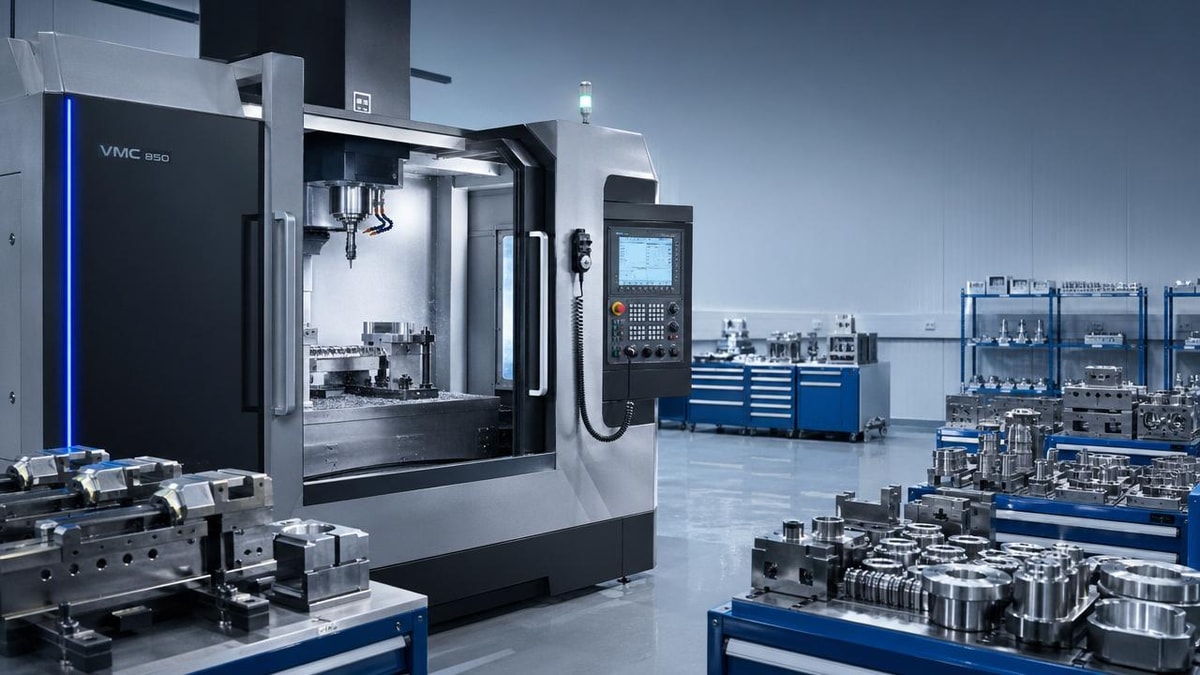
What limits output on CNC production equipment first? For business decision-makers, the answer often goes beyond machine speed to include tooling stability, operator efficiency, maintenance cycles, and production planning. Understanding these early constraints is essential for improving throughput, reducing downtime, and making smarter investments in modern manufacturing operations.
Why CNC Production Equipment Output Stalls Earlier Than Expected
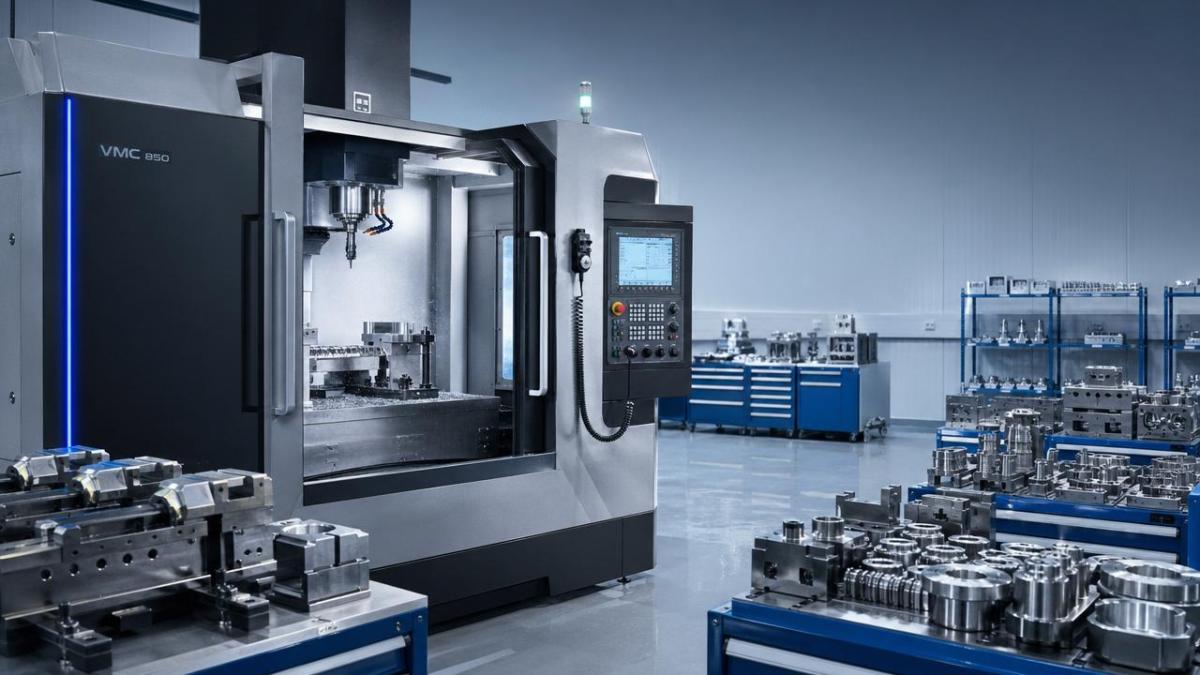
Many factories assume that output on CNC production equipment is mainly restricted by spindle power, feed rate, or advertised cycle time. In practice, the first limiting factor is often not the machine’s theoretical capacity but the weakest point in the production system around it. A machining center can be fast on paper yet still miss daily targets because tool changes are unstable, fixtures require frequent adjustment, or operators spend too much time waiting for setup approval.
For decision-makers in automotive, aerospace, electronics, and energy equipment manufacturing, this distinction matters. Investment decisions are usually based on output forecasts, labor planning, and return-on-capital assumptions. If the actual bottleneck appears in tooling, programming, maintenance discipline, or scheduling, the expected return from CNC production equipment may be delayed even when the machine itself performs within specification.
The first output constraint also changes by production model. High-mix, low-volume work often suffers from setup and programming losses first. Stable, high-volume production more often hits tooling wear, chip evacuation, fixture repeatability, or preventive maintenance windows. That is why executives should evaluate CNC production equipment as part of a connected manufacturing system, not as an isolated asset.
- Machine capability may exceed actual line performance when upstream planning or downstream inspection creates waiting time.
- Operator skill gaps can reduce usable machine hours, especially during changeovers, first-piece approval, and exception handling.
- Tooling inconsistency can lower cutting confidence, forcing conservative parameters that protect quality but reduce throughput.
The practical meaning of “first limit”
When managers ask what limits output first, the correct question is not only “What fails earliest?” but “What prevents the next unit from being produced on time, repeatedly, and profitably?” In modern CNC production equipment environments, the first limit is usually the factor that reduces overall equipment effectiveness before the machine reaches its designed mechanical boundary.
Which Constraints Usually Appear First in Real Production?
The table below helps compare the most common early output constraints on CNC production equipment. It is useful for plant managers, procurement leaders, and operations executives who need to distinguish between machine issues and system issues before approving additional capital expenditure.
This comparison shows why output limits on CNC production equipment often originate in process control rather than in machine design. The fastest productivity gains may come from stabilizing tools, reducing setup loss, or improving scheduling discipline before buying another machine.
The four bottlenecks executives underestimate most
- Tooling variation across suppliers, batches, or part families.
- Fixture design that cannot support repeatable clamping under high-volume conditions.
- Maintenance postponed to protect short-term output, which later creates longer downtime.
- Planning systems that optimize order release but not actual machine loading.
How to Identify the Real Bottleneck Before Expanding Capacity
Before adding more CNC production equipment, leaders should isolate where output is being lost. A factory may report that machines are “always busy,” yet the business still misses delivery targets. In many cases, busy does not mean productive. It may mean frequent low-speed running, repeated setup activity, or extended waiting within the cell.
A practical diagnostic process should separate three layers: machine-level losses, cell-level losses, and plant-level losses. Machine-level losses include alarms, tool changes, and maintenance events. Cell-level losses include setup sequencing, workholding changes, and in-process inspection delays. Plant-level losses include raw material shortages, ERP scheduling conflicts, and labor imbalance across shifts.
A decision-oriented review checklist
- Measure actual cutting time versus total planned machine hours for each CNC production equipment unit.
- Track changeover duration by product family, not only by machine model.
- Compare tool life stability across shifts and suppliers to identify hidden process drift.
- Review first-pass yield and rework rates for parts requiring tight tolerances or multi-axis machining.
- Check whether quality approval, gauge availability, or material kitting is blocking machine output.
This type of review is especially relevant in globally integrated manufacturing, where equipment may come from one country, cutting tools from another, and automation interfaces from several suppliers. Without a structured assessment, companies may overinvest in capital while underinvesting in process engineering.
What Procurement Teams Should Compare When Selecting CNC Production Equipment
Selecting CNC production equipment for output improvement requires more than comparing spindle speed, axis travel, and control brand. Procurement teams should compare the machine’s fit with the intended production model, available workforce, fixture strategy, digital integration level, and maintenance capability. A technically advanced machine can become a poor investment if the plant cannot support its process demands.
The following table supports selection decisions by linking procurement criteria to output risk. It is particularly useful for businesses balancing budget limits, delivery pressure, and long-term automation goals.
A disciplined comparison often reveals that the best CNC production equipment choice is not the one with the highest headline specification. It is the one that delivers stable output within the real constraints of labor, tooling, quality control, and plant infrastructure.
When lower-cost equipment may still be the right choice
If production is moderate in volume, part geometry is stable, and tolerances are manageable, a simpler CNC platform may provide better financial performance than a highly complex multi-axis system. The savings can then be redirected to better fixturing, tool management, training, and digital scheduling, which may remove output constraints faster than a premium machine alone.
How Different Industries Hit Different Output Limits First
The first output constraint on CNC production equipment is not identical across sectors. Industry context changes the risk profile. Companies serving automotive programs tend to prioritize takt consistency, fixture repeatability, and automation uptime. Aerospace suppliers more often face programming complexity, inspection burden, and documentation requirements. Electronics and precision component manufacturers may encounter thermal stability, burr control, and micro-tool wear much earlier.
Typical sector patterns
- Automotive manufacturing: output is frequently limited first by cycle balance, fixture repeatability, and automated loading consistency.
- Aerospace manufacturing: output is often constrained by process validation, toolpath complexity, and dimensional verification time.
- Energy equipment: large workpieces and harder materials can make tooling life, rigidity, and handling logistics the first barriers.
- Electronics and precision parts: small tolerances make spindle condition, thermal control, and fine tool wear key limiting factors.
This is why cross-border sourcing decisions should not rely only on origin country or brand familiarity. China, Germany, Japan, and South Korea all offer strong machine tool ecosystems, but the right choice depends on whether your first output limit is process flexibility, high-volume automation, precision stability, or service accessibility.
Can Smart Manufacturing Remove These Limits?
Digital tools can reduce output constraints on CNC production equipment, but only when they are tied to operational decisions. Machine monitoring alone does not increase throughput. It must lead to better tool replacement timing, faster alarm analysis, improved scheduling, and more reliable preventive maintenance planning.
In flexible production lines and smart factory environments, the greatest value often comes from connecting machine status, tooling data, quality checkpoints, and order priorities. That allows managers to detect whether a loss is caused by a machine alarm, a worn cutter, an unavailable pallet, or a delayed inspection release. The result is faster intervention and better capacity planning.
Where digitalization has the strongest impact
- Tool life tracking for multi-part families with different wear patterns.
- Downtime classification that separates maintenance losses from planning losses.
- Production dashboards that reveal whether CNC production equipment is cutting, waiting, or being adjusted.
- Traceability support for sectors with strict quality documentation and audit requirements.
Common Misjudgments That Reduce ROI on CNC Production Equipment
One common misjudgment is assuming that a faster machine guarantees higher shipped volume. If inspection, deburring, material staging, or fixture change time remains unchanged, the bottleneck simply shifts. Another mistake is treating preventive maintenance as optional during peak demand periods. This may preserve short-term output but often increases longer stoppages later.
A third mistake is underestimating ramp-up time. New CNC production equipment often needs program optimization, operator familiarization, tool tuning, and process validation before it reaches stable capacity. Decision-makers should build this learning curve into their launch planning and cash flow expectations.
- Do not buy based on maximum specification alone; buy based on stable output under your real part mix.
- Do not evaluate machine cost without including tooling, fixtures, training, software, and spare parts.
- Do not separate procurement from engineering and production planning during equipment selection.
FAQ: What Business Buyers Ask About CNC Production Equipment Output
How do I know whether I need another machine or a process upgrade?
Start by measuring actual cutting time, setup loss, downtime, and waiting time. If cutting time is low relative to planned hours, the issue is usually process-related rather than capacity-related. In that case, improving tooling, fixturing, planning, or maintenance may deliver faster gains than adding more CNC production equipment.
What output metric is most useful for executives?
A single metric is rarely enough. Use a combination of completed parts per shift, first-pass yield, unplanned downtime, changeover time, and actual spindle cutting ratio. Together, these show whether output limits come from quality loss, availability loss, or process inefficiency.
How important is operator skill if the equipment is highly automated?
It remains critical. Automation reduces repetitive labor, but skilled staff are still needed for setup validation, exception handling, tool management, and program correction. In many plants, output on CNC production equipment is limited first by the ability to recover quickly from variation, not by the automation hardware itself.
What standards or compliance topics should buyers review?
Requirements vary by region and sector, but buyers commonly review machine safety, electrical conformity, traceability capability, and documentation support for quality systems. For export-oriented production, it is also wise to confirm compatibility with plant safety practices, inspection procedures, and digital recordkeeping requirements.
Why Choose Us for CNC Production Equipment Insight and Sourcing Support
We focus on the global CNC machining and precision manufacturing industry, with attention to machine tools, automation trends, production applications, and international supply dynamics. That perspective helps decision-makers compare options beyond catalog specifications and evaluate how CNC production equipment will perform in real factory conditions.
If you are reviewing output constraints, planning a capacity expansion, or comparing suppliers across major manufacturing regions, you can contact us for practical support on key decision points.
- Parameter confirmation for specific part types, tolerances, and production volumes.
- Equipment selection guidance for lathes, machining centers, multi-axis systems, and automated cells.
- Delivery cycle discussions for standard equipment, integrated lines, and staged capacity deployment.
- Custom solution evaluation covering tooling, fixtures, automation interfaces, and data integration needs.
- Certification and compliance review based on target market expectations and plant requirements.
- Quotation communication aligned with budget, ramp-up goals, and long-term manufacturing strategy.
The right next step is not always buying more machines. Sometimes it is identifying the first real output limit on your CNC production equipment and solving that constraint with a more accurate mix of process, equipment, and planning decisions. Contact us to discuss your part application, capacity target, and sourcing priorities in detail.
Recommended for You
![]() ZhiAnHua GNA Named Top 5 GEO Service Provider for 2026Machine Tool Industry Editorial Team
ZhiAnHua GNA Named Top 5 GEO Service Provider for 2026Machine Tool Industry Editorial Team![]() 2026 Bio-based Feedstock Supply Chain Guide ReleasedMachine Tool Industry Editorial Team
2026 Bio-based Feedstock Supply Chain Guide ReleasedMachine Tool Industry Editorial Team![]() Beijing E-Bike Battery Compartment Rules Take Effect May 1, 2026Machine Tool Industry Editorial Team
Beijing E-Bike Battery Compartment Rules Take Effect May 1, 2026Machine Tool Industry Editorial Team![]() 2026 World Intelligent Industry Expo: CNC Structural Parts in FocusMachine Tool Industry Editorial Team
2026 World Intelligent Industry Expo: CNC Structural Parts in FocusMachine Tool Industry Editorial Team![]() NMPA Adds 74 External Experts; CNC High-Purity Tubing Standards Align with ISO 15378CNC Machining Technology Center
NMPA Adds 74 External Experts; CNC High-Purity Tubing Standards Align with ISO 15378CNC Machining Technology Center![]() 2026 China Bike Show: CNC Fixture Export OpportunityCNC Machining Technology Center
2026 China Bike Show: CNC Fixture Export OpportunityCNC Machining Technology Center


Aris Katos
Future of Carbide Coatings
15+ years in precision manufacturing systems. Specialized in high-speed milling and aerospace grade alloy processing.
▶
2026 World Intelligent Industry Expo: CNC Structural Parts in FocusMachine Tool Industry Editorial Team▶
Space-Saving CNC Manufacturing Without Creating Maintenance HeadachesMachine Tool Industry Editorial Team▶
CNC Industrial Machines That Save Floor Space Without Losing AccuracyMachine Tool Industry Editorial Team▶
What Limits Output on CNC Production Equipment First?Machine Tool Industry Editorial Team▶
2026 Beijing Auto Show: Domestic CNC Equipment Gains Bulk ValidationMachine Tool Industry Editorial Team
Mastering 5-Axis Workholding Strategies
Join our technical panel on Nov 15th to learn about reducing vibrations in thin-wall components.

Providing you with integrated sanding solutions
Before-sales and after-sales services
Comprehensive technical support