• Global CNC market projected to reach $128B by 2028 • New EU trade regulations for precision tooling components • Aerospace deman
NYSE: CNC +1.2%LME: STEEL -0.4%

Why some CNC industrial machines fail to scale with new orders
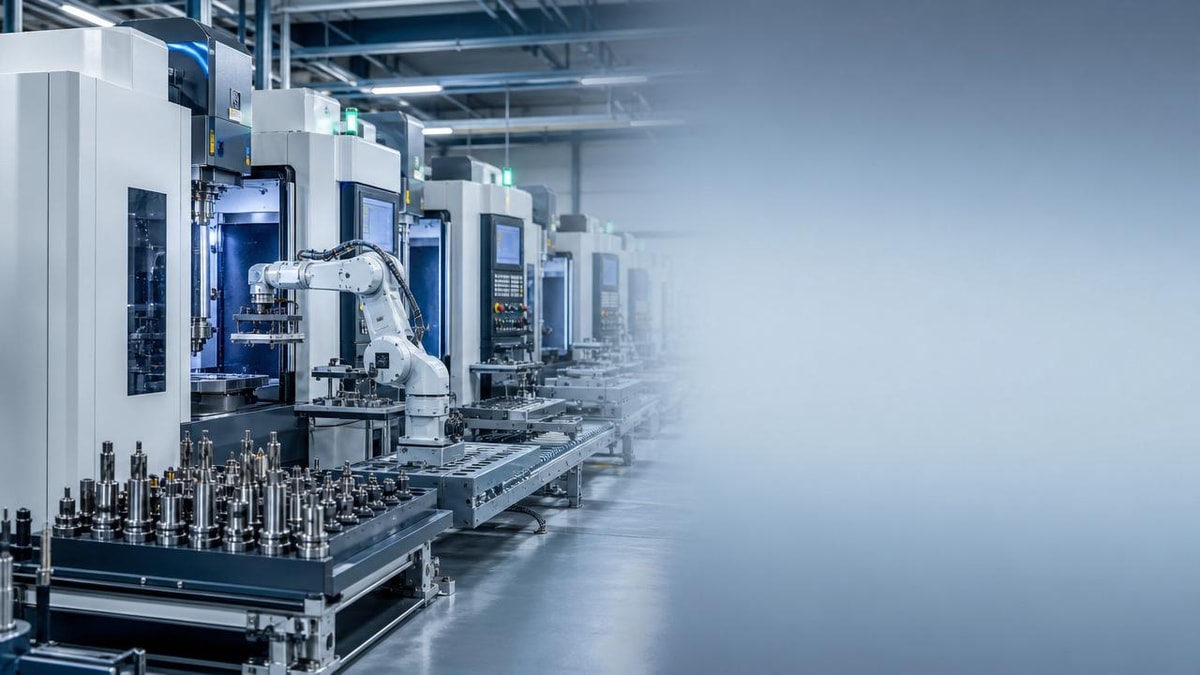
As demand surges, many manufacturers discover that some CNC industrial machines cannot keep pace with new orders. The problem is rarely just capacity—it often involves automation gaps, tooling limits, software integration, and inconsistent production efficiency. For business decision-makers, understanding why scaling fails is essential to protecting margins, delivery timelines, and long-term competitiveness in modern manufacturing.
Why a checklist approach is the fastest way to assess scaling risk
When new orders arrive, many companies first ask whether they need more CNC industrial machines. That is often the wrong starting point. A machine may have enough spindle hours on paper and still fail to support growth because of weak process stability, long setup time, poor scheduling, or incompatible software workflows. For decision-makers, a checklist-based review is more useful than a broad technical discussion because it reveals the true bottlenecks that slow output, increase scrap, and create delivery risk.
In the CNC machine tool industry, especially across automotive, aerospace, electronics, and energy equipment production, scaling depends on the full system around the machine: fixtures, cutting tools, programming standards, operator capability, maintenance discipline, and data visibility. Reviewing these items in order helps leaders decide whether to optimize existing CNC industrial machines, reconfigure production cells, or invest in more advanced machining centers and automation.
Start with these priority checks before blaming capacity
Before approving additional equipment budgets, management should verify whether current CNC industrial machines are constrained by true capacity or by hidden operational losses. The following checklist is a practical starting point.
- Check actual utilization versus theoretical utilization. If scheduled hours look high but effective cutting time remains low, the issue may be setup, waiting, rework, or tool changes rather than machine quantity.
- Review changeover time by product family. Machines that perform well in long production runs may struggle when order mix becomes more variable.
- Measure first-pass yield and scrap rates. A machine that scales output but creates unstable quality will damage margins and delay shipments.
- Assess operator dependency. If only a few senior staff can run the process efficiently, growth will stall as order volume rises.
- Confirm tool life consistency. Unstable tooling performance often limits repeatability more than spindle power or travel range.
- Examine queue time between machining, inspection, deburring, washing, and assembly. The bottleneck may sit outside the CNC industrial machines themselves.
This review is especially important for companies operating mixed fleets of CNC lathes, vertical machining centers, and multi-axis systems. The more product complexity increases, the more small inefficiencies multiply into major scaling problems.
Core checklist: the seven reasons CNC industrial machines fail to scale
1. Setup time grows faster than order volume
Many CNC industrial machines are productive only when batch sizes are large and part variation is limited. As new orders expand product mix, setup frequency rises. If fixtures are not standardized, programs are not modular, and tool offsets require manual adjustment each time, capacity drops quickly. Decision-makers should ask for setup-time data by machine, by shift, and by product type, not just monthly output totals.
2. Tooling and fixturing are not designed for repeatable scaling
Scaling fails when machines must stop for frequent tool replacement, unstable clamping, or dimensional drift. In precision manufacturing, a high-end machine tool cannot compensate for weak process tooling. If the company has not invested in standardized holders, quick-change fixtures, presetting, and robust cutting strategy validation, throughput gains from new orders may disappear in troubleshooting time.
3. Automation is partial, not end-to-end
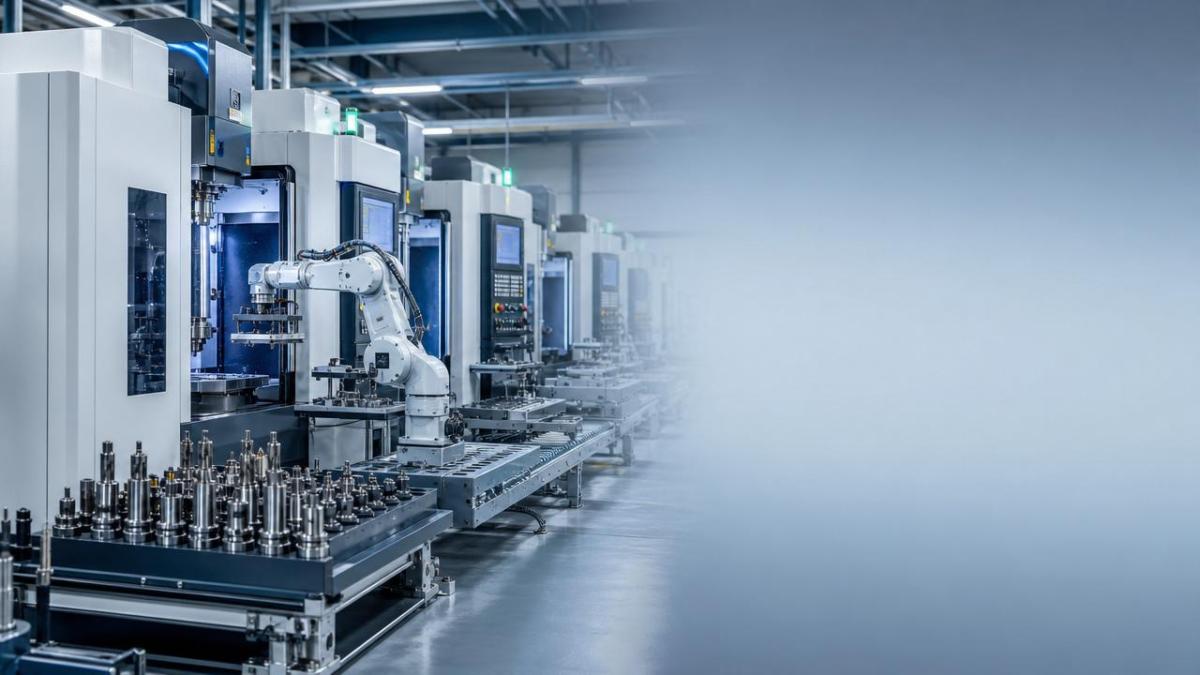
Some plants describe themselves as automated because they use CNC industrial machines with loaders, robots, or pallet changers. Yet scaling still fails because the surrounding flow remains manual. Parts may queue for inspection, operators may manually transfer WIP, or tool replenishment may be reactive. For modern manufacturing, isolated automation creates islands of efficiency, not a scalable production system.
4. Software and data systems do not support scheduling at scale
As orders increase, scheduling complexity rises sharply. If CNC industrial machines are programmed through disconnected systems, or if MES, ERP, CAM, and shop-floor reporting do not share reliable data, management loses visibility into real bottlenecks. This leads to poor sequencing, missed due dates, duplicated work, and inefficient machine allocation. Digital integration is no longer optional for companies that want to scale precision manufacturing output without losing control.
5. Process capability is strong in trials but weak in daily production
A machine may produce excellent sample parts during quoting or pilot production, but scaling exposes weaknesses in thermal stability, chip evacuation, coolant control, or measurement routines. This is common in multi-axis machining and high-precision component work. Leaders should distinguish between technical capability and production capability. The first wins projects; the second wins repeatable profit.
6. Maintenance strategy cannot support higher utilization
Older CNC industrial machines often perform acceptably at moderate load but become unreliable under sustained production pressure. Increased runtime exposes spindle wear, backlash, hydraulic issues, sensor faults, and lubrication problems. If maintenance is mainly reactive, scaling new orders will trigger unplanned downtime at exactly the wrong moment. A useful check is whether preventive maintenance intervals are tied to actual operating hours and critical failure modes.
7. The business model changed, but the machine strategy did not
Some CNC industrial machines were purchased for low-mix stable contracts, but the company now competes in shorter lead times, more customized work, or frequent engineering revisions. In that case, scaling problems are strategic, not mechanical. The machine fleet may simply be misaligned with the current order structure. This is a common issue for suppliers serving several sectors at once, from electronics to energy equipment, where demand patterns differ significantly.
A practical decision table for business leaders
The table below helps decision-makers identify whether the next step should be optimization, process redesign, or capital investment.
What to check by production scenario
For high-volume automotive or electronics work
The priority is repeatability, cycle time stability, and automation continuity. CNC industrial machines in these environments must support predictable takt performance, fast tool changes, and integrated quality monitoring. If even small stoppages occur repeatedly, large order scaling becomes fragile.
For aerospace or complex precision parts
The key issue is not only machine speed but process capability under stringent tolerance requirements. Multi-axis CNC industrial machines may have enough technical sophistication, yet scaling can fail if programming verification, fixture rigidity, and measurement routines are not standardized. Here, stable process engineering matters more than headline machine specifications.
For mixed-order subcontract manufacturing
Job shops and contract manufacturers must watch setup flexibility, quoting accuracy, and machine assignment logic. A diverse order book can overload CNC industrial machines if jobs are scheduled based on urgency alone rather than process fit. Leaders should evaluate whether the business needs a more flexible machine portfolio instead of simply more machine count.
Commonly overlooked risk items
- Program management is inconsistent across shifts, causing variation in offsets, edits, and revision control.
- Inspection capacity does not scale with machining output, creating hidden delays after parts leave CNC industrial machines.
- Chip management and coolant systems are undersized for heavier production volumes.
- Operator training focuses on machine operation but not process troubleshooting or quality interpretation.
- Suppliers of tools, fixtures, and spare parts cannot support accelerated delivery schedules.
- Management dashboards track output, but not OEE loss categories, changeover trends, or cost per qualified part.
Execution plan: what companies should do in the next 90 days
- Audit the top five CNC industrial machines linked to revenue-critical orders and identify true lost-capacity drivers.
- Separate machine issues from system issues by measuring setup, waiting, inspection, and maintenance losses individually.
- Standardize tooling, workholding, and program release practices for the part families with the highest growth potential.
- Review whether ERP, MES, and CAM data provide enough visibility to schedule based on real machine capability.
- Create an investment map that compares three options: optimize current assets, add automation, or replace mismatched equipment.
This approach helps decision-makers avoid a common mistake in the CNC machine tool industry: buying additional capacity before improving process discipline. In many cases, better scaling comes from removing instability around existing CNC industrial machines rather than expanding the fleet immediately.
FAQ for leaders evaluating scale readiness
Should we invest in more machines as soon as orders increase?
Not always. If your CNC industrial machines are losing time to setup, tool changes, quality checks, or poor planning, new equipment may add cost without solving throughput problems. Validate the loss structure first.
How can we tell whether the problem is flexibility or capacity?
If output drops when product mix increases, the issue is often flexibility. If output stays stable across products but total demand exceeds available productive time, the issue is capacity. Many CNC industrial machines fail because they were optimized for the wrong demand pattern.
What data should management request first?
Ask for effective cutting time, setup time, first-pass yield, downtime by cause, tool life consistency, queue time between processes, and on-time delivery by machine family. These metrics give a much clearer view than utilization alone.
Final guidance before making the next scaling decision
If your organization is preparing for growth, the right question is not simply whether current CNC industrial machines are busy. The better question is whether the full production system can convert new orders into repeatable, profitable, on-time output. That means checking setup efficiency, tooling strategy, automation continuity, digital integration, maintenance readiness, and process stability in a structured way.
Before moving forward, decision-makers should align internally on five points: target product mix, expected lead times, tolerance requirements, available labor capability, and budget for process upgrades versus new equipment. If further evaluation is needed, the most useful next discussion should focus on machine parameters, application fit, automation options, implementation cycle, software compatibility, service support, and total investment return.
PREVIOUS ARTICLE
NEXT ARTICLE
Recommended for You
![]() Beijing’s New E-Bike Lock Regulation Spurs CNC Housing DemandGlobal Machine Tool Trade Research Center
Beijing’s New E-Bike Lock Regulation Spurs CNC Housing DemandGlobal Machine Tool Trade Research Center![]() New Drone Standard GB/T 44723–2026 Takes Effect May 2026Manufacturing Policy Research Center
New Drone Standard GB/T 44723–2026 Takes Effect May 2026Manufacturing Policy Research Center![]() New Maritime Code Takes Effect May 1, 2026: CNC Equipment Shipping Rules UpdatedManufacturing Market Research Center
New Maritime Code Takes Effect May 1, 2026: CNC Equipment Shipping Rules UpdatedManufacturing Market Research Center![]() 2026 China Cycle Shanghai: CNC E-Bike Frame Capacity Draws ODM FocusManufacturing Market Research Center
2026 China Cycle Shanghai: CNC E-Bike Frame Capacity Draws ODM FocusManufacturing Market Research Center![]() 2026 Foshan Tanzhou Auto Expo: EV Parts Sourcing FocusGlobal Machine Tool Trade Research Center
2026 Foshan Tanzhou Auto Expo: EV Parts Sourcing FocusGlobal Machine Tool Trade Research Center![]() New Hazardous Chemicals Safety Law Takes Effect May 2026Manufacturing Policy Research Center
New Hazardous Chemicals Safety Law Takes Effect May 2026Manufacturing Policy Research Center


Aris Katos
Future of Carbide Coatings
15+ years in precision manufacturing systems. Specialized in high-speed milling and aerospace grade alloy processing.
▶
Why some CNC industrial machines fail to scale with new ordersMachine Tool Industry Editorial Team▶
CNC production delays often start with planning, not the machineMachine Tool Industry Editorial Team▶
CNC industrial machines with lower maintenance downtimeMachine Tool Industry Editorial Team▶
CNC industrial systems that fit small factory layoutsMachine Tool Industry Editorial Team▶
2026 World Intelligent Industry Expo: CNC Structural Parts in FocusMachine Tool Industry Editorial Team
Mastering 5-Axis Workholding Strategies
Join our technical panel on Nov 15th to learn about reducing vibrations in thin-wall components.

Providing you with integrated sanding solutions
Before-sales and after-sales services
Comprehensive technical support