• Global CNC market projected to reach $128B by 2028 • New EU trade regulations for precision tooling components • Aerospace deman
NYSE: CNC +1.2%LME: STEEL -0.4%

CNC industrial systems that fit small factory layouts
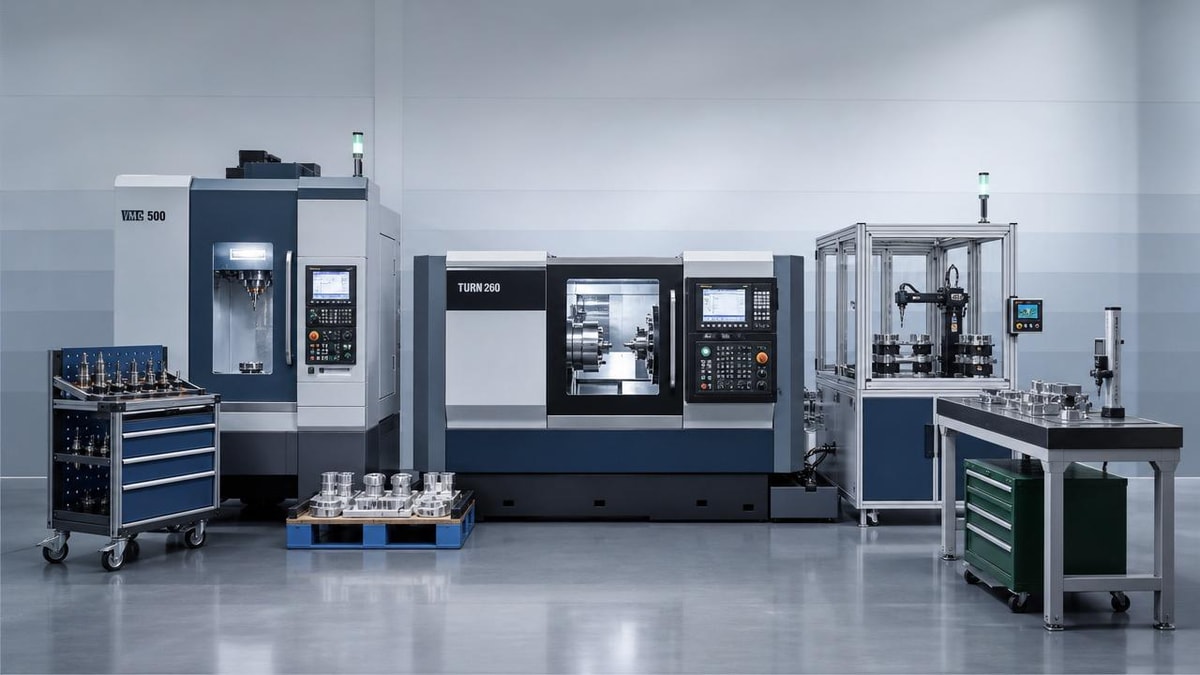
For project managers working with limited floor space, choosing CNC industrial systems that match small factory layouts is critical to balancing capacity, precision, and cost. From compact machining centers to flexible automation cells, the right setup can streamline workflows, reduce downtime, and support future expansion without overloading existing operations.
What CNC industrial systems mean in a small-factory context
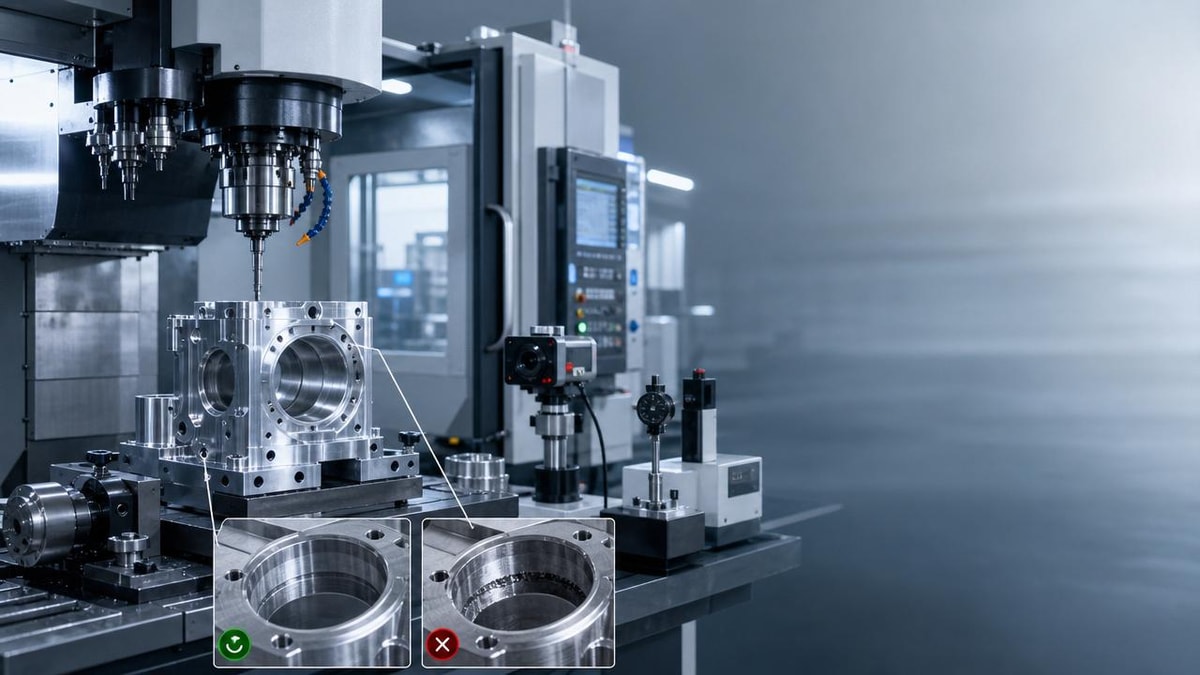
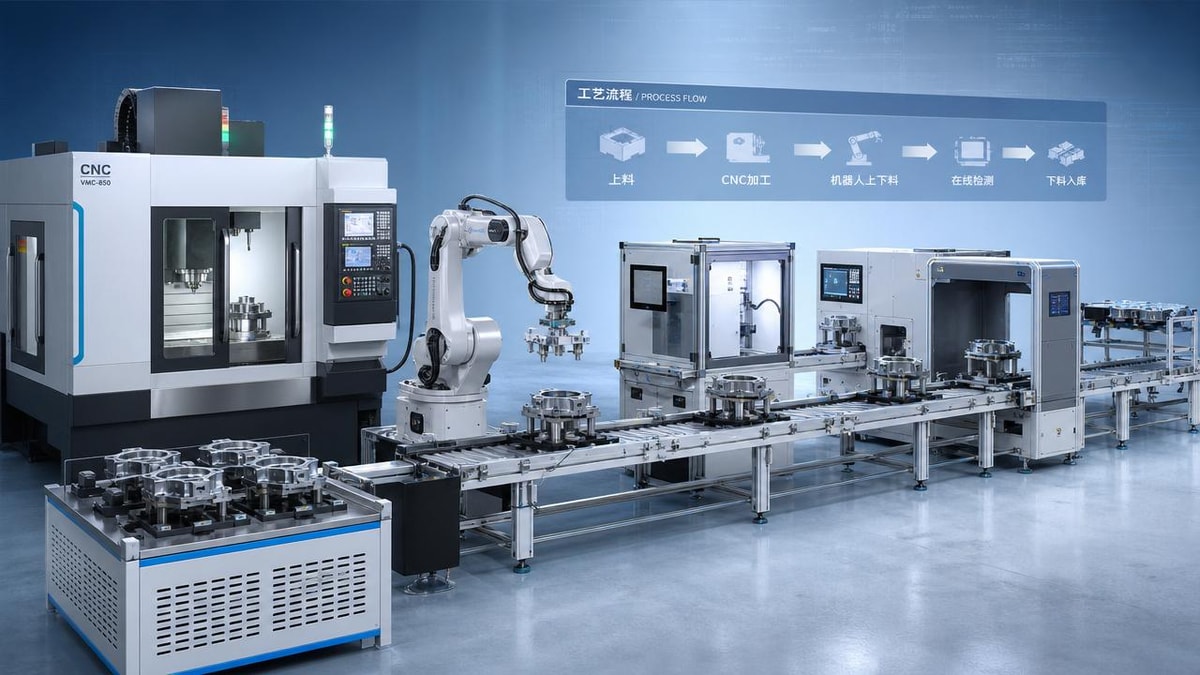
In practical terms, CNC industrial systems are not just individual machines. They include the machine tool itself, control software, tooling, fixtures, loading methods, chip management, quality checkpoints, and the surrounding workflow that allows parts to move efficiently from raw material to finished output. In a small factory layout, this broader definition matters because space limitations make every support element as important as the spindle or axis configuration.
For project leaders, the goal is rarely to buy the biggest or fastest machine. The goal is to create a production environment that fits real demand, supports part quality, and remains manageable for operators, maintenance teams, and scheduling staff. A well-planned CNC industrial setup should reduce internal transport, simplify supervision, and keep material flow predictable even when product mix changes.
This is especially relevant in modern manufacturing, where short lead times, mixed-batch production, and tighter tolerance requirements are common across automotive components, electronics housings, energy equipment parts, and precision subcontracting. Small factories increasingly need compact but capable systems that deliver industrial performance without requiring a large plant footprint.
Why the industry is paying closer attention
Across the global machine tool sector, the trend is clear: higher precision, greater automation, and deeper digital integration. However, not every manufacturer can respond by expanding facilities. Many suppliers, contract manufacturers, and specialist workshops must increase output inside existing buildings. That is why CNC industrial planning for small layouts has become a strategic issue rather than a simple equipment selection task.
Smaller factories face a unique combination of pressures. They may need to handle more product variants, stricter quality documentation, and faster turnover, while still controlling labor and utility costs. In this environment, compact machining centers, multi-function turning systems, and modular automation cells can create a meaningful advantage. They help businesses use available floor area more intelligently, often improving both throughput and process stability.
Another reason for growing attention is risk control. When one oversized machine dominates a tight space, maintenance access, safety movement, and future line adjustment become harder. By contrast, a right-sized CNC industrial arrangement can support phased investment, easier training, and more flexible response to customer demand shifts. For project managers, that flexibility often has more long-term value than headline machine specifications.
Key layout principles behind an effective CNC industrial setup
A small factory layout succeeds when machine capability and spatial logic are planned together. First, material flow should be as linear as possible. Raw stock entry, machining, inspection, deburring, cleaning, and packing should not force repeated backtracking. Even a high-performance CNC industrial cell can lose efficiency if pallets, tools, and operators must constantly cross paths.
Second, service clearance must be protected. Compact does not mean crowded. Machines still require safe loading zones, tool replacement access, electrical and coolant maintenance reach, and chip disposal space. Ignoring these needs can reduce uptime and create hidden operating costs. Third, utilities should be considered early. Air supply, power stability, coolant handling, and data connectivity all affect whether a compact system remains reliable over time.
Fourth, part family analysis is essential. If a factory mainly produces small precision aluminum parts, the ideal CNC industrial configuration may differ completely from one machining steel shafts or cast housings. Matching machine travel, rigidity, spindle range, and automation level to the actual product mix is one of the most important decisions in constrained facilities.
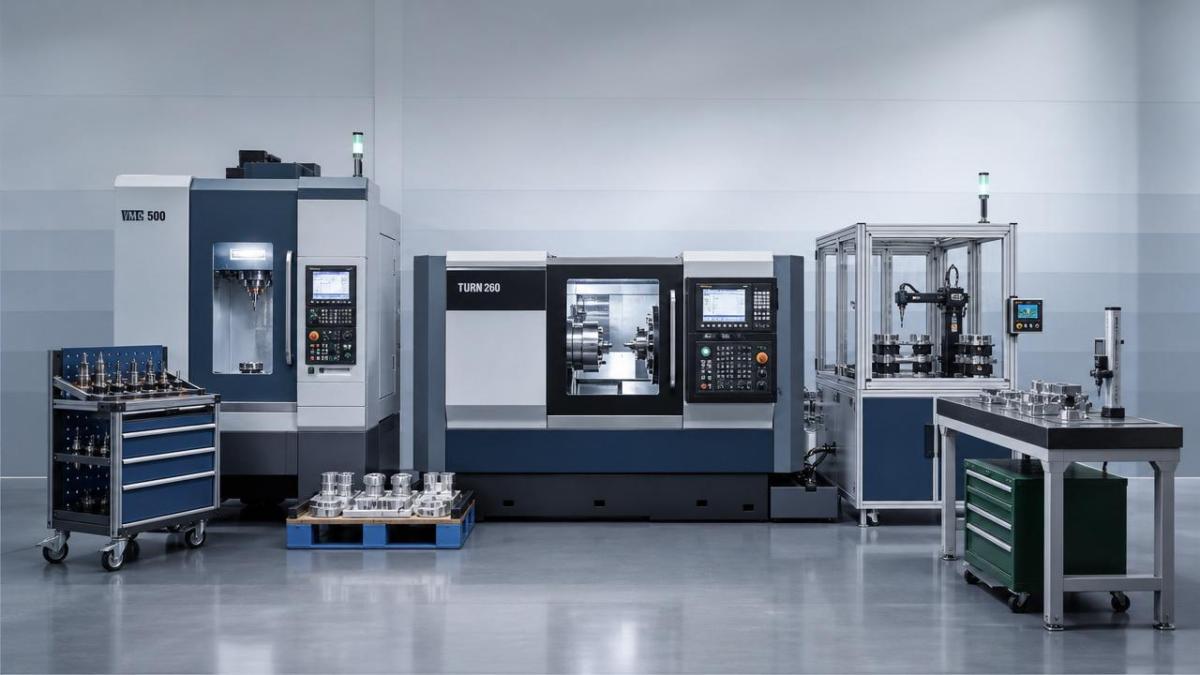
Typical CNC industrial options that fit limited floor space
Not all compact systems serve the same purpose. Some prioritize versatility, while others are designed for repeatability in a narrow application range. The most suitable solution depends on part geometry, batch size, staffing model, and expansion plans.
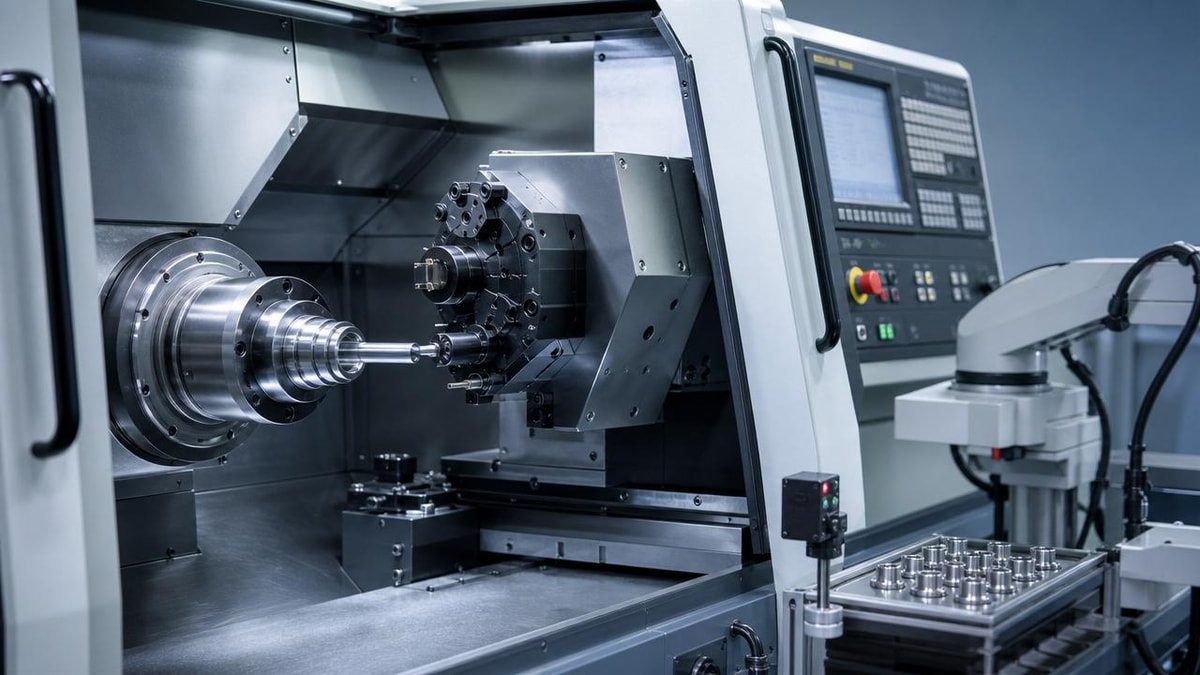
For many small manufacturers, the strongest starting point is a compact machining center or turning center that covers the largest share of current jobs. From there, automation or advanced inspection can be added in stages. This approach keeps the CNC industrial investment aligned with real production maturity rather than forcing a fully automated model too early.
Business value for project managers and engineering leads
A suitable CNC industrial system supports more than machining output. It affects project scheduling, launch stability, quality assurance, and customer confidence. In a constrained facility, layout efficiency directly influences the number of jobs that can run simultaneously and the speed at which urgent orders can be inserted without disrupting the entire line.
From a management perspective, one major benefit is visibility. Smaller, well-organized cells are easier to monitor than crowded machine rows with inconsistent work handling. Operators can maintain tools more consistently, supervisors can identify bottlenecks faster, and maintenance teams can intervene before minor issues become costly stoppages. This creates a more stable operating rhythm, which is essential for delivery performance.
Another important value is scalability. A compact CNC industrial layout can be designed in modules, allowing the business to add probing, automatic tool management, robot tending, or digital monitoring when volume justifies it. That phased path is often more realistic for growing factories than one-time large capital expansion. It also reduces implementation risk because each stage can be validated against real output, quality, and staffing data.
Common application patterns by production type
The ideal layout depends heavily on what the factory produces. Small-batch, high-mix environments need flexibility first. Repetitive part programs may benefit more from automation density and unattended runtime. Understanding these patterns helps project teams select CNC industrial systems that fit both present orders and future opportunities.
What to evaluate before implementation
Before selecting equipment, project managers should define the true production target. This means identifying part families, material types, annual volume ranges, tolerance classes, and expected setup frequency. Without this baseline, even a technically advanced CNC industrial system may underperform because it was designed for a different operating profile.
It is also important to evaluate human factors. A small layout places operators, tools, pallets, and support tasks in close interaction. The system should be easy to load, easy to clean, and easy to maintain. If operators must improvise around poor access or awkward fixture handling, efficiency gains will quickly disappear. In addition, software compatibility matters. Machine controls, tool libraries, CAM workflows, and production data reporting should support the team’s current skill level while allowing future digital integration.
Financial assessment should go beyond purchase price. Foundations, air supply, extraction, coolant treatment, training, tooling packages, and spare parts planning all influence total cost of ownership. In many cases, the best CNC industrial decision is the one that delivers predictable utilization and lower disruption, not simply the lowest initial quote.
Practical recommendations for long-term layout success
A practical way to begin is to map the current floor using actual movement data rather than assumptions. Track how material enters, where setups occur, how inspection is handled, and which machine interruptions are most common. This often reveals that the problem is not lack of floor space alone, but poor sequencing or underused vertical storage. Once that is visible, CNC industrial upgrades can be targeted more accurately.
Next, design for modularity. Leave room for a tool cart lane, a robot base option, or an inspection point that can be added later. Standardize fixturing where possible so multiple machines can share workholding logic. Build a layout that supports growth in capability, not just immediate installation. For small factories, this step is especially valuable because every future adjustment is harder when space is already saturated.
Finally, connect layout planning with operational discipline. Preventive maintenance schedules, chip management routines, tool life tracking, and first-off inspection practices should be defined alongside the machine plan. A CNC industrial system performs best when the surrounding process is equally disciplined. That combination is what turns compact equipment into reliable industrial capacity.
Moving from limited space to stronger manufacturing performance
Small factories do not need to accept lower capability as a consequence of limited floor area. With the right CNC industrial strategy, they can build efficient, precise, and scalable production cells that support modern manufacturing demands. For project managers and engineering leaders, the priority is to align machine selection, layout logic, workforce usability, and phased automation into one realistic plan.
When that alignment is achieved, compact CNC industrial systems become more than a space-saving choice. They become a foundation for stronger delivery performance, better asset utilization, and sustainable expansion. If your operation is reviewing layout constraints, product mix changes, or future automation options, a structured assessment of floor flow and machine fit is the most effective next step.
PREVIOUS ARTICLE
Recommended for You
 Industrial Robotics payback depends on one hidden variableManufacturing Market Research Center
 Shaft Parts machining problems linked to concentricity lossCNC Machining Technology Center
 Production Process changes that quietly raise defect ratesCNC Machining Technology Center
 Industrial Automation projects stall without process mappingCNC Machining Technology Center
 CNC metal cutting heat issues behind poor surface finishCNC Machining Technology Center
 High precision lathe claims that deserve a closer lookMachine Tool Industry Editorial Team

Aris Katos
Future of Carbide Coatings
15+ years in precision manufacturing systems. Specialized in high-speed milling and aerospace grade alloy processing.
▶
CNC industrial machines with lower maintenance downtimeMachine Tool Industry Editorial Team▶
CNC industrial systems that fit small factory layoutsMachine Tool Industry Editorial Team▶
2026 World Intelligent Industry Expo: CNC Structural Parts in FocusMachine Tool Industry Editorial Team▶
Space-Saving CNC Manufacturing Without Creating Maintenance HeadachesMachine Tool Industry Editorial Team▶
CNC Industrial Machines That Save Floor Space Without Losing AccuracyMachine Tool Industry Editorial Team
Mastering 5-Axis Workholding Strategies
Join our technical panel on Nov 15th to learn about reducing vibrations in thin-wall components.

Providing you with integrated sanding solutions
Before-sales and after-sales services
Comprehensive technical support