• Global CNC market projected to reach $128B by 2028 • New EU trade regulations for precision tooling components • Aerospace deman
NYSE: CNC +1.2%LME: STEEL -0.4%

Why Titanium Machining Fails Without the Right CNC Tooling
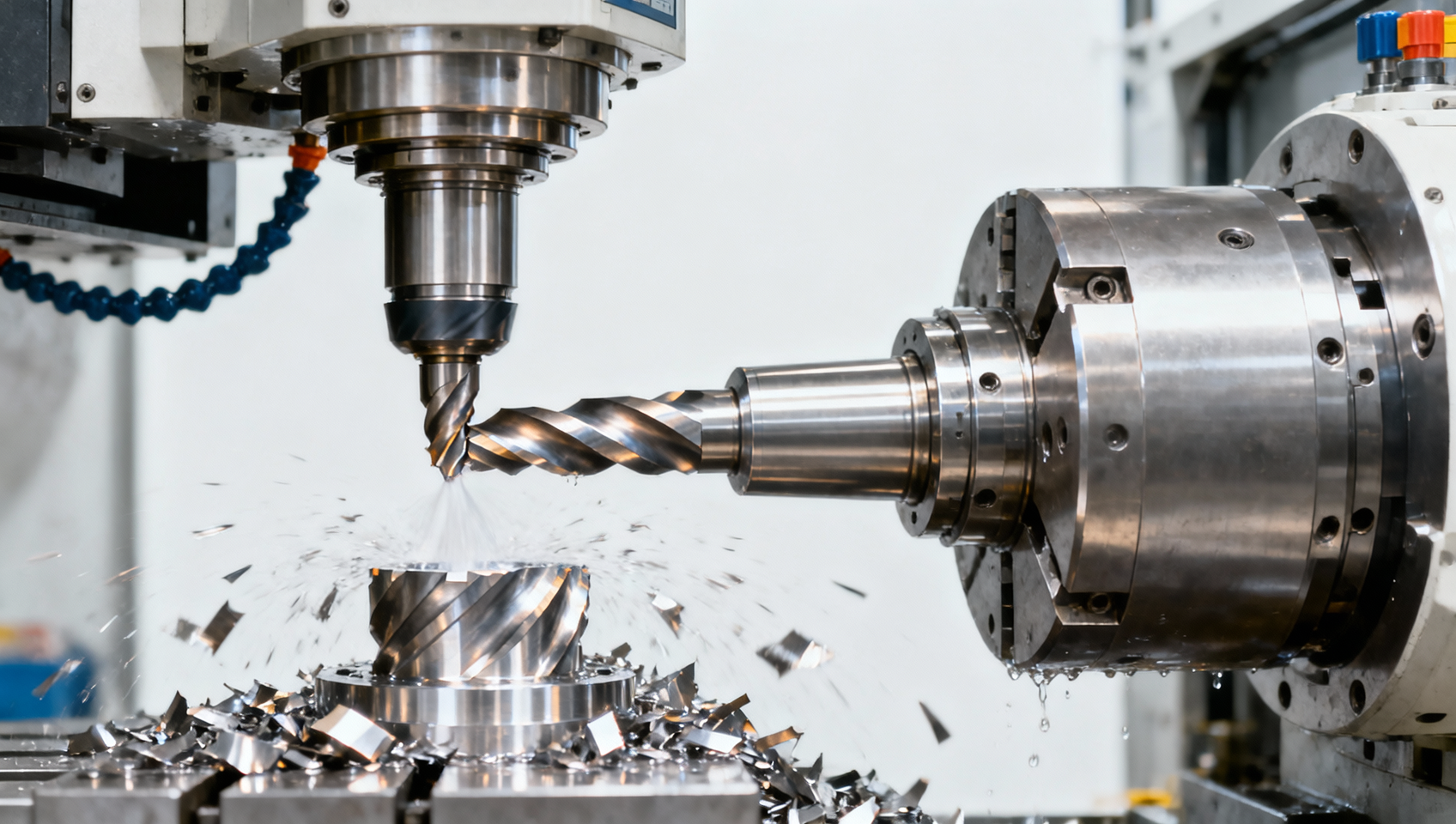
Titanium machining fails for one simple reason: the material punishes every weakness in the cutting process. If the CNC tooling system is not matched to titanium’s low thermal conductivity, high strength, and tendency to work-harden, manufacturers quickly see tool chipping, heat buildup, chatter, poor surface finish, and part rejection. In practice, success depends less on machine power alone and more on choosing the right insert grade, geometry, holder rigidity, coolant strategy, and process stability. For operators, buyers, and production managers, the key question is not whether titanium can be machined efficiently, but whether the tooling setup is robust enough to control heat, chip load, and vibration at scale.
Titanium is unforgiving: without the right CNC Tooling System for titanium machining, even advanced equipment can suffer rapid tool wear, unstable cutting, and costly part failure. For manufacturers pursuing smarter output through Industrial Automation integration for production line, choosing proper tooling is not optional. This article explains why titanium machining breaks down, how to optimize performance, and what buyers and operators should evaluate before scaling production.
Why titanium machining goes wrong so quickly
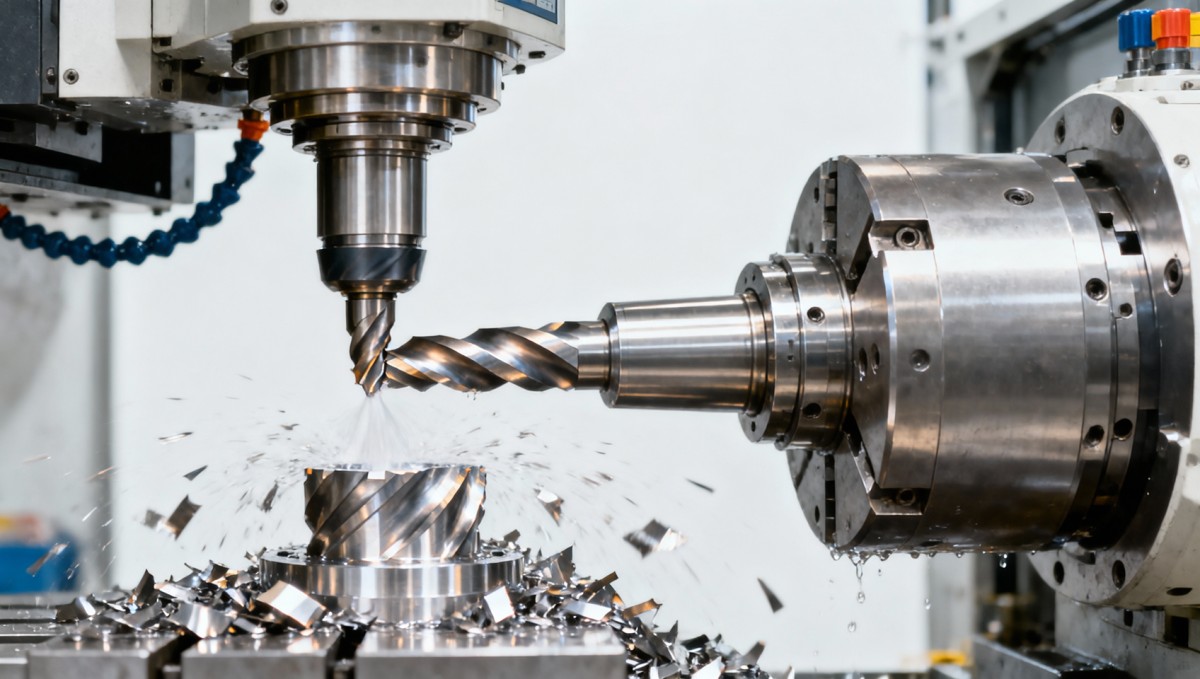
Many machining problems that seem like spindle issues, programming errors, or operator inconsistency actually start with an unsuitable tooling system. Titanium alloys generate intense heat at the cutting edge, but they do not transfer that heat away efficiently. As a result, the tool absorbs a large portion of the thermal load. If the insert grade, coating, edge preparation, or holder setup is wrong, tool life collapses fast.
At the same time, titanium maintains strength at elevated temperatures and creates high cutting forces in a concentrated zone. This combination leads to several common failure patterns:
- Rapid flank wear and crater wear due to excessive heat concentration
- Built-up edge and edge chipping when cutting geometry is not optimized
- Chatter and vibration caused by poor rigidity or long tool overhang
- Surface tearing or poor finish from unstable chip formation
- Dimensional inconsistency from heat distortion and tool deflection
- Unexpected insert breakage during interrupted cuts or aggressive parameter selection
This is why titanium machining often appears inconsistent even on high-end CNC machine tools. The real issue is usually not the machine platform itself, but the mismatch between material behavior and the selected CNC tooling system.
What operators, buyers, and managers care about most
Different readers approach titanium machining from different angles, but their concerns overlap around risk, productivity, and decision quality.
Operators and programmers want to know:
- How to reduce tool wear and avoid sudden failure
- Which feeds, speeds, and depths of cut are realistic for titanium
- How to control heat, chips, and vibration
- How to improve consistency across shifts and batches
Procurement teams want to know:
- Which tooling suppliers are truly suitable for titanium applications
- Whether a higher tooling cost produces lower cost per part
- How to compare insert systems, toolholders, and coolant delivery options
- How to avoid buying tooling that performs well in brochures but poorly in production
Business decision-makers want to know:
- What causes scrap, downtime, and unstable throughput
- Whether investing in better tooling improves ROI
- How tooling choices affect automation readiness and production scalability
- Which process risks could limit delivery performance in aerospace, energy, and precision manufacturing
So the most valuable content is not a generic explanation of titanium as a material. What helps most is a practical framework for selecting tooling, controlling process variables, and evaluating production impact.
What the right CNC tooling system for titanium machining must do
A capable tooling system for titanium is not just a cutting insert. It is a complete process package that must maintain thermal control, mechanical rigidity, and predictable wear behavior.
The right setup usually includes the following elements:
- Appropriate substrate and coating: Tool materials must balance hot hardness, toughness, and wear resistance. In titanium applications, toughness is often as important as hardness because edge failure is common.
- Optimized geometry: Positive cutting geometries can lower cutting forces, while edge preparation must still protect against chipping.
- Stable toolholding: High-clamp-force holders, shrink-fit systems, hydraulic holders, or specialized anti-vibration solutions can significantly improve stability.
- Short overhang: Minimizing tool extension reduces deflection and chatter.
- Effective coolant delivery: High-pressure, well-aimed coolant helps manage heat and improve chip evacuation.
- Application-specific insert selection: Roughing, semi-finishing, and finishing in titanium often require different grades and edge designs.
Without these factors working together, even an advanced machining center may underperform. This is especially important in multi-axis machining systems and automated production lines, where repeatability matters more than one-time cutting success.
Why cheap or general-purpose tooling often increases total cost
One of the most common purchasing mistakes is evaluating tooling mainly by unit price. In titanium machining, low-cost or general-purpose tooling often creates hidden losses that far exceed the original savings.
These hidden costs include:
- More frequent tool changes
- Longer cycle times from conservative parameters
- Higher scrap rates from surface or dimensional defects
- Unplanned machine stoppages
- More operator intervention
- Reduced suitability for unattended or automated production
For example, a more expensive insert system that delivers stable wear and predictable change intervals may reduce part cost even if each insert costs more. In high-value titanium parts, especially in aerospace and energy equipment, process stability usually matters more than nominal tooling price.
That is why procurement and operations teams should evaluate cost per qualified part, not only cost per tool.
How to judge whether your titanium tooling setup is truly optimized
If a manufacturer wants to improve titanium performance, the best approach is to assess the process using clear operational signals. A tooling setup is probably not optimized if you see any of the following:
- Tool life varies significantly between batches
- Surface finish deteriorates before expected insert life ends
- Operators frequently adjust offsets or cutting parameters
- Chips are difficult to evacuate or frequently re-cut
- There is visible vibration, squealing, or inconsistent cutting sound
- Cycle time improvements always lead to sudden tool failure
- Automation attempts fail because process stability is too weak
A stronger setup should produce repeatable wear patterns, controllable chip formation, stable dimensional results, and a predictable tool-change interval. These are the indicators that matter for both production teams and management.
Best practices for improving titanium machining performance
To reduce failure risk and improve productivity, manufacturers should focus on process discipline rather than isolated parameter changes.
Effective actions include:
- Match tooling to the exact titanium grade and operation. Different alloys and part features place different demands on the cutting edge.
- Use rigid machine-tool-fixture-tool combinations. The full system matters, not just the insert.
- Control heat aggressively. Coolant pressure, direction, and consistency are critical.
- Avoid excessive overhang and weak clamping. Mechanical instability quickly destroys tool life.
- Validate parameters through monitored trials. Track wear mode, cycle time, and finish quality together.
- Standardize successful setups. This is essential for Industrial Automation integration for production line environments.
- Work with tooling suppliers who understand titanium applications. Real application support is often more valuable than catalog breadth.
For enterprises expanding precision manufacturing capacity, these steps help turn titanium machining from a high-risk process into a manageable and scalable one.
How better tooling supports automation and smart manufacturing
As manufacturing moves toward greater digital integration, titanium machining becomes even less tolerant of weak tooling decisions. In automated cells, robotic loading systems, flexible production lines, and smart factory environments, unstable cutting cannot be hidden by operator intervention.
The right CNC tooling system supports automation in several ways:
- Predictable tool life enables planned replacement schedules
- Stable cutting performance reduces alarm events and machine interruptions
- Better chip control improves unattended machining safety
- Consistent part quality supports traceability and digital process control
- Lower variability makes data-driven optimization more reliable
For manufacturers integrating CNC machines into larger automated production strategies, tooling is not a minor consumable. It is a core enabler of process reliability, throughput, and quality assurance.
What buyers should ask before selecting titanium machining tooling
Before committing to a tooling supplier or system, buyers and technical teams should ask practical questions that reveal real suitability:
- Is this tooling proven specifically in titanium, or only marketed as universal?
- What wear modes are most common in similar applications?
- What tool life data exists under production conditions, not just test conditions?
- What holder and coolant recommendations are required to achieve claimed performance?
- How sensitive is the tooling to speed, feed, and setup variation?
- Can the supplier support optimization during trial and ramp-up?
- How will this tooling perform in automated or unattended production?
These questions help separate technically suitable solutions from generic sales claims. In titanium machining, the difference is substantial.
Conclusion
Titanium machining fails without the right CNC tooling because titanium exposes every weakness in heat control, rigidity, geometry, and process stability. The result is not just shorter tool life, but higher scrap, unstable quality, slower throughput, and poor automation readiness. For operators, the solution is better control of wear, vibration, and chip formation. For buyers, it is smarter evaluation based on cost per qualified part. For decision-makers, it is understanding that tooling strategy directly affects productivity, risk, and scalability.
In modern CNC machining and precision manufacturing, success with titanium does not come from machine capability alone. It comes from building a tooling system that is specifically designed to handle one of the industry’s most demanding materials.
NEXT ARTICLE
Recommended for You
![]() Iranian LNG Vessels Breach U.S. Strait Blockade; Shanghai Crude Surges 4%Manufacturing Market Research Center
Iranian LNG Vessels Breach U.S. Strait Blockade; Shanghai Crude Surges 4%Manufacturing Market Research Center![]() Pakistan Launches CNC Localization Tender for CPEC II Smart Manufacturing ParkGlobal Machine Tool Trade Research Center
Pakistan Launches CNC Localization Tender for CPEC II Smart Manufacturing ParkGlobal Machine Tool Trade Research Center![]() NVIDIA Joins $1T Club; AI-Driven CNC Digital Twin Gains Global TractionCNC Machining Technology Center
NVIDIA Joins $1T Club; AI-Driven CNC Digital Twin Gains Global TractionCNC Machining Technology Center![]() World's First 5-Axis Middle-Grade Wire EDM Machine Enters Mass ProductionMachine Tool Industry Editorial Team
World's First 5-Axis Middle-Grade Wire EDM Machine Enters Mass ProductionMachine Tool Industry Editorial Team![]() China’s CNC Machine Tool Export Prices Up 11.3% in Q1 2026Global Machine Tool Trade Research Center
China’s CNC Machine Tool Export Prices Up 11.3% in Q1 2026Global Machine Tool Trade Research Center![]() Saudi Energy Security Boosts CNC Import Efficiency in Middle EastGlobal Machine Tool Trade Research Center
Saudi Energy Security Boosts CNC Import Efficiency in Middle EastGlobal Machine Tool Trade Research Center


Aris Katos
Future of Carbide Coatings
15+ years in precision manufacturing systems. Specialized in high-speed milling and aerospace grade alloy processing.
▶
Why Titanium Machining Fails Without the Right CNC ToolingMachine Tool Industry Editorial Team▶
Modular Tooling System for flexible manufacturing: Why interface repeatability degrades faster than expectedMachine Tool Industry Editorial Team▶
How much scrap in CNC cutting comes from poor parameter choices?Machine Tool Industry Editorial Team▶
CNC cutting tool life dropping faster than expected in aluminum aerospace partsMachine Tool Industry Editorial Team▶
Modular Tooling System for flexible manufacturing: Why standardization reduces flexibility in practiceMachine Tool Industry Editorial Team
Mastering 5-Axis Workholding Strategies
Join our technical panel on Nov 15th to learn about reducing vibrations in thin-wall components.

Providing you with integrated sanding solutions
Before-sales and after-sales services
Comprehensive technical support