• Global CNC market projected to reach $128B by 2028 • New EU trade regulations for precision tooling components • Aerospace deman
NYSE: CNC +1.2%LME: STEEL -0.4%

How much scrap in CNC cutting comes from poor parameter choices?
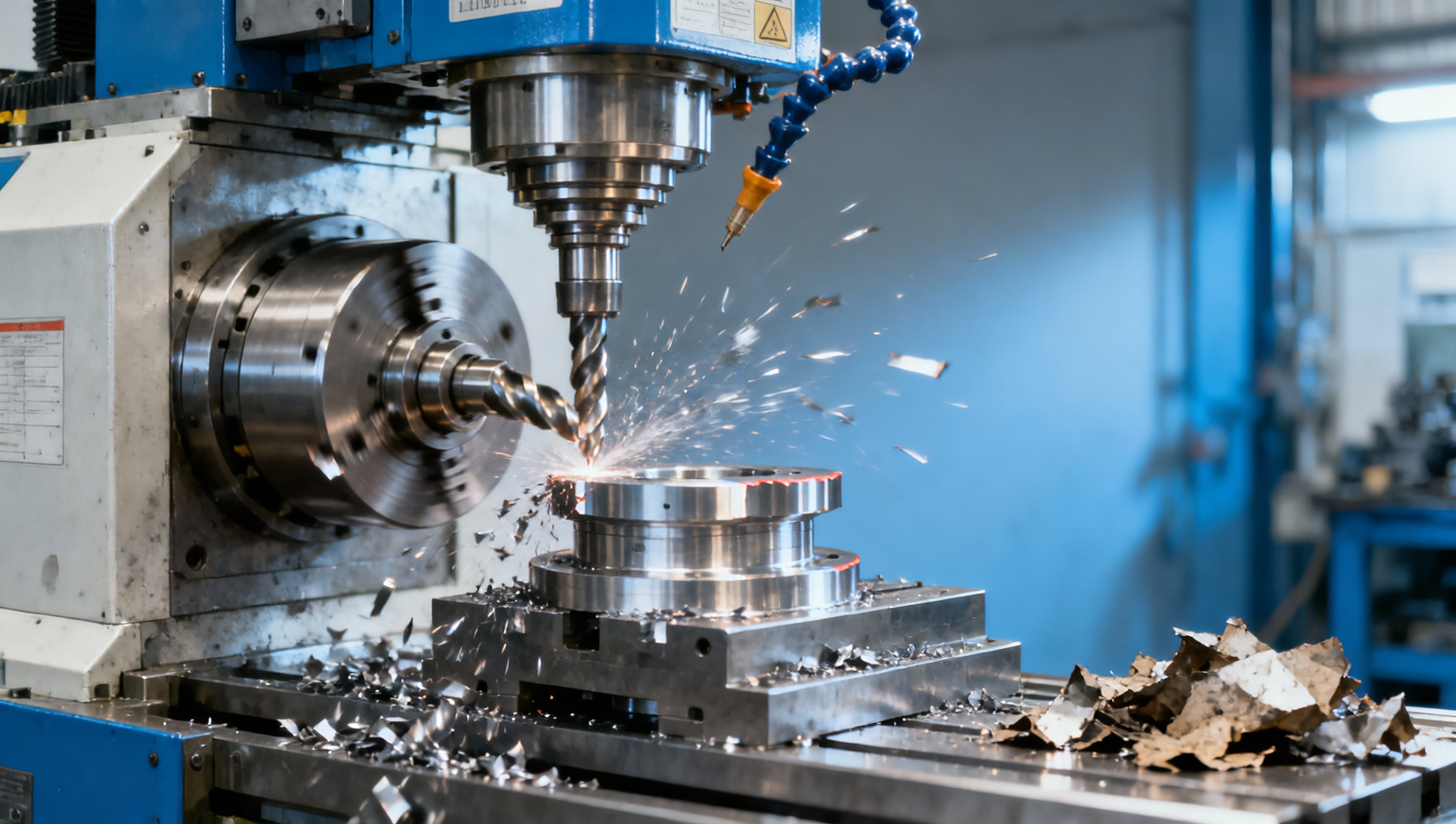
In CNC cutting, scrap often starts with poor parameter choices long before a part reaches inspection. Incorrect feeds, speeds, tool paths, and setup decisions can raise waste rates across metal machining, CNC milling, and automated production lines, affecting cost, quality, and delivery. For professionals in industrial CNC and Global Manufacturing, understanding how CNC Programming influences the production process is essential to reducing defects and improving CNC production efficiency.
For operators, a wrong parameter may show up as chatter, burrs, tool wear, or thermal distortion within the first 10 to 30 minutes of a run. For buyers and plant managers, the same mistake appears later as rising scrap cost, unstable cycle times, and missed shipment windows. In many shops, parameter-related waste is not caused by one dramatic error, but by small settings that push the process outside a stable cutting window.
This article looks at how much scrap in CNC cutting can come from poor parameter choices, where those losses typically originate, and what manufacturers can do to control them. It is designed for research-oriented readers, machine users, procurement teams, and decision-makers evaluating CNC process capability, production risk, and return on process optimization.
How Poor CNC Parameters Turn Good Material into Scrap
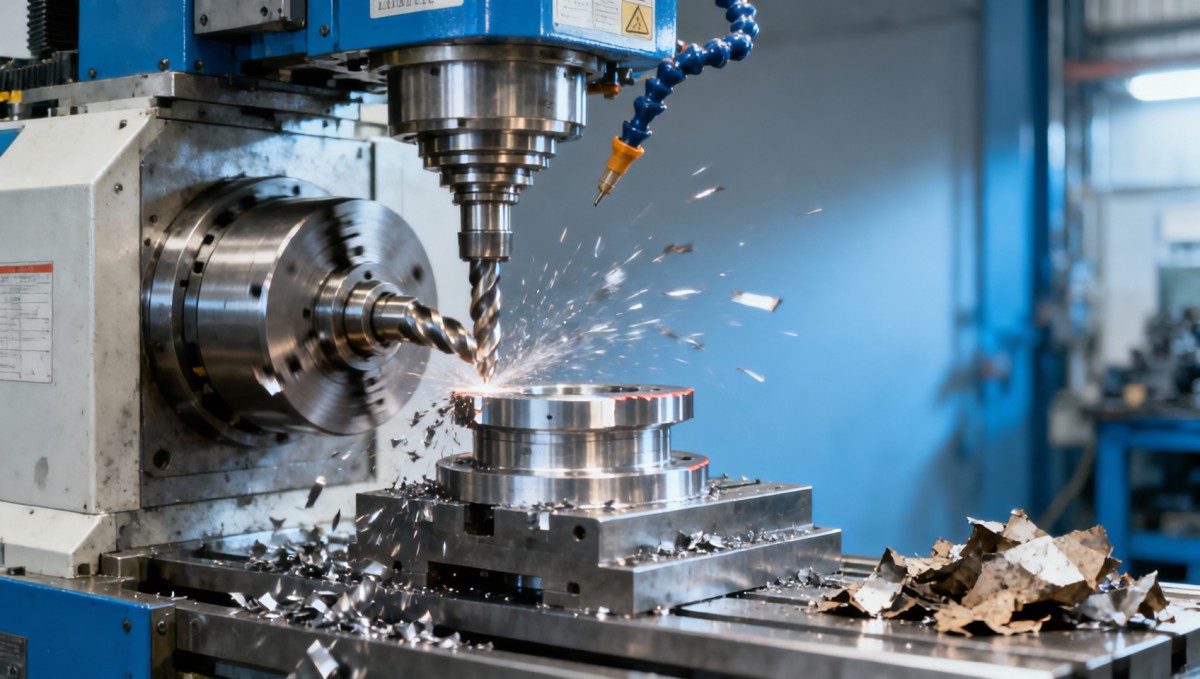
In practical CNC cutting, scrap rarely comes from material alone. It often begins with an unstable combination of spindle speed, feed rate, depth of cut, coolant delivery, workholding, and tool engagement. When two or three of these variables are mismatched, the process may still run, but dimensional drift, poor surface finish, and premature tool failure increase the chance that parts fall outside tolerance.
Many manufacturers see parameter-related scrap as a hidden percentage rather than a visible shutdown event. In a stable job, scrap may stay below 1% to 2%. In an unstable job with aggressive feeds, poor chip evacuation, or weak setup rigidity, scrap can climb to 5% to 10%, and in difficult alloys or thin-wall components it may go higher during first-run setup or changeover periods.
This issue matters across automotive, aerospace, energy equipment, electronics housings, and precision component production. A shop producing 1,000 parts per week with an average part value of $40 does not need a dramatic failure to feel the impact. Raising scrap from 2% to 6% means 40 extra failed parts weekly, or $1,600 in direct material and machining loss before rework, inspection time, or delivery penalties are included.
Poor parameter choices also damage process confidence. Operators may slow the machine excessively to “play safe,” which reduces spindle utilization and increases cost per part. Procurement teams then see higher tooling consumption and may blame tool quality, while the real problem is that the cutting data was never matched to the machine, fixture, material batch, and part geometry together.
Where parameter-related scrap usually begins
Most scrap linked to CNC programming and setup starts in a small number of process decisions. These are the areas where a stable process window is gained or lost:
- Feed rate set too high for the real rigidity of the machine-tool-fixture system, causing vibration and size variation.
- Spindle speed chosen from catalog values without adjusting for tool overhang, coolant condition, or interrupted cutting.
- Depth and width of cut not balanced, leading to tool deflection or heat buildup in corners and entry points.
- Tool path strategy that leaves sharp direction changes, full-slot engagement, or repeated recutting of chips.
- Setup offsets and probing routines not verified after tool change, resulting in first-piece failure or batch drift.
In many mixed-production workshops, 60% to 80% of recurring scrap can be traced to a repeatable process condition rather than random machine behavior. That is why disciplined parameter management often delivers faster savings than simply buying new tools or replacing machines.
Which Parameters Have the Biggest Impact on Scrap Rate
Not all cutting parameters carry equal risk. Some mainly affect cycle time, while others directly decide whether a part passes or fails. In CNC milling and turning, the highest-risk variables are usually feed per tooth, spindle speed, radial engagement, axial depth, tool stick-out, and coolant method. When these are not matched to material and geometry, scrap shows up as dimensional error, burrs, edge breakdown, taper, or burned surfaces.
Thin-wall aluminum parts may fail because spindle speed is acceptable but feed and step-over create excessive wall deflection. Stainless steel parts may fail because surface speed is too high and heat accumulates faster than chips can evacuate. Hardened steel can show micro-chipping and tolerance loss if the feed is too light, because the tool rubs instead of cutting. In other words, both “too much” and “too little” can create scrap.
The table below summarizes common parameter mistakes and their likely production consequences in general CNC cutting environments.
The key takeaway is that scrap is usually driven by parameter interaction, not by one isolated number. A safe spindle speed can still produce bad parts if the radial engagement is excessive or the fixture allows movement under load. That is why process validation should test combinations, not single values in isolation.
Material-specific sensitivity
Different materials respond to poor settings in different ways. Aluminum often reveals mistakes quickly through burrs, built-up edge, or thin-wall movement. Stainless steel tends to expose thermal problems and work hardening. Cast iron is more forgiving on heat but less forgiving on dust control and edge chipping. Titanium and nickel alloys require a narrow process window where heat, chip thinning, and tool load are carefully balanced.
As a rule, the more expensive the material and the tighter the tolerance, the more costly poor parameter choices become. A ±0.02 mm tolerance part in aerospace or medical-style machining has far less room for process drift than a general industrial bracket with ±0.10 mm tolerance.
How to Estimate Scrap Caused by Parameter Choices
Shops often ask how much scrap is really caused by poor CNC programming or parameter selection. There is no universal percentage, but there is a practical way to estimate it. Start by separating scrap into 4 categories: material defects, setup/fixturing issues, tool condition, and parameter/programming errors. In many facilities, parameter-related causes account for roughly 20% to 50% of preventable scrap, depending on part complexity and process discipline.
A simple assessment method is to review the last 30 to 90 days of nonconforming parts and tag each event by root cause. If the same job repeatedly fails at corners, entry points, wall thickness, or surface finish after machine startup, that usually points to cutting data or path strategy rather than raw material. If failures reduce after feed and speed adjustment without changing supplier or machine, the link becomes even clearer.
Use the following framework to estimate parameter-driven waste in a structured way.
A practical 5-step review process
- Track scrap by operation, not only by finished part, for at least 4 weeks.
- Record the exact tool, program revision, operator shift, and machine used for each failure.
- Check whether scrap spikes after tool changes, material batch changes, or setup resets.
- Run one controlled trial with feed, speed, and engagement reduced by 10% to 15% and compare results.
- Calculate the difference in scrap rate, tool life, and cycle time to find the real cost balance.
This method is especially useful for decision-makers because it avoids vague assumptions. It turns a discussion such as “the process feels unstable” into measurable indicators like scrap per 100 parts, tool life in minutes, or first-pass yield by machine family.
Example estimation model
If a factory produces 5,000 machined parts per month and total scrap is 4%, then 200 parts fail. If root-cause review shows 35% of those failures are linked to feed, speed, engagement, or tool path decisions, then about 70 parts per month are parameter-related scrap. On a $25 average cost basis, that is $1,750 in direct scrap. Add operator handling, inspection, machine time, and delivery risk, and the real monthly impact may rise by another 30% to 80%.
For procurement teams, this is important because the best financial result may not come from the lowest tool price. A more stable insert, holder, or CAM strategy that cuts parameter-related scrap from 70 parts to 25 parts can generate a better overall return than a lower unit-cost consumable that performs inconsistently.
Best Practices to Reduce Scrap Through Better Parameter Control
Reducing scrap does not always require a major capital investment. In many CNC machine tool operations, the first gains come from standardizing process windows, validating setup conditions, and linking programming choices to real shop-floor capability. Shops that move from informal parameter selection to controlled parameter libraries often see measurable improvement within 2 to 8 weeks.
A strong process starts by defining a stable baseline for each material family, tool type, and machine category. For example, separate standards for carbon steel, stainless steel, aluminum, and high-temperature alloys are more effective than a single “general cutting rule.” Likewise, a 3-axis vertical machining center and a 5-axis machine with different spindle characteristics should not share identical default data without validation.
The table below outlines practical control actions that can lower scrap risk in day-to-day production.
The best results usually come from combining technical control with process discipline. Even a well-optimized tool path can fail if operators are not given clear parameter revision rules, offset checks, and wear limits. Scrap reduction becomes sustainable only when programming, tooling, setup, and inspection work from the same standards.
Operational priorities for users and plant teams
- Create a red-flag list for jobs with thin walls, deep cavities, interrupted cuts, or tolerance tighter than ±0.05 mm.
- Require trial validation whenever a feed or speed change exceeds 10%, especially on critical parts.
- Document tool overhang, holder type, and fixture contact points, since these often change real cutting stability.
- Use in-process inspection at the first 3 to 5 pieces of a new batch instead of waiting for end-of-run inspection.
For smart manufacturing environments, these controls can also be connected to MES, tool management, or machine monitoring systems. Digital records make it easier to compare machines, shifts, and material lots, helping plants identify whether scrap comes from a local setup issue or a broader parameter standard problem.
What Buyers and Decision-Makers Should Evaluate Before Choosing CNC Solutions
For procurement specialists and business leaders, parameter-related scrap is not only a technical issue. It is also a purchasing and supplier-evaluation issue. A CNC machine, cutting tool package, fixture system, or CAM solution should be assessed by how well it supports stable process windows, repeatable programming, and fast problem diagnosis. Low purchase price loses value quickly if the process needs frequent manual adjustment or creates a 3% to 5% hidden scrap burden.
When evaluating equipment or production partners, ask how they support parameter validation during new part introduction. A capable supplier should discuss trial runs, first-article verification, recommended cutting ranges, tool life tracking, and process handover. If the answer focuses only on machine power or theoretical speed, the risk of unstable production remains high.
The checklist below can help buyers compare CNC production capability from a scrap-control perspective.
Procurement and supplier review checklist
For enterprises scaling global production, the ability to replicate stable parameters across sites is increasingly important. Plants in China, Germany, Japan, South Korea, and other manufacturing centers often run similar parts on different machine platforms. Without shared process standards, scrap and cycle time can vary widely between facilities even when drawings are identical.
FAQ for production planning and purchasing
How much scrap is considered normal in CNC cutting?
It depends on the part and material. For mature, repeatable jobs, many shops aim for below 1% to 2%. New product introduction, complex 5-axis work, or tight-tolerance exotic alloys may run higher during launch. What matters most is whether the scrap trend falls quickly after process validation.
Can reducing feed and speed always reduce scrap?
No. Cutting too slowly can cause rubbing, heat buildup, built-up edge, and poor surface quality. The goal is not the lowest setting, but the most stable window for the machine, tool, fixture, and material combination.
What should be reviewed first when scrap suddenly rises?
Start with 4 checks: tool wear condition, recent program edits, setup offset changes, and coolant or chip evacuation performance. These factors explain a large share of sudden scrap increases in ongoing production.
Is software alone enough to solve parameter-related waste?
No. CAM optimization helps, but stable results also require machine rigidity, proper holders, correct workholding, disciplined setup, and operator feedback. The strongest improvement comes when software, tooling, and shop-floor execution are aligned.
Poor parameter choices can account for a meaningful share of scrap in CNC cutting, often ranging from a moderate but persistent loss to a major source of preventable waste in high-value manufacturing. The real impact is seen not only in failed parts, but also in tool life, cycle time, delivery reliability, and production confidence across automated lines.
For operators, the priority is process stability and early detection. For procurement teams, the focus should be on suppliers and solutions that support verified cutting data, program control, and repeatable ramp-up. For decision-makers, the strongest return usually comes from reducing hidden process variation rather than chasing headline machine speed alone.
If you are evaluating CNC machines, tooling systems, process optimization, or production support for precision manufacturing, now is the right time to review how parameter control affects your scrap cost. Contact us to discuss your application, get a tailored process assessment, or learn more about practical CNC solutions for stable, efficient production.
Recommended for You
 Heavy-duty Machining Center for mold making: Why coolant filtration standards evolve faster than OEM manualsMachine Tool Industry Editorial Team
 Quick-change Fixture Design for CNC turning: Why clamping force consistency drops after 200 cyclesCNC Machining Technology Center
 5 Axis Machining for impeller manufacturing: Why toolpath smoothing affects surface fatigue lifeCNC Machining Technology Center
 Lean Production Process implementation: Where value stream mapping fails to expose hidden machine downtimeManufacturing Market Research Center
 Modular Tooling System for flexible manufacturing: Why interface repeatability degrades faster than expectedMachine Tool Industry Editorial Team
 Industrial Automation control system for CNC machines: When cybersecurity updates disrupt scheduled maintenanceMachine Tool Industry Editorial Team

Aris Katos
Future of Carbide Coatings
15+ years in precision manufacturing systems. Specialized in high-speed milling and aerospace grade alloy processing.
▶
Modular Tooling System for flexible manufacturing: Why interface repeatability degrades faster than expectedMachine Tool Industry Editorial Team▶
How much scrap in CNC cutting comes from poor parameter choices?Machine Tool Industry Editorial Team▶
CNC cutting tool life dropping faster than expected in aluminum aerospace partsMachine Tool Industry Editorial Team▶
Modular Tooling System for flexible manufacturing: Why standardization reduces flexibility in practiceMachine Tool Industry Editorial Team▶
Quick setup CNC manufacturing: The hidden cost of ‘plug-and-play’ tooling systemsMachine Tool Industry Editorial Team
Mastering 5-Axis Workholding Strategies
Join our technical panel on Nov 15th to learn about reducing vibrations in thin-wall components.

Providing you with integrated sanding solutions
Before-sales and after-sales services
Comprehensive technical support