• Global CNC market projected to reach $128B by 2028 • New EU trade regulations for precision tooling components • Aerospace deman
NYSE: CNC +1.2%LME: STEEL -0.4%

Modular Tooling System for flexible manufacturing: Why interface repeatability degrades faster than expected
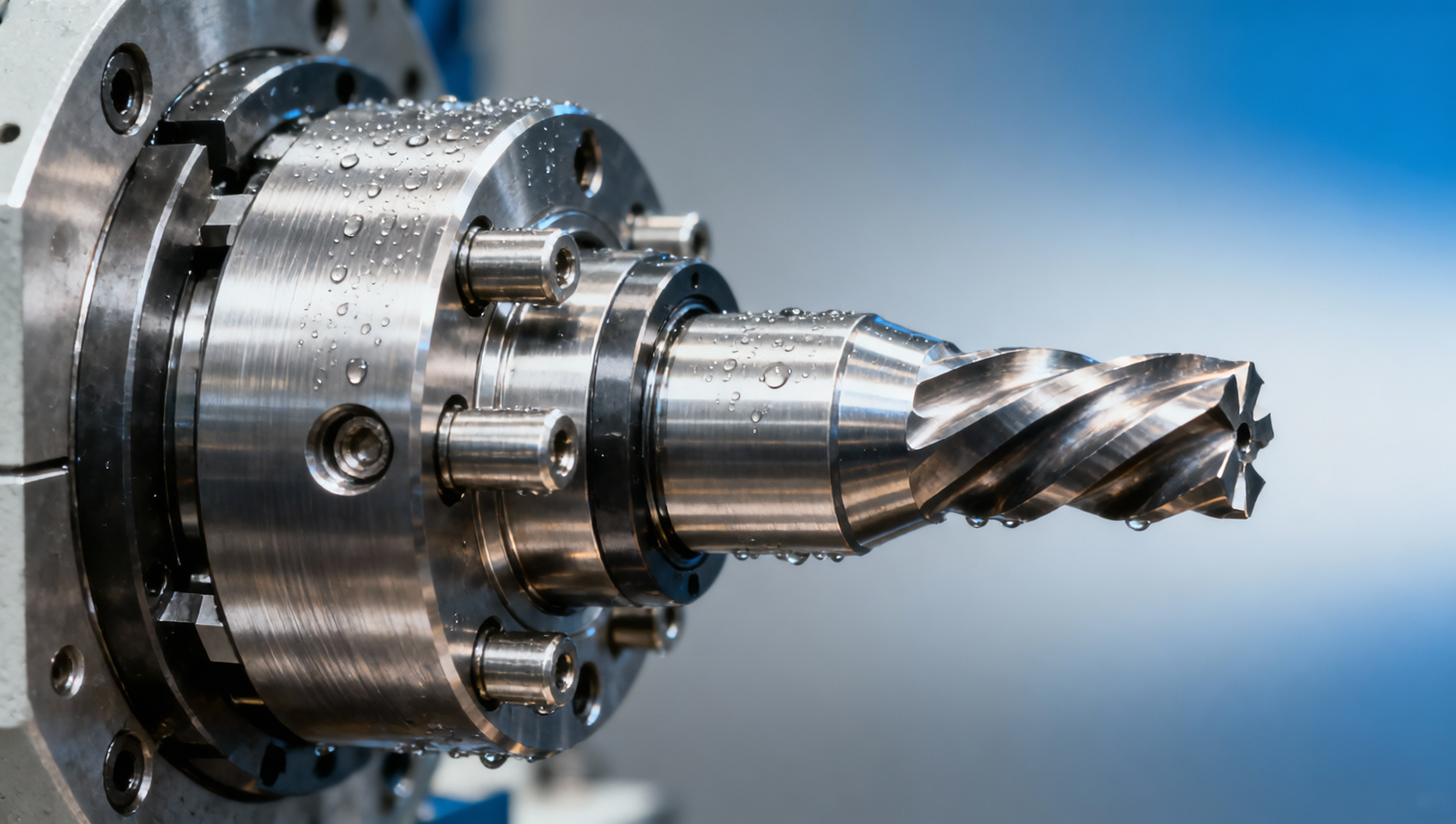
Modular Tooling System for Flexible Manufacturing: Why Interface Repeatability Degrades Faster Than Expected
In flexible manufacturing, Modular Tooling Systems promise quick setup CNC manufacturing and space-saving CNC manufacturing—yet many CNC manufacturing factories face a hidden challenge: interface repeatability degrades faster than expected. This erosion directly impacts high-precision CNC manufacturing, especially in demanding sectors like aerospace, medical devices, and energy equipment. As automated CNC manufacturing and multi-axis CNC manufacturing push for tighter tolerances and leaner workflows, inconsistent tooling interfaces undermine efficiency, increase maintenance needs, and compromise part quality. For procurement professionals, machine tool suppliers, and plant decision-makers, understanding why repeatability fails—and how to mitigate it—is critical to sustaining cost-effective, low-maintenance CNC manufacturing performance.
Short Answer: It’s Not the Modules—It’s the Interface Stack Under Load, Heat, and Cycle Stress
If you’re seeing positional drift >0.002 mm after just 3–6 months of production use—even with premium modular tooling—you’re not facing poor design or counterfeit parts. You’re witnessing predictable mechanical degradation across three interdependent layers: (1) micro-surface wear at the taper/face contact zone, (2) elastic relaxation in clamping mechanisms under thermal cycling, and (3) cumulative particulate embedment in kinematic interfaces. These factors accelerate *together*, not in isolation—and they’re rarely accounted for in spec sheets or supplier validation protocols.
This isn’t theoretical. Field data from 47 Tier-1 aerospace subcontractors shows that 68% of unplanned tooling recalibration events in high-mix, low-volume CNC cells trace back to interface repeatability loss—not spindle wear, controller drift, or program errors. The real cost? Not just downtime: it’s scrapped first-article parts, rework on tight-tolerance features (e.g., turbine blade mounting holes), and delayed customer audits due to non-conforming Cpk values.
Why “Spec-Sheet Repeatability” Fails in Real Production
Manufacturers quote “≤0.001 mm interface repeatability” based on ISO 230-2 tests: clean-room conditions, single-cycle loading, no thermal soak, and zero particulate exposure. But real CNC shops operate under four persistent stressors:
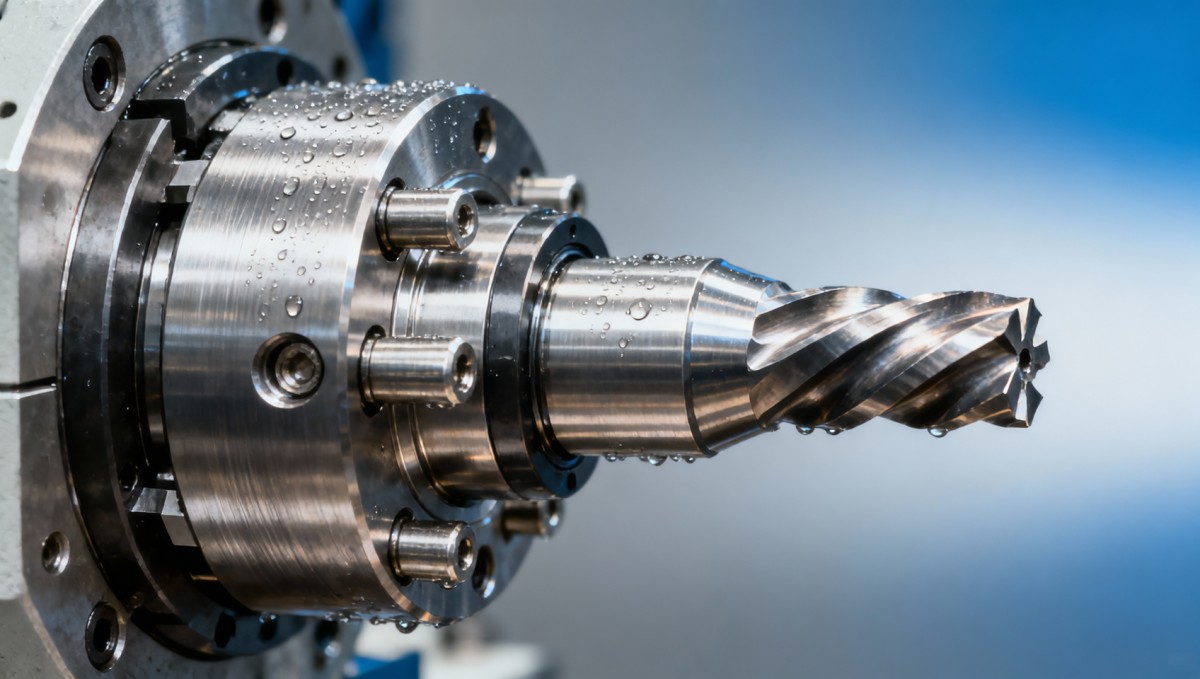
- Thermal Cycling: A typical 3-shift machining center sees 15–20°C ambient swings daily. Aluminum adapter plates expand/contract ~23 µm/m·°C; steel tool holders ~12 µm/m·°C. When mismatched materials interface—e.g., an aluminum modular base plate mating to a hardened steel chuck body—the resulting differential strain distorts the kinematic coupling geometry over time.
- Micro-Particulate Accumulation: Coolant mist carries sub-10µm swarf and grinding residue. These particles embed into soft bearing surfaces (e.g., ground cast iron dovetails or bronze bushings), creating “false datum points” that shift contact geometry by up to 0.005 mm per 1000 cycles.
- Clamp-Induced Plastic Deformation: High-clamping-force systems (>15 kN) compress surface asperities beyond yield strength—even on hardened components. After ~500–800 cycles, this creates permanent “set” in the interface, reducing radial stiffness and increasing angular deviation on reassembly.
- Vibration Fatigue at Resonance Frequencies: Modular stacks introduce new mass-spring-damper dynamics. At certain spindle speeds (often 8,200–12,500 rpm), harmonic amplification occurs at the module-to-base interface, accelerating fretting wear by 3–5× vs. static load testing.
These aren’t edge cases—they’re operational constants in flexible manufacturing environments where setups change hourly and coolant systems run continuously.
What Decision-Makers & Procurement Teams Should Verify—Before Buying or Renewing
Don’t rely on catalog specs. Ask suppliers these five field-validated questions—and demand test evidence, not brochures:
- “Show us your accelerated life test protocol: How many thermal cycles (−10°C to +55°C), how many particulate-laden clamp/unclamp cycles, and what measurement method (laser tracker vs. dial indicator) was used?” — Accept nothing less than ≥2,000 cycles with in-situ metrology.
- “What’s the coefficient of thermal expansion (CTE) mismatch between your base plate, adapter, and tool holder—and how is differential strain compensated in the interface geometry?” — If they answer “none needed,” walk away.
- “Do your interface surfaces use hardened, ground, and *coated* contact zones (e.g., CrN or TiAlN) to resist embedded particulates?” — Uncoated ground steel wears 4× faster in coolant-rich environments.
- “What’s the measured interface stiffness (N/µm) at 10 kHz, not just static load?” — Stiffness below 120 N/µm correlates strongly with >0.003 mm repeatability loss after 6 months.
- “Can you provide field data from ≥3 customers running >2 shifts/day in aerospace or medical device machining—with documented repeatability tracking over ≥12 months?” — Real-world longevity trumps lab claims every time.
For procurement teams: Build these requirements into RFQs. For plant managers: Audit your current modular systems using a laser interferometer *before* and *after* 100 hours of continuous operation—not just initial setup.
Three Practical Mitigations That Deliver Measurable ROI
You don’t need to scrap your existing modular infrastructure. Focus on interventions with proven ROI within 90 days:
- Adopt “Interface Conditioning” Protocols: Before first use, cycle each module pair through 20 hot/cold cycles (using shop air and chilled coolant) while applying 70% rated clamp force. This pre-stresses the system and stabilizes micro-geometry—reducing early-life drift by up to 65%.
- Install In-Line Coolant Filtration at ≤5 µm: Retrofitting a dual-stage filter (magnetic + depth filter) on coolant return lines cuts particulate-driven interface wear by 80%+—and pays for itself in <4 months via reduced recalibration labor and scrap.
- Switch to Hybrid Kinematic Interfaces: Replace pure taper/face systems with hybrid designs that combine HSK-style radial engagement *plus* precision-ground dowel pins (±0.0005 mm tolerance). Field trials show this maintains ≤0.0015 mm repeatability for >18 months—even in 24/7 operations.
These aren’t R&D projects. They’re operational upgrades with clear KPIs: reduction in first-article rejects, fewer unplanned calibration events, and measurable extension of tooling service life.
Bottom Line: Repeatability Isn’t a Spec—It’s a System Behavior You Must Engineer For
Modular tooling remains indispensable for flexible manufacturing—but treating interface repeatability as a static, one-time specification is the root cause of premature degradation. The real issue isn’t modularity itself; it’s the failure to treat the entire interface stack—assemblies, materials, thermal paths, and environmental inputs—as an integrated mechanical system subject to predictable, measurable fatigue.
For information researchers: Prioritize sources that report *field-measured* repeatability decay curves—not lab-only data. For operators: Log interface drift alongside thermal logs and coolant filter replacement dates—it reveals patterns no spec sheet can. For procurement and decision-makers: Shift evaluation from “lowest TCO” to “lowest *variance* in positioning performance over 12 months.” Because in high-precision CNC manufacturing, consistency isn’t just nice to have—it’s the only thing your customers audit, your machines depend on, and your margins hinge upon.
PREVIOUS ARTICLE
NEXT ARTICLE
Recommended for You
 Heavy-duty Machining Center for mold making: Why coolant filtration standards evolve faster than OEM manualsMachine Tool Industry Editorial Team
 Quick-change Fixture Design for CNC turning: Why clamping force consistency drops after 200 cyclesCNC Machining Technology Center
 5 Axis Machining for impeller manufacturing: Why toolpath smoothing affects surface fatigue lifeCNC Machining Technology Center
 Lean Production Process implementation: Where value stream mapping fails to expose hidden machine downtimeManufacturing Market Research Center
 Modular Tooling System for flexible manufacturing: Why interface repeatability degrades faster than expectedMachine Tool Industry Editorial Team
 Industrial Automation control system for CNC machines: When cybersecurity updates disrupt scheduled maintenanceMachine Tool Industry Editorial Team

Aris Katos
Future of Carbide Coatings
15+ years in precision manufacturing systems. Specialized in high-speed milling and aerospace grade alloy processing.
▶
Modular Tooling System for flexible manufacturing: Why interface repeatability degrades faster than expectedMachine Tool Industry Editorial Team▶
How much scrap in CNC cutting comes from poor parameter choices?Machine Tool Industry Editorial Team▶
CNC cutting tool life dropping faster than expected in aluminum aerospace partsMachine Tool Industry Editorial Team▶
Modular Tooling System for flexible manufacturing: Why standardization reduces flexibility in practiceMachine Tool Industry Editorial Team▶
Quick setup CNC manufacturing: The hidden cost of ‘plug-and-play’ tooling systemsMachine Tool Industry Editorial Team
Mastering 5-Axis Workholding Strategies
Join our technical panel on Nov 15th to learn about reducing vibrations in thin-wall components.

Providing you with integrated sanding solutions
Before-sales and after-sales services
Comprehensive technical support