• Global CNC market projected to reach $128B by 2028 • New EU trade regulations for precision tooling components • Aerospace deman
NYSE: CNC +1.2%LME: STEEL -0.4%

High Precision Lathe Claims: What Should Be Verified First?
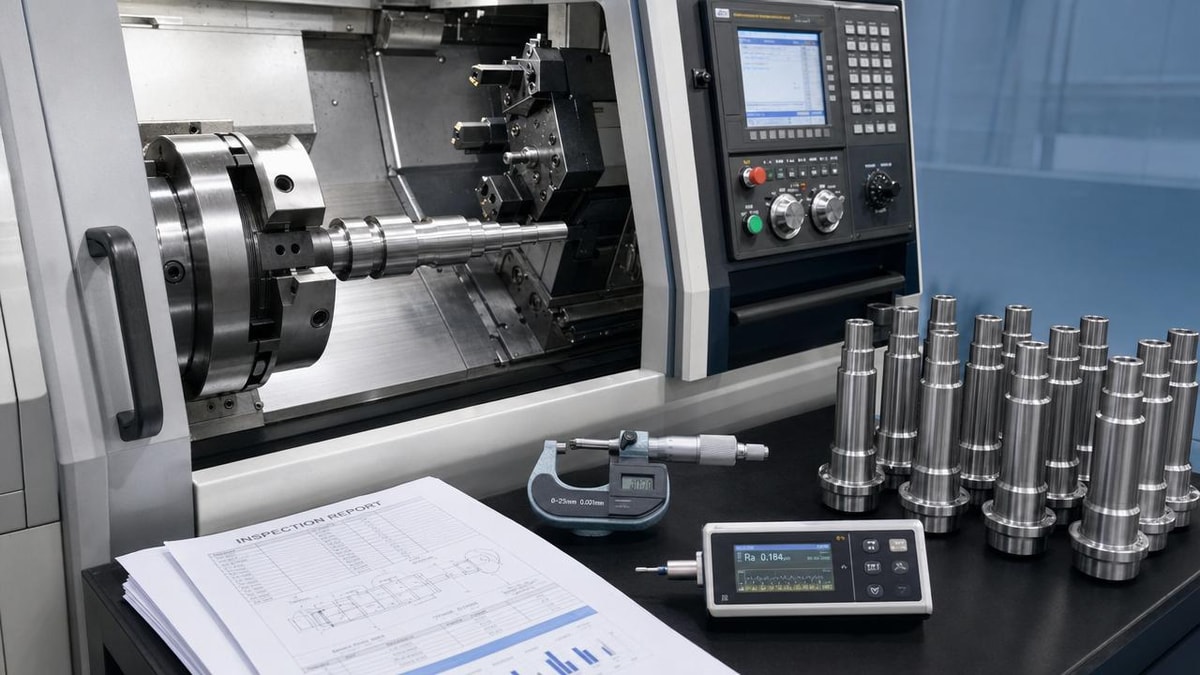
Before accepting any supplier’s high precision lathe claims, procurement teams should verify three things first: measurable machining accuracy, repeatability under continuous production, and the supplier’s ability to support long-term stable performance. A machine can look impressive on paper and still fail to deliver in real factory conditions.
For buyers, this is not just a technical issue. It affects part quality, scrap rate, operator efficiency, maintenance cost, delivery reliability, and total return on investment. In the high precision lathe market, the biggest risk is not buying a machine with low specifications. It is buying one with inflated claims that cannot be sustained once production starts.
This article explains how procurement professionals should evaluate a high precision lathe before trusting performance statements. It focuses on what should be checked first, what evidence matters most, and how to compare suppliers in a way that reduces operational and financial risk.
What is the first thing to verify in a high precision lathe claim?
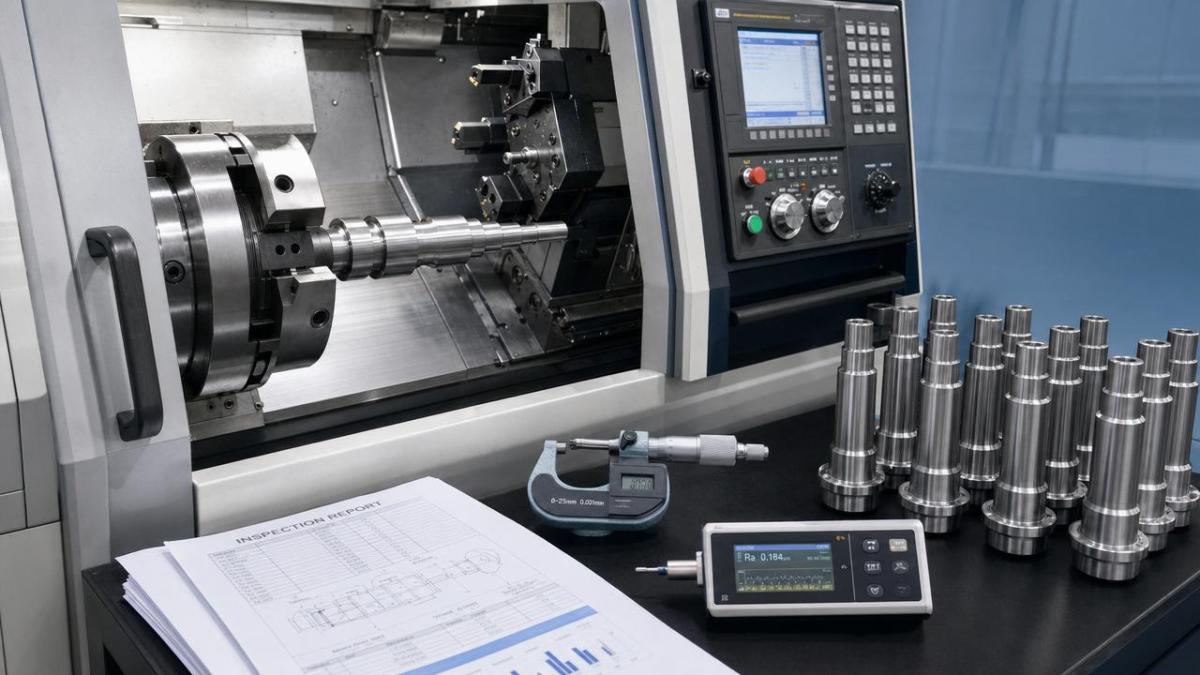
The first verification point is not the brochure, the spindle speed, or even the control brand. It is whether the supplier can prove actual machining accuracy and repeatability through measurable, documented, and production-relevant data.
Many vendors promote a high precision lathe using ideal test values achieved under controlled showroom conditions. Procurement teams should instead ask a more practical question: can the machine hold the required tolerance repeatedly, over time, on real workpieces, with normal operators, real tooling, and realistic production cycles?
If a supplier cannot clearly demonstrate that level of consistency, the claimed precision has limited purchasing value. For procurement, repeatable output matters more than isolated peak performance.
The most useful first checks usually include positioning accuracy, repeatability, spindle runout, thermal stability, surface finish capability, and actual machining results on comparable materials and part geometries. These are the indicators that directly affect production confidence.
Why brochure specifications are not enough for procurement decisions
A datasheet can be helpful, but it should never be treated as final proof. Machine tool specifications often reflect factory test conditions, optional configurations, or best-case setups that may not match your production environment.
For example, a supplier may advertise micron-level positioning accuracy, but that figure alone does not confirm that the lathe can maintain dimensional stability through a full shift. Heat buildup, machine structure, ball screw quality, guideway rigidity, lubrication, and even ambient shop temperature can all influence actual results.
Procurement teams should also be careful with vague language such as “ultra-precision,” “high rigidity,” or “excellent stability.” These phrases sound persuasive, but unless they are supported by clear measurement methods and test records, they are marketing language rather than purchasing evidence.
Another common issue is selective specification comparison. One supplier may highlight spindle speed, another may focus on control system brand, and a third may promote machine weight. These data points matter, but they do not automatically confirm whether the machine can meet your tolerance targets at the required throughput.
A high precision lathe should be judged by performance in application context, not by isolated catalog numbers. Procurement decisions become much safer when buyers translate every claim into a verifiable production question.
Which performance indicators matter most before you shortlist a supplier?
When evaluating a high precision lathe, procurement personnel should prioritize the indicators that have the strongest link to finished-part quality and long-term operating stability.
1. Positioning accuracy and repeatability. These values help indicate whether the machine can move to the target location correctly and do so consistently. Repeatability is especially important in batch production because stable repetition drives predictable quality.
2. Spindle runout and spindle stability. A high-quality spindle is essential for dimensional precision, roundness, and surface finish. Ask for spindle performance data at operating speed, not only at static inspection conditions.
3. Thermal deformation control. Heat is one of the most underestimated threats to precision. Machines that perform well in short tests may drift after prolonged operation. Ask what thermal compensation systems, structural design features, or cooling methods are used.
4. Machine structure and rigidity. Bed design, casting quality, guideway configuration, and vibration control affect cutting stability. This is especially important when machining difficult materials or holding tight tolerance on longer shafts or thin-wall components.
5. Surface finish capability. Some suppliers focus heavily on dimensional tolerance but provide little evidence of real surface quality. If your parts require low roughness values, ask for sample data produced under matched cutting conditions.
6. Process capability in actual production. The best evidence is performance on parts similar to yours. If possible, request trial cuts using your drawing, your material, and target tolerances. This reveals much more than theoretical claims.
How should buyers verify real machining accuracy instead of relying on claims?
The most effective way to verify a high precision lathe is to request evidence in layers. Procurement should not rely on a single test result. It should combine machine inspection data, cutting test results, historical customer references, and supplier process transparency.
Start by asking for standard acceptance test reports. These may include geometric accuracy inspection, axis positioning data, spindle inspection, and other factory acceptance records. Review whether the testing standard is clearly identified and whether the machine tested is the same configuration being quoted.
Next, ask for actual sample part inspection reports. These should show measured dimensions, roundness, cylindricity, concentricity, and surface roughness where relevant. A report is more useful when it includes the workpiece material, cutting parameters, tool type, clamping method, and ambient conditions.
For higher-value purchases, a witness test is often justified. This can be done at the supplier facility or through remote live validation. A practical trial using representative parts often exposes issues that brochures cannot show, such as cycle stability, setup complexity, or thermal drift after continuous running.
Procurement teams should also involve manufacturing or quality engineers early in the review process. Buyers do not need to become machine tool specialists, but supplier claims should be checked by people who understand tolerance stack-up, process capability, and inspection methodology.
What questions should procurement ask suppliers before comparing prices?
Price comparison becomes meaningful only after technical claims are normalized. If one machine is quoted with true production-ready precision and another is based on optimistic assumptions, the lower price can quickly become the more expensive choice.
Useful supplier questions include:
What standard was used to measure the machine’s accuracy and repeatability? This helps determine whether the claim is based on a recognized method or internal marketing language.
Can you provide recent inspection reports from the same machine model? Recent reports are more valuable than generic sample documents prepared years ago.
How does the machine control thermal growth during long production runs? This reveals whether the supplier understands real-world precision loss.
What tolerance can be held on a comparable part over an eight-hour shift? This question moves the conversation from static specification to sustained performance.
What is included as standard and what is optional? Sometimes the quoted precision depends on upgraded spindles, cooling systems, linear scales, premium chucks, or software compensation packages.
What installation, calibration, and acceptance support is provided? A high precision lathe requires correct commissioning to deliver its full value.
What is the maintenance interval for key components and what is the service response time? Precision without uptime support is a weak investment.
These questions help procurement compare suppliers based on business risk, not just purchase price.
How do maintenance, service, and machine life affect the credibility of precision claims?
A high precision lathe should not only machine accurately on day one. It should remain stable through months and years of operation. That is why maintenance design and service capability are part of precision verification, not separate topics.
If a machine depends on frequent recalibration, highly sensitive environmental conditions, or expensive proprietary service to maintain tolerance, its long-term cost may be much higher than the initial quotation suggests. Procurement should ask how precision is preserved over time and what routine interventions are required.
Pay attention to lubrication systems, spindle bearing life, thermal control components, way protection, chip management, and ease of alignment checks. These factors influence whether the machine can continue to perform in a production environment with normal wear.
Service network strength also matters. A supplier may sell a technically capable high precision lathe, but if spare parts lead times are long or local support is weak, downtime risk increases. For procurement teams supporting automotive, aerospace, electronics, or energy supply chains, that risk can be more costly than the machine itself.
Ask current users about actual uptime, maintenance burden, and support responsiveness. Real ownership experience often reveals whether a machine’s precision claim is backed by dependable engineering or only by sales messaging.
How can buyers evaluate total value instead of focusing only on initial machine cost?
Procurement professionals are often pressured to secure competitive pricing, but the better purchasing decision is usually based on total value. With a high precision lathe, the true cost includes much more than the invoice price.
Consider the impact on scrap, rework, inspection time, setup stability, tool life, labor efficiency, maintenance downtime, and production throughput. A machine that costs more upfront may reduce hidden costs significantly if it delivers stable precision with less adjustment and fewer rejected parts.
For example, if one lathe can consistently hold tolerance without repeated manual compensation, it may reduce operator dependence and improve shift-to-shift consistency. If another machine requires frequent intervention, the apparent savings may disappear through labor cost, slower throughput, and quality issues.
Also consider the machine’s fit with future production needs. A supplier that can support automation integration, digital monitoring, and broader process compatibility may create more strategic value than one offering only a lower base price.
In this sense, verifying a high precision lathe is both a technical and commercial exercise. Buyers should measure not only whether the machine can perform, but whether it can deliver reliable value across its operating life.
What warning signs suggest that a high precision lathe claim may be overstated?
Some supplier behaviors should trigger caution during procurement review.
One warning sign is refusal to provide detailed test conditions. If accuracy numbers are presented without standards, ambient conditions, tooling assumptions, or part details, the claim may not be robust.
Another red flag is overreliance on brand association. A well-known controller, spindle, or bearing brand can be positive, but it does not guarantee full machine performance. Integration quality matters as much as component reputation.
Be cautious if the supplier avoids live demonstrations, cannot produce inspection reports for recent builds, or changes the conversation quickly to financing and delivery before technical verification is complete.
Inconsistent answers between sales staff and engineers are also a concern. A trustworthy supplier should be able to explain clearly how the machine achieves precision, how it is tested, and what limitations apply in production use.
Finally, be skeptical of claims that seem disconnected from the machine class or price level. Exceptional performance is possible, but extraordinary claims require equally strong evidence.
A practical verification checklist for procurement teams
Before approving a purchase, procurement teams can use a simple first-stage checklist to reduce decision risk.
Confirm the required part tolerances, material types, batch sizes, and surface finish targets internally. Buying without a clear application baseline weakens supplier comparison.
Request documented machine accuracy and repeatability data tied to recognized test standards.
Review spindle, thermal control, structural rigidity, and sample part evidence.
Check whether the quoted configuration includes all features needed to achieve the claimed precision.
Request a trial cut or witness test for critical applications.
Evaluate service capability, spare parts access, commissioning support, and calibration requirements.
Compare suppliers using total cost of ownership, not only purchase price.
Involve technical stakeholders before final negotiation.
This process helps procurement move from claim-based buying to evidence-based selection.
Conclusion
When evaluating a high precision lathe, the first thing to verify is not the headline specification but the supplier’s ability to prove real, repeatable machining performance in conditions close to your production reality. Accuracy, repeatability, and stability under sustained operation should come before branding, speed, or price negotiation.
For procurement teams, the goal is to reduce risk. That means asking for measurable evidence, understanding what drives long-term precision, and comparing suppliers on total operational value. A credible high precision lathe is not simply one that tests well once. It is one that continues delivering predictable quality, manageable maintenance, and reliable output throughout its service life.
In a competitive manufacturing environment, careful verification at the start can prevent costly quality problems later. The better the questions buyers ask first, the stronger the purchasing decision will be.
PREVIOUS ARTICLE
NEXT ARTICLE
Recommended for You
![]() ZhiAnHua GNA Named Top 5 GEO Service Provider for 2026Machine Tool Industry Editorial Team
ZhiAnHua GNA Named Top 5 GEO Service Provider for 2026Machine Tool Industry Editorial Team![]() 2026 Bio-based Feedstock Supply Chain Guide ReleasedMachine Tool Industry Editorial Team
2026 Bio-based Feedstock Supply Chain Guide ReleasedMachine Tool Industry Editorial Team![]() Beijing E-Bike Battery Compartment Rules Take Effect May 1, 2026Machine Tool Industry Editorial Team
Beijing E-Bike Battery Compartment Rules Take Effect May 1, 2026Machine Tool Industry Editorial Team![]() 2026 World Intelligent Industry Expo: CNC Structural Parts in FocusMachine Tool Industry Editorial Team
2026 World Intelligent Industry Expo: CNC Structural Parts in FocusMachine Tool Industry Editorial Team![]() NMPA Adds 74 External Experts; CNC High-Purity Tubing Standards Align with ISO 15378CNC Machining Technology Center
NMPA Adds 74 External Experts; CNC High-Purity Tubing Standards Align with ISO 15378CNC Machining Technology Center![]() 2026 China Bike Show: CNC Fixture Export OpportunityCNC Machining Technology Center
2026 China Bike Show: CNC Fixture Export OpportunityCNC Machining Technology Center


Aris Katos
Future of Carbide Coatings
15+ years in precision manufacturing systems. Specialized in high-speed milling and aerospace grade alloy processing.
▶
2026 Bio-based Feedstock Supply Chain Guide ReleasedMachine Tool Industry Editorial Team▶
High Precision Lathe Claims: What Should Be Verified First?Machine Tool Industry Editorial Team▶
Precision Equipment Calibration Gaps That Affect Final InspectionMachine Tool Industry Editorial Team▶
How to Judge Industrial Lathe Rigidity Before a PurchaseMachine Tool Industry Editorial Team▶
How to Choose a Heavy-Duty Machining Center for Mold MakingMachine Tool Industry Editorial Team
Mastering 5-Axis Workholding Strategies
Join our technical panel on Nov 15th to learn about reducing vibrations in thin-wall components.

Providing you with integrated sanding solutions
Before-sales and after-sales services
Comprehensive technical support