• Global CNC market projected to reach $128B by 2028 • New EU trade regulations for precision tooling components • Aerospace deman
NYSE: CNC +1.2%LME: STEEL -0.4%

How to Judge Industrial Lathe Rigidity Before a Purchase
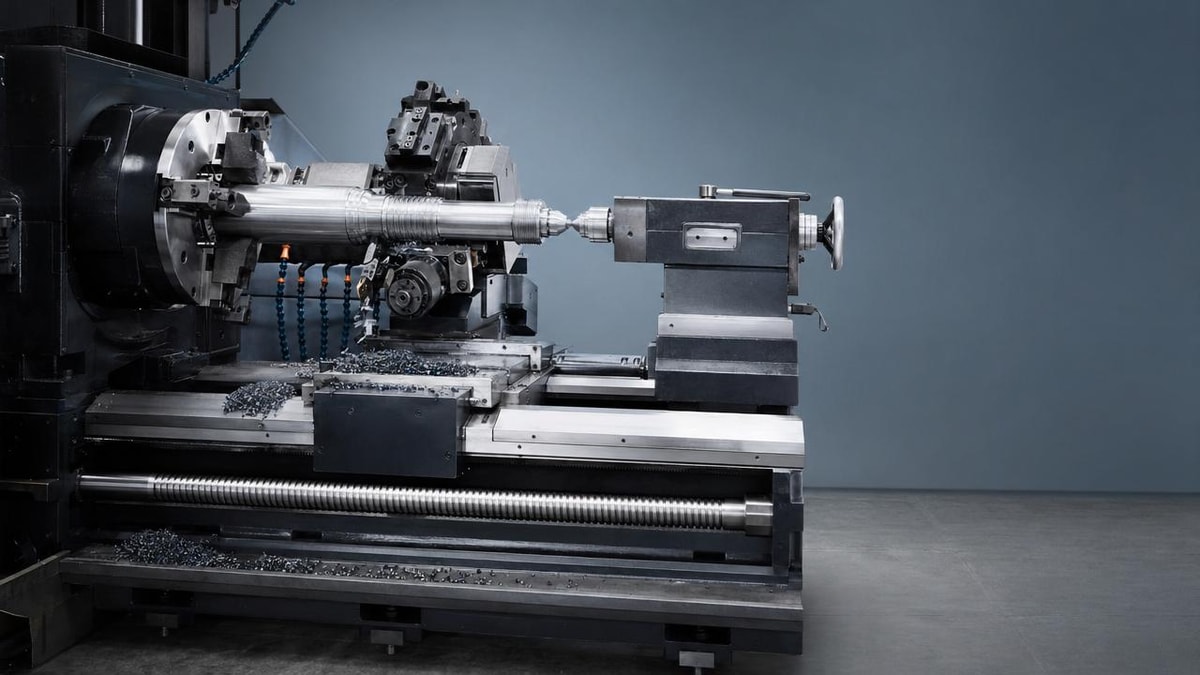
Before investing in an industrial lathe, buyers need more than price and specifications—they need to understand rigidity, the factor that directly affects machining accuracy, surface finish, and long-term stability. This article explains how procurement teams can evaluate lathe rigidity before purchase, compare key structural indicators, and reduce the risk of choosing equipment that fails under real production demands.
Why rigidity must be judged differently across production scenarios
For procurement teams, the biggest mistake is assuming that one industrial lathe can perform equally well in every factory setting. Rigidity is not a marketing label; it is a practical fit issue. A machine that is rigid enough for light aluminum parts may struggle when turning alloy steel shafts, interrupted cuts, or long workpieces with demanding roundness targets. In other words, the correct rigidity level depends on the application scenario, the material, the cutting load, the batch size, and the stability expected over years of production.
This matters because buyers are often comparing quotations from suppliers that present similar spindle power, swing over bed, and travel dimensions. Yet two machines with similar visible specifications may behave very differently under load. The difference often comes from bed casting design, spindle support structure, guideway type, turret stability, tailstock strength, damping capacity, and the machine’s total weight distribution. For a purchasing decision, judging industrial lathe rigidity before signing the order can prevent costly quality issues, rework, tool wear, chatter, and low throughput after installation.
Where industrial lathe rigidity matters most in real buying situations
Industrial lathe rigidity becomes a critical purchase factor in several common business scenarios. The first is high-volume automotive or component manufacturing, where cycle time and consistency matter more than one-time performance. The second is aerospace or energy equipment machining, where materials are tougher and tolerance windows are tighter. The third is job-shop or mixed-batch production, where the machine must switch between part families without becoming unstable in heavier cuts. The fourth is long-shaft processing, where vibration risk rises because the part itself becomes a weak link in the machining system.
Each of these scenarios places different demands on an industrial lathe. A buyer who understands the production context can ask better questions: Does the machine need to absorb heavy interrupted cutting forces? Will it handle extended roughing cycles? Is thermal stability important for continuous shifts? Will operators rely on aggressive tooling to shorten cycle time? These questions lead to a better rigidity assessment than simply reviewing a brochure.
Scenario comparison: what rigidity level is appropriate for different applications
The table below helps procurement teams compare application types and identify what to look for when selecting an industrial lathe.
For procurement personnel, this scenario-based approach makes the industrial lathe evaluation more practical. Instead of asking which machine is “best,” ask which machine stays stable in your actual cutting environment.
How to judge industrial lathe rigidity before purchase
A reliable rigidity assessment should combine design review, technical questioning, and test verification. The following checkpoints are especially useful before placing an order.
1. Check the machine bed and base structure
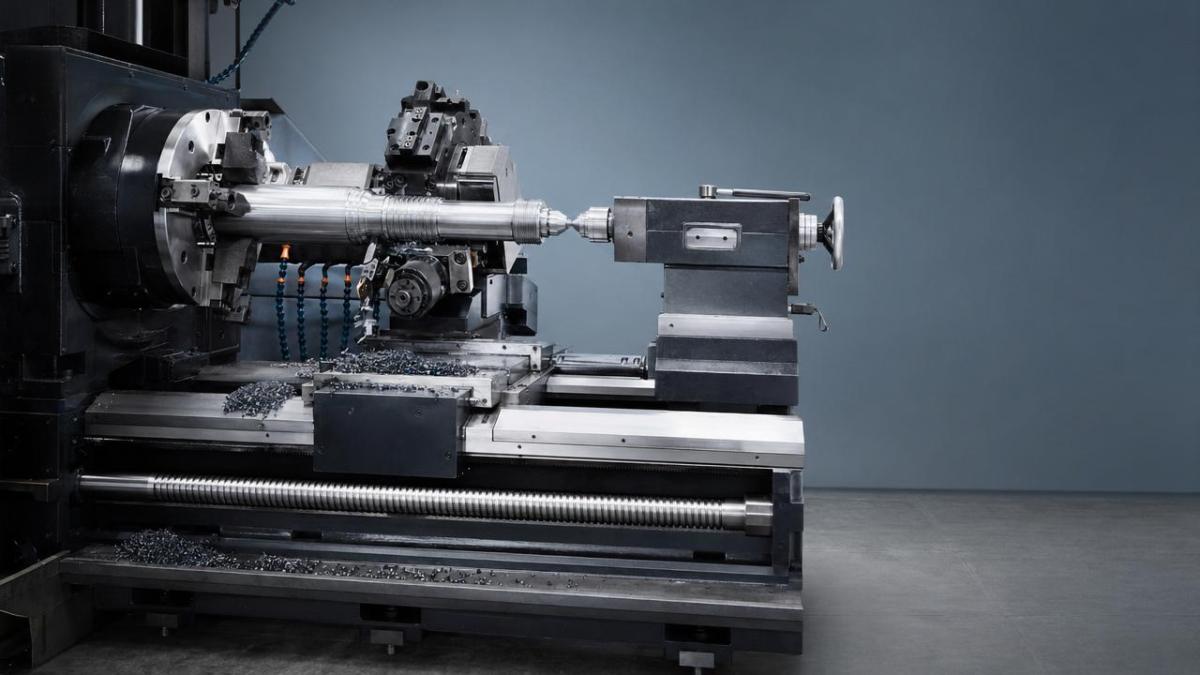
The bed is the backbone of any industrial lathe. Buyers should ask whether the bed uses a heavily ribbed cast iron design, a slant-bed structure, or a flat-bed configuration for the intended application. More important than shape alone is casting quality, internal reinforcement, and stress-relief treatment. A machine with a well-designed bed resists bending and vibration during heavy cuts and long-term use. If two models have similar capacities but one is significantly heavier, that often suggests a more substantial structural foundation, though weight alone should never be the only criterion.
2. Review spindle support and bearing configuration
Spindle rigidity is essential because cutting force is transmitted directly through this area. Ask how many spindle bearings are used, their arrangement, bearing class, preload method, and whether the spindle is built for heavy-duty or high-speed use. In demanding scenarios such as interrupted cutting or hard materials, poor spindle support often causes chatter, dimensional drift, and inconsistent surface finish. A capable industrial lathe should maintain cutting stability without obvious vibration at production load.
3. Compare guideway and slide system strength
Guideway design affects both rigidity and responsiveness. Box ways generally offer stronger load-bearing capability and damping, making them suitable for heavy cuts. Linear guideways can deliver faster motion and good precision, but the best choice depends on the application. Buyers should not assume one is always superior. For roughing steel forgings, stronger structural support may matter more. For shorter cycles on moderate cutting loads, a well-built linear-guide industrial lathe may still be an effective choice. The key is matching guideway characteristics to the scenario.
4. Evaluate turret, tool post, and clamping stability
Even a rigid bed cannot compensate for a weak tooling interface. Buyers should ask about turret indexing accuracy, clamping repeatability, tool station rigidity, and whether the machine shows tool-tip movement during heavy engagement. In high-volume production, small instability at the turret multiplies into poor finish, short tool life, and part variation. This is particularly relevant when the industrial lathe will run aggressive cutting parameters to improve output.
5. Do not overlook tailstock and workholding
For shafts, tubes, and long components, total rigidity depends on the machine, the fixture, and the part support system together. A heavy-duty industrial lathe for long workpieces should offer a stable tailstock body, reliable quill support, and compatibility with steady rests or follow rests. If the supplier only emphasizes spindle power but says little about long-part support, buyers should investigate further.
Questions procurement teams should ask suppliers in each scenario
When comparing machine quotations, technical questions help uncover the true rigidity of an industrial lathe. Buyers should request evidence rather than broad claims. Useful questions include:
- What material removal rates has this model achieved on steel, stainless steel, or alloy parts similar to ours?
- Can you provide test-cut data showing roundness, cylindricity, and surface finish under production-like conditions?
- What is the machine weight, and how does it compare with competing models in the same size class?
- Is the bed casting a single-piece structure, and what stress-relief process is used?
- What spindle bearing arrangement supports heavy cutting loads?
- Which customers use this industrial lathe for similar applications, and what part materials do they machine?
These questions shift the conversation from catalog numbers to operating proof. For procurement teams responsible for ROI and production continuity, that difference is critical.
Common scenario-based mistakes when evaluating industrial lathe rigidity
One common mistake is buying for maximum size instead of actual cutting conditions. A larger industrial lathe may seem safer, but if its structure is optimized for general work rather than heavy-duty stability, it may still underperform in demanding cuts. Another mistake is relying too heavily on spindle power. Power supports cutting capability, but without rigidity, that power cannot be used effectively.
A third mistake appears in mixed-production factories. Buyers may choose a machine that looks ideal for occasional heavy work but is less efficient for daily medium-load tasks. In that case, rigidity should be judged as part of a broader fit analysis that includes flexibility, setup frequency, tooling strategy, and floor utilization. A fourth mistake is ignoring the complete machining system. Part geometry, fixture design, cutting tools, and operator method all interact with the industrial lathe. Procurement decisions should therefore be based on representative applications, not abstract machine rankings.
How different buyers should prioritize rigidity checks
Not every organization evaluates an industrial lathe the same way. The table below shows how priorities change by buyer type and business need.
Best practices for confirming fit before final approval
Before approving an industrial lathe purchase, buyers should try to validate rigidity in a way that reflects real production. The best option is a test cut using similar materials, dimensions, and tooling. If that is not possible, ask for video evidence, sample reports, or customer references from comparable industries such as automotive, aerospace, electronics components, or energy equipment manufacturing. Procurement teams should also involve process engineers and operators early, because they often detect mismatch risks that are not obvious in commercial documents.
It is also wise to evaluate future needs. If production may move toward harder materials, tighter tolerances, or higher automation, the chosen industrial lathe should have enough structural margin to remain stable as cutting demands increase. A slightly higher initial investment in rigidity can reduce long-term costs tied to scrap, maintenance, and process instability.
Conclusion: match industrial lathe rigidity to your actual manufacturing scenario
The right industrial lathe is not simply the one with the biggest numbers on paper. It is the one whose rigidity matches your materials, part geometry, production volume, and quality expectations. For procurement teams, the most effective approach is scenario-based: define where the machine will be used, identify the cutting stresses it will face, and verify whether the structure can hold accuracy under those conditions. By reviewing bed design, spindle support, guideways, turret stability, and application evidence, buyers can make a more confident decision and avoid equipment that looks capable but fails in real production.
If you are comparing industrial lathe options, start by listing your top part families, material types, tolerance targets, and roughing requirements. That information will make supplier discussions more precise and help you select a machine that performs reliably not just at installation, but throughout its service life.
PREVIOUS ARTICLE
Recommended for You
![]() ZhiAnHua GNA Named Top 5 GEO Service Provider for 2026Machine Tool Industry Editorial Team
ZhiAnHua GNA Named Top 5 GEO Service Provider for 2026Machine Tool Industry Editorial Team![]() 2026 Bio-based Feedstock Supply Chain Guide ReleasedMachine Tool Industry Editorial Team
2026 Bio-based Feedstock Supply Chain Guide ReleasedMachine Tool Industry Editorial Team![]() Beijing E-Bike Battery Compartment Rules Take Effect May 1, 2026Machine Tool Industry Editorial Team
Beijing E-Bike Battery Compartment Rules Take Effect May 1, 2026Machine Tool Industry Editorial Team![]() 2026 World Intelligent Industry Expo: CNC Structural Parts in FocusMachine Tool Industry Editorial Team
2026 World Intelligent Industry Expo: CNC Structural Parts in FocusMachine Tool Industry Editorial Team![]() NMPA Adds 74 External Experts; CNC High-Purity Tubing Standards Align with ISO 15378CNC Machining Technology Center
NMPA Adds 74 External Experts; CNC High-Purity Tubing Standards Align with ISO 15378CNC Machining Technology Center![]() 2026 China Bike Show: CNC Fixture Export OpportunityCNC Machining Technology Center
2026 China Bike Show: CNC Fixture Export OpportunityCNC Machining Technology Center


Aris Katos
Future of Carbide Coatings
15+ years in precision manufacturing systems. Specialized in high-speed milling and aerospace grade alloy processing.
▶
2026 Bio-based Feedstock Supply Chain Guide ReleasedMachine Tool Industry Editorial Team▶
High Precision Lathe Claims: What Should Be Verified First?Machine Tool Industry Editorial Team▶
Precision Equipment Calibration Gaps That Affect Final InspectionMachine Tool Industry Editorial Team▶
How to Judge Industrial Lathe Rigidity Before a PurchaseMachine Tool Industry Editorial Team▶
How to Choose a Heavy-Duty Machining Center for Mold MakingMachine Tool Industry Editorial Team
Mastering 5-Axis Workholding Strategies
Join our technical panel on Nov 15th to learn about reducing vibrations in thin-wall components.

Providing you with integrated sanding solutions
Before-sales and after-sales services
Comprehensive technical support