• Global CNC market projected to reach $128B by 2028 • New EU trade regulations for precision tooling components • Aerospace deman
NYSE: CNC +1.2%LME: STEEL -0.4%

Precision Equipment Calibration Gaps That Affect Final Inspection
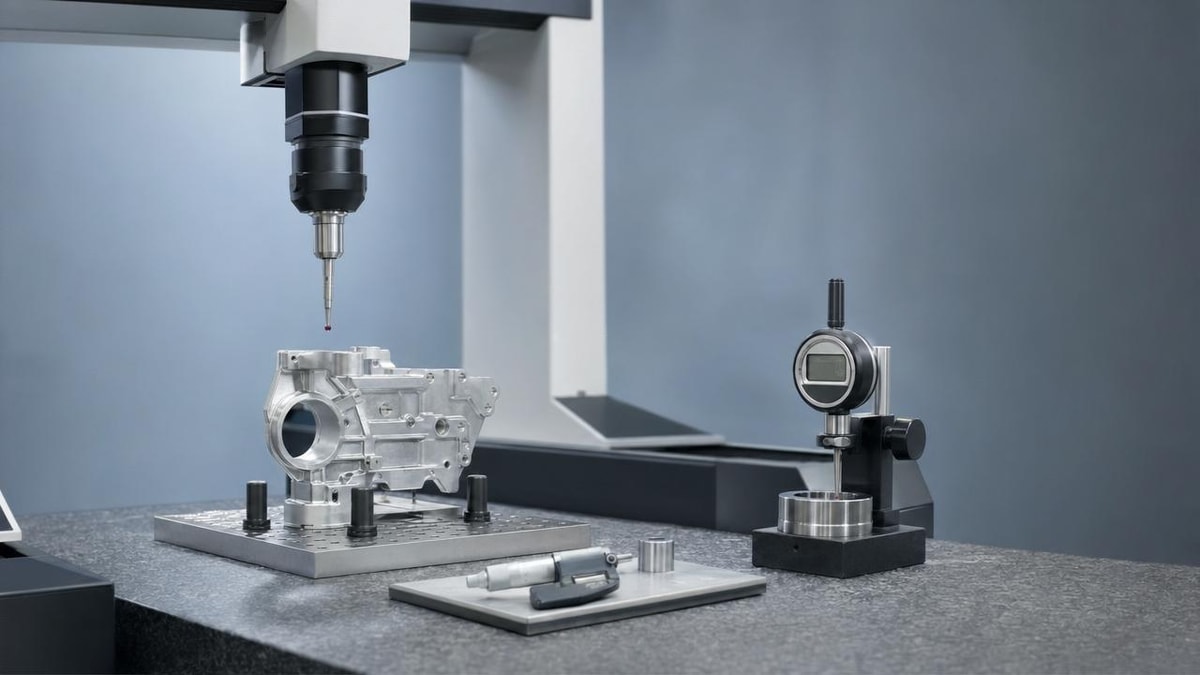
Even the most advanced final inspection process can be undermined by hidden calibration gaps in precision equipment. For quality control and safety management teams, small deviations in machine tools, gauges, or testing systems can lead to inconsistent measurements, compliance risks, and costly rework. Understanding where calibration weaknesses occur is essential to maintaining product accuracy, process stability, and confidence in inspection results.
Why Calibration Gaps Are Becoming a Bigger Industry Signal
Across the CNC machine tool and precision manufacturing sector, final inspection is no longer treated as a standalone checkpoint. It is now closely tied to digital traceability, customer audit readiness, process capability, and safety assurance. This change matters because precision equipment is being asked to perform in more demanding environments: tighter tolerances, multi-axis machining, mixed-material production, shorter product cycles, and more globally distributed supply chains.
As manufacturers push toward smart production, many expect inspection data to be automatically reliable. In practice, however, inspection quality depends on the calibration condition of every linked device. A coordinate measuring machine, spindle probe, laser measurement system, torque tester, surface roughness gauge, or temperature-compensated sensor may all appear functional while still producing drift that affects final inspection decisions. The gap is not always equipment failure. More often, it is a mismatch between calibration intervals, real operating conditions, and the speed of manufacturing change.
For quality control personnel, this trend means more scrutiny on measurement integrity. For safety management teams, it raises a related concern: when inspection results are unreliable, nonconforming parts can move downstream into assembly, field use, or regulated applications. In sectors linked to automotive, aerospace, electronics, and energy equipment, that risk is no longer viewed as a minor technical issue. It is increasingly seen as a business continuity issue.
What Has Changed in Precision Manufacturing Environments
Several industry shifts are making calibration gaps more visible than before. First, tolerance expectations continue to tighten while part geometries become more complex. Multi-axis machining and advanced fixturing can produce highly sophisticated components, but they also increase the number of dimensions and surfaces that must be verified accurately. Second, production lines are becoming more automated, which means a bad measurement can propagate faster through an entire batch before anyone notices the trend.
Third, customer and regulatory expectations around traceability are rising. Buyers increasingly want documented proof that precision equipment used in machining and inspection is calibrated under controlled conditions. Fourth, factories are integrating more software, sensors, and networked systems. This improves visibility, but it also creates new weak points: firmware updates, software compensation errors, data transfer mismatches, and synchronization issues between machines and metrology platforms.
Another important change is the global movement of equipment and components. A gauge calibrated in one facility may later be used in another climate, by another shift, on another product family. If the calibration strategy does not reflect actual use conditions, the resulting inspection data may look valid on paper while being unstable in operation.
Where Hidden Precision Equipment Gaps Usually Start
In many factories, calibration weakness does not begin in the metrology lab. It begins in the production rhythm. Precision equipment may be calibrated on schedule, yet still become unreliable because operating stress changed faster than the calibration plan. A machine spindle running longer hours, a fixture exposed to repeated thermal cycles, or a handheld gauge used across multiple lines can all shift the risk profile without triggering a review.
Common starting points include environmental instability, undocumented repairs, uncontrolled tool replacement, software parameter changes, and poor storage of master standards. Another frequent issue is separating machine calibration from inspection system calibration. A CNC machining center may be geometrically corrected, but if the probing system, reference artifact, or post-process measuring device is not aligned to the same standard, final inspection will still be inconsistent.
Quality teams also see gaps when calibration records exist but are not decision-ready. A certificate may confirm compliance at one date, yet offer little help in judging current process risk. What matters increasingly is not only whether precision equipment was calibrated, but whether the calibration scope, uncertainty, usage pattern, and wear condition still support the required inspection confidence.
Why Final Inspection Is the First Place the Problem Becomes Visible
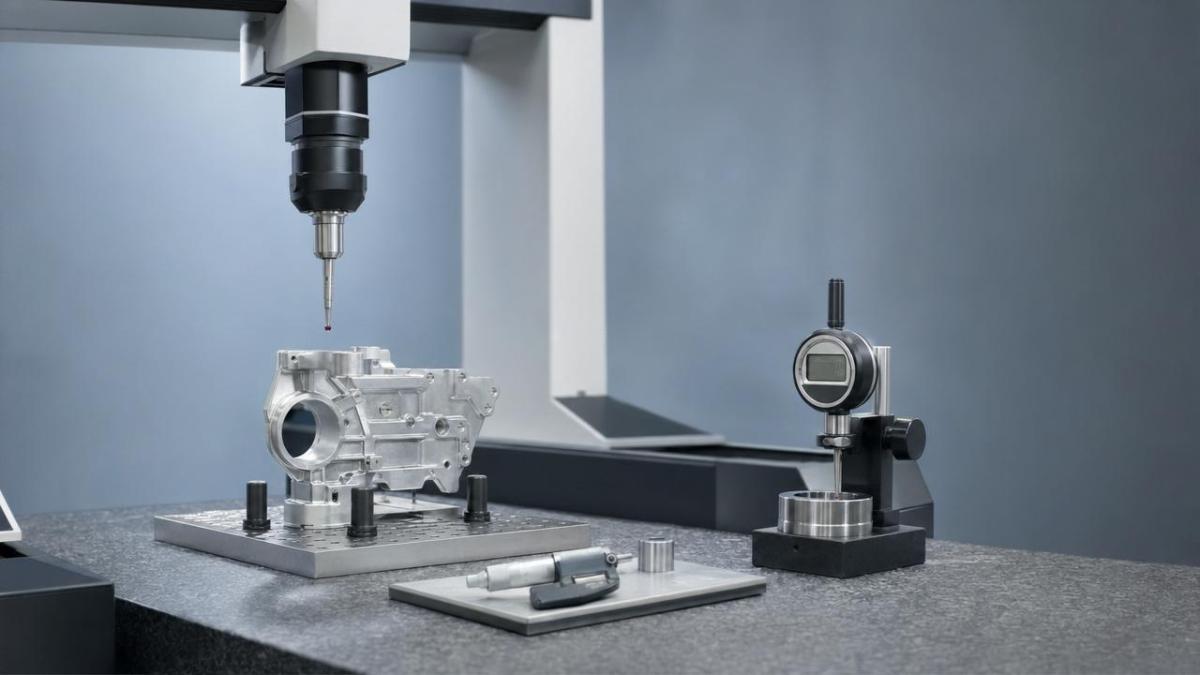
Final inspection is where accumulated small errors converge. A machining deviation, a fixture shift, a worn probe stylus, an offset software setting, and a temperature variation may each seem minor alone. Together, they can push measured values beyond acceptance limits or, more dangerously, make bad parts appear acceptable. This is why final inspection often reveals calibration weakness even when upstream processes looked stable.
For safety management personnel, the issue is not limited to dimensional nonconformance. Unreliable precision equipment can influence functional checks, pressure tests, torque verification, alignment validation, and other safety-relevant inspections. If a product enters service with an undetected defect because measurement trust was assumed rather than confirmed, the downstream exposure can include customer claims, recalls, regulatory findings, or internal safety investigations.
There is also a financial dimension. As production systems become leaner, manufacturers have less tolerance for inspection uncertainty. Rework, sorting, delayed shipment, repeated testing, and supplier disputes all increase when confidence in final inspection drops. In this sense, calibration discipline is no longer just a laboratory requirement. It is a control point for operational efficiency.
The Main Drivers Behind the Shift
Three forces are driving a sharper focus on precision equipment calibration. The first is customer expectation. OEMs and tiered suppliers increasingly ask for stronger evidence that inspection systems are suitable for the tolerance and criticality of each part. The second is process complexity. More complex machining strategies and hybrid production cells create more interfaces where measurement quality can degrade. The third is digital accountability. Once data is connected across MES, SPC, quality dashboards, and audit systems, inconsistencies become easier to detect and harder to explain away.
A fourth driver is workforce transition. Experienced inspectors and maintenance technicians are retiring in many regions, while newer teams often rely more heavily on automated systems. Automation helps, but it does not replace metrology judgment. If teams assume that software alerts are enough, subtle calibration degradation may remain hidden until final inspection trends become unstable.
Key driver summary
- Higher part accuracy requirements in CNC and precision manufacturing
- Broader use of integrated sensors, probes, and digital inspection systems
- Rising audit, traceability, and compliance pressure
- Faster production turnover with less margin for measurement error
- Skills gaps between equipment operation and metrology interpretation
Who Feels the Impact Most
Not every function experiences calibration gaps in the same way. Quality control teams are affected first because they must defend inspection decisions. Safety managers are affected when critical characteristics depend on trusted measurement. Production managers feel the impact through downtime, scrap, and unstable yields. Procurement and supplier quality teams are pulled in when incoming parts and internal measurements do not agree. Senior management becomes involved when customer complaints or certification findings expose a wider control issue.
Signals That Suggest Your Calibration Strategy Is Falling Behind
The most useful trend insight for manufacturers is that calibration gaps usually announce themselves before a major failure occurs. Repeated borderline inspection results, increasing disagreement between operators, frequent offset adjustments, or inconsistent first-pass yield after maintenance are all early warning signals. So are rising disputes between in-process checks and final inspection, or between internal and customer measurements.
Another signal is administrative rather than technical: calibration records are complete, but no one can clearly explain why the interval, method, or reference standard remains appropriate for current production conditions. In a fast-changing environment, a static annual calibration routine may no longer match actual risk. Precision equipment that supports tight-tolerance or safety-relevant work often needs a more dynamic review model.
How Leading Teams Are Responding
A stronger response is emerging across advanced manufacturing operations. Instead of treating calibration as a compliance task, leading teams connect it to process capability, change control, and inspection planning. They review precision equipment performance based on use intensity, part criticality, environment, and maintenance history. They also pay closer attention to measurement uncertainty and correlation between machine-based probing and offline verification.
Another important shift is cross-functional governance. Quality, maintenance, production, and safety teams are involving one another earlier when equipment settings change, new product introductions begin, or automated inspection routines are updated. This matters because a calibration issue rarely stays inside one department. It typically crosses process ownership boundaries before it reaches final inspection.
Manufacturers are also becoming more selective about where to focus effort. Not every device needs the same response. Critical precision equipment should be ranked by consequence of error, not just by replacement value or calibration cost. That helps teams devote tighter controls to inspection points that affect fit, function, traceability, or operator safety.
Practical Judgments for the Next 12 Months
For companies in CNC machining, machine tools, automated lines, and precision manufacturing, the next phase is less about buying more instruments and more about improving confidence in existing measurement systems. A practical path forward begins with judgment, not volume. Review which precision equipment directly influences release decisions, which assets operate under changing thermal or load conditions, and which systems depend heavily on software compensation.
Then assess whether current calibration intervals reflect actual use. A device used in high-mix, high-speed production may need more frequent verification than one used in a stable lab environment. Check whether maintenance, relocation, collision events, fixture modifications, or new workholding strategies automatically trigger recalibration review. If not, the strategy may already be behind the process.
It is also wise to compare internal inspection outcomes with supplier and customer measurement feedback. Persistent differences often point to reference alignment problems, environmental effects, or inconsistent interpretation of measurement standards. These are exactly the kinds of hidden gaps that can distort final inspection performance without obvious equipment failure.
Questions Worth Confirming Now
If an organization wants to understand how calibration trends will affect its own inspection reliability, it should start with a focused review. Which precision equipment directly supports final release? Which devices are most exposed to thermal variation, wear, or software changes? Which critical dimensions or safety characteristics depend on correlated results across different systems? Where do current calibration records prove compliance, but fail to prove confidence?
For quality control and safety management teams, these questions are more valuable than generic calibration checklists. They help identify whether the real gap is technical, procedural, environmental, or organizational. In an industry moving toward higher precision, greater automation, and stronger traceability, the companies that respond early will be in a better position to protect inspection credibility, reduce downstream risk, and make smarter decisions about precision equipment before final inspection problems become visible to customers.
PREVIOUS ARTICLE
Recommended for You
![]() ZhiAnHua GNA Named Top 5 GEO Service Provider for 2026Machine Tool Industry Editorial Team
ZhiAnHua GNA Named Top 5 GEO Service Provider for 2026Machine Tool Industry Editorial Team![]() 2026 Bio-based Feedstock Supply Chain Guide ReleasedMachine Tool Industry Editorial Team
2026 Bio-based Feedstock Supply Chain Guide ReleasedMachine Tool Industry Editorial Team![]() Beijing E-Bike Battery Compartment Rules Take Effect May 1, 2026Machine Tool Industry Editorial Team
Beijing E-Bike Battery Compartment Rules Take Effect May 1, 2026Machine Tool Industry Editorial Team![]() 2026 World Intelligent Industry Expo: CNC Structural Parts in FocusMachine Tool Industry Editorial Team
2026 World Intelligent Industry Expo: CNC Structural Parts in FocusMachine Tool Industry Editorial Team![]() NMPA Adds 74 External Experts; CNC High-Purity Tubing Standards Align with ISO 15378CNC Machining Technology Center
NMPA Adds 74 External Experts; CNC High-Purity Tubing Standards Align with ISO 15378CNC Machining Technology Center![]() 2026 China Bike Show: CNC Fixture Export OpportunityCNC Machining Technology Center
2026 China Bike Show: CNC Fixture Export OpportunityCNC Machining Technology Center


Aris Katos
Future of Carbide Coatings
15+ years in precision manufacturing systems. Specialized in high-speed milling and aerospace grade alloy processing.
▶
2026 Bio-based Feedstock Supply Chain Guide ReleasedMachine Tool Industry Editorial Team▶
High Precision Lathe Claims: What Should Be Verified First?Machine Tool Industry Editorial Team▶
Precision Equipment Calibration Gaps That Affect Final InspectionMachine Tool Industry Editorial Team▶
How to Judge Industrial Lathe Rigidity Before a PurchaseMachine Tool Industry Editorial Team▶
How to Choose a Heavy-Duty Machining Center for Mold MakingMachine Tool Industry Editorial Team
Mastering 5-Axis Workholding Strategies
Join our technical panel on Nov 15th to learn about reducing vibrations in thin-wall components.

Providing you with integrated sanding solutions
Before-sales and after-sales services
Comprehensive technical support