• Global CNC market projected to reach $128B by 2028 • New EU trade regulations for precision tooling components • Aerospace deman
NYSE: CNC +1.2%LME: STEEL -0.4%

High precision lathe performance starts to slip in subtle ways
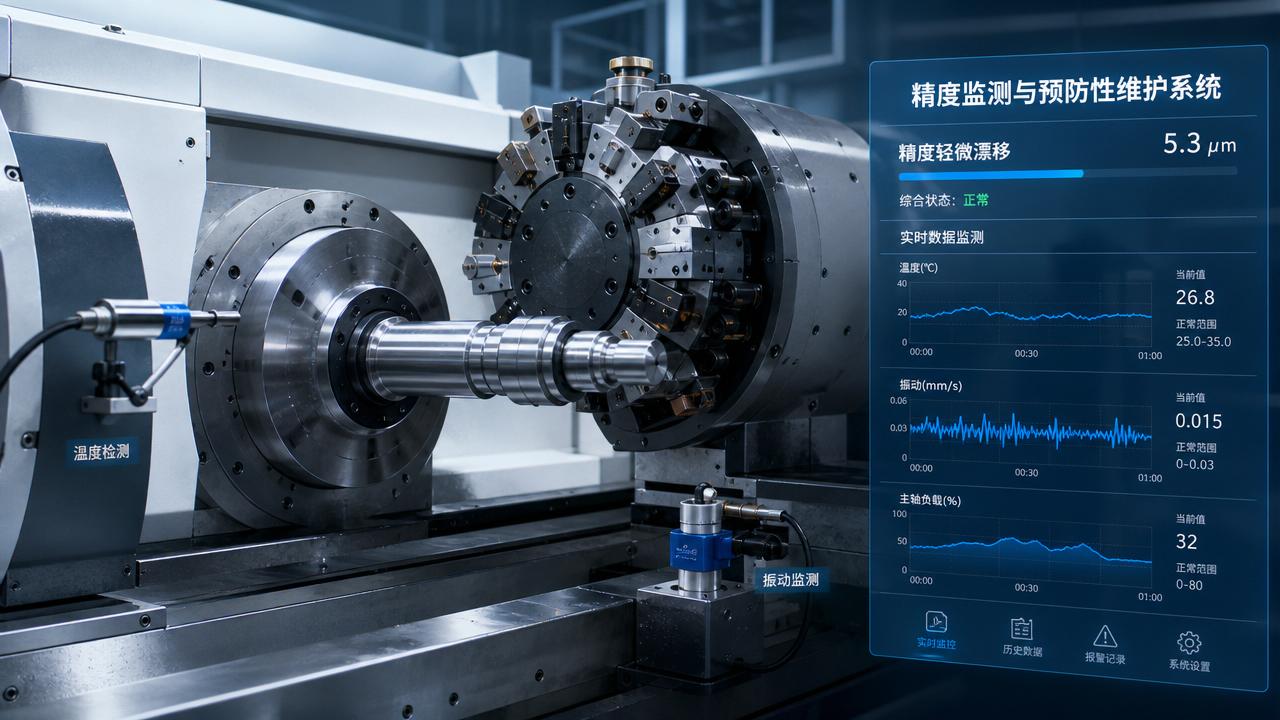
Even a high precision lathe rarely drops out of tolerance in one dramatic event. In most workshops, accuracy loss appears as a slow drift: a faint rise in vibration, a slightly warmer spindle housing, a change in surface gloss, or repeatability that moves from excellent to merely acceptable. These subtle changes matter because they often appear long before alarms, hard failures, or obvious dimensional rejection. In CNC machining and precision manufacturing, where part quality, machine utilization, and tool life are closely linked, recognizing early decline is often the difference between a planned service stop and an expensive production interruption.
For service teams working around a high precision lathe, the challenge is not only fixing faults but also interpreting weak signals. A machine may still cut parts within a basic tolerance band while already showing early signs of spindle preload change, guideway wear, thermal imbalance, lubrication inconsistency, or fixture instability. This article examines the most important trend signals behind gradual performance slip, why they emerge, how they affect different production links, and what checks should come first before minor drift turns into scrap, downtime, or mechanical damage.
Subtle performance drift is becoming a more visible issue in high precision lathe operations
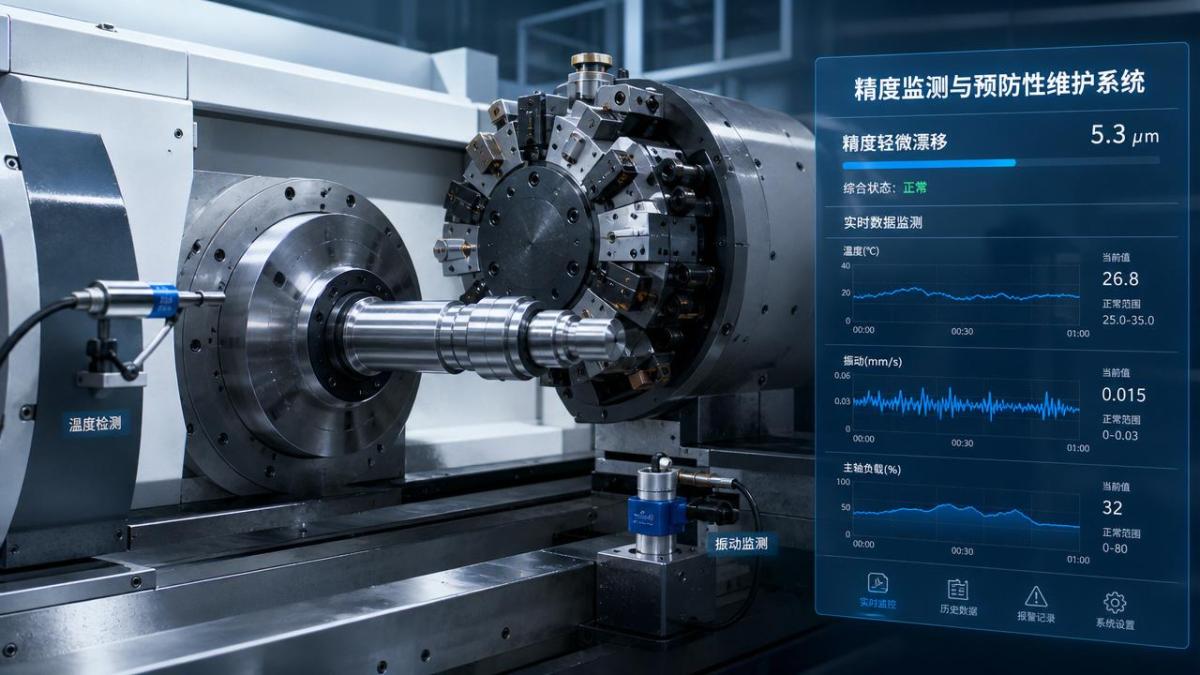
Across the global CNC sector, the modern high precision lathe is working under tighter expectations than ever. Automotive, aerospace, electronics, and energy equipment applications increasingly require better consistency across longer runs, shorter setup times, and closer digital traceability. As a result, small deviations that might once have gone unnoticed are now easier to detect and harder to ignore. What used to be treated as “normal machine aging” is increasingly seen as a measurable decline in process capability.
Another reason the issue is more visible is the broader move toward smart manufacturing. More facilities track spindle load, temperature, cycle variation, tool wear behavior, and dimensional trends in real time. This makes subtle drift on a high precision lathe easier to correlate with output quality. Instead of waiting for a severe breakdown, teams can now identify a gradual pattern: rising correction offsets, inconsistent roundness, taper changes through warm-up, or chatter that only appears on certain materials and speeds.
The warning signs usually appear before the machine fails
A high precision lathe often communicates distress indirectly. Surface finish may become less uniform even when dimensions remain acceptable. The machine may require more offset adjustment than usual after startup. Tool life may shorten without any obvious change in material or program. In some cases, the first clue is not on the part at all, but in maintenance observations such as degraded lubrication film, abnormal bearing sound, or thermal growth that settles more slowly than before.
The most common weak signals include:
- Repeatability drifting between cycles or shifts
- Surface finish changes on identical cutting conditions
- Slight taper, roundness, or concentricity variation after warm-up
- Increasing vibration at specific spindle speed ranges
- Frequent need to compensate offsets on a high precision lathe
- Unexpected changes in tool wear pattern or insert edge damage
- Localized heating near spindle, ball screw, or guideway areas
When several of these signs appear together, the machine should not simply be “adjusted back” into production. The pattern itself is valuable diagnostic information. A high precision lathe that still cuts but no longer behaves consistently is already indicating a loss of mechanical or thermal stability.
Why gradual accuracy loss develops: the main drivers behind high precision lathe decline
The causes behind slow performance slip are usually cumulative rather than singular. Wear, contamination, thermal cycling, process changes, and maintenance gaps often interact. The table below summarizes the most important drivers affecting a high precision lathe over time.
In many cases, more than one factor is active. A high precision lathe may show spindle-related symptoms that are actually intensified by coolant contamination, poor leveling, damaged foundation damping, or unstable workholding. That is why isolated replacement of one component does not always restore full performance.
The impact spreads beyond the machine itself
When a high precision lathe begins to lose accuracy gradually, the consequences move through the entire production chain. Part quality becomes less predictable, but the hidden cost often appears elsewhere first. Tool consumption may increase because operators compensate with conservative settings. Inspection frequency may rise because confidence in repeatability falls. Production scheduling can also suffer if warm-up time becomes longer or trial cuts are needed more often after stoppages.
The broader effects typically include:
- Higher scrap risk on precision shafts, discs, and thin-wall parts
- Lower confidence in process capability for long-run jobs
- More downtime from reactive service rather than planned maintenance
- Difficulty matching digital quality records to real machine behavior
- Potential secondary damage to spindle, guideways, tools, and fixtures
In high-mix and automated environments, the effect is even stronger. A high precision lathe integrated into a flexible line or linked with robotic loading can produce a large batch before subtle drift is noticed. That is why early detection is no longer just a maintenance concern; it is a core requirement for stable automated manufacturing.
What should be checked first when a high precision lathe starts to slip
The first response should be structured, not speculative. Before changing parameters or replacing parts, gather evidence from the machine, the part, and the process. A disciplined first-pass inspection can often separate true machine degradation from tooling, material, or setup variation.
Priority checks
- Thermal behavior: compare cold-start and stabilized dimensions, spindle housing temperature, and axis heat distribution.
- Vibration pattern: review speed-specific chatter, resonance bands, and any recent changes in sound signature on the high precision lathe.
- Lubrication condition: verify oil delivery, grease quality, contamination, and evidence of starvation on moving components.
- Geometry and motion: check backlash, straightness trend, axis repeatability, and signs of stick-slip or servo compensation drift.
- Workholding integrity: inspect chuck force, jaw wear, fixture cleanliness, and clamping repeatability.
- Tooling baseline: confirm insert grade, holder condition, tool overhang, and whether wear is creating misleading symptoms.
This sequence matters because many service interventions fail when they begin with the most expensive assumption. A high precision lathe with unstable finish is not automatically a spindle rebuild case. The root cause may be thermal distortion, machine leveling change, coolant concentration shift, or clamping inconsistency.
The smartest response is trend-based maintenance, not one-time correction
The long-term solution is to treat performance decline on a high precision lathe as a trend to be monitored, not a single event to be erased. Facilities that build historical baselines for vibration, temperature, test part results, lubrication health, and geometry checks are better positioned to intervene early. This is especially important as machine tools become more digitally connected and production tolerances continue to tighten.
The practical next step is simple: choose one high precision lathe with recurring minor deviations and build a structured check record for the next 30 days. Track thermal growth, repeatability, vibration notes, offset corrections, and surface finish behavior. Even this modest discipline can reveal whether the issue is mechanical wear, process instability, or an environmental factor. In precision manufacturing, the machines that seem only “slightly different” are often the ones providing the earliest and most valuable warning.
PREVIOUS ARTICLE
NEXT ARTICLE
Recommended for You
![]() Five Ministries Launch Joint Enforcement on EV Battery RecyclingManufacturing Policy Research Center
Five Ministries Launch Joint Enforcement on EV Battery RecyclingManufacturing Policy Research Center![]() Top 10 Future Industries Roadmap 2026 ReleasedManufacturing Market Research Center
Top 10 Future Industries Roadmap 2026 ReleasedManufacturing Market Research Center![]() Global Methanol-Electric Ecosystem Alliance LaunchedManufacturing Market Research Center
Global Methanol-Electric Ecosystem Alliance LaunchedManufacturing Market Research Center![]() ISO 23218-3:2026 Enters Force: CNC Digital Twin Interoperability Standard Goes GlobalCNC Machining Technology Center
ISO 23218-3:2026 Enters Force: CNC Digital Twin Interoperability Standard Goes GlobalCNC Machining Technology Center![]() ANVISA New Rule: Portuguese Biocompatibility Labels for Medical CNC EquipmentManufacturing Policy Research Center
ANVISA New Rule: Portuguese Biocompatibility Labels for Medical CNC EquipmentManufacturing Policy Research Center![]() KATS Updates KC Certification: CNC Cybersecurity Modules Must Comply with IEC 62443-4-2Manufacturing Policy Research Center
KATS Updates KC Certification: CNC Cybersecurity Modules Must Comply with IEC 62443-4-2Manufacturing Policy Research Center


Aris Katos
Future of Carbide Coatings
15+ years in precision manufacturing systems. Specialized in high-speed milling and aerospace grade alloy processing.
▶
High precision lathe performance starts to slip in subtle waysMachine Tool Industry Editorial Team▶
Precision equipment calibration gaps that hurt final toleranceMachine Tool Industry Editorial Team▶
What matters most in CNC production equipment reliabilityMachine Tool Industry Editorial Team▶
High precision lathe costs more, but where is the payoffMachine Tool Industry Editorial Team▶
Precision equipment failures that begin with minor vibrationMachine Tool Industry Editorial Team
Mastering 5-Axis Workholding Strategies
Join our technical panel on Nov 15th to learn about reducing vibrations in thin-wall components.

Providing you with integrated sanding solutions
Before-sales and after-sales services
Comprehensive technical support