• Global CNC market projected to reach $128B by 2028 • New EU trade regulations for precision tooling components • Aerospace deman
NYSE: CNC +1.2%LME: STEEL -0.4%

Precision equipment calibration gaps that hurt final tolerance
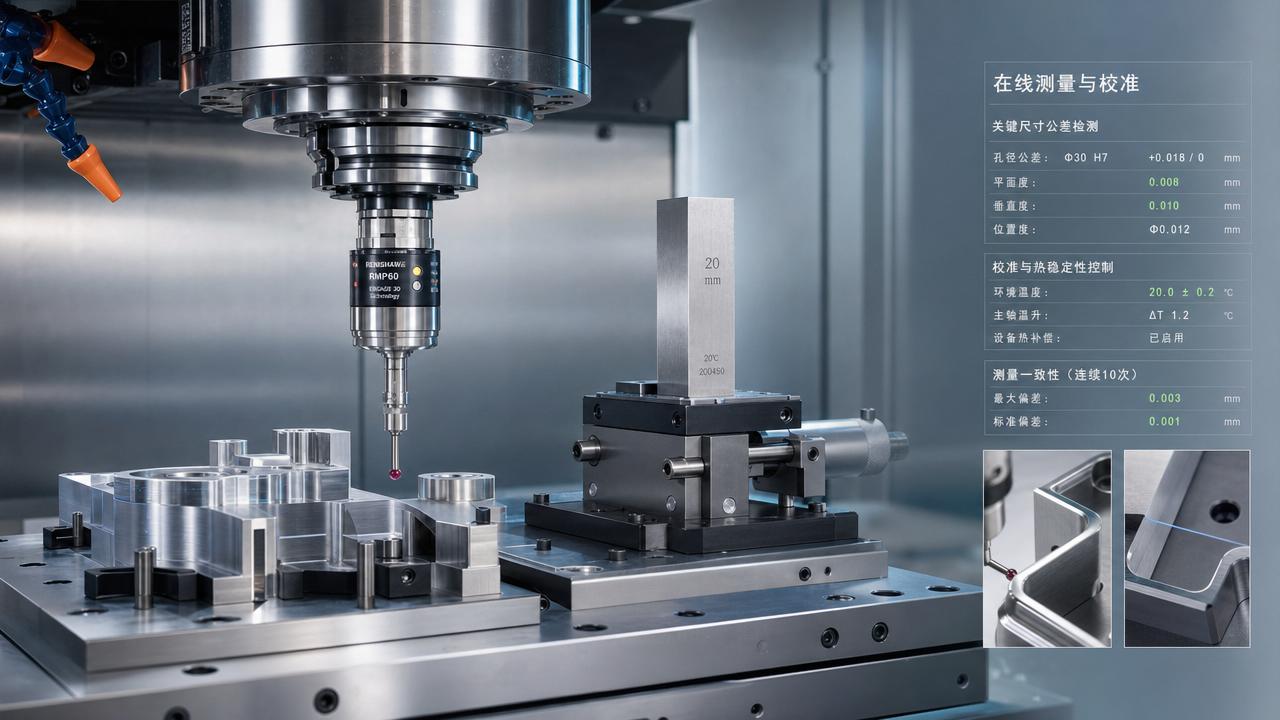
Small calibration gaps in precision equipment rarely announce themselves at the moment they begin. They show up later as drifting dimensions, unstable surface finish, assembly mismatch, repeated offsets, inspection disputes, and customer complaints about final tolerance. In CNC machining and precision manufacturing, the problem is often not one catastrophic failure but a chain of small deviations across machine geometry, thermal behavior, tooling, fixturing, probing, and inspection routines. When these gaps stack together, process capability weakens and good parts become harder to repeat. Understanding where precision equipment loses alignment is essential for protecting consistency, reducing rework, and maintaining safe, stable production.
The issue matters across the broader industrial sector because high-precision automated production now supports automotive systems, aerospace structures, energy equipment, electronics housings, shafts, discs, and complex multi-axis parts. As production lines become more connected and cycle times tighten, calibration discipline has a direct effect on scrap rate, machine utilization, traceability, and delivery performance. A structured review helps reveal hidden weak points before they damage final tolerance.
Why a structured review is necessary for precision equipment
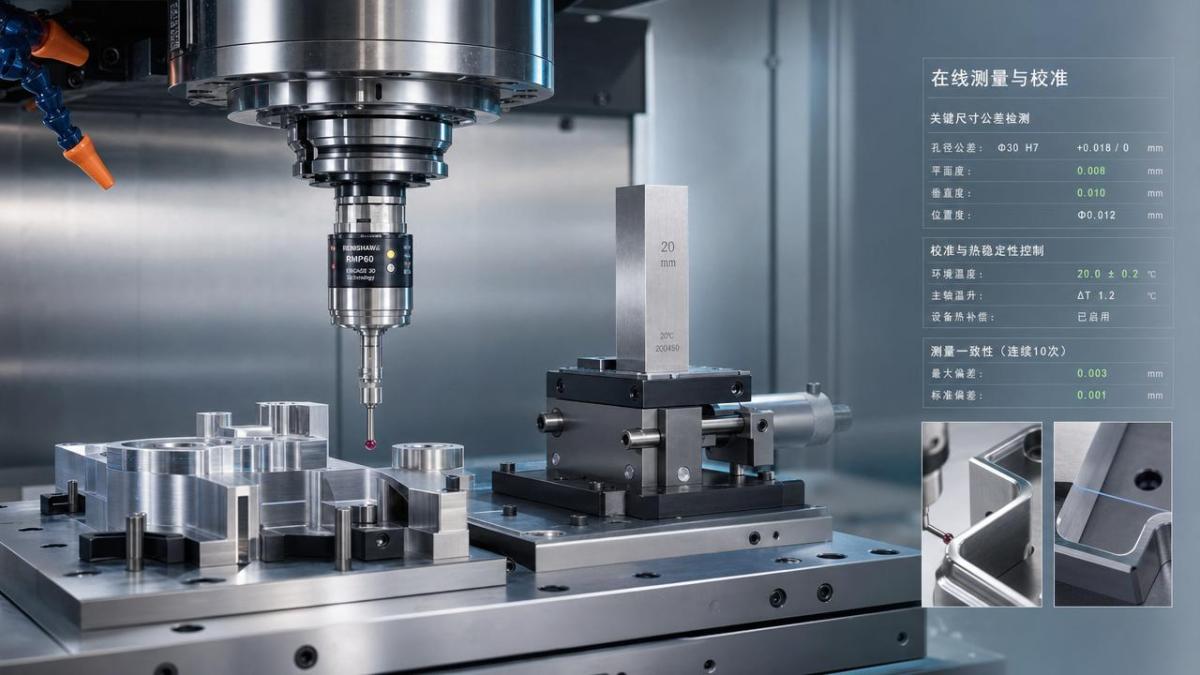
A checklist-based review works because tolerance loss is usually cumulative. One machine may have slight spindle growth, another may have fixture wear, and a third may rely on outdated probe compensation. Each issue seems manageable in isolation, yet the combined effect can push dimensions beyond specification. Precision equipment performs best when calibration is treated as a living control system rather than a one-time setup event.
This approach also improves communication between machining, maintenance, metrology, and quality functions. Instead of reacting only after nonconformance appears, teams can verify the same control points in the same order: geometry, environment, tool data, workholding, in-process measurement, and final inspection. That consistency helps identify whether the real source of variation is the machine, the process, or the measurement method itself.
Core points to check when final tolerance starts drifting
- Verify machine geometry against the latest baseline, including squareness, straightness, backlash, axis positioning, and spindle runout, before adjusting offsets or blaming tool wear.
- Confirm thermal stability after warm-up, because precision equipment can shift significantly between a cold start, steady production, and heavy-duty cutting cycles.
- Check tool length and diameter offset integrity, ensuring presetter values, manual entries, and in-machine probe updates match the active tool library.
- Inspect fixture location surfaces, clamping force, pin wear, and contamination, since poor workholding often creates repeatable but misleading dimensional error.
- Review spindle taper cleanliness and toolholder condition, because tiny debris, fretting, or pull stud damage can degrade concentricity and surface accuracy.
- Validate probing systems with calibrated masters, and compare probe-trigger repeatability against recent records to detect silent metrology drift inside precision equipment.
- Compare machine-side measurements with CMM or bench inspection results to separate cutting process variation from measurement system disagreement.
- Audit compensation tables for pitch error, rotary axis correction, thermal maps, and software updates that may have changed machine behavior unexpectedly.
- Evaluate coolant temperature, shop ambient swings, and airflow near the machine, because environmental instability can distort both the part and precision equipment.
- Review preventive maintenance timing for ball screws, guideways, lubrication, filters, and encoder health, as neglected maintenance often appears first as tolerance scatter.
- Confirm reference artifacts, gauge blocks, rings, and masters remain within calibration status and are stored properly to avoid passing error into every check.
- Track tolerance performance by feature family rather than only by part number, so recurring weakness in bores, faces, pockets, or true position becomes visible faster.
Where calibration gaps usually begin
Machine geometry and axis behavior
Many final tolerance issues start with machine geometry that has drifted from its accepted baseline. In CNC lathes and machining centers, even small changes in axis straightness, yaw, pitch, squareness, or backlash can affect bore location, flatness, and positional accuracy. Multi-axis precision equipment is even more sensitive because a minor rotary alignment error can produce amplified deviation at the tool center point.
A common mistake is to correct these problems only with work offsets. Offsets may temporarily recover one feature while masking a deeper mechanical issue that later affects another feature differently. If tolerance loss appears across multiple programs or setups, geometry verification should come before any broad process adjustment.
Thermal drift and production rhythm
Thermal drift is one of the most underestimated causes of unstable precision equipment performance. Machines expand as spindles rotate, axes travel, coolant circulates, and chips accumulate heat in the cutting zone. A setup proven during first-article inspection may no longer hold the same final tolerance after several hours of continuous operation.
The risk increases when production alternates between light and heavy materials, or when operators restart cold machines after breaks. Warm-up routines, temperature trend recording, and compensation verification should be tied to actual production rhythm, not only to daily startup habits.
Tool setting, holder condition, and spindle interface
Precision equipment cannot hold final tolerance if tool data is unstable. Errors often come from worn holders, inconsistent pull studs, taper contamination, chipped cutting edges, or duplicated offsets after tool replacement. In high-mix machining, the speed of tool changes increases the chance of entering the wrong compensation value or skipping tool verification entirely.
The spindle-tool interface deserves special attention. Micron-level debris in the taper or face contact area can alter runout enough to affect roundness, concentricity, and finish. That problem may appear as random tool wear but actually originates in poor spindle interface discipline.
Application-specific notes across manufacturing environments
Automotive and high-volume component lines
In high-volume automotive machining, precision equipment is exposed to repetitive thermal loads and fast tool turnover. Here, the biggest risk is gradual drift hidden by frequent offset edits. Key checks include cycle-based spindle growth monitoring, fixture wear trending, and correlation between in-line gauging and final audit inspection.
Aerospace and tight-tolerance structural parts
Aerospace work often combines thin walls, long cycle times, and demanding positional tolerance. Precision equipment in this setting should be checked for multi-axis volumetric accuracy, probe qualification status, and thermal compensation under extended machining conditions. Part distortion must also be separated from machine error through staged inspection.
Energy equipment and large-part machining
Large shafts, discs, and heavy housings place different stress on precision equipment. Foundation stability, axis loading, long-travel positioning, and fixture rigidity become critical. Calibration routines should include checks at multiple axis positions rather than only near the center of travel, where the machine often performs best.
Electronics and compact precision parts
For smaller precision components, tolerance failures may come less from bulk machine movement and more from micro-runout, tool deflection, burr generation, and measurement sensitivity. Precision equipment used for these parts needs stable environment control, frequent probe validation, and disciplined handling of tiny reference gauges and masters.
Commonly overlooked risks that quietly damage final tolerance
One overlooked risk is assuming the measuring system is always correct. If the CMM, bench gauge, and machine probe do not agree, a false correction can be applied to healthy precision equipment. Measurement system analysis and cross-verification prevent chasing the wrong problem.
Another frequent gap is poor control of calibration intervals. Time-based schedules alone are not enough for precision equipment running mixed loads, overtime shifts, or abrasive materials. Calibration frequency should reflect duty cycle, process criticality, and historical drift behavior.
Software changes are also underestimated. Updated CNC parameters, compensation files, post-processors, or probing macros can alter machine response without any visible mechanical change. Every digital change that affects positioning or measurement should be traceable and reviewed like a mechanical intervention.
Finally, storage and handling of calibration artifacts can create hidden bias. A damaged setting ring, dirty master sphere, or poorly stored gauge block can transfer error into every validation step. Precision equipment control depends on trustworthy references, not just trustworthy machines.
Practical execution steps to close calibration gaps
- Create a single baseline record for each precision equipment asset, including geometry results, thermal behavior, probe repeatability, and known compensation settings.
- Set trigger limits for early warning, such as repeated offset edits, unusual tool wear, feature-specific drift, or disagreement between machine probing and final inspection.
- Use layered verification: daily quick checks, weekly trend review, and periodic full calibration based on process risk and machine utilization.
- Standardize warm-up, taper cleaning, master artifact handling, and fixture inspection so critical steps are not left to individual habit.
- Link maintenance, machining, and metrology records to the same equipment history, making it easier to identify recurring tolerance loss patterns.
FAQ about precision equipment calibration and tolerance control
How often should precision equipment be calibrated?
There is no universal interval. Precision equipment should be calibrated based on machine duty, tolerance criticality, environmental stability, and historical drift. High-load or tight-tolerance applications usually need more frequent verification than low-risk operations.
What is the first sign that calibration gaps are affecting final tolerance?
The earliest sign is often not scrap but increased adjustment activity: more offset edits, more first-piece corrections, and more disagreement between different measurement points. These signals often appear before parts fail specification.
Can software compensation solve all precision equipment errors?
No. Compensation can help manage predictable error, but it cannot reliably replace healthy machine geometry, stable thermal control, proper toolholding, and valid measurement practice. Overuse of compensation may hide the real source of drift.
Closing actions to protect consistency
Final tolerance is rarely lost at one point alone. It is usually weakened by small, unverified changes inside precision equipment and around it: geometry drift, temperature variation, fixture wear, incorrect tool data, or measurement mismatch. The most effective response is a disciplined review that connects machine condition, process behavior, and inspection results instead of treating them separately.
Start with one practical step: define a short control routine for every critical precision equipment asset covering geometry baseline, thermal condition, tool offset integrity, fixture condition, probe verification, and reference artifact status. Then trend those results against feature performance over time. This turns calibration from a reactive event into a preventive control method that supports stable quality, lower rework, and more reliable precision manufacturing outcomes.
PREVIOUS ARTICLE
Recommended for You
![]() Five Ministries Launch Joint Enforcement on EV Battery RecyclingManufacturing Policy Research Center
Five Ministries Launch Joint Enforcement on EV Battery RecyclingManufacturing Policy Research Center![]() Top 10 Future Industries Roadmap 2026 ReleasedManufacturing Market Research Center
Top 10 Future Industries Roadmap 2026 ReleasedManufacturing Market Research Center![]() Global Methanol-Electric Ecosystem Alliance LaunchedManufacturing Market Research Center
Global Methanol-Electric Ecosystem Alliance LaunchedManufacturing Market Research Center![]() ISO 23218-3:2026 Enters Force: CNC Digital Twin Interoperability Standard Goes GlobalCNC Machining Technology Center
ISO 23218-3:2026 Enters Force: CNC Digital Twin Interoperability Standard Goes GlobalCNC Machining Technology Center![]() ANVISA New Rule: Portuguese Biocompatibility Labels for Medical CNC EquipmentManufacturing Policy Research Center
ANVISA New Rule: Portuguese Biocompatibility Labels for Medical CNC EquipmentManufacturing Policy Research Center![]() KATS Updates KC Certification: CNC Cybersecurity Modules Must Comply with IEC 62443-4-2Manufacturing Policy Research Center
KATS Updates KC Certification: CNC Cybersecurity Modules Must Comply with IEC 62443-4-2Manufacturing Policy Research Center


Aris Katos
Future of Carbide Coatings
15+ years in precision manufacturing systems. Specialized in high-speed milling and aerospace grade alloy processing.
▶
High precision lathe performance starts to slip in subtle waysMachine Tool Industry Editorial Team▶
Precision equipment calibration gaps that hurt final toleranceMachine Tool Industry Editorial Team▶
What matters most in CNC production equipment reliabilityMachine Tool Industry Editorial Team▶
High precision lathe costs more, but where is the payoffMachine Tool Industry Editorial Team▶
Precision equipment failures that begin with minor vibrationMachine Tool Industry Editorial Team
Mastering 5-Axis Workholding Strategies
Join our technical panel on Nov 15th to learn about reducing vibrations in thin-wall components.

Providing you with integrated sanding solutions
Before-sales and after-sales services
Comprehensive technical support