• Global CNC market projected to reach $128B by 2028 • New EU trade regulations for precision tooling components • Aerospace deman
NYSE: CNC +1.2%LME: STEEL -0.4%

What makes a CNC milling system qualify as ‘industrial grade’ — beyond spindle power?
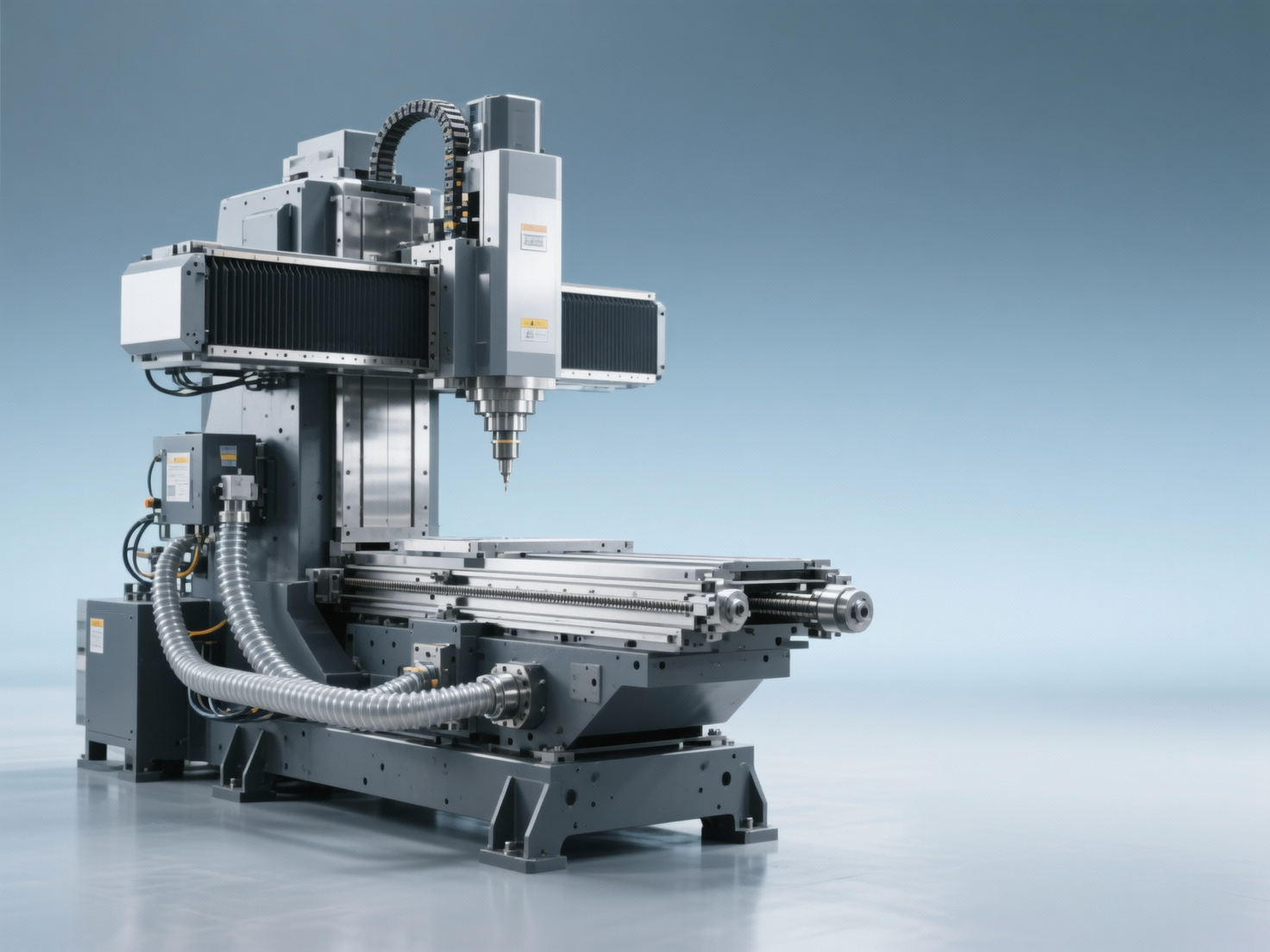
When evaluating a CNC milling system for industrial-grade performance, spindle power is just the starting point. True industrial CNC excellence hinges on rigidity, thermal stability, precision motion control, and seamless integration into automated production lines — all critical for metal machining of shaft parts, aerospace components, and high-tolerance structural parts. As Global Manufacturing accelerates toward smart factories and Industrial Automation, terms like CNC metalworking, CNC cutting, and industrial lathe no longer describe tools alone — they define capabilities within a digital, scalable Production Process. For procurement teams, operators, and decision-makers alike, understanding what elevates CNC milling beyond specs to ‘industrial CNC’ reliability is key.
Beyond Horsepower: The Four Pillars of Industrial-Grade CNC Milling
Spindle power—often cited in kW or HP—is a visible metric, but it reflects only one facet of capability. Industrial-grade CNC milling systems operate under sustained loads, tight tolerances (±2–5 µm), and multi-shift cycles exceeding 6,000 hours/year. What separates entry-level machines from true industrial assets lies in four interdependent engineering pillars: structural rigidity, thermal management, motion system fidelity, and automation readiness.
Rigidity isn’t just about cast iron mass—it’s about dynamic stiffness under 500–3,000 N·m cutting torque, damping ratios >0.03, and finite-element-validated frame geometry. Thermal stability demands coolant temperature control within ±1.5°C over 8-hour runs and ambient compensation algorithms that adjust positioning in real time. Motion control requires servo bandwidths ≥120 Hz, backlash <0.002 mm, and laser-calibrated linear scales traceable to ISO 230-2.
Finally, automation readiness means native support for OPC UA, MTConnect v1.7+, and dual-channel Ethernet/IP—enabling plug-and-play integration with MES, SCADA, and robotic loaders without custom middleware. These are not “nice-to-have” features—they’re non-negotiable thresholds for automotive Tier-1 suppliers, turbine blade manufacturers, and medical implant producers.
Rigidity & Dynamic Stability: Where Metal Meets Mechanics
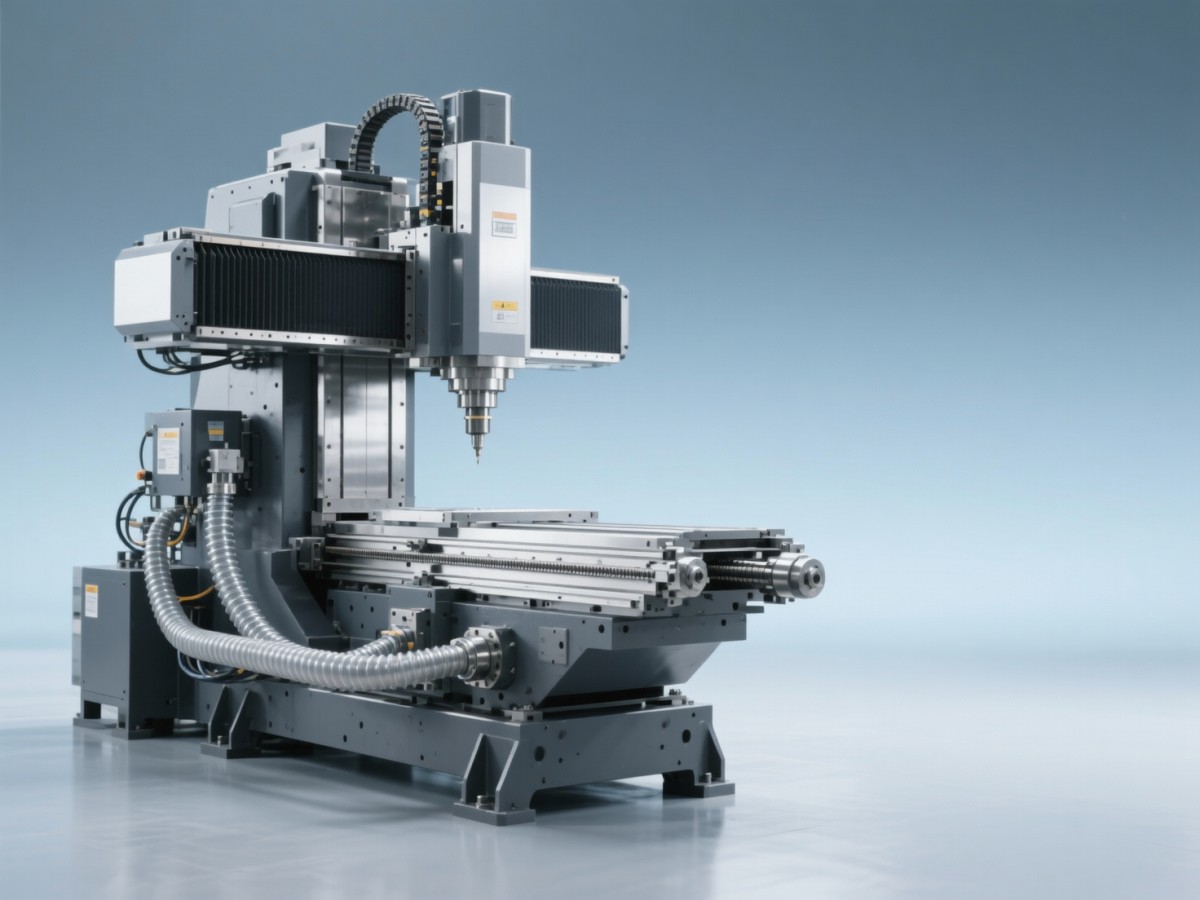
A machine tool’s static weight tells little about its real-world performance. Industrial-grade milling systems must maintain geometric accuracy under variable loading—such as interrupted cuts in Inconel 718 or deep-pocket roughing in aluminum 6061-T6. This requires monoblock bed designs with rib-reinforced cross-sections, Meehanite castings aged for ≥90 days, and preloaded hydrostatic or roller guideways delivering >150 kN static load capacity.
Dynamic deflection matters more than static weight: top-tier systems limit tool-tip displacement to <1.2 µm under 2,500 N radial force at 10 kHz excitation frequency. Vibration damping is achieved through constrained-layer composites in column walls and tuned mass dampers integrated into the spindle housing—reducing resonance peaks by up to 40% compared to standard designs.
This table highlights how foundational mechanical design differentiates industrial systems. Procurement teams should request modal analysis reports—not just static load ratings—and verify vibration test data across three axes at full travel. A 20% increase in casting mass rarely improves performance; optimized rib geometry and damping do.
Thermal Management: Precision Under Real-World Conditions
Temperature gradients cause dimensional drift—up to 8–12 µm over a 1,000 mm axis length per 1°C difference between spindle and bed. Industrial mills counter this with dual-loop thermal control: closed-loop coolant chillers holding fluid at 20±0.3°C, and embedded thermistor networks (≥12 sensors per axis) feeding real-time compensation to the CNC controller.
High-end systems also feature symmetrical thermal mass distribution—spindle housings matched to column thermal inertia—and air curtains isolating heat sources (e.g., drives, transformers) from the kinematic chain. Field validation shows such systems maintain positional repeatability within ±2.5 µm over 12-hour continuous operation, versus ±7.5 µm for standard configurations.
Operators benefit directly: fewer manual compensations, reduced scrap on first-article parts, and consistent surface finish (Ra ≤0.4 µm) across batch runs. For aerospace suppliers auditing to AS9100 Rev D, thermal stability documentation is now a mandatory clause in equipment qualification protocols.
Motion Control Fidelity: From Command to Cut
Industrial CNC milling demands motion control that translates G-code intent into micron-accurate metal removal—without overshoot, lag, or contour deviation. This requires high-bandwidth servo loops (≥120 Hz), direct-drive rotary tables (zero backlash, ±1 arc-second indexing), and real-time path smoothing algorithms compliant with ISO 10791-6.
Critical parameters include: following error <0.001 mm at 20 m/min feed, acceleration ≥0.8 g on X/Y axes, and contour accuracy <0.005 mm on circular interpolation tests (DIN 66025). These aren’t lab benchmarks—they’re verified during factory acceptance testing (FAT) using laser interferometers and ball-bar analyzers.
- Linear scale resolution: ≤0.1 µm (Heidenhain LC 481 or equivalent)
- Backlash compensation: Active, bidirectional, updated every 200 ms
- Jerk limitation: Configurable per axis (default: 150 m/s³)
- Look-ahead buffer: ≥2,000 blocks for complex 5-axis toolpaths
For users running titanium impeller programs or medical bone-screw threads, these specs directly impact cycle time reduction (12–18%), tool life extension (20–30%), and first-pass yield rates (>98.5% vs. ~92% on mid-tier machines).
Automation Integration: The Smart Factory Interface
An industrial-grade CNC mill must function as a node—not an island—in a connected production network. That means native, certified support for Industry 4.0 communication standards: OPC UA PubSub (IEC 62541), MTConnect v1.7+, and Siemens SINUMERIK Integrate APIs. It also requires hardware-level security (TPM 2.0), role-based access control, and encrypted log export compliant with ISO/IEC 27001.
Delivery timelines reflect this maturity: industrial systems ship with preconfigured data tags for OEE calculation, predictive maintenance alerts (vibration + temperature trend analysis), and RESTful endpoints for MES job dispatch. Lead times average 14–20 weeks for configured systems—longer than off-the-shelf models—but include FAT, network commissioning, and operator training.
Procurement teams should require documented proof of protocol certification—not just vendor claims—and validate API response latency (<150 ms) during site acceptance testing. Integration delays cost more than hardware: unplanned downtime averages $22,000/hour in Tier-1 automotive plants.
Making the Industrial Choice: A Decision Framework
Selecting an industrial-grade CNC mill isn’t about maxing out specs—it’s about matching engineering integrity to your production reality. Start with your most demanding part: Is it a 3,200 mm wind turbine shaft requiring ±0.01 mm straightness? A nickel-alloy combustion chamber needing 5-axis simultaneous contouring at 8 µm Ra? Or a high-mix electronics enclosure family requiring <45-minute changeover?
Then apply this 4-point filter:
- Rigidity Verification: Request modal analysis report + measured damping ratio at 1st bending mode (target: >0.03)
- Thermal Validation: Demand 12-hour thermal stability test report (ISO 230-3) with sensor placement diagram
- Motion Certification: Confirm laser interferometer results per ISO 230-2, including bi-directional repeatability
- Automation Readiness: Verify OPC UA server certificate, MTConnect agent version, and documented API latency test
Industrial CNC isn’t defined by a single number—it’s validated by how consistently it delivers precision, uptime, and connectivity across thousands of operational hours. For decision-makers, that consistency translates to predictable CapEx ROI, lower TCO over 10+ years, and scalability into next-generation smart manufacturing ecosystems.
Ready to evaluate a CNC milling system against industrial-grade benchmarks? Request our Industrial Readiness Assessment Kit—including technical checklist, FAT protocol template, and integration validation guide—for your next procurement cycle.
Recommended for You
![]() Fuxing EMU Trainset Procurement Reaches ¥4.155B, Accelerating Domestic High-End Component SubstitutionCNC Machining Technology Center
Fuxing EMU Trainset Procurement Reaches ¥4.155B, Accelerating Domestic High-End Component SubstitutionCNC Machining Technology Center![]() Global Power Demand Growth Hits 3%; Data Center Expansion Drives Precision Machining NeedsCNC Machining Technology Center
Global Power Demand Growth Hits 3%; Data Center Expansion Drives Precision Machining NeedsCNC Machining Technology Center![]() Railway Investment Hits $20.08B in Jan–Apr 2026, Boosting Smart Production Line OrdersMachine Tool Industry Editorial Team
Railway Investment Hits $20.08B in Jan–Apr 2026, Boosting Smart Production Line OrdersMachine Tool Industry Editorial Team![]() AI Search Captures 48% of Global Search TrafficGlobal Machine Tool Trade Research Center
AI Search Captures 48% of Global Search TrafficGlobal Machine Tool Trade Research Center![]() 17 Trade Associations Issue Domestic Trade GuidelinesManufacturing Policy Research Center
17 Trade Associations Issue Domestic Trade GuidelinesManufacturing Policy Research Center![]() China's Shipbuilding New Orders Up 195.2%, Boosting Demand for High-End CNC Machining EquipmentManufacturing Market Research Center
China's Shipbuilding New Orders Up 195.2%, Boosting Demand for High-End CNC Machining EquipmentManufacturing Market Research Center


Aris Katos
Future of Carbide Coatings
15+ years in precision manufacturing systems. Specialized in high-speed milling and aerospace grade alloy processing.
▶
Haidou-2 Submersible Components Pass 10,000-Meter TestMachine Tool Industry Editorial Team▶
China Launches Largest Single-Line Carbon Fiber Line, Boosting CNC ExportMachine Tool Industry Editorial Team▶
EU’s Revised Ecodesign Regulation for Machinery Enters Force: Mandatory Energy Labeling for CNC Machine Tools from May 10, 2026Machine Tool Industry Editorial Team▶
High precision lathe performance starts to slip in subtle waysMachine Tool Industry Editorial Team▶
Precision equipment calibration gaps that hurt final toleranceMachine Tool Industry Editorial Team
Mastering 5-Axis Workholding Strategies
Join our technical panel on Nov 15th to learn about reducing vibrations in thin-wall components.

Providing you with integrated sanding solutions
Before-sales and after-sales services
Comprehensive technical support